The best heating radiators for a private home are aluminum or steel. They offer high heat output and an elegant design. Aluminum or steel radiators can withstand operating pressures of 10-16 atm, while steel radiators can withstand 6-8 atm.
Installing radiators in a home is quite a challenging task. This article aims to help you decide which heating appliances are best for your home, provide comprehensive information about the best radiator manufacturers, where and under what conditions they are best installed, and when.
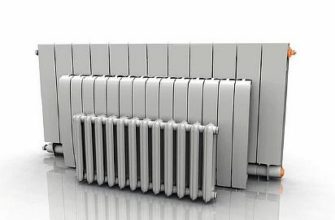
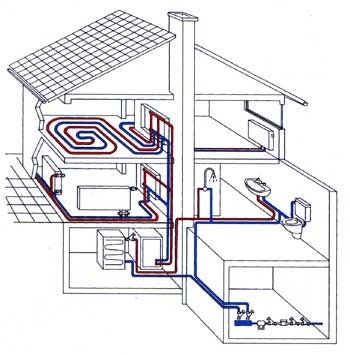
The modern design of autonomous heating systems for private homes consists of water heating equipment (solid-liquid fuel, gas and electric boilers), hot water pipelines and heating devices (radiators).
It is important that the battery characteristics fully comply with the operating conditions.
- Features of an autonomous heating system
- Advantages
- Flaws
- Classes of heating radiators
- Sectional
- Tubular
- Panel
- Plate-shaped
- Types of heating radiators
- Vacuum
- Quartz - advantages and disadvantages
- Aluminum
- Bimetallic
- Cast iron
- Steel - advantages and disadvantages
- Trusted manufacturers
- Aluminum
- Steel
- Cast iron: MS-140 and GURATEC Apollo 970/05
- Bimetal: SIRA GLADIATOR 500x4 and ROYAL Thermo Revolution Bimetall 350
- Vacuum: EnergyEco
- Quartz: TeplEko
- Which heating radiator is best for a private home?
- Stone, brick, block, reinforced concrete
- Wooden private houses
- Installation rules
- Area of premises
- Availability of a coolant source
- Number of floors
- Number of window openings
- Connection types
- Installation
Features of an autonomous heating system
Installing an autonomous heating system (AHS) in a private home allows you to take advantage of its many advantages over a centralized system, despite some disadvantages.
Advantages
- One water heating boiler can provide a house with radiator heating, heated floors, and hot water to the kitchen and bathroom.
- The heating system operates fully regardless of seasonal shutdowns of the central heating system. This helps maintain a comfortable indoor climate during the sudden drop in temperature during the off-season.
- Closed heating and hot water supply circuits allow the use of a clean, contaminant-free coolant. To achieve this, coarse and fine water filters are installed in heating systems.
- The home owner schedules and carries out maintenance and repair work on the home's heating system.
- An autonomous heating system is the only alternative to central heating for country cottages, large mansions and summer houses.
- When the owners of a private home are away, the heating system can be set to the minimum temperature, which will help save on heating costs.
- The homeowner can independently choose the class, type of heating radiators and determine their quantity.
- There is no risk of water hammer.
- Possibility of connection to the Smart Home system.
Flaws
Despite all the advantages, autonomous heating has a number of disadvantages:
- It is necessary to spend time and money on installing the ASO, but apartment owners receive a ready-made heating system;
- Maintenance and repair of the automatic control system are the direct responsibility and concern of the homeowners, and in an apartment building this falls on the shoulders of the service company;
- It is necessary to constantly monitor and regulate the temperature regime.
Classes of heating radiators
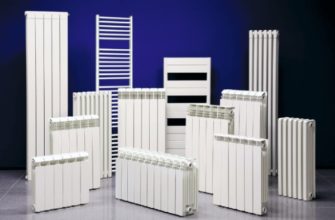
The classification of heating radiators can be outlined by the following list:
- sectional;
- tubular;
- panel;
- lamellar.
Sectional
This class of radiators is constructed by joining two or more hollow flow-through vessels (sections) into a single radiator. The number of sections varies depending on the room's thermal design. They are available in both aluminum and cast iron.
Pros
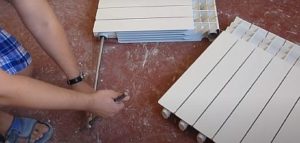
The advantage of such heating devices is that you can always increase or decrease them heat transfer (see table), adding or removing sections. To assemble the radiator sections, you'll need fittings with external threads (nipples), O-ring gaskets, connecting pipes, and a special wrench. Sectional heating units can be quickly disassembled into individual sections or reassembled into a reliable unit.
Cons
The structure, consisting of several components, has numerous connecting points. Poorly made connections can result in battery leaks.
Tubular
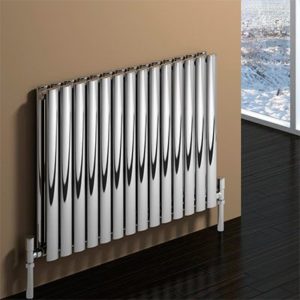
Tubular radiators first appeared in the 1930s. They have always been considered custom-made, meaning they are custom-ordered. This type of radiator is the most popular among designers. Steel radiators can have either horizontal or vertical tubes.
Pros
Like all custom-made products, tubular steel appliances are in demand among owners of expensive country houses.
The use of any bold design solutions makes it possible to install tubular radiators not only as heating devices but also as striking accents in the interior of any room. The thermal performance of steel products is excellent.
Cons
The disadvantages of tubular heaters in autonomous heating systems include their low availability for most consumers due to the high price of the products, and their sensitivity to the quality of the coolant (the need to install coarse and fine filters).
It should also be noted that this class of batteries is non-disassemblable devices, and partial replacement of individual segments is not possible.
Panel
Screen heaters are also non-detachable devices. The appearance of solid panels, painted primarily in neutral tones, is quite popular among ordinary consumers.
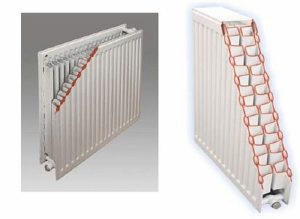
Rectangular steel radiators are made of two parallel steel panels welded together, each containing a U-shaped tube. Steel strips are installed around the perimeter of the radiator. Panels can be supplied with either side or bottom coolant inlet.
Pros
Steel panel radiators offer high heat output, are compact, and complement any interior design. Panel radiators are especially popular in private homes with large windows.
Long screen heaters are placed in niches or simply under windows to prevent cold air from entering the premises.
Cons
Panels that have been subjected to water hammer or mechanical damage with rupture of the steel surface cannot be repaired. The radiators cannot be disassembled or adjusted for size. The devices have a rather uniform appearance.
Plate-shaped
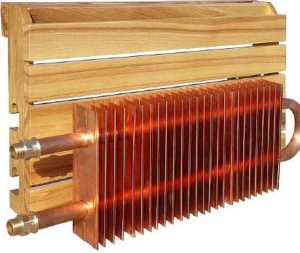
In some cases, they can be classified as bimetallic batteries and converter devices. The design consists of a steel pipe containing a coolant placed through a set of thin steel, aluminum, or copper plates.
Pros
The more petals, the greater the heat transfer area. Therefore, a seemingly small appliance in a private home will heat the room just as effectively as its much larger panel, sectional, or tubular counterparts. Its trouble-free service life is 20 years or more.
Cons
The main disadvantage of plate heaters is that the area of the plates not only increases the heat output of the device, but also attracts a large amount of dust.
Accumulations of lightly suspended particles in a private home can cause allergic reactions in those living in the room. Therefore, these types of radiators should be vacuumed regularly.
Types of heating radiators
Based on their appearance, heating radiators can be represented by the following list:
- vacuum;
- quartz;
- aluminum;
- bimetallic;
- cast iron;
- steel.
Vacuum
Vacuum radiators operate on the principle of a thermosiphon. Ethanol or lithium bromide liquid is heated in a closed vessel with evacuated air. The substance boils under the heat and evaporates, forming a mist. As it cools, the vapor settles on the walls of the vessel as condensation. During this process, heat is uniformly transferred to the vessel walls.
This rather unusual solution for heat exchange between the primary and secondary coolants, followed by heat transfer through the tank walls, has been known for many years. Only recently has this idea been implemented in vacuum radiators. Such devices can be installed in private homes in two versions: with a water or a vacuum. electric heating.
In the first case, hot water flows through the lower horizontal steel pipe. It heats the liquid (secondary heat transfer fluid) in the vertical tubes under negative pressure through the metal. In the second case, a tubular electric heater (TEH) is installed in place of the hot water pipe.
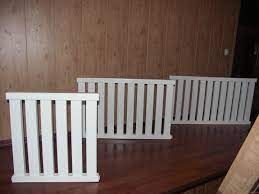
The main characteristics of vacuum heating batteries can be briefly expressed in the following table.
| Consumption of the main coolant g/sec | Temperature of the main coolant, C0 | Battery heating level in % after 2 minutes | Battery heating level in % after 4 minutes | The ratio between thermal radiation and convection in % |
| 50 | 75 | 70 | 100 | 80/20 |
Pros
Vacuum devices have many advantages over their counterparts. Here are some of them:
- ease of maintenance;
- fast heating of radiators;
- low power consumption;
- no risk of air locks or water hammer;
- relatively low cost;
- service life – 20 years;
- The high safety of operation and storage of the vacuum heating system attracts owners of country houses and summer cottages.
Cons
The disadvantages of vacuum heaters include their low performance and effectiveness in large spaces. Installing them in such spaces is impractical. If the device fails, it cannot be repaired and must be disposed of.
Quartz - advantages and disadvantages
They can hardly be called radiators. They are most likely electric plate heaters. A panel measuring 300 x 500 mm is capable of heating a small room of 6-8 m2.2Quartz heaters are a popular option for heating small buildings and country houses. They have an unlimited service life.

The advantages include compactness and, if necessary, mobility. Safe operation and storage when unplugged. The use of a variety of design solutions for the heating panels' appearance allows you to decorate your room with a beautiful interior accent.
They lack most of the disadvantages associated with other types of heating devices. The disadvantages of quartz models include low power, slow response, and high cost. To heat even the smallest rooms in a private home, several quartz panels must be installed.
Aluminum
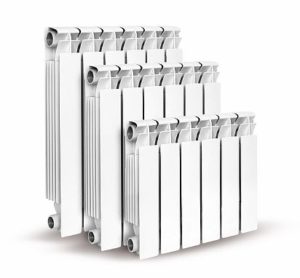
When asked which heating radiator is best for a private home, many experts recommend aluminum radiators. There are several reasons for this. Firstly, choosing this type of radiator is a budget-friendly option for installing an independent heating system.
How do you think, Which batteries are better, aluminum or bimetallic? The answer is here..
Secondly, products manufactured using the extrusion method (filling casting molds with molten aluminum under pressure) allow for the production of thin-walled devices with spacious flow channels.
Pros
The advantages include the following:
- the aluminum radiator warms up quickly;
- a reliable oxide film is formed on the surface of the device, which resists the occurrence of corrosion processes;
- Light weight makes radiators easy to install.
Cons
Despite all the attractive aspects of this type of product, it should be noted that:
- aluminum radiators are quite expensive;
- The difficulty of connecting to hot water pipes is associated with the installation of special transition couplings that prevent contact corrosion of steel and aluminum;
- Aluminum ducts often become clogged due to contaminated coolant. Experts recommend using coarse and fine water filters in heating systems for private homes.
- It is economically beneficial to install them in a private home only in small quantities.
Bimetallic
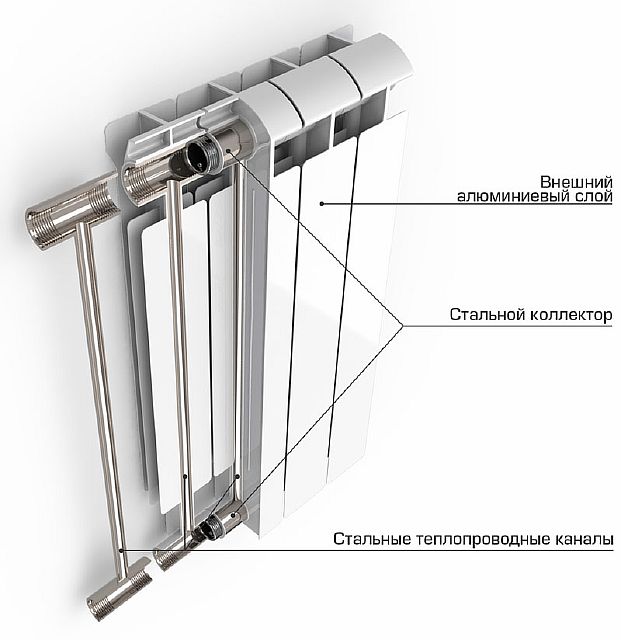
By its name bimetallic radiators Owing to the combination of two types of metal in a single structure, steel pipes containing the coolant are enclosed in a multi-lobed frame made of aluminum plates.
Pros
- The products combine two main qualities: high heat transfer of aluminum plates and corrosion resistance of steel pipes;
- the devices are capable of withstanding the pressure of the coolant inside the pipes at 25–35 atm.;
- Almost all manufacturers of aluminum batteries claim a service life of 40 years for their products.
Cons
The disadvantages include the high cost of aluminum radiators. Since local heating networks rarely experience high pressure or water hammer, installing expensive, high-strength radiators is not cost-effective.
Cast iron
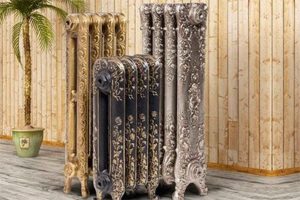
The first cast-iron radiators were installed in private homes back in the days of the Russian Empire. Modern models resemble their "ancestors" only in their outer contours. Exquisite design solutions have given birth to models that can complement even the most luxurious interiors.
Pros
The advantages of cast iron products include:
- service life – 50 years or more;
- high heat transfer;
- It is possible to assemble and install batteries from different numbers of sections;
- resistance to coolant contamination;
- low cost of MS-140 models.
Cons
Several significant disadvantages of cast iron batteries are as follows:
- if the water freezes, the radiator is destroyed;
- For the above reason, the products are not installed in country houses and cottages that the owners leave for a long time;
- Due to the high inertia of radiators (slow heating and cooling), it is not advisable to use cast iron radiators in autonomous heating systems (although there are exceptions).
Steel - advantages and disadvantages
Steel radiators, as mentioned above, come in sectional, panel, and tubular varieties. All offer high heat output and increased durability. All three types of radiators are equally popular with homeowners. The advantages and disadvantages of each type are discussed in the relevant chapters above.
Trusted manufacturers
The Russian heating market offers a wide range of heating radiators, whose manufacturers are renowned for their high-quality products.
The best radiators are presented by several well-known manufacturers.
Aluminum
Among the products of this type, two manufacturers worth noting are Global ISEO and Royal Thermo Revolution.
Global ISEO
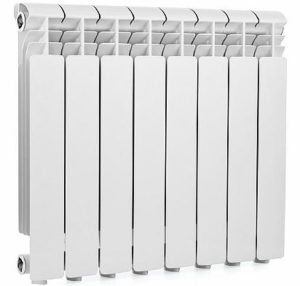
The Italian company Global ISEO has been manufacturing aluminum radiators for over fifty years. Their elegant designs fit harmoniously into window recesses and look stunning when open. Their model range includes units with varying numbers of sections. The average price for an 8-section radiator is 5,200 rubles, while a 10-section radiator costs 10,200 rubles.
Royal Thermo Revolution
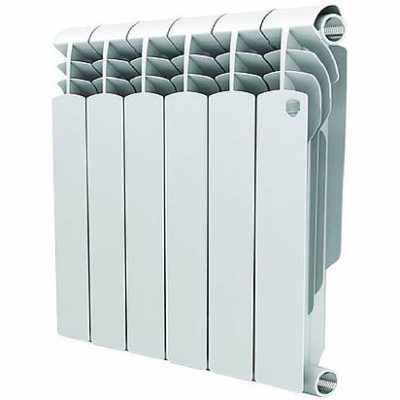
This brand has established itself as a manufacturer of reliable products at an affordable price. Impeccable design, increased power, resistance to water hammer, and a 10-year warranty all testify to the high quality of its aluminum radiators. The average price of a Royal Thermo Revolution radiator with 10 sections is 10,800 rubles.
Steel
The best steel heating batteries are presented by such manufacturers as Kermi and Buderus.
Kermi
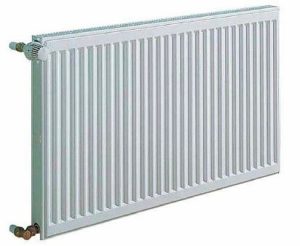
Kermi presents one of its best steel radiators, the Kermi FKO 22, with side connection. These German-made radiators are made from high-quality low-carbon steel, ensuring high performance.
All units are sold with a full set of brackets, plugs, and an air vent. The average price for a 500 x 800 mm panel is 6,300 rubles.
Buderus
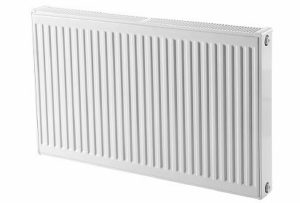
This German company is a leading manufacturer of high-quality steel panel heating radiators. One of the best models, the Buderus Logatrend VK-Profil 22, is manufactured using a roller welding process.
These devices feature an elegant appearance and are designed for 50 years of trouble-free service. The average price for this 500 x 600 mm model is approximately 5,000 rubles.
Cast iron: MS-140 and GURATEC Apollo 970/05
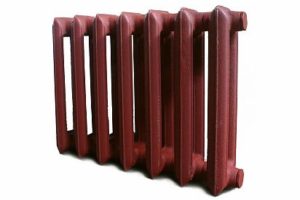
The Luhansk Foundry and Mechanical Plant offers a budget-friendly cast iron option. They are popular in public spaces and non-residential buildings. The average cost of one 5-section MS-140 radiator, 800 mm high, is 2,700 rubles.
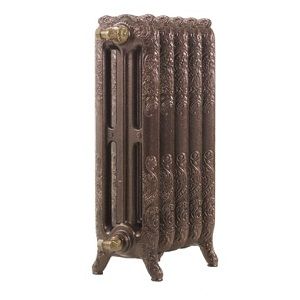
The German company Guratec is considered one of the best foreign manufacturers of cast iron radiators. Their products are crafted in a retro style. Their high prices stem from the fact that each unit is a unique work of art, featuring paintings and monograms in a wide range of colors. The GURATEC Apollo 970/05 cast iron radiator will cost around 90,000 rubles.
Bimetal: SIRA GLADIATOR 500x4 and ROYAL Thermo Revolution Bimetall 350
In the heating market, the Italian company Sira Group is known for its high-quality Gladiator bimetallic radiators. Their wide product line includes the Alfa Bimetal, Gladiator, RS Bimetal, and other models. The average price of a SIRA GLADIATOR 500x4 bimetallic radiator is approximately 3,600 rubles.
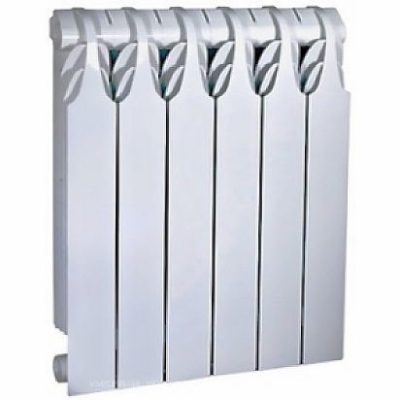
ROYAL Thermo Revolution Bimetall 350 bimetallic radiators are distinguished by their high quality. Their main advantage is their seven-layer anti-corrosion coating, making them suitable for use in high-humidity environments (gyms, swimming pools, etc.). The average cost of a 60 x 415 mm radiator is 8,300 rubles.
Vacuum: EnergyEco
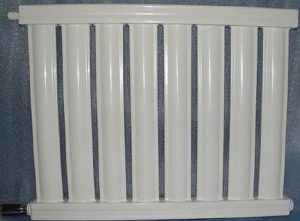
The Russian company EnergyEco is considered one of the best manufacturers of vacuum heating radiators. Their units are made from 1.5 mm steel. The heat output of one section is 170 kW. The average price of a 10-section lithium bromide flow-through radiator is 7,000 rubles.
Quartz: TeplEko
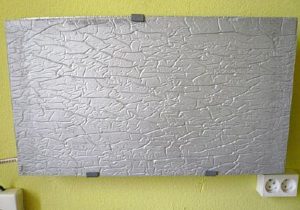
According to 2021 ratings, the Russian company TeplEko was named the best manufacturer. Quartz panels can be installed in rooms with high humidity. For a bathroom, a 400W slab will provide a comfortable temperature. A monolithic quartz slab measuring 600 x 350 x 25 mm costs an average of 2.6 rubles.
Which heating radiator is best for a private home?
Radiators are the final components of a stand-alone heating system for a cottage, a large mansion, or any private home. The choice of a specific class and type of radiator largely depends on the building material used.
If we take into account that houses can be made of stone, brick, reinforced concrete and wood, then the requirements for batteries will also differ.
Stone, brick, block, reinforced concrete
Houses built from masonry materials offer a high level of fire safety and moisture resistance. They are best equipped with radiators from a stand-alone hot-water heating system. Gas and electric boilers are more efficient than solid-liquid fuel-fired units.
In this case, it is better to choose panel, sectional steel and aluminum water radiators.
For boiler equipment operating on solid and liquid fuel, tubular, bimetallic and plate batteries are quite suitable for heating.
Wooden private houses
Hot-water heating is not installed in timber-frame houses and log cabins. This is because if a pipe bursts, the wood would quickly become saturated with moisture and eventually become completely unusable.
Although there are exceptions, despite the significant risk, electric radiators are used to heat wooden houses.
These include electric vacuum batteries and quartz panels.
Installation rules
The installation of heating batteries largely depends on several factors below.
- Area of premises.
- Availability of a coolant source.
- Number of floors.
- Number of window openings.
- Connection types.
Area of premises
For each type of heating radiator, the manufacturer specifies the calculated heating area per unit of its product in the technical specifications. For example, one section of the MS-140 radiator can heat 4.5 square meters (44.5 sq. ft.) for a room of 18 sq. m.2 Radiators with a total of 18 sections will need to be installed. Panel, tubular, and plate heaters are also calculated.
Availability of a coolant source
Water can be used as a heat transfer fluid in a water heating boiler, whether from a pond, a well, or a centralized water supply. If the heat transfer fluid is not completely clean, it's better to choose cast iron or steel sectional units. Almost all types of radiators are installed with filters in autonomous heating systems.
Number of floors
Multiple floors affect the length of heating mains, which in turn leads to logistical heat losses, which are offset by increased boiler pump capacity. This increases the risk of high pressure in the automated heating system. If the heating radiators for a private home with a gas boiler on two or three floors will be frequently subjected to maximum pressures of 16 atm or more, it is better to install steel units.
Number of window openings
According to heating regulations, radiators must be installed under each window. If, according to calculations, a 1.4 x 0.5 m panel radiator is sufficient to heat a given room, and the room has two windows, then 0.7 x 0.5 m panels are installed under each.
The same applies to sectional devices. In this case, the number of sections must be selected for each radiator.
Connection types
Radiators are manufactured with side and bottom connections to the coolant pipes. Side connections are used when connecting radiators in series on each floor.
If hot water pipes are laid along the floor or under it in a one-story house, then the radiators are installed with lower outlets.
Installation
Typically, sectional, tubular, panel, and plate radiators are hung on wall brackets. Floor-standing heaters are simply connected to the pipes.
Electrical panels in private homes are not only attached to vertical fences with brackets, but can also be installed on the ceiling as additional heating devices.

I have sectional radiators throughout the house, and they're quite satisfactory. I considered installing tubular radiators, but they're more expensive and they're also more sensitive to heat transfer fluid quality. I use a Thermagent, and I've had no problems for several years now. The heat output is good, and it doesn't harm the radiators because it's made with propylene glycol. I recommend aluminum radiators; they're more affordable, especially if you're budget-conscious.
I appreciated the thorough and comprehensive approach to covering the topic—absolutely nothing was forgotten, every detail and characteristic of heating radiators was described, and not the outdated pre-revolutionary ideas about heating, but modern ones used today and around the world. I'm sure it's impossible to write more thoroughly.
In my opinion, the optimal combination will depend on the design features of the house itself. For us, a sectional option is the most acceptable; cast iron radiators are also good in terms of durability, but they are difficult to install. The new products and variety of choices in this article make it possible to make a rational decision. We also considered the gas connection lines, or more precisely, the gas boiler. We connected the system with this aspect in mind.
Thanks for the article; everything is clearly shown and explained. I liked that the models were immediately accompanied by comments, pros, and cons. So, I read about the radiator, looked at the pros and cons, and everything became clear. This is my personal opinion. Again, this is my personal opinion and it's specific to my home. I installed the simplest cast-iron ones. They save money, but they take a long time to cool down. They're the most suitable option in our area.
Well, if the water is fine, you can install aluminum. The choice is entirely up to the manufacturer. I installed a Global Vox 500 a couple of years ago and couldn't be happier. The quality is fantastic, and thanks to the aluminum, they heat up quickly and give off decent heat. And they look nice; the paint hasn't yellowed in a couple of years.