Regardless of the materials used, a ventilated façade for a private home consists of five structural components. A metal profile frame is attached to the wall. Thermal insulation is laid between the guide elements. A membrane is attached to remove vapor from the room and provide wind protection against the insulation.
The outer layer is made of panels, porcelain stoneware, composite materials, or other finishing materials. A ventilation gap is maintained between the decorative cladding and the thermal insulation layer, protecting the wall from excess moisture and temperature fluctuations.
To independently arrange a ventilated facade for a private house, draw up project with a diagram The arrangement of the frame elements. Select materials based on the building's characteristics and local climate, and attach them to the wall according to installation procedures. We'll discuss the design, purpose, types, and operation of ventilated façades in more detail in this article.
- Purpose and design of curtain wall
- Ventilated frameless facade
- How does ventilation work?
- Recommended types of thermal insulation
- A variety of facing materials
- Installation rules for a timber frame façade system
- Installation rules for ventilated facade systems under brick
- Operating and maintenance instructions
- Answers to frequently asked questions
- Video materials
Purpose and design of curtain wall
A ventilated curtain wall in a private house performs two important functions: it reduces heat loss of a building, protects the wall from destruction by negative natural factors. The third purpose of the structure relates to aestheticsThe cladding gives the building a finished look and stylistic image.
Regardless of the materials used for installation, the structure of the facade system consists of 5 units.
- FrameThe structure is assembled from aluminum or galvanized profiles and secured to the wall with metal hangers. The exterior cladding is supported by the sheathing of the load-bearing frame. The profiles, aligned level, help perfectly align the walls and give the building the correct geometry.
The advantage of a galvanized frame is its affordability. Disadvantages include a tendency to corrode in areas with damaged zinc coating. The advantage of aluminum profiles is their durability and corrosion resistance. The disadvantages include their high cost.
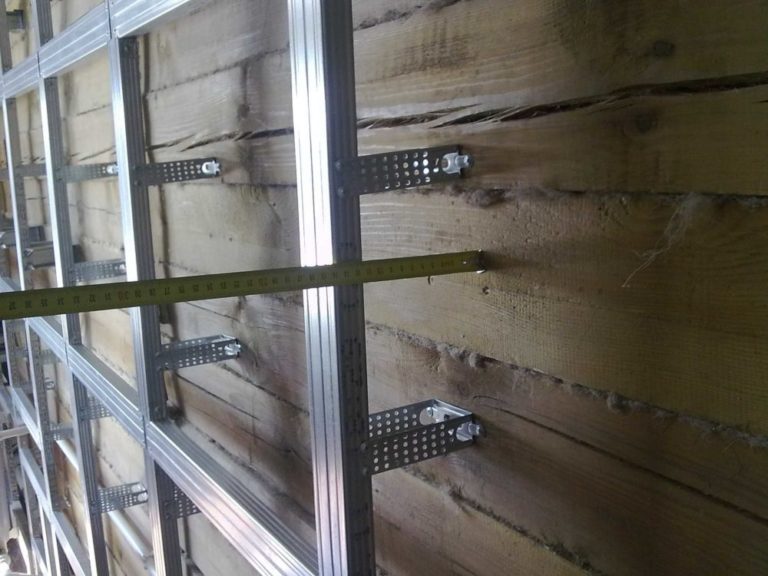
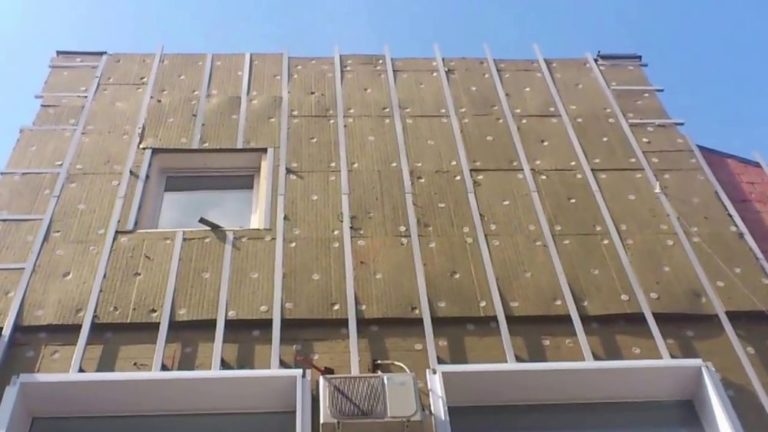
- Thermal insulationInsulation reduces heat loss in a private home and acts as a soundproofing material. Thermal insulation protects walls from damage caused by temperature fluctuations and moisture vapor. Basalt wool slabs or extruded polystyrene foam are commonly used for insulating private residential buildings.
The choice of thermal insulation type is determined by the characteristics of the house's wall material. Each panel is secured to the façade with foam adhesive and five wide-headed plastic umbrella anchors.
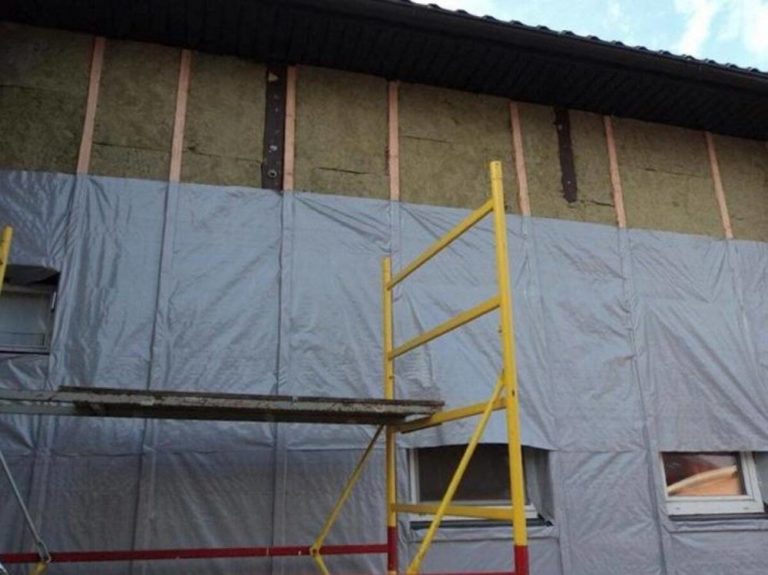
- MembraneThe vapor-permeable membrane serves as a wind barrier for the insulation. On the exterior side, it prevents moisture from passing through the ventilation channel to the thermal insulation. The membrane is one-way permeable. On the side of the building walls with insulation, the membrane helps wick away moisture vapor.
The vapor-permeable membrane is suitable for loose thermal insulation with a density of less than 90 kg/m3.3, for example, basalt wool. Extruded polystyrene foam has zero vapor permeability. Covering the Penoplex boards with a membrane is useless and not cost-effective.
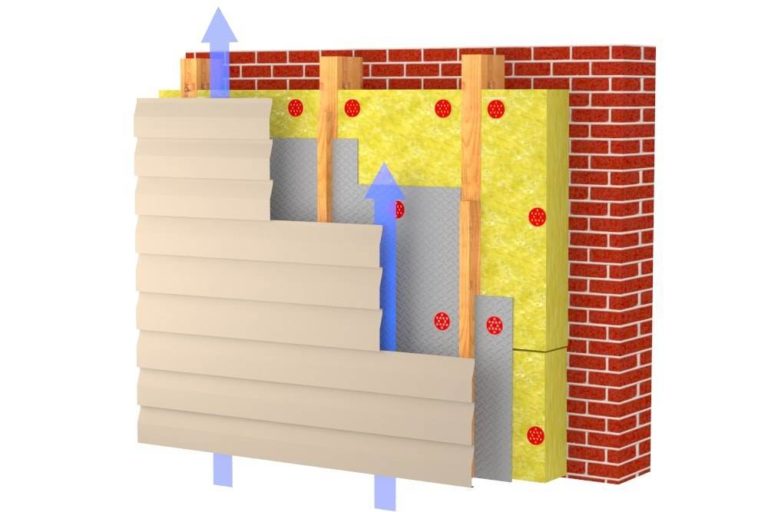
- Ventilation gapA gap is left between the insulating layer and the exterior cladding. The average gap size is 2-5 cm. Engineers calculate the exact parameters based on the building's heat transfer coefficient, temperature fluctuations, and air flow rates. Moisture vapor is released into the atmosphere through the ventilation gap.
- External claddingOwners of private homes have a wide range of ventilated façade options, including materials and decorative finishes. Exterior finishes include panels made of plastic, metal, stone, and other materials. Cladding can be smooth, textured, or imitating wood, stone, or tile.
Manufacturers strive to offer a diverse color range. Ventilated façade panels of a particular manufacturer and type selected by a homeowner can be mounted using proprietary hardware. For example, porcelain tiles cannot be installed using vinyl siding fasteners. Hardware must be purchased together with the paneling from the same manufacturer.
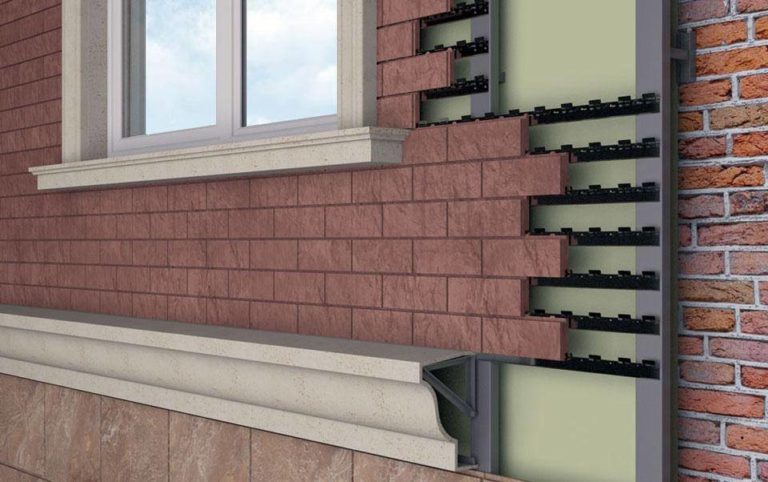
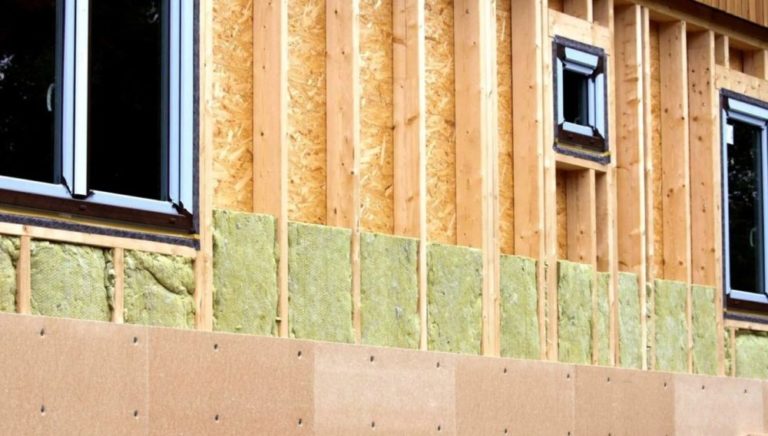
The materials used for suspended substructures must comply with GOST R 58154-2018. In addition to metal profiles, the load-bearing frame is assembled from timber. This technology is suitable for insulating a private wooden house with a ventilated façade.
The technology for installing a ventilated façade is determined by the structural features of the architectural structure. Private homes with high foundations are clad up to the basement level.
This option is typical for both old and new buildings, where the building envelope is designed to be elevated above ground level. The joints between the wall cladding and the base are separated by drip caps, with a gap left underneath to allow air to pass through.
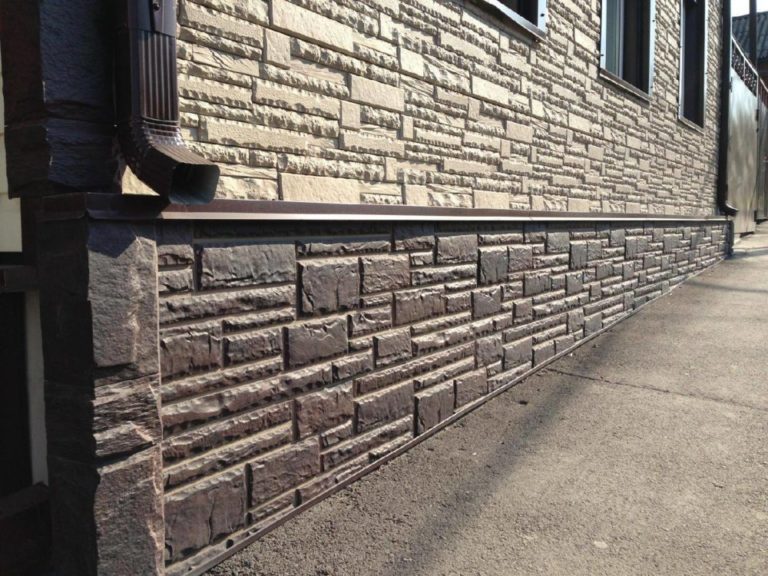
Modern cottages are often designed on a low foundation without a protruding plinth. The ventilated façade cladding extends to ground level, but not flush. A 3-4 cm gap is left between the bottom of the cladding and the foundation apron to allow for air circulation.
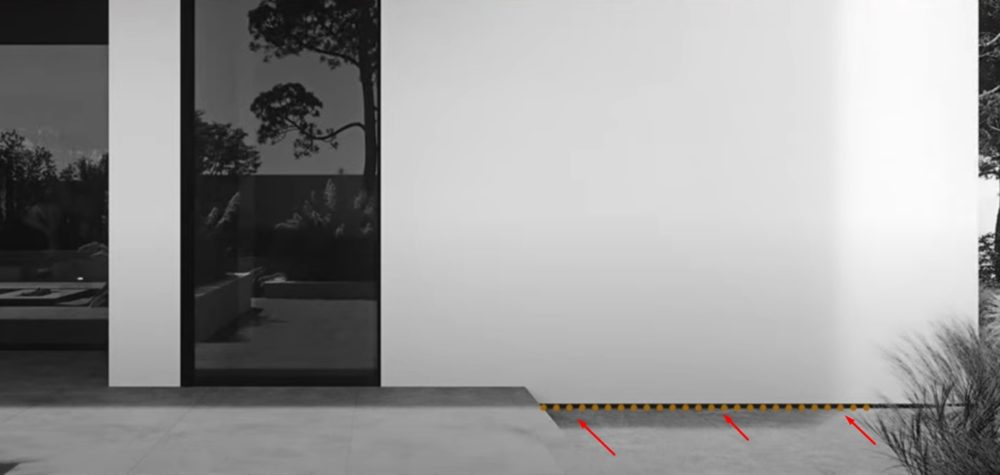
Moisture can penetrate along with air through the gap left at the bottom of the cladding.
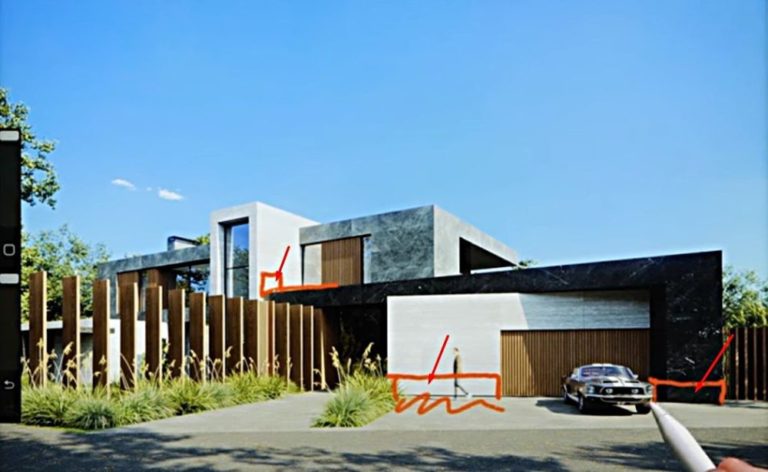
The situation is typical for a curtain wall on the second floor with a roof adjoining the first level of the building and for architectural structures with finishing that descends to the level of the base or ground.
Water seeps in from rain splashes and the melting of thick snowdrifts. To protect the lower parts of the walls from moisture, sheet waterproofing is installed with an upward fold. This work is performed before installing the curtain wall cladding to conceal the waterproofing material.
Ventilated frameless facade
In addition to the curtain-frame structure, there is another type of ventilated façade—frameless. This technology is expensive and difficult to implement. A frameless façade consists of an outer shell around the perimeter of the house's walls, constructed of brick or block.
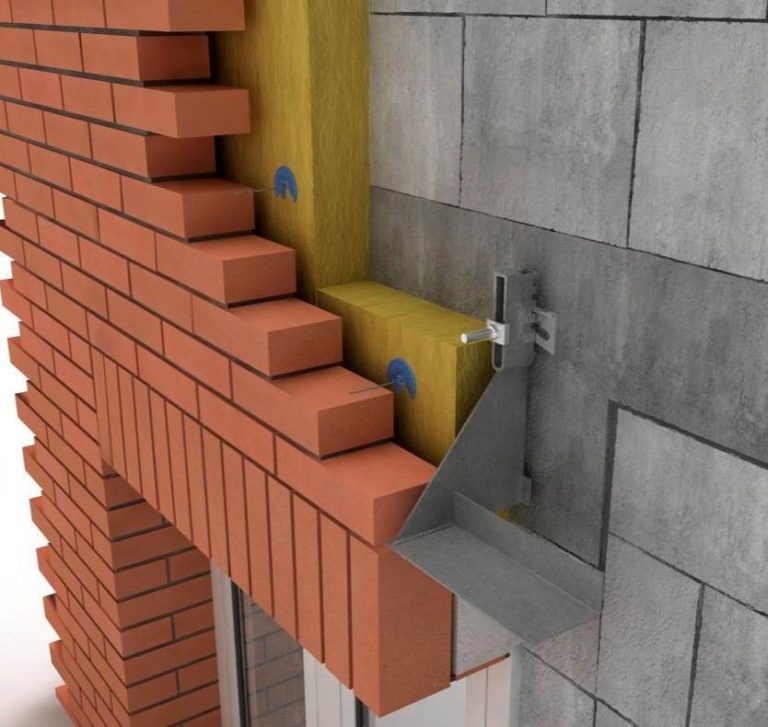
When using decorative masonry materials, no additional finishing is required. Frameless ventilated façades made of aerated concrete, regular brick, or other blocks with unsightly and moisture-unprotected surfaces are additionally finished with plaster or other finishing materials.
How does ventilation work?
Ventilation in both framed and frameless façades operates on the same principle: natural air circulation. Cold air enters from the street beneath the building's cladding through technical gaps in the lower part.
The masses are warmed by some of the heat transmitted by the thermal insulation. As they move upward through the ventilation layer, the warm air captures moisture vapor and exits through the technical gaps in the cladding at the top of the walls.
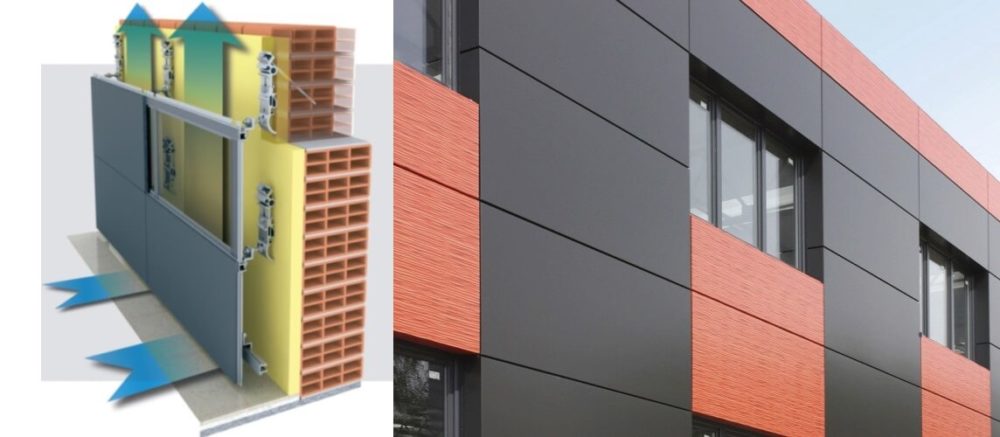
To ensure proper ventilation, the gap between the external screen and the frame of a private building is designed as an open space without horizontal partitions. Each partition creates resistance and traps moisture vapor.
There is a danger of deterioration in air circulation in areas where the external cladding adjoins windows, balconies, and other structures protruding beyond the plane of the building frame.
Recommended types of thermal insulation
The efficiency of a ventilated façade depends on the type of thermal insulation used to insulate the building envelope. In private housing, foam plastic or extruded polystyrene foam boards are commonly used.
Material cheaper and easier to install compared to basalt woolA disadvantage is its zero vapor permeability. Expanded polystyrene does not allow vapor to pass through from the room. Moisture accumulates between the boards and the wall surface, leading to the following problems:
- Thermal protection is reduced.
- The fungus is multiplying.
- The insulation and wall material of the house are destroyed.
Expanded polystyrene is suitable for insulating private homes made of monolithic concrete, blocks, and other low-porosity materials with low vapor permeability. It makes no sense to install a vapor barrier membrane over wall slabs. Expanded polystyrene prevents moisture vapor from passing through in both directions—into the house and out of it.
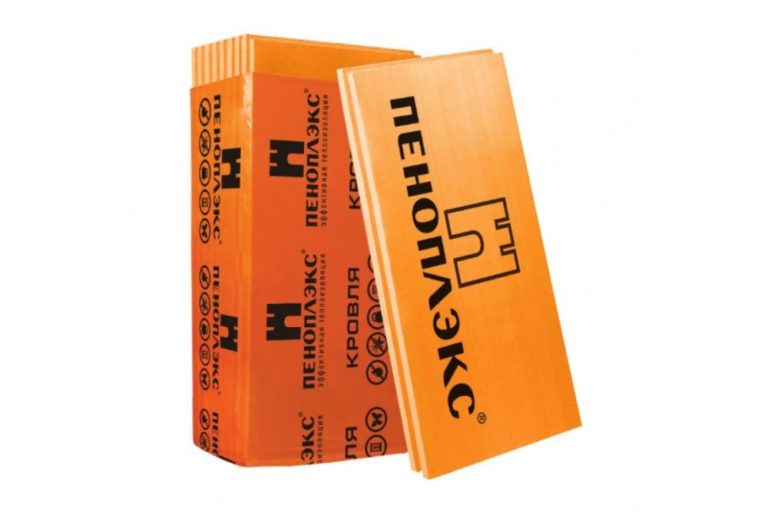 Wood and all types of foam concrete have high vapor permeability. Insulation should be selected with similar characteristics. If you cover a wall with expanded polystyrene, the wood will quickly rot. Porous foam concrete will remain constantly damp due to the dew point shifting within the wall. In winter, frozen moisture will begin to destroy the wall blocks, causing the insulation to peel off.
A private house made of wood and foam concrete is insulated with basalt wool slabs covered with a vapor barrier membrane. The hydrophobic material allows moisture vapor to pass through the interior, preventing the dew point from shifting inward. Water does not accumulate in the basalt slabs. Moisture from the insulation, in its vapor state, penetrates the membrane.

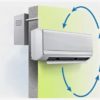
Condensation accumulated on the walls of the insulation layer is vented by air currents circulating through the ventilation gap. Being one-way permeable, the membrane prevents moisture from re-entering the insulation.
The advantage of using basalt wool over other types of fiberglass insulation is its low heat loss and resistance to damage. The slabs are composed of randomly interwoven fibers, creating a reliable barrier to cold air in winter.
When severe frost sets in, moisture inside the insulation doesn't freeze and is vented as usual into the ventilation gap. The interwoven fibers retain heat, reducing heat loss in a private home.
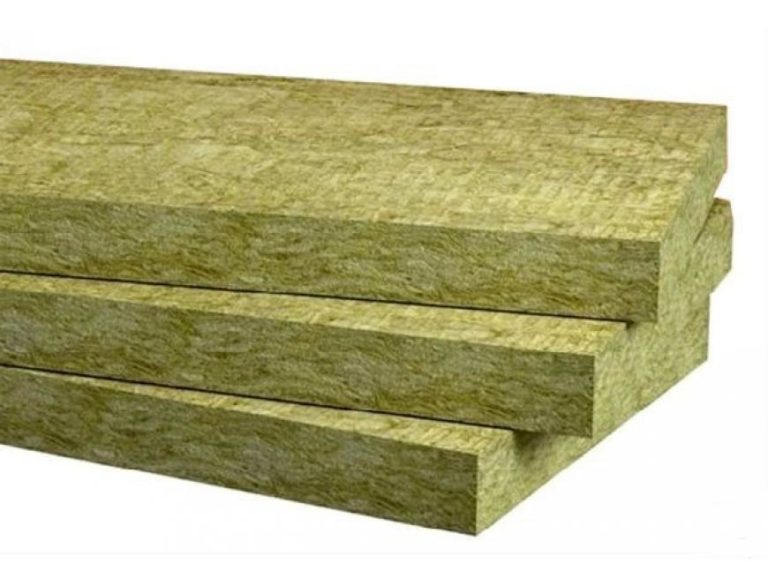 Other types of fiberglass insulation have parallel fibers. While façade ventilation is beneficial in summer, problems arise with the onset of winter.
The accumulated moisture freezes due to low temperatures penetrating the parallel fibers. This causes the dew point to shift, and the insulation and wall material to deteriorate.
The thickness of thermal insulation is calculated based on the thermal conductivity of the house's wall material and the regional climate. An average value of 100 mm is generally used as a guideline.
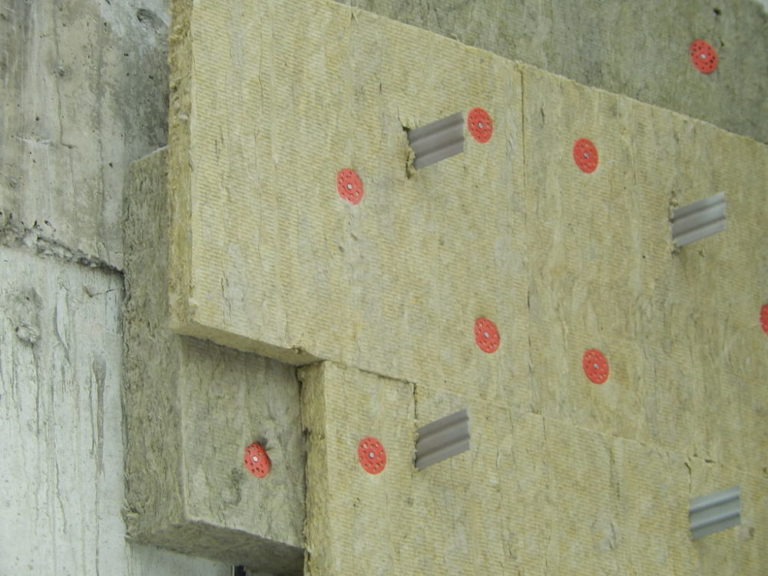
When a house is built with thick wooden walls in the southern region, 50-80 mm of insulation is sufficient. In the north, private stone houses are usually insulated with two layers, totaling over 100 mm. The first layer is made of 50 mm thick slabs.
For the second layer, use 80 mm thick slabs. During installation, avoid overlapping the joints between the first and second layers of insulation to prevent cold bridges.
A variety of facing materials
With the wide variety of materials available on the construction market, the choice of ventilated facades depends on the operational needs and preferences of the homeowner. Let's look at some popular options:
- Composite panels are made of multilayer aluminum with an internal high-density polyethylene liner. Decorative paint is applied using a hot-baking process in 2-3 layers. The advantage is their light weight and service life of over 20 years. The disadvantage is their high cost.
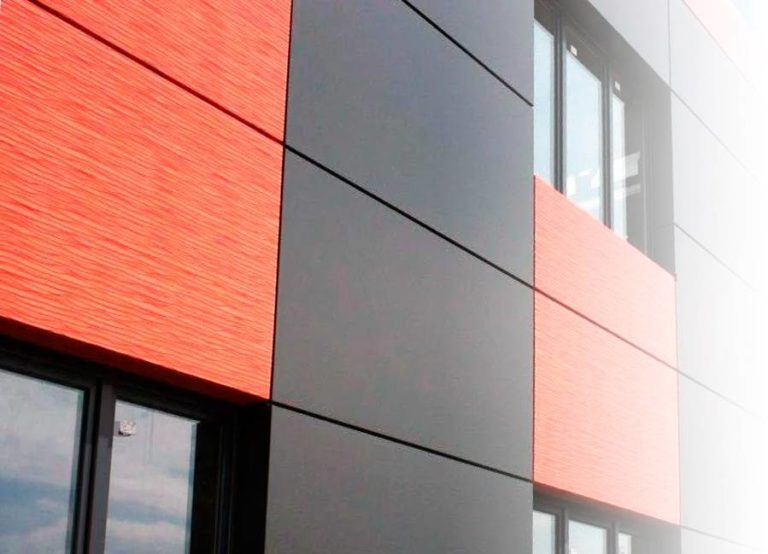
- Linear panels are made from galvanized rolled metal with a protective polymer coating and decorative color. Their advantage is their affordability. Their disadvantages include a short service life of 15 years and the risk of corrosion in damaged areas.
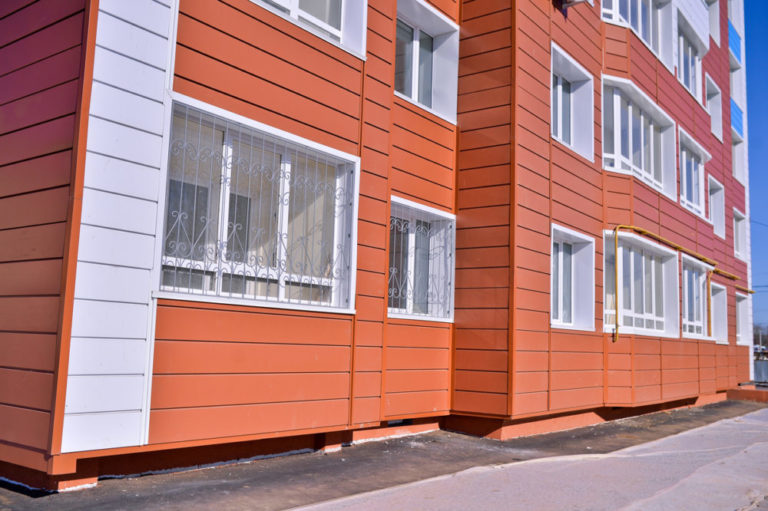
- Porcelain tiles are manufactured artificially by pressing and firing a mixture of white clay, sand, pegmatite, and feldspar. The slabs mimic the texture of natural stone, with polished and matte surfaces. The advantage is that a durable ventilated porcelain tile facade will last up to 100 years. The disadvantage is complex and expensive installation.
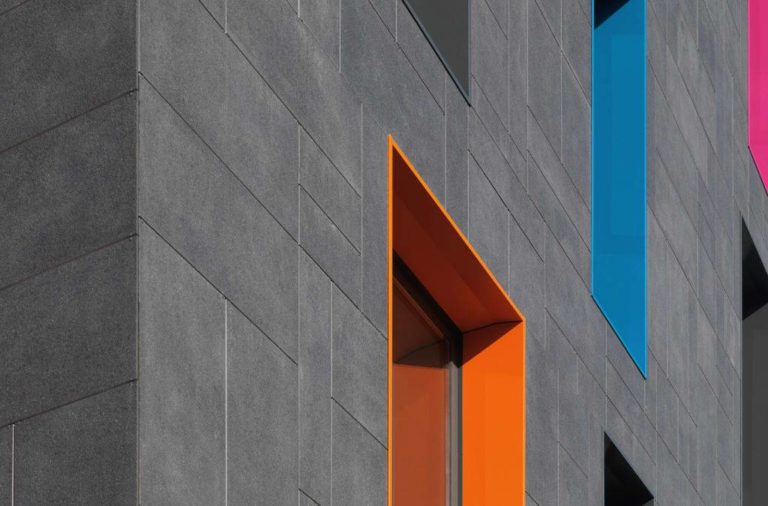
- HPL panels are made of plastic, paper fiber, and adhesives. They are attached to the substructure using adhesive or mechanical means, leaving 4 mm expansion gaps to allow for thermal expansion. The advantage is that they are inexpensive and have a 20-year service life. The disadvantage is their poor resistance to deformation and mechanical damage.
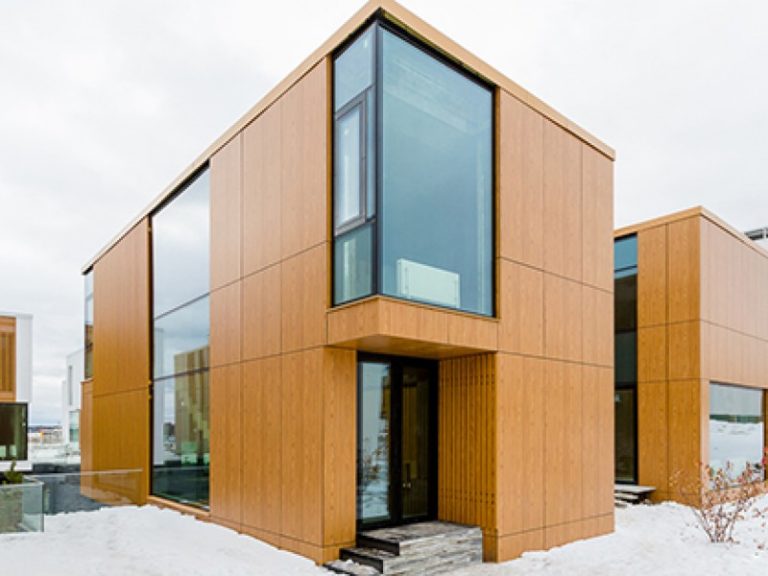
- Fiber cement boards are manufactured by pressing fiber filler with concrete to a thickness of 6-12 mm. Color is achieved by painting the face or the entire product. The advantage is a durable finish at an affordable price. The disadvantage is that their massive weight complicates installation and increases stress on the foundation. The service life is 15 years.
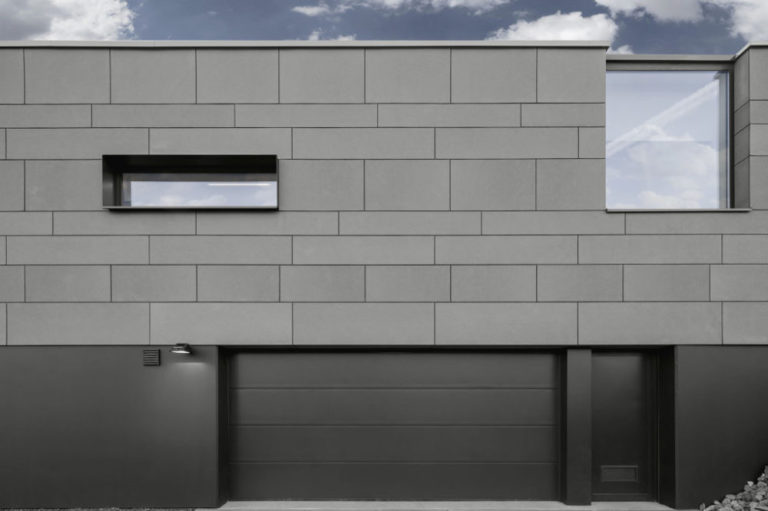
- Terracotta panels are made by extruding and firing clay. Their appearance resembles that of 18-40 mm thick ceramic tiles. Their advantages include a 100-year service life and concealed installation using a profile built into the panels, eliminating visible fasteners. Their disadvantage is their high cost.
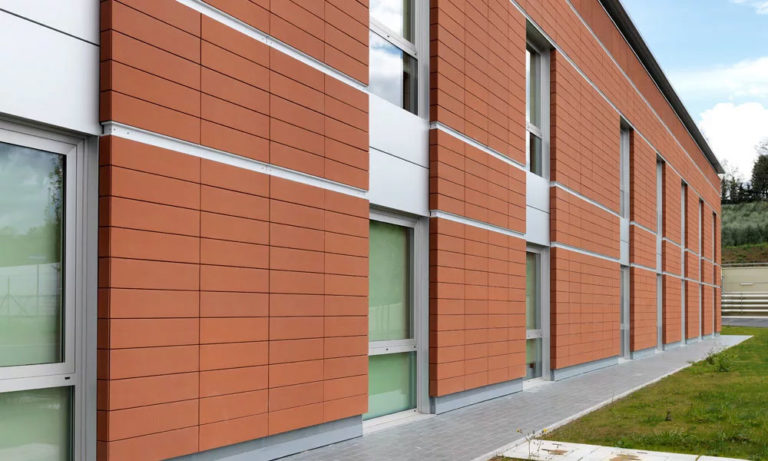
- Facade cassettes are made from 2 mm thick aluminum sheet. The decorative coating is a polymer colored layer, with a shade selected from the RAL palette. The advantage is that the lightweight, corrosion-resistant cassettes will last for 50 years. The disadvantage is the high cost, and installation requires professional skills.
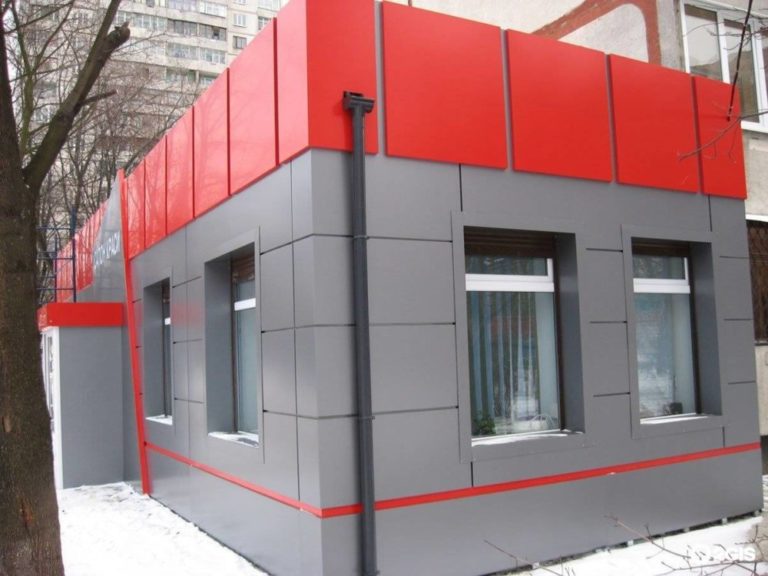
- Metal cassettes are considered similar to aluminum cassettes, but their components are made from galvanized rolled metal with a colored polymer coating. Their advantage is their low cost. Their disadvantage is the need for professional installation skills and a short service life of approximately 15 years.
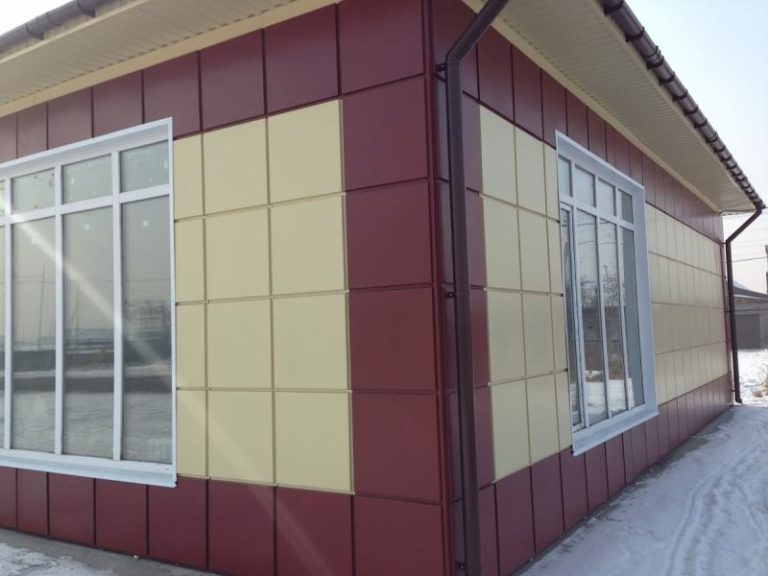
- Natural stone is produced by cutting slabs up to 2500 x 2500 mm in size. The advantage is a durable, beautiful finish with a 100-year service life. The disadvantages are its weight, difficulty installing using cuts and clamps, and high cost.
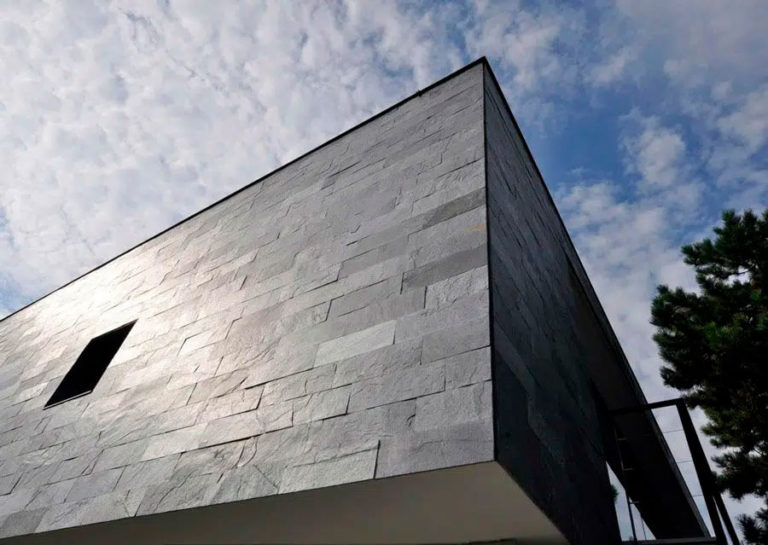
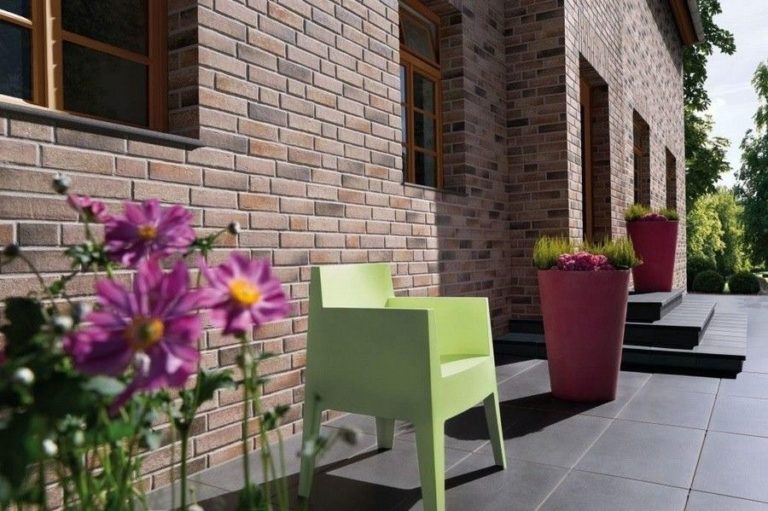
- Clinker tiles are made of ceramic with a height limit of 250 mm and a width limit of 500 mm. The pattern creates the appearance of a ventilated brick façade with beautiful joints. The advantage is a premium finish with a 100-year service life. The disadvantage is the high cost and difficulty of installation.
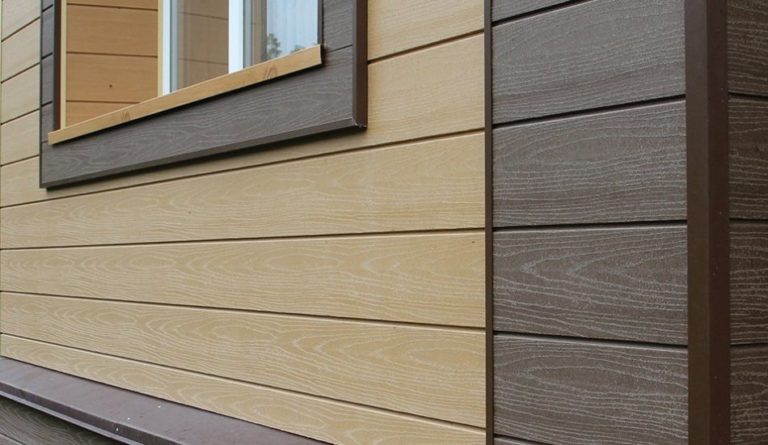
- When cladding a private wooden house, the load-bearing frame is most often assembled from timber. The finishing material used is façade boards or artificial panels imitating timber or logs.
Installation rules for a timber frame façade system
Wood is considered an excellent natural insulator. Thick walls don't necessarily need to be insulated when the goal is to give a private residential building a new look and smooth geometry. A warm, ventilated façade for a timber house is necessary when heat loss is high. Let's consider the main installation details:
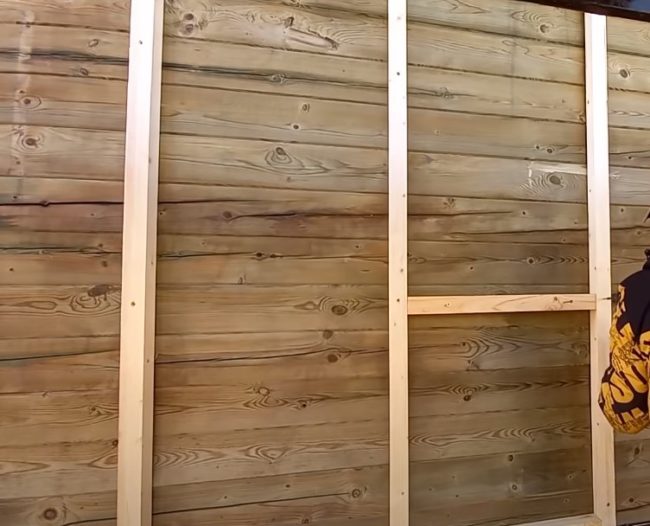
- Markings are applied to the walls for the placement of the vertical beams of the load-bearing frame. The distance between the beams is maintained in accordance with the width of the basalt wool slabs. Wooden beams are attached according to the markings.
- Place basalt wool slabs into the resulting spaces between the vertical beams. If a gap forms, fill it with foam. The insulation slabs should fit snugly against the beams.
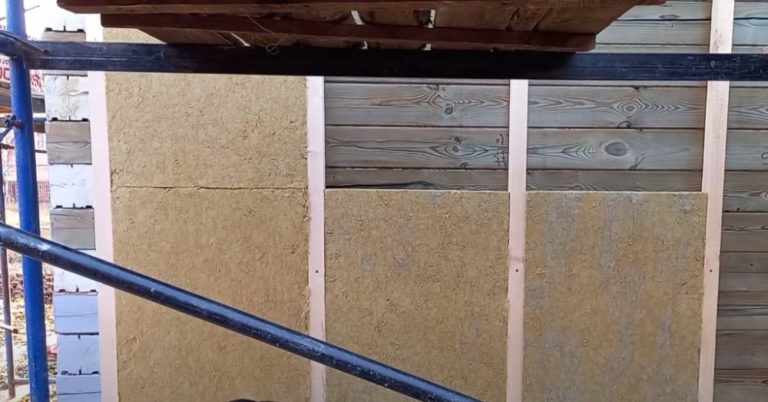
- Basalt wool is secured to a wooden wall with a wide umbrella washer and a self-tapping screw. Foam adhesive is sometimes used for additional security.
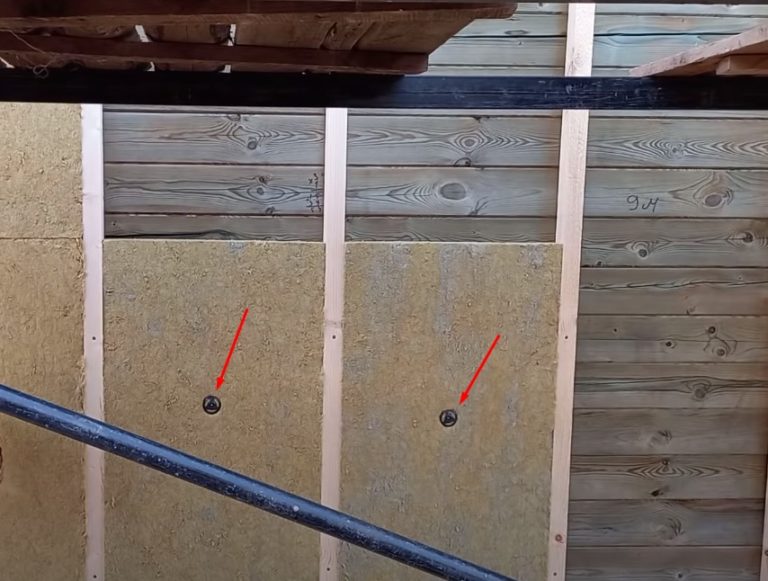
- After laying the first layer of insulation, horizontal beams of the load-bearing frame are attached to the vertical guides. A second layer of basalt slabs is placed inside the newly formed cells and secured to the wall with umbrella washers.
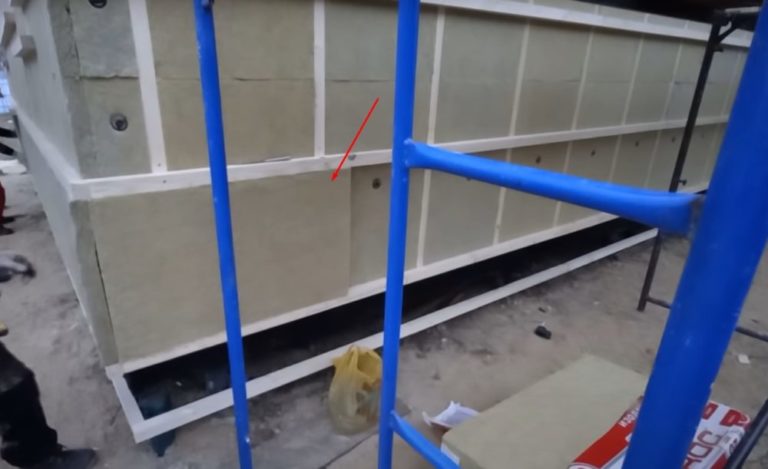
- The insulated walls are covered with a vapor barrier. The membrane is stapled to the wooden beams of the structural frame.
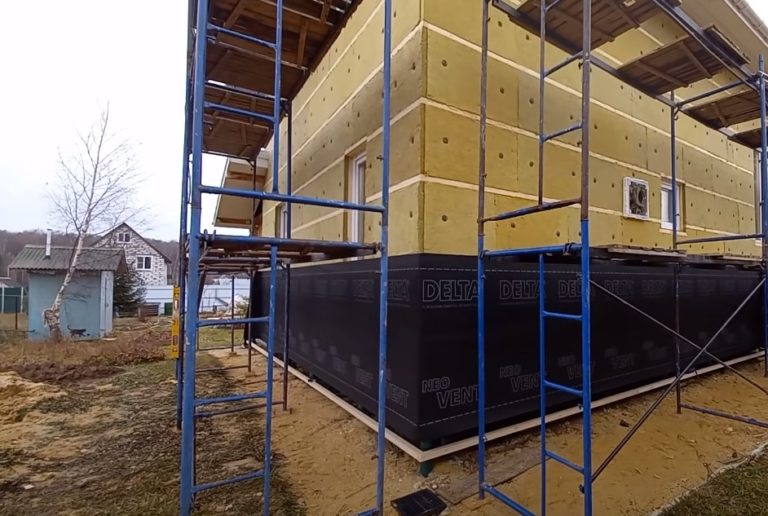
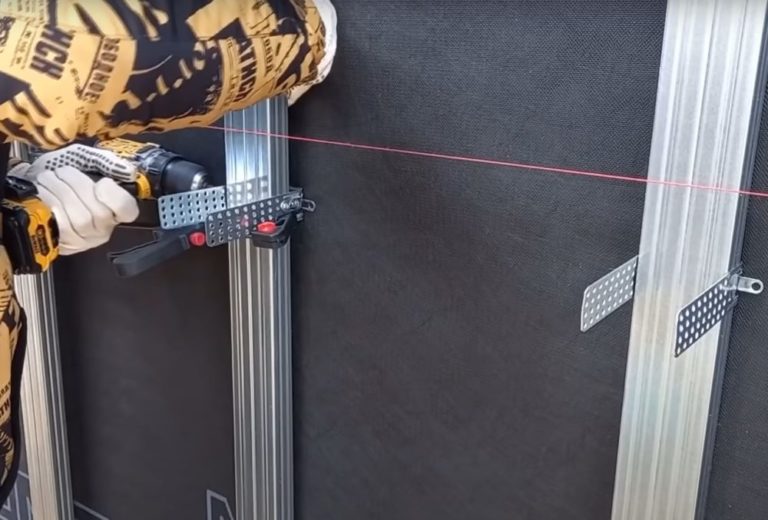
- Hangers are secured to the horizontal frame beams using screws on top of the membrane. Galvanized profiles will be vertically attached to the perforated strips to secure the cladding and create a ventilation gap.
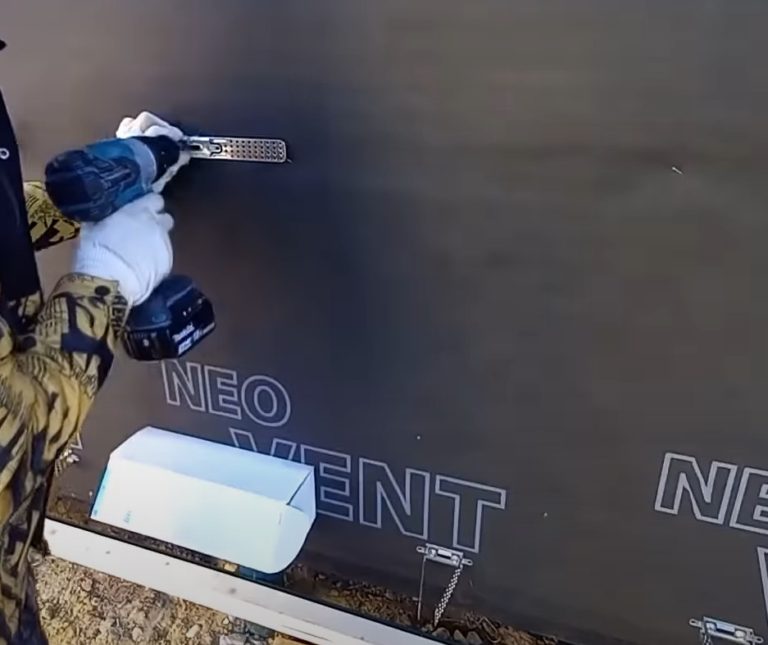
- The hangers are installed at intervals consistent with the fastening technology used for the panels selected for cladding. The rows are adjusted for straightness using a taut cord. Metal profiles are secured vertically to the installed hangers using screws. To ensure the sheathing elements are aligned, cords are taut or a laser level is used.
- Starting from the bottom left corner of the house, cladding panels are attached to the frame sheathing. The thickness of the profile creates a ventilated gap between the back of the cladding and the membrane.
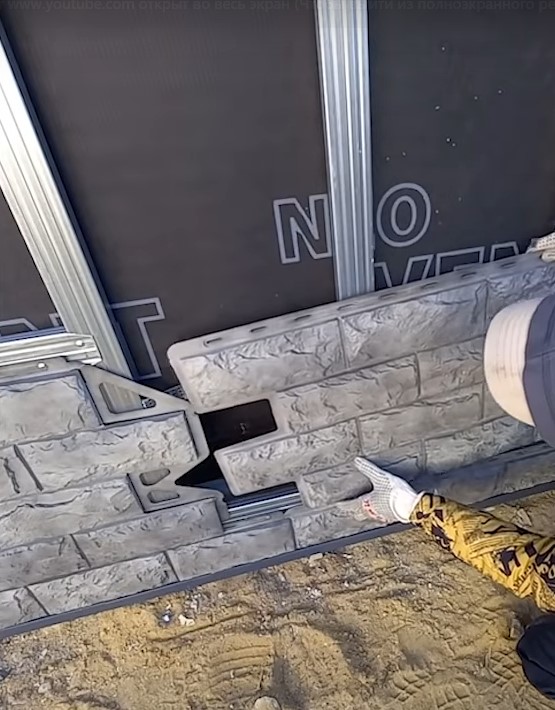
The installation technology for the cladding depends on the type of panels used. For a wooden house, lightweight materials are typically used, secured to the profile with screws through the openings.
Installation rules for ventilated facade systems under brick
To save on additional finishing, a frameless ventilated façade is more conveniently constructed from decorative brick. This option is ideal for a private residential building made of aerated concrete blocks.
The technology is implemented in private housing construction in two ways:
- Simultaneously with the construction of a new house on a common foundation.
- Along the perimeter of the walls of the building in use, an additional foundation made of concrete strip or metal subsystem is installed.
A ventilation gap of 40 mm is left between the outer shell and the walls of the house frame, which are insulated with non-combustible thermal insulation.
During the bricklaying stage, metal anchors with a protrusion of more than 100 mm are placed between the aerated concrete blocks to provide a flexible connection to the outer shell. The insulation and membrane are secured. During bricklaying, the other end of the anchors is overlapped in rows. For every 1 m2 4-6 anchors are installed for a flexible connection between two walls. At the corners of the building, in the area of door and window openings, 3-4 anchor fasteners are installed per linear meter.
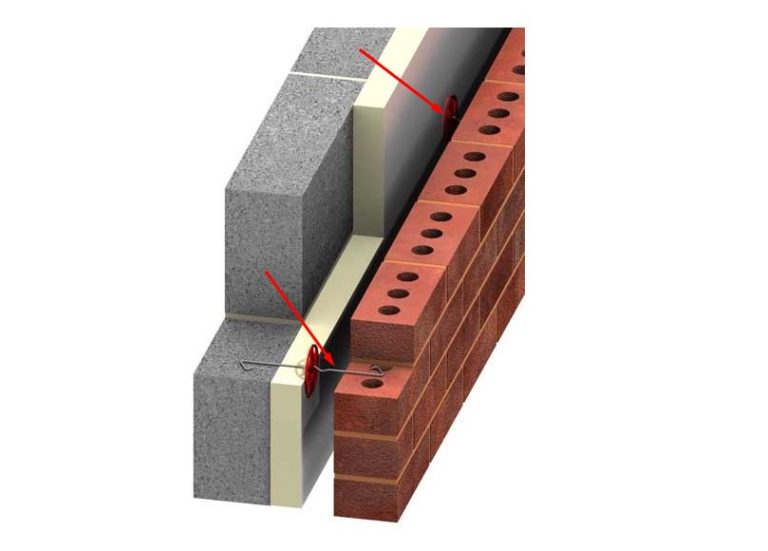
When cladding is installed around the perimeter of an existing building, anchors are first secured to the load-bearing walls, then the insulation and vapor barrier membrane are installed. The other end of the anchors is embedded into the brickwork as the rows are built.
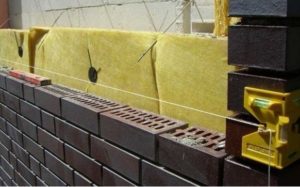
The flexible bond prevents cracking of the joints during uneven settlement of parallel walls made of aerated concrete blocks and bricks. The insulation and membrane are pressed against the house frame by an expansion washer mounted on the rod of each anchor.
In addition to anchors, perforated strips and basalt rods with a screw anchor at the end are laid to provide a flexible connection between the rows of masonry.
Operating and maintenance instructions
Answers to frequently asked questions
The structure consists of a power frame, thermal insulation, wind protection and vapor barrier membrane, ventilated gap, and external cladding.
A façade using galvanized profiles for the structural frame will be less expensive. For budget-friendly cladding, consider panels made of galvanized rolled metal or plastic.
The work will require a profile and hangers for the load-bearing frame, thermal insulation, a windproof and vapor barrier membrane, and facade panels with fasteners.
Basalt wool and extruded polystyrene foam are used to insulate the facade system.
Unlike a conventional wet façade, a ventilated façade has a gap under the external cladding for air circulation.
When a private home does not require insulation, a cold ventilated façade without thermal insulation is hung to level and decorate the walls.
Video materials