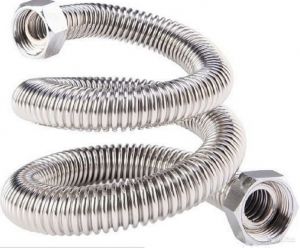
 Today, corrugated steel pipes are still used for installing pipelines in various directions. To ensure a high-quality connection, stainless steel corrugated pipe fittings are required.
They are used as connecting elements during the installation of hot and cold water supply, heating pipelines, in water fire extinguishing structures, as well as in process pipelines.
Today, it is common to see engineering systems installed using stainless steel corrugated pipes, which were invented by Japanese specialists back in the 1980s.
To properly form a joint for such a pipeline, it is better to use brass fittings for corrugated stainless steel pipes, which can provide a high-quality connection for any climate zone at a relatively low price (compared to their counterparts).
General information about corrugated steel products
Today, high demands are placed not only on the quality of building construction, but also on the installation of corresponding communications.
Corrugated stainless steel pipe has proven itself to be a good choice and is in demand among customers in the construction market.
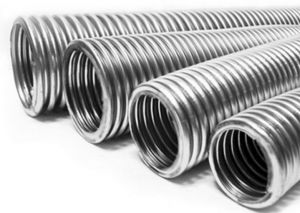 Such products are often used not only for installing new systems, but also for replacing worn-out sections of pipes in old buildings during repair and restoration work.
They are frequently used due to their high quality and long service life. Other advantages include:
- resistance to water hammer;
- easy flexibility;
- resistance to low temperatures (freezing);
- It is not subject to corrosion and does not retain any deposits of dirt or limescale on its walls;
- environmentally friendly and does not require cleaning procedures during the installation of pipelines for food liquids;
- does not require constant checking for possible breaks and leaks;
- the couplings can withstand internal system pressure of up to 60 atmospheres, and the pipe up to 200 atmospheres;
- installation does not require the use of complex metalworking tools.
Characteristics of fittings
Fittings for corrugated stainless steel pipe are designed to connect pipeline components, thereby changing flow patterns and forming system branches. They are classified as threaded or welded.
Video 1.
The former are distinguished by threads applied to their internal or external surfaces, which are used for securing the joint.
Threaded fittings differ from welded fittings in that they can be reversed, but they are not recommended for use in systems with high internal liquid or steam pressure.
For this case, it is better to use welded stainless steel fittings, which can withstand both high temperatures and pressure.
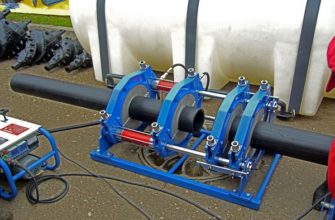
Welded fittings for corrugated pipes made of stainless steel ensure a tight and reliable connection between pipeline components. As mentioned above, this connection is made by welding.
Types of stainless steel connecting fittings
Stainless steel fittings are divided into the following manufacturing types:
- electric-welded, containing several parts;
- Seamless – produced in factories using a casting method and sold in one piece.
In addition, welded and threaded connecting elements containing stainless steel are divided according to the type of application into:
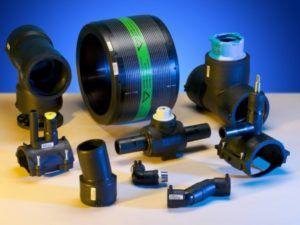
- adapters that help to make connections with cross-sections of different sizes;
- bends that help change the direction of the internal flow;
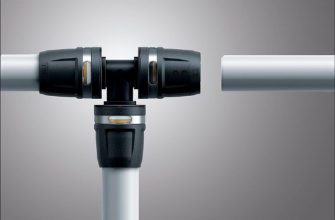
- Tees are used to branch communications.
Steel fittings are an ideal connecting element for corrugated products, allowing them to be connected to fittings and other equipment without any problems.
Importantly, metal connecting elements are hygienic, easy to clean, and resistant to disinfectants, making them often used in water supply systems in schools, childcare facilities, hospitals, and elsewhere.
Video 2.
They can change the flow of liquid or steam in a water supply system and, if necessary, form several branches from the main pipe.
Stainless steel fittings for corrugated products found in our construction markets can withstand a wide range of temperatures from -30 to +230 degrees at pressures up to 16 bar.
The undeniable advantages of these stainless steel connecting elements include:
- The product's versatility and aesthetic appeal. Thanks to these characteristics, these details have been used for many years in the interiors of renowned architects;
- safety and reliability with complete environmental friendliness;
- Durability, as stainless steel has a longer service life than other metals that are subject to corrosion, which ultimately significantly reduces their service life;
- the alloy is characterized by high strength and resistance to mechanical damage;
- They do not have narrowed cross-sections, so they do not slow down the movement of the transported liquid or gas.
Corrugated pipes and fittings
Stainless steel pipes and fittings for its installation can be used for a long time if used correctly.
Video 3.
What's important is that the pipe can bend without damaging the entire utility system. It doesn't develop microscopic cracks over time, and there's no mechanical stress whatsoever.
The properties of the materials allow them to resist mold, fungi, and rodents, while their flexibility allows them to withstand pressure changes and, as a result, possible water hammer.
This communication is indifferent to internal and external temperature differences, since all this is compensated for by the possibility of its expansion or contraction.
Using corrugated stainless steel pipes in the water supply system There is no need to install special cleaning devices.
In such a pipeline, the inner side of the component elements is polished, so it does not retain any sediment, mold or other deposits.
The versatile appearance allows all stainless steel elements to be combined with any interior design, even the most sophisticated.
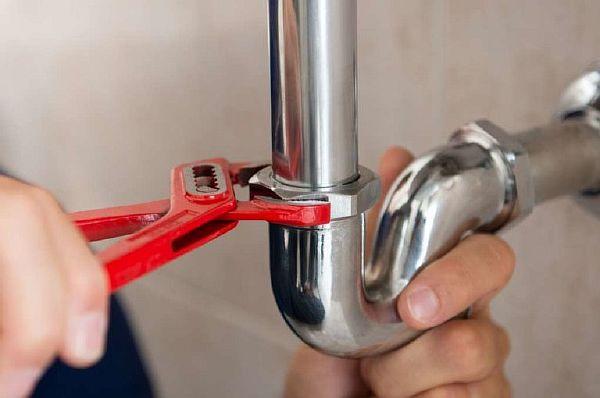
Corrugated steel pipes and fittings are easy to install, even in hard-to-reach areas. Installation takes just minutes.
As a result, everything can be hidden under plaster in a concrete screed, which speaks to the reliability and durability of the structure.
If you need to reduce or trim system components, you can do so with a metal knife, a pipe cutter, or an angle grinder. The choice should be made based on the cross-section diameter.
Installing a fitting on a corrugated steel pipe
If corrugated pipes are chosen for installing a heating system in a house, then it is better to use brass or steel fittings with a silicone gasket and a comb ring inside to connect them.
Thus, this connecting tool allows for maximum tightness, and the absence of a seam significantly increases the safety and reliability of the connection.
The connection principle is that the silicone gasket fits tightly to the base of the pipe and compresses it inside the fitting, and when the nut is tightened on the body, the ring provides additional fixation of the connection.
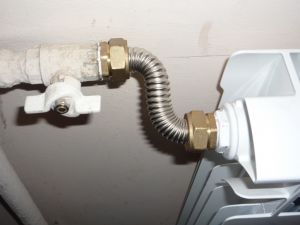 This way, the overall load is distributed evenly, without being held in place. With this type of fastening, the pipe cannot become loose or slip out, even under high internal pressure, temperature, or vibration.
The fitting's design also helps, as the corrugated pipe can partially absorb any adverse impacts. No tightening of the couplings is required during system operation.
Retail chains selling plumbing fixtures offer customers a wide selection of various fittings made from steel, brass, and other materials for pipeline installation.
Stainless steel corrugated pipe fittings are available in a wide variety of sizes and configurations, allowing you to connect your corrugated pipe to any utility system. Proper connection is key, and your system will serve you faithfully for many years to come!