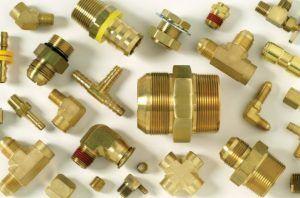
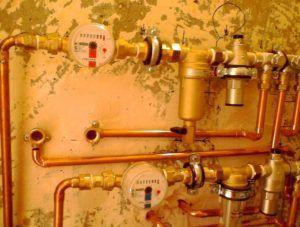
 Copper tubing has long been considered a universal solution. They are used everywhere: in the installation of water pipes, gas pipelines, and heating main.
These products are not affected by chlorinated water, and this becomes an important factor when choosing them for work.
They are the optimal choice for laying city water mains, as copper sections are corrosion-resistant and provide long-lasting service.
Laying a pipeline using these pipes is accomplished using various connection methods, including soldering and welding, as well as using copper pipe fittings with compression fittings.
- The pros and cons of these parts
- How a compression fitting is designed and works
- Types of compression fittings
- Threaded elements
- Compression
- Capillary connecting elements
- Press fittings
- Self-locking connectors
- How to install compression fittings on a copper pipe
- How to install type A compression fittings:
- How to install type B compression fittings
- Features of connecting these fittings to pipes
- We use soldering
The pros and cons of these parts
Connecting pipes with compression fittings is very easy. This method eliminates the need for high temperatures or specialized equipment.
This method allows pipes to be laid even in difficult-to-reach areas. This type of work requires the following tools:
- Spanner;
- Calibrator;
- Cutter.
If you compare the time and labor costs for this work, they are small. And the installed pipeline is hermetically sealed and, employees for a long time.
But no matter how good such a system is, it still has its drawbacks. The crimp fitting must be constantly check and tightenFor this reason, they are not recommended for installation under concrete.
These components are also designed for low-pressure systems. Compared to soldered fittings, their reliability is lower.
A connection assembled with compression fittings becomes a reusable structure.
It can be assembled and disassembled. However, each subsequent assembly and disassembly will affect its strength.
How a compression fitting is designed and works
This device includes:
- Frame;
- Compression nut;
- Compression ring. One or two rings are often used. They improve the seal of the joint and ensure resistance to high pressures. This also extends the life of the structure.
IMPORTANT! It is recommended to purchase parts that use EPD M seals rather than regular rubber. These products will last longer.
To produce these elements we use:
- Brass;
- Copper;
- Plastic;
- Metal.
Brass fittings are most often used for copper tubing products. They are easy to machine and inexpensive compared to copper products.
Brass is as strong as stainless steel and much easier to install. To increase the durability of brass fittings, they are nickel-plated.
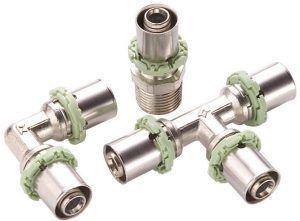
When purchasing such parts, consider their weight (avoid lightweight components). Experts also recommend purchasing them from a reputable manufacturer.
This way, funds will not be wasted, and the highway will operate smoothly and reliably.
Types of compression fittings
Video
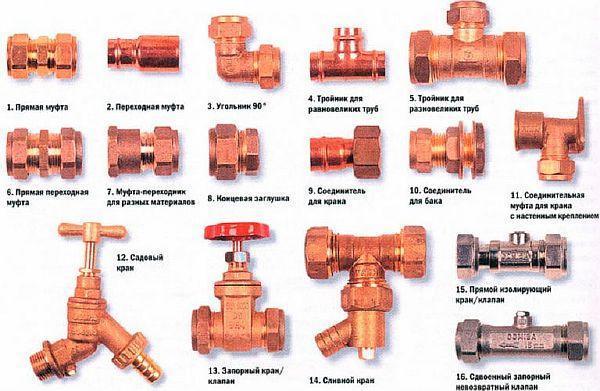
These devices come in the following types:
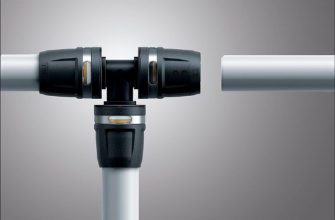
- TeeFor installation of branches in one direction;
- Crosspiece. For the device of branching in two directions;
- coupling. It is used to connect pipe blanks that have the same diameters;
- Rejection. It is used to create a turn;
- Plug. Placed on the end of the cut piece.
To connect pipes of the same diameter, straight parts are used, and for different diameters, a transitional option is used.
By type they are divided into:
- Threaded;
- Compression;
- Capillary;
- Press fittings;
- Self-locking.
Threaded elements
They are simple and robust, requiring no modifications. Brass fittings are the optimal choice for these parts. They offer increased corrosion resistance and are used in pipeline locations where wall mounting is required.
IMPORTANT! Combining these fittings with plastic, metal-plastic, and copper piping is not recommended. This is because, when tightened, this component can easily crush the pipe made from these materials.
Compression
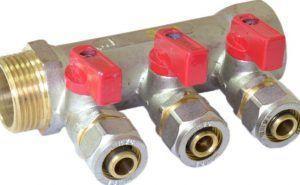
Situations arise when using an open flame is not possible, so compression fittings are installed on copper pipes. They allow for easy handling of workpieces of varying diameters, even when made from different materials.
They come from:
- brass;
- copper;
- metal-plastic;
- plastic;
- steel.
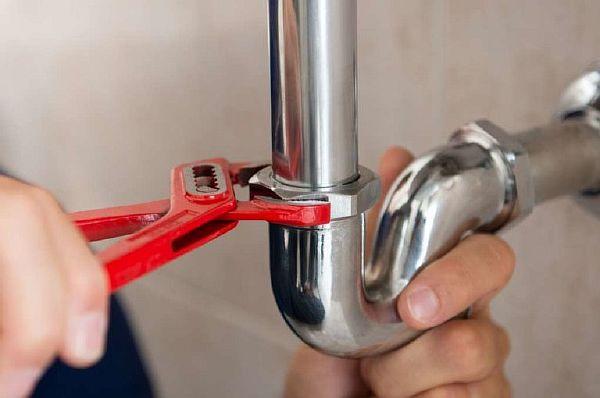
They have a crimping ring that secures the part to the pipe, creating a tight seal. This ring is tightened manually using a wrench and a coupling nut.
IMPORTANT! These elements make it very comfortable to work in hard to reach areas.
Capillary connecting elements
They are best suited for copper and steel tubing. They have a very thin copper, tin, or silver wire on the inside under the threads. This wire becomes the solder.
Video
The flux-coated workpiece is inserted into the fitting. The joint is heated with a torch until molten solder fills the space.
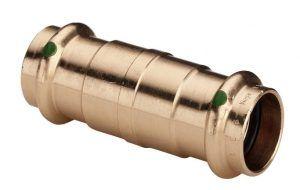
After this, the joint is left to cool. After some time, the joint is cleaned with special cleaning agents for copper.
The described connection is considered the most reliable, and it is better suited than others for copper products.
Press fittings
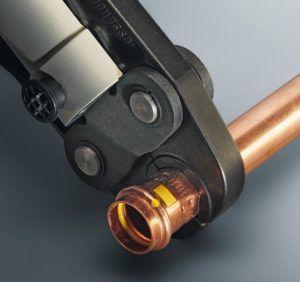
They are used for copper pipes. rarelyThey are most often used for working with metal-plastic and plastic products. These elements are used in work where soldering is not possible.
Compared to a compression fitting, this connection is more robust. However, a press is required for this job.
This fact is the reason why they are used only in mass construction.
Self-locking connectors
Video
Self-locking elements are mechanical devices. They are based on internal rings, one of which has teeth. When pressed with a puller key, these teeth engage tightly with the other ring.
This type of joint is reliable and durable. This part can be used repeatedly because it can be easily removed with a puller key.
This type of fitting is made of copper and perfectly connects workpieces of any cross-section and different materials. It's a very convenient method for connecting pipelines made from various rolled pipe products and fittings.
How to install compression fittings on a copper pipe
Video
It should be noted right away that this type of connection does not require special equipment, and can be done by yourself.
According to European standards, crimp connectors are divided into two types and are marked with the letters A or B.
Type A. They are used exclusively for laying above-ground pipeline networks made from semi-solid types of copper or stainless steel.
View BIt is used for above-ground and underground communication systems, created from soft and semi-hard types of copper with thick-walled pipes.
IMPORTANT! To obtain a very reliable joint, it is necessary to act strictly according to certain rules and instructions.
How to install type A compression fittings:
Video
- An element of the required size is selected. This is easy because all connecting structures are manufactured according to a single European standard;
- A pipe blank is cut to the required size and deburred. The cuts are checked with a gauge. Contamination is removed from the blank, and poorly finished edges and damage are cleaned. A crimping ring is placed on the blank.
ADVICE. It is recommended to wet the connection point with water to prevent the seal from slipping and tearing;
- The end of the pipe is inserted into the connector until it stops. Then, the compression nut is tightened. It is first tightened by hand, and then a wrench is used.
ADVICE. Avoid applying excessive force when doing this. This won't improve the seal. If cheap parts are used, there's a risk of squeezing out the ring, making the joint unreliable.
After this work, the pipe may be slightly deformed. This will confirm that the connection is sealed.
How to install type B compression fittings
Video
This type of crimped connector is installed using almost the same procedure as the first method. The cut area must be thoroughly cleaned of any dirt. The threads must also be free of dirt. Only a light application of machine oil to the threads is permitted.
This will make it easier to wrap the pipe. Care must be taken to ensure that the sealing cone is pressed against the inside of the workpiece, and the edge of the workpiece itself must be flared.
It's important to choose the right wrench. It shouldn't wobble, as this will damage the nut. For example, for a 54 mm diameter, you'll need a 750 mm wrench.
Features of connecting these fittings to pipes
Video
The cost of a copper pipe main is high, so when purchasing materials, it is recommended to follow these guidelines:
- It is necessary to give preference to homogeneous materials, so the entire structure will last longer;
- Avoid combining copper and unalloyed steel. Electrochemical processes between them are detrimental to the joint, causing the steel components to rust.
- If it is impossible to avoid using dissimilar materials, then steel products are installed in front of copper ones in the direction of fluid flow;
- Copper pipes work well with PVC network components. There are no negative consequences in this situation.
We use soldering
Video
Compression fittings for copper pipes are manufactured in various diameters, allowing for installation of any system.
For heating and water supply systems, small-diameter rolled pipes are used and connected by soldering. This process does not require much space.
The use of crimping options for copper pipes allows you to lay a good pipeline with little effort and time.
Solder fittings are very easy to connect using low-temperature and high-temperature soldering.These connection details allow for the solution of design solutions of increased complexity.
Video
Copper's flexibility eliminates the need for unnecessary joints and elbows. It's a fairly rigid yet flexible material, resulting in a system that's reliable and resistant to external influences.
Compression fittings for copper pipes are very common because they're cost-effective and convenient. However, don't skimp on the quality of the materials. Otherwise, the pipeline will quickly need repairs.
A responsible approach to the selection and installation of components will ensure that the pipeline will serve for a very long period of time.
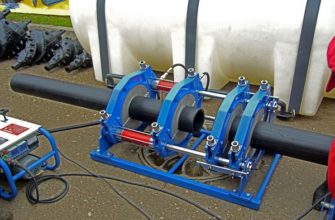
I replaced the copper pipes in my apartment with polypropylene ones. This prevents corrosion and extends the lifespan.