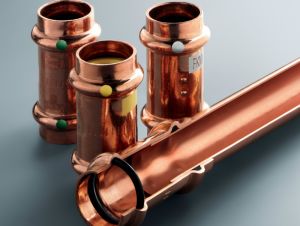
 Today, for the installation of heating systems systems use plastic, steel, or copper pipes. Copper heating pipes and fittings are valued for their good thermal conductivity and long service life (over half a century).
These systems can be installed independently, but it's important to understand the installation technology and properly solder (see video) the joints to avoid leaks.
Copper is a noble metal that has been known to people for over 1000 years, so it is not surprising that it is used in the manufacture of various devices and heating and plumbing systems.
These pipes are flexible and durable, so there's no need to worry about easy access. These heating systems can be encased and concreted.
Their advantages and disadvantages
 If copper is so good, why do construction market buyers more often purchase plastic and metal products for plumbing and heating systems?
The main misconceptions that prevent buyers from purchasing them include:
- comparative high cost of materials;
- complexity of installation (requires soldering of joints).
However, these pipes have a number of advantages:
- high quality material;
- has a high thermal conductivity coefficient (applies specifically to non-insulated samples);
- ease of flaring;
- does not corrode and does not react to temperature changes;
- easy to solder;
- withstands high pressure;
- are reliable despite their plasticity.
- When purchasing non-insulated pipes, you can note that their price is lower than that of plastic or steel samples of the same diameter;
- welding for connection is not expensive;
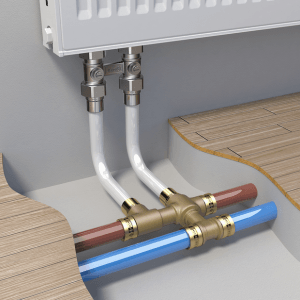
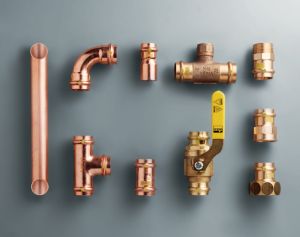
- it is possible to make any type of wiring due to the wide variety of copper fittings;
- heating can last more than 50 years without repair;
- plastic material can be deformed without breaking under high pressure;
- can operate effectively at temperatures up to + 250°C.
Therefore, it is entirely justified that the price of copper products is correspondingly high. Besides the pricing policy, consumers avoid using such pipes and fittings, because they are concerned about the complexity and correctness of their installation (soldering).
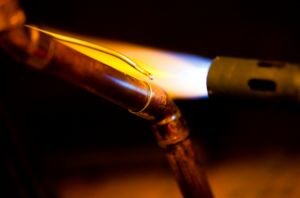
According to customers, soldering copper heating systems properly is very difficult without the necessary skills. For proper soldering, watch the video tutorials below.
Thermal insulation
This type of product, like others, requires insulation or thermal insulation when installed outdoors or in an unheated room.
For these purposes, special insulation materials in the form of a polyurethane foam casing are used, which are sold for pipes of different cross-sections.
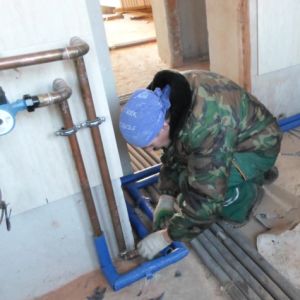 Some manufacturers also recommend using a protective plastic cover for copper items in areas where they may be subject to mechanical damage.
A wide variety of copper products can be found on the construction market, so you need to approach your choice carefully.
Before purchasing, it is recommended to request certificates of conformity from sellers, which guarantee the quality of the products and their suitability for use in heating systems.
Please note that all heating components must be made of the same type of copper. Pipes with a cross-section of up to 22 mm are sold in coils and can be shaped on-site, which is very convenient.
As for samples with a larger diameter, they are sold in lengths of 3-5 meters.
Preparing for soldering
Video 1. How to solder correctly.
Soldering (see video tutorials) requires careful and responsible soldering. To achieve leak-proof connections and perform the work to a high standard, you will need:
- pipe cutter;
- chamfering machine;
- pipe expander;
- steel brush for cleaning the surface of the pipe and seams;
- gas burner with adjustable flame.
It is difficult to describe the connection process in words, therefore to properly understand how to solder copper pipes heating, watch the video tutorials presented on our website!
Video 2.
When installing heating, consider the following points:
Copper pipes are an ideal choice for installing autonomous heating, but it is important to know that they must be protected from contact with aluminum, so fittings must be selected accordingly.
If this nuance is not taken into account, direct contact between these two metals will lead to a chemical reaction, followed by gas formation. As a result, the aluminum radiator may simply rupture.
Video 3.
When it comes to aesthetics, copper pipes and fittings retain their appeal over time, but instead add style and a certain charm to the interior.
Copper pipes are marked with markings that provide information about their physical and chemical properties, including melting point, internal surface roughness, thermal conductivity, material density, and more.
Video 4.
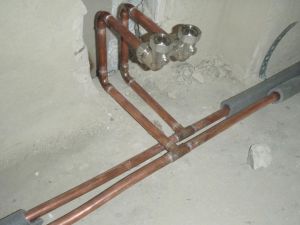 And most importantly, copper heating pipes and fittings, in a properly designed system and provided they are installed with high quality, will last for decades without requiring routine repairs.
 Therefore, this type of heating can be installed in any home; the main thing is to thoroughly familiarize yourself with all the rules for connecting joints that require soldering (watch video tutorials) and gain at least minimal experience in this area.