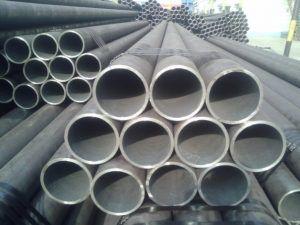
 Steel pipes are used in many industries and production facilities. Despite the complex and lengthy production process, there is always a demand for high-pressure steel pipes.
The following types are no less popular:
- seamless;
- boiler houses;
- electric welding;
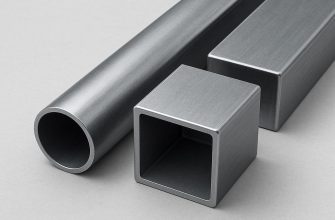
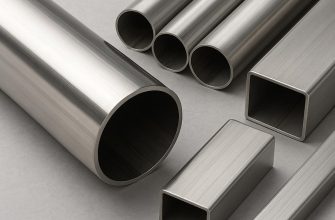
- profile.
All of the above-mentioned types are subject to increased requirements, as specified in GOSTs 10705-80, 10706-80, 20295-85, 8696-74, 3262-75.
Without additional processing, high-pressure steel pipes are not permitted for sale or production. For example, any metal needs to be given an anti-corrosion coating, which will positively impact its quality.
Some types of rolled pipes are coated with insulating materials, plastic or varnish, and special paint can also be used.
Steel can be processed in various ways, meaning several methods have been developed for producing pipes. Let's list the main ones.
- Cast. Manufactured by casting using special machines or lathes.
- Seamless. Manufactured or produced by pressing. The process involves rolling a steel blank.
- Welded. Made from sheet steel, which, after being shaped into a rounded shape, must be welded at the joint.
Welded steel pipes can be produced using two technologies:
- Cold-formed.
- Electric welding.
Seamless steel pipes are produced using the following method: cold or hot rolling.
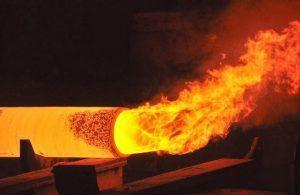
For each of them, there are 6 classes, which are further classified by:
- materials for manufacturing;
- integrity of the product in transverse view;
- technical purpose;
- manufacturing method;
- by cross-section shape.
More details about each class
1st gradeAlso known as gas or standard, these are used to deliver gas, bulk materials, or liquids.
The construction of pipelines, underground cable installations, and irrigation systems is impossible without these products. They are also suitable for support and all kinds of fencing.
2nd gradeSuitable for any high- and low-pressure main pipeline. They transport gases and petroleum products under pressure. The second class is suitable for transporting petrochemicals, fuels, and liquids.
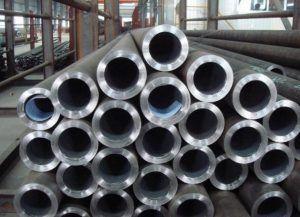 3rd gradeSuitable for high-pressure systems or extreme temperatures. It is also used in the food and chemical industries. It is also suitable for heating boilers and nuclear equipment.
4th gradeThey are mainly used in natural resource exploration activities as a drill pipe, auxiliary pipe, or casing pipe.
5th gradeAlso known as structural pipes, they are used in the production of transport and auxiliary equipment. They are also used in furniture manufacturing for small steel structures. They can be used in the drilling industry as supports or masts.
Video
6th gradeIt is produced for the mechanical engineering industry, where it is used to manufacture cylinders and pistons for hydraulic devices. It is also suitable for bearings, vehicle shafts, and other automotive components. It is also used in the construction of various reservoirs that operate under significant pressure.
Read an article about steel water and gas pipeline products.
How are seamless high-pressure steel pipes made?
State standards (GOSTs) define specific parameters by which a particular type of material is produced. Any seamless product is based on carbon or stainless steel.
Pipe diameters are also determined according to GOST.
Seamless stainless steel pipe is made according to specific methods.
- Forging.
- Drawing.
- Pressing.
- Rent.
Regardless of the method, seamless steel pipes are reliable and durable. These characteristics make them most commonly used in compressed air pipelines or hydraulic systems (in the latter case, high-pressure steel hydraulic pipe is used).
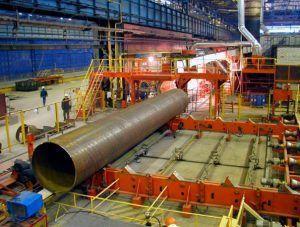 The name speaks for itself. Any seamless rolled pipe is characterized by the absence of any seams connecting the circumference. Because of this, the seamless production method is quite complex and requires increased resources. This inevitably impacts the price or cost when compared to products manufactured using other technologies.
Hot rolled seamlessIt is produced using a production machine from cast, forged, or hot-rolled blanks. These blanks are heated to 1200°C. The temperature range varies depending on the steel grade.
The above-described process produces low-precision rolled pipes with thick walls and poor surface quality. Consequently, this production method is not suitable for producing small-diameter, thin-walled pipes.
The main stages of production include the following.
- The workpiece is sent to a furnace, where the steel is heated just above the critical point, which marks the recrystallization period.
- The red-hot blank is then sent to a piercing press. There, the rectangular bar is shaped into a hollow cylinder. In metallurgical parlance, this is called "making a sleeve." Visually, the red-hot steel is already a pipe, but it lacks the required geometry and size.
- After the piercing press, the part is sent to several rollers. These perform the hot deformation process. The heated part is given the desired diameter and wall thickness. During the rolling process, the workpiece is also stretched.
- After rolling, the workpiece must be cooled with water and also subjected to control calibration.
- The process is complete. All that remains is to cut the finished product into pieces and store it.
Video
- GOST 8732-78
- The diameter is specified: minimum 20 mm, maximum 550 mm.
- Wall thickness from 2.5 mm to 75 mm.
- Length: minimum 4 meters, maximum 12.5 meters. Some manufacturers offer custom sizes with allowances.
- The allowable tolerance for curvature is no more than 20 millimeters per meter and no more than 2 to 4 mm for walls, depending on the size.
- There is also a maximum deviation from the outer diameter.
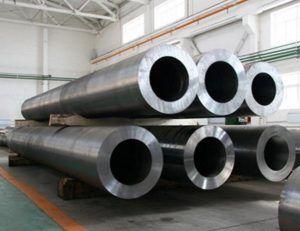 Seamless cold-formedIt is produced by drawing. The process uses a hot-rolled tube, which is passed through a tube-rolling machine.
Temperatures are quite low for steel, no more than 450 degrees Celsius. Cold forming technology allows for the production of small diameters with thin walls. The thickness is precisely measured. The technology guarantees high surface quality for the product.
Video
The cold deformation method is similar to hot deformation, but there are two key points:
- After passing through the piercing mill, the steel "shell" must be cooled in water. The subsequent process is carried out at lower temperatures, where the workpiece is less ductile. So, the name speaks for itself. However, the lower temperatures during the process generate a fair amount of heat.
- Before final calibration, cold deformation involves preliminary annealing. Essentially, the "sleeve" is reheated until recrystallization occurs and then left to cool. Why is this necessary? It imparts plasticity and toughness to the metal, and also relieves internal stress.
- GOST 8734-75
- Minor ovality or variations in pipe wall thickness are allowed.
- For the product's section curvature translation, the error per meter does not exceed 3 millimeters for thin-walled rolled pipes. For medium-thickness rolled pipes, the error per meter does not exceed 2 millimeters.
- Final heat treatment is not performed by individual agreement with the customer. Heat treatment is mandatory for the standard.
How are these products classified?
In practice, similar types of rolled pipes are classified according to production methods and wall thickness.
Video
The following methods are distinguished:
- Electric-welded straight seam.
- Electric welded with a spiral seam.
- Seamless hot-deformed.
- Seamless cold-rolled and heat-deformed.
The last two methods are combined into a common standard.
By wall thickness:
- Extra thick-walled;
- Thick-walled;
- Thin-walled;
- Particularly thin-walled.
All the differences are due to the difference in external diameters and wall thicknesses.
Anti-corrosion coatingIt is either mandatory or not required at all. Moreover, galvanizing is only available for water and gas pipes and straight-seam electric-welded pipes. Galvanizing is permitted on any type of steel, manufactured using any production method.
Where is it used?
Seamless high-pressure steel pipe boasts exceptional tensile strength and is leak-free. Thick-wall seamless pipes are acceptable for production.
These products are ideal for hydraulic systems. To lift a truck bed, a piston is needed, with oil pumped inside under extreme pressure. A seamless material is essential for such a piston.
Video
Energy industryHeat transfer isn't limited to heating from boilers. Heat can be delivered to the consumer via a heating main, just like hot water. Heat sinks in boilers (screens and baffles) require a material capable of withstanding superheated steam and flames.
The critical rupture resistance due to internal pressure depends on the thickness of the heat sink. Service life is also a factor. Without a high-quality seamless element, it's impossible to guarantee heat supply throughout the entire season.
Oil industryHigh-pressure tubular goods are used for wells, casing pipes, pumping natural resources, and pipeline transportation.
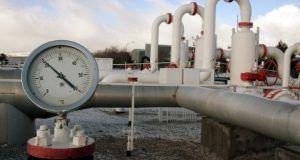
A good product must withstand many factors, including ground movement. Of course, only high-quality pipe products can provide a long, trouble-free service life.
They can withstand pressures of tens and hundreds of atmospheres. The deeper the wells, the greater the loads. Steel can withstand very high pressures and resists the thickness of the soil.
Automotive, aviation and shipbuilding industriesIn the sectors mentioned, thin-walled seamless pipes with minimal weight are in demand.
ResultWe consider this to be our introduction to high-pressure steel pipes. More detailed (technical) information is contained in GOST standards.