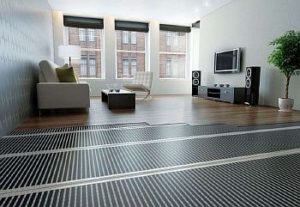
Infrared heated floors are an excellent alternative to hydronic and cable systems. They operate on electricity, and electricity costs are the main drawback of these systems. However, it's worth noting that compared to electric cable-based floors, they are significantly cheaper.
The level of costs associated with the operation of film floors is influenced by the area of the heated room and the power of the device - Find out how to select the power of different types of underfloor heating (water, electric)Therefore, it is important to correctly calculate the performance of an infrared floor for a specific area.
In addition, there are methods that can reduce energy costs - high-quality thermal insulation of the room and installation of the correct thermostat with a special program.
- Consumption with continuous switching on
- Consumption using thermostats
- Ways to reduce electricity consumption
- Power selection
- Insulation of the premises
- Doors and windows
- Using programmable thermostats
- Space zoning
- Floor covering
- Disabling the system and preventing it from running unnecessarily
- Power consumption per 1 m2 depending on the coating
- Let's calculate the electricity consumption for one room
- Example of calculating energy consumption
- Which heated floors are the most energy efficient?
- Video tutorials
Consumption with continuous switching on
Operation of a warm film floor without a thermostat is unsafe.
After all, operating the device without this device can lead not only to system failure, but also to damage to the floor covering.
In this mode, the floor's power consumption is 0.22 kW/h. Over 30 days of continuous operation, the power consumption will be 158.4 kW/m2 or 533.8 rubles/sq.m.
Consumption using thermostats
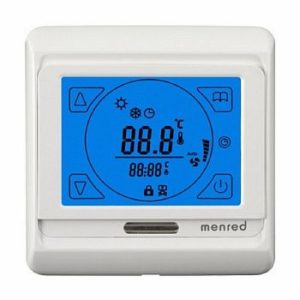
Installing a thermostat can reduce the energy consumption of infrared floors by approximately 30–40%. Without one, the surface will become excessively hot, reducing the comfort of the floors.
The main function of the thermostat is to monitor the heating level of the finished floor surface and, if necessary, turn the power supply off and on.
Thermostats come in two types: mechanical—designed to operate in floors for no more than 12 hours a day—and automatic. Automatic devices can be programmed to control heating modes and can also be used to control the device.
The operating principle of a thermostat is simple: when the device detects changes in temperature, it cuts off the power supply or resumes it when the temperature drops below the set level.
Ways to reduce electricity consumption
To reduce the energy consumption of infrared underfloor heating, a number of points should be taken into account when constructing the system.
Power selection
To ensure a comfortable temperature in an apartment, a film with a rating of 150 W/m² is required. A 220 W product may be installed if the floor is the primary heat source.
Infrared floors are recommended to be installed only in areas where heating is required. Installation guidelines must be strictly followed. The film should cover approximately 70% of the total area.
For your information! In country houses, ground floors and balconies require a continuous carbon film with a special moisture-resistant layer.
Insulation of the premises
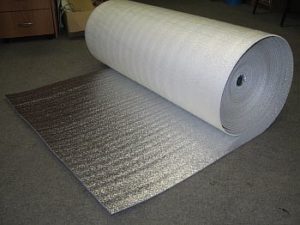
Thermal insulation, or reducing heat loss, plays a major role in saving energy. If a room is poorly insulated, heat will escape through cracks. To maintain the required temperature, floor heating cycles will be longer, thereby increasing energy costs.
Proper insulation of not only the floor but also the walls and ceiling will help prevent heat loss, as approximately 20% of heat is lost through these areas. It's best to insulate the ceiling with two layers of basalt wool, and the walls with insulating material and additional brickwork.
To prevent heat loss through floors, in addition to laying thermal insulation material, an additional layer of concrete screed would be a good option. As a floor insulation Foamed polyethylene with a reflective layer is suitable.
Please note! The presence of a metallized reflective layer allows for energy savings of up to 40%, as it directs heat upward and prevents it from escaping through the floor joists.
And given that electricity rates are quite high today, this will significantly save the family budget from unnecessary expenses.
Doors and windows
Doors and windows must be installed and closed tightly to prevent warm air from escaping through them.
If these conditions are not met, then half of the heat will be blown out, and the device will have to work longer, which will lead to additional costs.
Using programmable thermostats
By installing a programmable thermostat in each room, you can significantly reduce the energy consumption of your film-based underfloor heating system. This allows you to adjust the temperature based on the room's purpose, characteristics, and season.
Unlike a conventional thermostat, which turns off when the desired temperature is reached and turns on when the floor cools, a programmable thermostat can regulate the heating according to a set time or completely shut off the heating. Using a programmable thermostat saves up to 30% on electricity.
Space zoning
Zoning the space will help reduce energy consumption, especially with programmable thermostats and alternating heating options. Furthermore, there's no need to install film under heavy furniture—that's just wasted money.
Floor covering
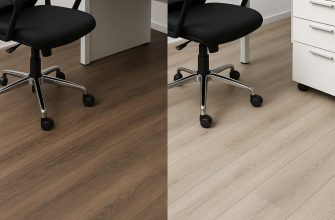
Since the infrared film has a small thickness, it can be installed under any floor covering.
When choosing a flooring product for a warm film floor, you need to consider, that different coatings have different degrees of thermal insulation. The level of thermal conductivity affects the power of the device required for a given “pie”.
Disabling the system and preventing it from running unnecessarily
An additional way to reduce energy costs is to turn off the system when the house is unoccupied. However, this option is only suitable if the film flooring serves as a supplemental heat source.
If the device is the main heating system, then turning it off is not advisable, since the room will cool down, and reheating it will require approximately the same amount of energy that you will save by turning it off.
Please note! Reducing the room heating level by just 1 degree will reduce your costs by 5%.
By following these rules, you can significantly reduce your energy costs without affecting the comfort of your home.
Power consumption per 1 m2 depending on the coating
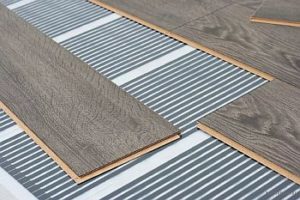
As mentioned above, the unit's output is affected by the thermal conductivity of the flooring, meaning different products require different levels of heating. If linoleum or PVC flooring is being installed, a low-wattage floor, no more than 100–130 W/m², is sufficient.
If the room has wooden floors, then the power of the film-based underfloor heating per 1 m2 increases proportionally to the thickness of the boards, since wood has a low thermal conductivity.
It is not recommended to lay infrared floors under tiles, as the adhesive or screed will not adhere tightly enough to the base, which will lead to cracks in the surface.
Let's calculate the electricity consumption for one room
To calculate how much electricity an infrared heated floor consumes, you need to consider its modification and purpose—whether the unit will be the primary or secondary heating source.
Average consumption ranges from 150 to 220 W. If the film is the primary heat source, it's 150 to 200 W/m², and if it's an additional source, it's 100 to 160 W/m². The estimated consumption is 2.5 W per hour, but the actual consumption is much lower. A dedicated control unit can be installed to reduce this consumption. It heats individual zones of the room in sequence, reducing the film floor's power by a factor of three.
The energy cost indicator varies from:
- type of system - primary or secondary;
- floor power;
- outside air temperature;
- degree of insulation of the room;
- the presence of a thermostat;
- correct installation;
- number of windows.
Therefore, it is impossible to calculate 100% accurately how much electricity a film-based underfloor heating system consumes.
Example of calculating energy consumption
Before starting the calculation, you need to calculate the area of the room, determine the desired temperature, and calculate the heat loss coefficient, which is multiplied by the power per square meter.
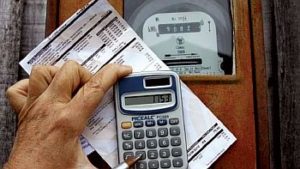
Let's calculate the energy consumption using the example of a room with a total area of 60 m². Minus the furniture, the room size would be 40 m².
Heat loss from 60 m2 will be equal to 30 watts per m2, or 0.03 kW.
0.03 x 60 = 1.8 kW per hour – this is how much energy is lost per hour.
To compensate for these losses and create a comfortable atmosphere in the room, an additional 0.2 kW, or 2 kW, of energy would be required. This is the required power for a film floor without a thermostat.
If you plan to install a floor with a thermostat, the power of 1 square meter should be equal to 2000/40 = 50 W/m2.
When installing a programmable thermostat, a more powerful film—80 W/m²—is required. With this device, the floor will operate at half the power consumption. Despite this, the apartment will still maintain a comfortable temperature, and energy consumption will be low—only 0.8 kW/h instead of 1.8.
That is, 0.8 x 24 = 19 kW, and the monthly energy consumption of the film-based underfloor heating system will be approximately 600 kW. This is assuming the infrared floor is the primary heating source.
To determine the costs in monetary terms, you need to use a simple formula: multiply 600 kW by the cost of 1 kW.
Please note! Experts recommend calculating the power consumption of an infrared floor with a reserve. The size of this reserve depends on the type of room and climate conditions.
Which heated floors are the most energy efficient?
There are the following types of heated floors: water and electric, the latter in turn are subdivided into cable and infrared.
Water heaters are connected to the central heating system (if permitted) or to a specially equipped boiler. The boiler heats the water using electricity, which is quite expensive, or gas, which is the cheapest option.
If we compare electrical systems in terms of energy consumption, it looks like this.
| Type of underfloor heating | Energy efficiency level | Energy saving |
| Cable, they have a heating element - cable | 68% | 58% |
| Infrared - film with carbon plates | 82% | 87% |
Based on this table, we can conclude that infrared electric floors are the most energy-efficient. The film heats up quickly and retains heat for a long time. Moreover, the heat is not wasted on heating the air, but is transferred directly to objects and people.
Please note! Any heating system only uses energy intensively during the initial heating phase; subsequently, it only uses energy to maintain the set temperature, so consumption will be low.
It's worth noting that in addition to saving energy, the infrared design ionizes the air and eliminates unpleasant odors. Furthermore, the film floor doesn't dry out the air or affect its humidity.
By correctly calculating the infrared floor's power and heat loss, and installing a thermostat, you can easily achieve the desired comfortable conditions in your apartment. Furthermore, the system will be energy-efficient, with minimal operating costs.