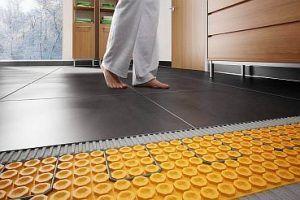
Heated floors are becoming increasingly popular, driven by people's desire for greater comfort. Properly selected flooring for finishing plays a crucial role in their design and longevity.
When choosing a floor covering for underfloor heating, you need to consider not only the aesthetic appearance, but also the presence of good thermal conductivity. The material must withstand heat and temperature changes..
Thermal conductivity of floor coverings
The primary purpose of underfloor heating in a private home or apartment is to heat 1 square meter of space and create a heat balance where the heating temperature exceeds the cooling rate of the given area.

Today, manufacturers produce flooring products that are almost always suitable for use with heated flooring systems. However, it's important to note that different finishes not only differ in structure but also have different thermal conductivity coefficients, and therefore, the final result will vary. For example, ceramic flooring has higher thermal conductivity than linoleum or parquet.
When choosing a floor covering, it is worth considering the operating characteristics of the heating structure, the installation location, and the design of the room.
The primary requirement for underfloor heating flooring is maximum and uniform heat transfer. Below, we'll examine the main materials in detail and determine which flooring is suitable for different types of underfloor heating systems.
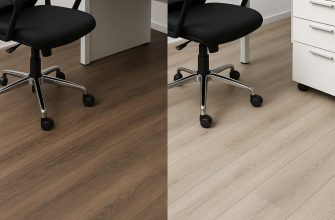
Laminate
Laminate is a dense fiberboard, 6-15 mm thick. It's less sensitive than parquet and, unlike parquet, less prone to warping.
The main advantages of laminate:
- It is easy to install and can be laid by yourself;
- it is inexpensive;
- A wide range of color shades reminiscent of various wood species. Aesthetic appearance;
- the ability to quickly dismantle only individual boards if necessary;
- comfortable, pleasant to walk on barefoot;
- inert, capable of retaining heat for some time, the smaller the thickness, the higher the thermal conductivity.
Despite its positive aspects, this floor covering also has its disadvantages:
- low thermal conductivity;
- Deforms under the influence of high temperature and moisture, therefore not suitable for rooms with high humidity. Intended exclusively for living rooms;
- Cheaper options release higher than normal levels of formaldehyde when heated, which is dangerous to health;
- heats up 20% slower than a ceramic hob;
- maximum heating temperature 27 degrees.
That's why, Laminate is a more suitable material for finishing electric or infrared heated floors., and for water it is better to choose a different coating.
However, today, manufacturers produce laminated flooring models suitable for wet floors, as they have increased thermal conductivity and heat resistance. This is indicated by special markings on the packaging.
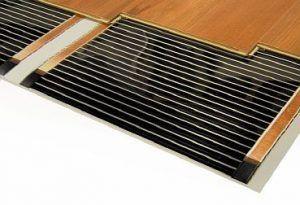
The service life of this floor covering is up to 15 years.
Features of using laminated boards for different types of floors.
| Warm water floor | Film floor |
| Laminate flooring can only be installed over hydronic underfloor heating if there's a dry screed. Otherwise, the floor will move and creak after drying. Laminate flooring must be treated with a moisture-repellent finish. | Laminate with a porous structure and a binding impregnation that is not resistant to temperature changes cannot be placed on the film, as it will crack. |
When choosing laminate flooring for heated floors, it must meet the following requirements:
- class not less than 32;
- must have low porosity;
- be equipped with a substrate designed for installing flooring on a heated floor;
- heating - no more than 30 degrees.
Wooden coverings
The use of wood flooring as a finishing material for heated floors is not very popular due to the properties of the natural material.
Wood is a poor conductor of heat, so combining it with a heating element system will not be effective.
For this reason, wood is not recommended for finishing heated floors, as it will prevent heat from the heating device from entering the room.
Furthermore, wood will swell and contract when exposed to water and sudden temperature changes. Under normal conditions, wood flooring doesn't present such problems, but when laid over underfloor heating, especially hydronic ones, they do. After all, the system isn't turned on in the summer, and in the winter, it operates at full capacity, and these sudden temperature changes negatively impact the material.
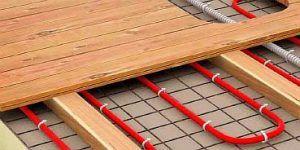
If you prefer natural wood, you should follow the advice of experts:
- the material must be dense, hard and resistant to shrinkage;
- have increased thermal conductivity;
- Do not turn on heating above 27 degrees.
Exotic and expensive wood species such as bamboo, rosewood, sage, and oak possess these characteristics. These are the ones that can be used to finish heated floors.
Before installation, the wood must be thoroughly dried to reduce shrinkage. Flooring with a moisture content greater than 8% should not be installed. The recommended thickness is no more than 1 cm; using a thicker layer will impede heat transfer into the room.
Parquet or engineered board
Engineered wood flooring is used in construction work, especially when installing heated floors, but this type of flooring doesn't heat up sufficiently. To improve the process, choose boards no thicker than 16 mm and no wider than 150 mm.
Parquet flooring is expensive and looks sophisticated. Parquet is also installed over heated floors, but not standard ones, but special models such as mosaic, slatted, and industrial. Like any wood, it doesn't conduct heat well.
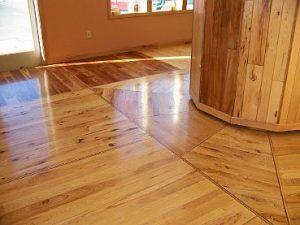
And temperature changes lead to floor deformationsThe installation method should be floating, and it is better if the boards are oiled rather than varnished.
Ceramic tiles and porcelain tiles
Ceramic tiles are safe covering for water-heated floorsCeramics are resistant to high temperatures and practically do not expand under heat. Ceramics are the most heat-conducting material, even though they take a long time to heat up. Once heated, they retain heat for a long time, releasing it into the room.
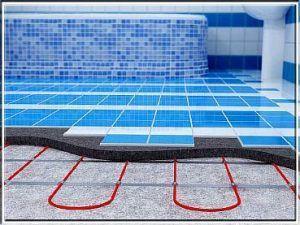
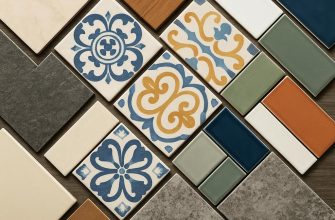
A wide variety of colors and sizes allows ceramics to be used to create sophisticated interiors. Furthermore, this surface is easy to clean and moisture-resistant, making it ideal for high-humidity areas such as bathrooms and saunas.
And its ability to dry quickly prevents mold from forming. A huge advantage of tiles is that they come in a variety of thicknesses, allowing you to regulate the room's temperature; the thinner the material, the more intense the heating.
When choosing tiles, you should make sure that they:
- has increased hardness, not lower than class 5 or 6;
- wear resistance class of at least 4;
- water absorption properties - from 3 to 6%;
- resistant to the effects of chemicals contained in cleaning products.
Important! The tile must have a dense core; looseness will impede heat transfer. Therefore, facade tiles are not suitable.
A disadvantage of laying tiles over underfloor heating is the need to pour a concrete screed, which complicates and lengthens the installation process.
Linoleum
Linoleum is one of the most popular flooring materials. However, despite all its advantages—low cost, a wide range of colors, ease of installation, and waterproofness—it is not suitable for underfloor heating. The main reason is that the material is not environmentally friendly, and when heated, it releases chemicals harmful to human health. Therefore, laying linoleum over any type of heated flooring in residential spaces is not recommended.
See how to lay it correctly Underfloor heating under linoleum on a wooden floor – step-by-step installation algorithm with video materials.
An exception is a product made from natural materials, but in this case, its cost increases significantly. This type of linoleum is safe, as it does not emit harmful substances, and it can be installed over water pipes and other types of heated floors. See the article on how to install a heated film floor under linoleum.The naturalness of the product is indicated by a special marking on the packaging.
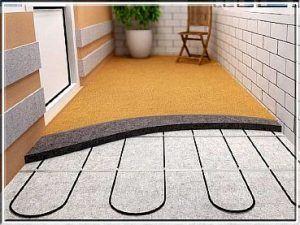
Linoleum is a poor conductor of heat, ranking below ceramic tile but above parquet and wood. Furthermore, when exposed to temperature fluctuations, it loses its shape, becomes soft, and tears.
However, a covering with a smooth base, without a felt insulating layer, has better thermal conductivity and is less susceptible to deformation when heated by a warm floor.
Carpet
Carpet is a popular flooring material for heated floors.Designers often recommend it for children's rooms or bedrooms. Carpet's properties are similar to those of laminate flooring, but it's more comfortable, as walking barefoot on a soft surface is more pleasant than on planks.
It has the ability to accumulate and retain heat, transferring it into the room, even better than ceramics.
A major advantage, especially when used with hydronic underfloor heating, is that the covering can be easily removed in the event of a leak. However, its installation requires a level surface, which requires pouring a self-leveling screed and an underlayment, which complicates and prolongs the entire process.
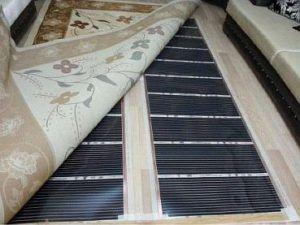
How to choose the best flooring for each type of floor
Today, the building materials market is huge, and flooring materials vary in cost, thermal conductivity, and design.
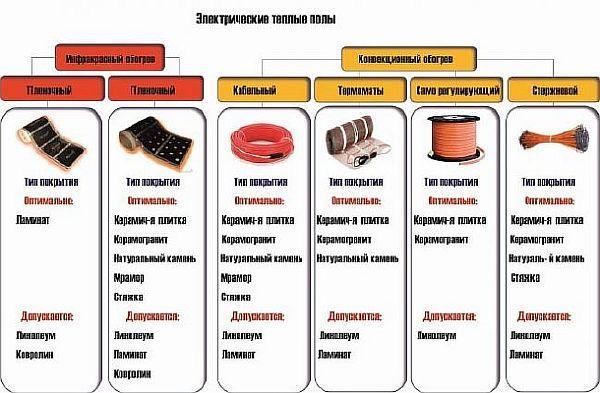
When choosing a finish for underfloor heating, in addition to your preferences, it is important to consider a number of factors:
- In panel buildings and on basement floors, it is not recommended to lay ceramic tiles, as they are cold and require more heating;
- Laminate flooring is suitable for those who love a cozy and comfortable environment, as it is pleasant to the touch and adds style to the interior;
- For non-residential premises with water-heated floors, the best option is stone, it is durable.
If we consider which covering is suitable for different types of floors, then:
- For a water-heated floor, ceramic tiles are an excellent choice for floor covering (kitchen, bathroom, toilet), and laminate or carpet are suitable for a living room;
- For cable types of floors that have a high heating temperature (45ºС), one of the most suitable options is ceramics. Despite the high cost of this material, it will quickly pay for itself, as it is durable and practical;
- Infrared flooring is compatible with any surface. It even works well with cork and wood subfloors, as there is no risk of fire or flooding.
When choosing flooring, consider its compatibility with underfloor heating. This is always indicated on the product packaging. For example, bamboo parquet or carpet should not be used; products made from them will almost immediately fail.
Parquet boards also do not tolerate heat well; they dry out, forming huge cracks.
But parquet can still be used as a finishing coating observing the installation features, which are described in detail in this article.
Regular linoleum, as mentioned above, is generally harmful to health, since heating it provokes the production of harmful substances.
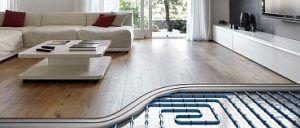
Therefore, to avoid harming your family's health, you should install flooring specifically designed for heated floors over heated floors. Only then should you choose a flooring that matches the room's design and your preferences.
Additionally, the intended use of the system should be considered: whether the design is intended to be the primary or secondary heating source. If a standard radiator is not available and underfloor heating is the primary heating source, then ceramic tile is best for the kitchen, bathroom, and toilet, while laminate or carpet are suitable for the remaining rooms.
We conducted an analysis and determined what is best in a private home - heated floors or radiatorsWe invite you to read this article.
To ensure your new floor looks beautiful and lasts a long time, consider the recommendations of specialists and flooring manufacturers when choosing and carrying out renovations.
Video tutorials