Innovative technologies have made it possible to heat rooms through the floor covering, using a system known as "underfloor heating." Such floors are divided into electric and hydronic.
- Electric heated floors
- Cable electric underfloor heating
- Self-regulating cable
- Heating mat
- IR film coating
- Rod heated floor
- Water-heated floor
- Copper
- Metal-plastic
- Polypropylene
- Cross-linked polyethylene (REX)
- Which system and which manufacturer should I choose?
- Trusted manufacturers of heated floors
- Video materials
Electric heated floors
Technically, electric underfloor heating gets its name from its use in conjunction with the electrical grid. Unlike hydronic underfloor heating, installing it in a multi-story building doesn't require a permit, as it doesn't affect the building's utility lines.
There are several types of electric heated floors: heating cables and mats, infrared film, and rod-type devices. The main difference between them is the heating element.
We invite you to get acquainted with another type - mobile electric mat.
Cable electric underfloor heating
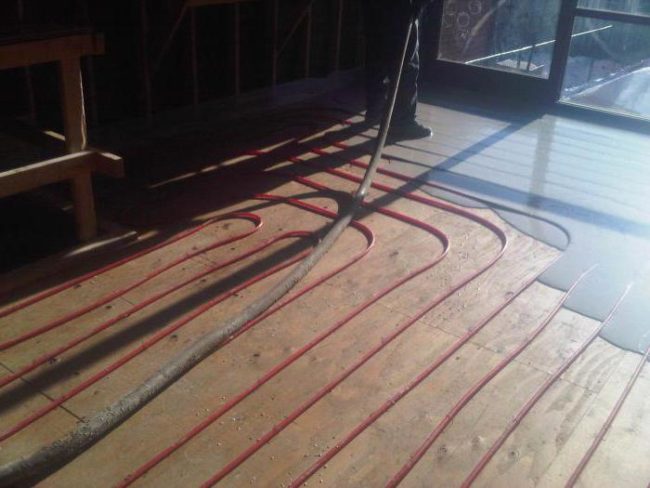
The design includes a cable made of a special alloy with conductive conductors. During operation, electrical energy is converted into heat. To regulate the heat input, the device is equipped with a thermostat.
The cable, embedded in a concrete screed or dry-laid, is laid at a specified pitch beneath the floor covering. When installed in this manner, the floor is raised by at least 3 cm.
Advantages of cable floors:
- long service life;
- low operating costs, since the cable system requires little energy to power it.
The main drawback is that they produce an electromagnetic field, which is undesirable for humans. However, this only applies to the cheapest models, and even these emit low levels of radiation, within acceptable limits. It's also worth noting the significant installation costs.
Please note! Laying cables under wood flooring, such as parquet, cork, or planks, is not recommended.
However, today, modern technology and improved materials, which are developed specifically for heated floors, make it possible to use these coatings.
When purchasing, be sure to check for ISO 14000 and KIMA certificates, which indicate the product's environmental safety.
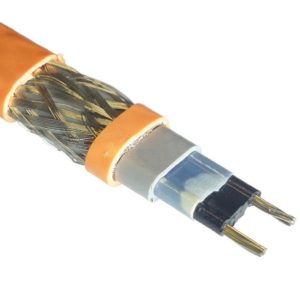
The main types of electrical cable:
- Single-core heating is a simple and inexpensive type. It comes in various lengths and wattages (maximum 20W). It can be used as either a primary or secondary heating source. The connection requires both ends of the cable to be connected to the same location.
- A two-core cable is similar to a single-core cable, but has an insulated metal core with a shield. The difference is that it has two current-carrying cores connected at one end. The advantage of this type is that there's no need to extend both ends to the connection point, making installation easier. Furthermore, a two-core cable has both individual cores insulated, an overall insulation layer, and a reinforcing braid.
Self-regulating cable
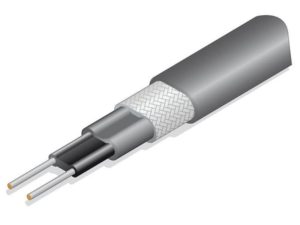
This is an improved type of cable floor, using a semiconductor instead of a conductor. The main advantages of this type of underfloor heating are:
- the ability to regulate the heating level of individual zones, thanks to special technology, which allows for a reduction in electricity costs without reducing the efficiency of the device;
- Incorrect installation does not affect the operation.
The main disadvantage is its short lifespan.
We invite you to take a closer look and find out what it is. Self-regulating cable - what types are there, application features, and step-by-step installation in the screed.
Heating mat
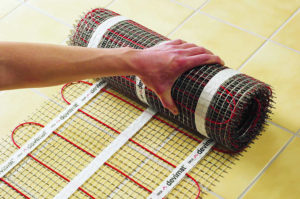
A heating mat is a cable placed at a specific pitch, typically 9 cm, on a polymer mesh. Mats vary in length, but their width is typically up to half a meter. Like all electric floor heating systems, cable mats are controlled by a thermostat, which allows you to set the desired temperature, power, and operating time.
The heating cable cores are shielded, insulated, and sheathed. The shield is made of aluminum-lavsan, making the mats harmless to humans and protecting against potential electric shock.
If you want to know Is underfloor heating harmful to health?, then this article will help you figure it out.
Advantages of the view:
- ease of installation, compared to conventional cable flooring, since there is no need to calculate the pitch, it is enough to roll out the mesh with the wire attached to it;
- the possibility of laying in a layer of glue of 8-10 cm, since a small diameter cable is used for production, the ceiling height is not reduced;
- additional reinforcement due to the polymer mesh on which the cable is laid.
Mats are made from single- and double-core wire. Double-core wire is recommended for rooms where people spend most of their time, such as bedrooms and children's rooms, as it produces low electromagnetic radiation.
It is better to choose a device with one power cord, rather than two.The mat's thermostat can be simple (for adjusting the temperature) or programmable (allowing you to set the on/off time), making it more energy-efficient.
IR film coating
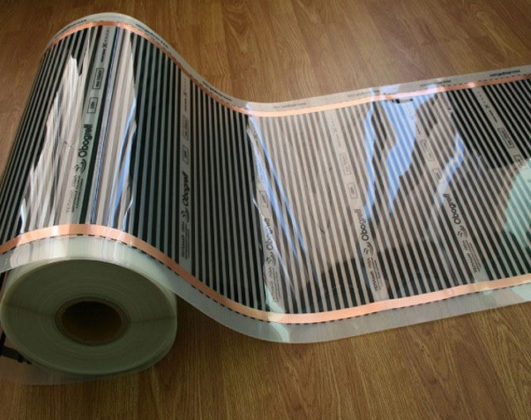
Infrared film is a relatively new product on the market. It's called that because the device emits infrared electromagnetic waves when in use.
The infrared floor has a multi-layer structure and consists of:
- non-conductive substrate;
- heating carbon strips;
- copper or silver wires, through which current passes to the heating strips;
- protective layer.
This type is the simplest and is in demand because:
- The film is universal - any material can be laid on top of it;
- the device is mobile - if desired, it can be attached to the back of the carpet and removed if necessary;
- the design is easy to install - there is no need to pour a concrete screed;
- the floor has low inertia - the heating and cooling process occurs quickly;
- suitable for rooms with high mechanical loads - gyms, offices;
- there is no electromagnetic field;
- economical in terms of energy consumption;
- does not take up ceiling height - thickness 0.4 mm.
Please note! If desired, you can install an infrared floor under a screed, but special models are suitable for this purpose.
It is worth noting that if the film is damaged, only the damaged area fails, while the entire device continues to function.
Disadvantages of the species:
- vulnerability - the film is thin and has many connections;
- the presence of a large number of connecting contacts, which requires testing before installation;
- Additional costs include purchasing connectors, without which high-quality contact between the film and the wires will not be achieved.
Rod heated floor
A rod floor is a modern, environmentally friendly heating system. It also belongs to the infrared category. It differs from a film floor by using carbon rods instead of plates. These rods are connected to each other, a thermostat, and an electrical power supply. When operating, it emits infrared radiation, with a standard operating temperature of 50 degrees Celsius.
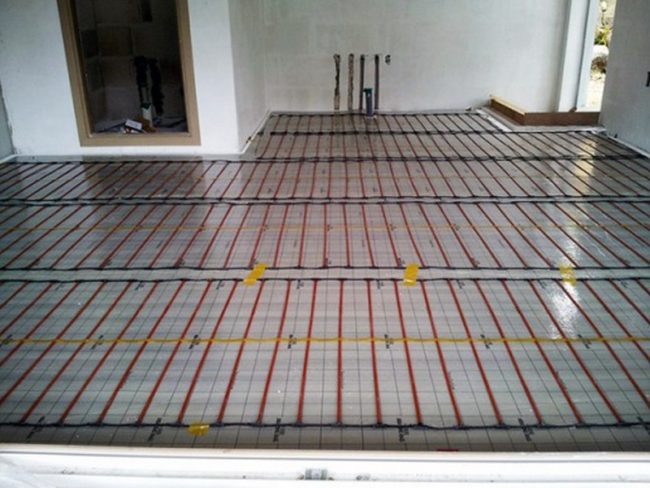
The rod floor is sold in mats. It consists of two copper wires enclosed in a sheath. Between them are carbon rods, connected into a single element by a stranded copper conductor. The system has excellent performance properties, making it very popular.
Among the positive aspects, we can note:
- ease of installation, and there is no need to think through a furniture arrangement plan, since placing heavy objects on the mats will not damage them;
- When pouring, you can use either concrete mortar or adhesive composition; carbon rods are not affected by such contacts;
- Suitable for installation in damp areas;
- If one element breaks down, the entire system continues to function.
The main disadvantage of the rod infrared floor is its high cost.
When purchasing, you should carefully examine all documentation and certificates, as there is a risk of purchasing a counterfeit.
Water-heated floor
Hydronic underfloor heating is a pipe system that carries heated coolant. The flooring is heated by hot water supplied from the heating system or boiler. The coolant flow is regulated by a manifold unit equipped with a pump. The temperature supplied to the pipes should not exceed 45 degrees Celsius.
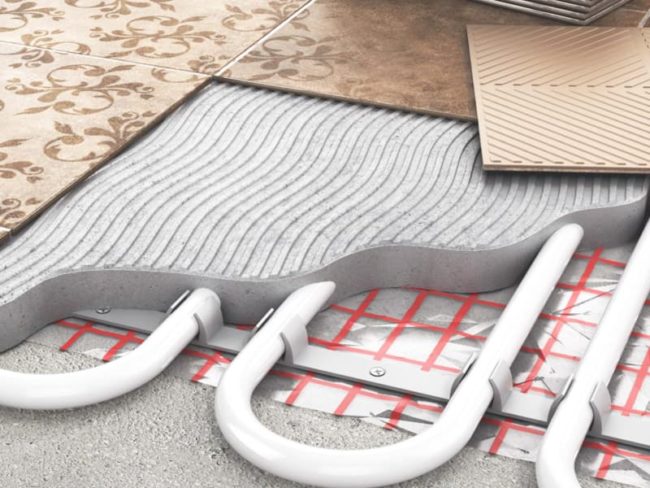
The water system has many advantages:
- heats the room evenly;
- economical - operating costs are not significant;
- Laying over the entire area is permitted - there is no risk of overheating the surface under heavy furniture.
The disadvantages of this type include:
- the installation process is complex and time-consuming;
- the design reduces the height of the ceilings, since it is often filled with concrete screed;
- the complexity of repair work in case of a leak, since it will require dismantling the entire "pie".
Important to know! Such devices are rarely installed in multi-story buildings because they require permission to connect to the central heating system. Furthermore, there is a risk of flooding the neighbors below.
As for the material from which pipes for warm water floors are made, there are several varieties.
Copper
Copper is the most suitable material for hydronic underfloor heating pipes. It is corrosion-resistant and withstands mechanical stress and pressure on the material inside the pipe. It can withstand temperatures from -100 to +250 degrees Celsius. If the coolant inside the circuit freezes, the pipes will not crack.
Please note: When using underfloor heating with copper pipes, it is not recommended to drain the water from the circuit.
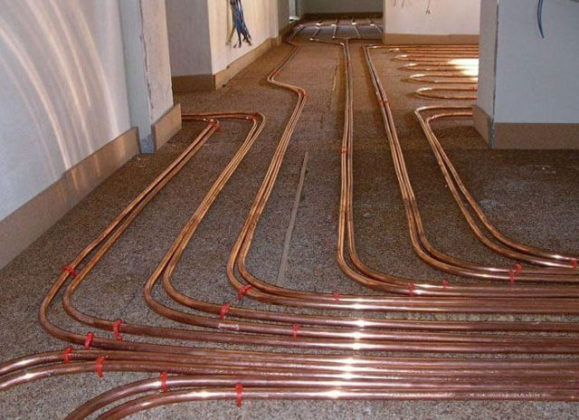
There are a number of limitations when using copper piping:
- It is not permissible to lay steel and copper pipes in the same circuit;
- It is not recommended to carry out the installation yourself, as the work is complex and requires professional equipment;
- It is not possible to use a coolant with an acidic or alkaline environment in order for the main line to last longer.
Copper pipes are expensive, but they pay for themselves thanks to their long service life—more than 50 years.
Warm water floors with copper pipes are recommended for installation in houses with temporary occupancy, where there is a risk of the main line freezing.
Metal-plastic
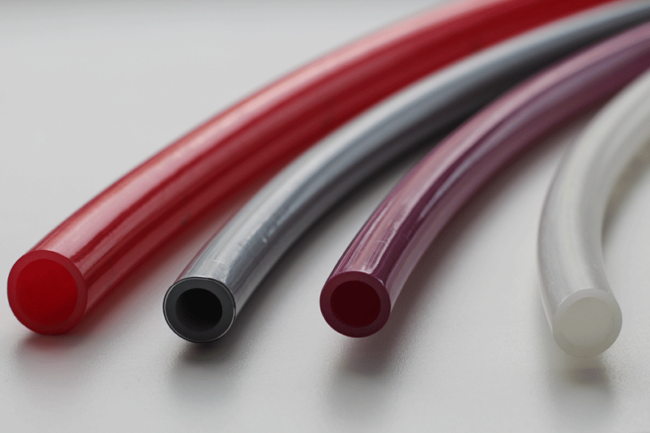
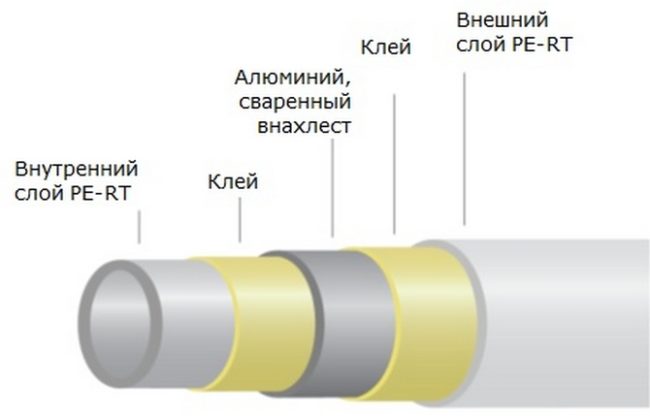
Metal-plastic is a relatively new material consisting of an outer and inner layer, as well as a reinforcing layer with aluminum foil.
Pipes made from this material have high performance characteristics. They:
- durable - up to 50 years;
- corrosion resistant;
- resistant to mineral deposits;
- biologically inert - do not release harmful substances;
- resistant to chemicals - it is possible to add water with various additives or antifreeze;
- lightweight - so it’s easy to install them yourself, without any special equipment;
- have good soundproofing properties.
For your information! Despite the ease of installing metal-plastic pipes, it's advisable to have at least some experience. Incorrect installation can lead to loosening of fittings during operation. Therefore, it's best to ensure that the section of the circuit filled with screed is a single piece. Furthermore, pipes made of this material have temperature limitations ranging from -10 to +95 degrees Celsius.
Polypropylene
Polypropylene loops are affordable and offer excellent performance characteristics. However, they are not recommended for underfloor heating systems. This is due to the material's rigidity, which complicates the bending process. Therefore, experts recommend using them in underfloor heating systems only in exceptional cases, and in rooms not exposed to subzero temperatures.
Cross-linked polyethylene (REX)
This material is relatively new, but has already proven itself. It has some excellent properties:
- temperature range from 0 to +95 degrees, although it can withstand -50 and +150 for a short time;
- the presence of deformation memory, that is, when creased, it is enough to direct hot air to restore the shape;
- has pressure resistance;
- REX pipes are easy to bend;
- it is not afraid of corrosion;
- no emission of toxic substances during operation.
Cross-linked polyethylene is sensitive to ultraviolet rays. This is not important if there are pipes located within the underfloor heating system, but it should be kept in mind when storing the product.
Which system and which manufacturer should I choose?
When choosing a floor heating system for your home, it's important to consider its characteristics and operating conditions. First, consider the area of the room where the flooring is planned and its location. For example, in a private home, any type of underfloor heating is suitable. However, hydronic underfloor heating is not recommended for apartments, and obtaining permission to install it in multi-family buildings is quite difficult.
In addition, the height of the ceilings in the room also plays an important role, because when in the presence of a concrete screed it decreasesTherefore, if the room has low ceilings, it's better to use an infrared system. The characteristics of the ceilings are also taken into account.
After all, a structure with a screed is heavy, and not every floor, especially a wooden one, can support it. In this case, it's better to opt for a type of underfloor heating such as film-based underfloor heating.
The second most important factor when choosing a heating device is its intended use. If the floor is needed as an additional heating source, then an inexpensive film-based underfloor heating system is suitable. A power rating of 80.0–100.0 W/m² is sufficient for additional devices. However, if you plan to use it as the main heating system, you should choose a more powerful type of underfloor heating (120.0–140.0 W/m²): cable or hydronic.
When purchasing electric floors, you should check the apartment's electrical system and its ability to withstand the additional load.
Please note! For underfloor heating to be fully effective, it must occupy at least 70% of the area—this should be taken into account when calculating the area.
Trusted manufacturers of heated floors
Top manufacturers of heated floors that you should pay attention to when purchasing include:
- ENERGY CABLE (UK) specializes in heating cables. Excellent quality at an affordable price.
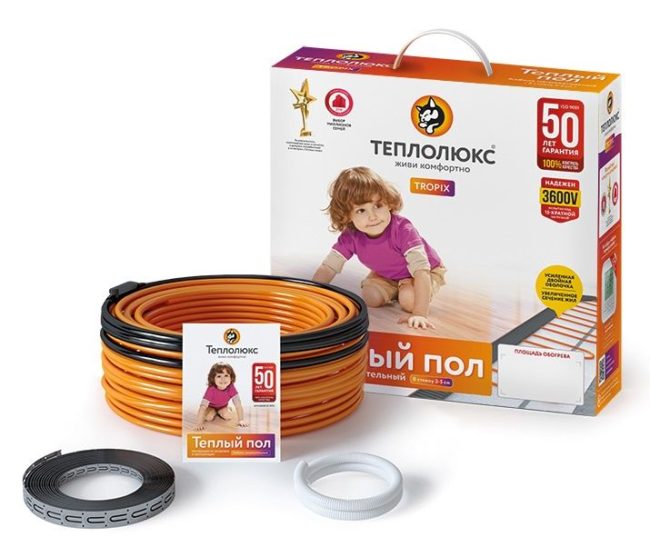
- TEPLOLUX ELITE (Russia) produces high-quality two-core cable products.
- DEVI PIPEHEAT (Poland) specializes in self-regulating underfloor heating systems—a type of electric underfloor heating. Customer reviews indicate that their products are highly reliable.
- WARMSTAD (Russia) produces affordable core floors. They are safe and environmentally friendly.
- ELECTROLUX (Israel) produces infrared rod-type floors. Their products are in high demand due to their quality and power, which are commensurate with their price.
- REHAU (Germany) produces electric and hydronic underfloor heating systems made from cross-linked polyethylene pipes, with a product warranty of up to 10 years.
- SANEXT (Italy) — produces water circuits made of cross-linked polyethylene, as well as manifold units for floors.
Regardless of whether you choose electric or hydronic floors, there are key factors to consider: the quality of the device, certifications, service life, and, of course, the brand name.
If you follow these rules when purchasing, you will not have any problems during installation or operation of the heating system.