Electric heated floors They are no longer considered something out of the ordinary. They are now popular in private homes and high-rise apartments. However, rising electricity prices make them unaffordable for many ordinary people.
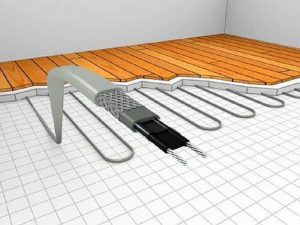
But there is a solution: use a self-regulating heating cable for underfloor heating, which allows for energy savings.
- What is self-regulating underfloor heating?
- Heating cable for underfloor heating – types and their characteristics
- Resistive heating cable
- Heating mats
- Self-regulating cable
- Can self-regulating cable be used for underfloor heating?
- Features of application
- Pros and cons of self-regulating cable
- Which cable should I choose?
- How to calculate the power and amount of cable for heating a room
- Power calculation
- Determining the length of a contour
- Installation of electric underfloor heating with self-regulating cable
- Video tutorials
What is self-regulating underfloor heating?
In a self-regulating heated field, the cable resembles a simple insulated two-wire cable, with two parallel wires forming a closed circuit. It is equipped with busbars that help distribute voltage along its entire length.
The floor's structural features protect it from overheating. And the presence of a conductive matrix allows for cable routing that eliminates cold spots.
If the matrix overheats, the number of conductive connections decreases, thereby cutting off the electricity supply. When the floor cools, the supply resumes.
A special feature of the self-regulating floor is that it can regulate the power supply itself based on the level of heating.
Find out how Call or repair your electric underfloor heating yourself.
Heating cable for underfloor heating – types and their characteristics
Today, the range of cable products is vast. They are divided into groups based on their intended use, power rating, and the material they are made from.
Resistive heating cable
This heating cable has an active load and an elongated shape. The conductor has a constant resistance, higher than that of the power and installation wires. Heating is achieved by insulated copper or special alloy heating conductors. Additionally, the product is equipped with a copper or foil shield with a drain conductor.
Screen functions:
- Reduces electromagnetic radiation, which is necessarily present in a current-carrying conductor.
- It grounds the circuit, and in the event of an insulation breakdown, the electricity will be shorted through the shield and flow into the ground, protecting people from electric shock. Furthermore, circuit breakers and RCDs are tripped.
Resistive cable products are:
- Single-core – it has only one current-carrying core. This type is one of the most inexpensive, but installation is quite complex, as both ends must be brought to a single point and connected to the thermostat.
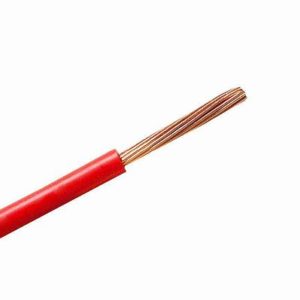
- A two-wire cable has two parallel wires enclosed in a shield. The wires can be of various types, including two heating wires or one heating wire and one power supply wire. At the end of the cable section, a sleeve connects the two wires and insulates them. The advantage of this type is its ease of connection, as the cable simply needs to be laid out according to the planned layout, and there is no need to connect the other end to the thermostat. Furthermore, a two-wire cable produces minimal electromagnetic waves. Naturally, the price of cable products is significantly higher.
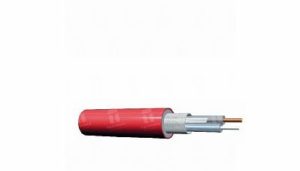
Resistive cables are produced in the form of ready-made sections., which have a fixed size and cannot be changed. The main characteristic of any cable is the specific power of one meter, which should be 10–20 W/m. Exceeding this value is unacceptable, as it may damage the heating elements.
The section length should be selected based on the calculations performed. Since the cable is available in various lengths, from 10 to 110 meters, choosing the right length is easy. The product is sometimes sold wound on reels, from which any length of wire can be cut.
Advantages of the model:
- Reasonable price.
- Constancy of the main characteristics.
- There is no starting current, so there is no need to install special circuit breakers.
But resistive cable also has its disadvantages:
- If the installation is not done correctly, there is a risk of overheating, which can cause the system to fail.
- It is not possible to change the length of the wire without adjusting the characteristics.
- It is necessary to ensure the required heat transfer indicators.
Resistive zone cable
As the cable industry developed, a sectional resistive cable model—the zonal type—was invented. Two insulated conductors are located in the center, wrapped in a high-voltage wire spiral. This wire is connected to one of the central conductors in turn every meter. All sections are independent.
Among the positive aspects of zonal cable, the following can be noted:
- the same specific power along the entire length;
- starting does not require large currents;
- constancy of characteristics.
Disadvantages of this type:
- local overheating is possible;
- heat transfer requirement;
- the cost is the highest, in contrast to the usual resistive cord.
Heating mats
Heating mats are a structure consisting of a cable secured to a special mesh at a specific pitch. Using these mats simplifies the installation of underfloor heating; simply unroll them on a flat surface. They can be laid in a layer of tile adhesive. Various types of cable can be used in these mats.
Important! When fixing them in a layer of adhesive, avoid the formation of air bubbles, as this can cause localized overheating.
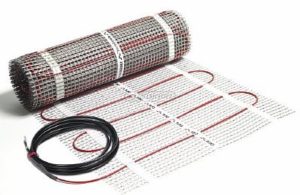
The main disadvantage of heating mats is the difficulty of installing them in rooms with non-standard, geometrically complex layouts.
Self-regulating cable
The most technologically advanced type of heating cable for underfloor heating is self-regulating. It can adjust the temperature based on the room's temperature.
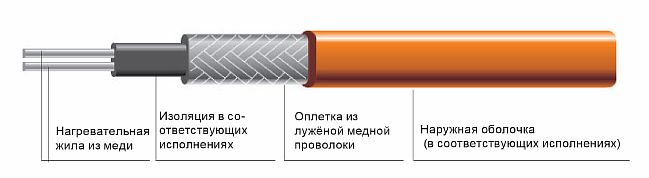
The presented model consists of two conductors with a polymer matrix sandwiched between them, acting as a semiconductor. It resembles a conventional cable, but is flattened rather than round, and can be of varying lengths.
A decrease in temperature causes the matrix to contract, creating thermal conductivity paths with increased resistance. The flowing current heats the matrix and cable.
As the heating temperature rises above the required level, the polymer expands and the number of current paths decreases, eventually becoming very few, and floor heating ceases. All sections operate independently.
The semiconductor is protected by a layer of heat-resistant insulation. Then comes a copper or steel shield, covered with additional insulation. Each cable should be selected based on its operational characteristics.
Can self-regulating cable be used for underfloor heating?
The main function of a self-regulating heating cable is to reduce the power supply when the desired temperature is reached, without compromising the quality or uniformity of surface heating. This feature makes it ideal for underfloor heating installations in any room, from living rooms to bathrooms and toilets.
Furthermore, if you have underfloor heating with a self-regulating cable, you can rearrange furniture in your apartment, as it can regulate the heating level, unlike a resistive cable. This means that heating may decrease under heavy furniture. With a resistive cable, you can't adjust the heat output, which can cause the surface to overheat, leading to system failure.
It's also worth noting the ease of installation of a self-leveling floor, as the electrical cord can be cut anywhere and the end sealed manually. Furthermore, all connections, if installed correctly, can last for years.
Naturally, like any electric floor, a self-regulating one must be connected to the power supply in accordance with all standard protection measures. This means the system must have a circuit breaker and an RCD with a leakage current of no more than 30 mA. The self-regulating cable must be shielded and rated for 30-40 watts. The heating element must be installed at a spacing of 15-20 cm.
Note: A huge achievement is the use of the material's self-regulating properties in film floors.
Previously, this feature was impossible due to the film's small size. Today, infrared film with 30% self-regulating ability is produced in Korea.
Features of application
However, despite the simplicity of installing a self-regulating underfloor heating system, some features of its construction should be noted:
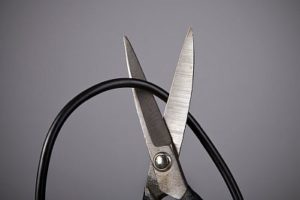
- Cutting must be done during the installation of the underfloor heating system. The length of the self-regulating loop can range from a few centimeters to several tens of meters. The maximum length varies for different types of cord, ranging from 70 to 160 meters.
- When installing underfloor heating systems with self-regulating cables, keep in mind that there is a significant difference in current between the nominal and starting values, ranging from 2 to 4 times. This should be taken into account when selecting control gear.
By following these expert tips, you can properly install underfloor heating yourself.
Pros and cons of self-regulating cable
When planning the installation of self-regulating underfloor heating, keep in mind that the cost of the conductor is high, significantly higher than that of standard wire. However, with a properly designed design, such a system will cost no more than 40 percent more. Despite this, the system is considered cost-effective, and the installation costs will quickly pay for themselves.
The main advantages of self-regulating heated floors:
- Highly reliable, unlike floors with a resistive cord. This cord does not overheat, so the risk of fire or failure is low.
- The heating circuit is not limited to a specific length, which allows it to be laid over any area, even less than a meter, which is not possible with a conventional wire.
- Easy installation using simple regulators.
- Can be used in areas where the use of explosive devices is prohibited.
- Energy savings as only cold areas are heated.
- Independence of specific power from length.
- Inaccuracies during installation do not affect the quality of the floor, and even overlaps do not lead to overheating.
It is worth mentioning that self-leveling floors also have their disadvantages:
- high price;
- are not capable of heating the entire room, but only the floor surface;
- Possibility of installation only in a screed of at least 35 mm;
- periodic wear of the heat-generating matrix;
- service life of only 10 years;
- The starting currents of such a cable are high, especially if there are large cold sections, which is why there is a need for class C circuit breakers.
Important! It's important to take into account the readings of the power supply's protective units. If the temperature around the cable is low, the starting current will be 1.5 times higher than the operating current.
Which cable should I choose?
The choice of a cable product is influenced not only by its specifications but also by the rating of the manufacturer. Preference should be given to reputable manufacturers that produce high-quality products.
Among such manufacturers, the following companies can be noted:
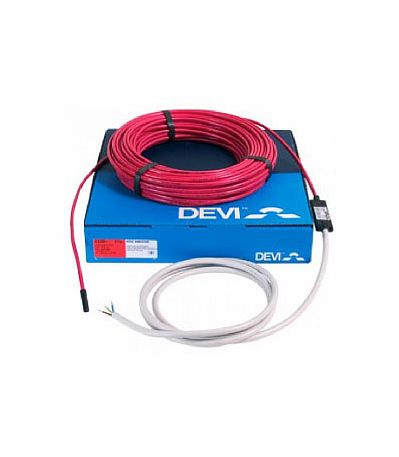
- Devi (Denmark) produces Deviflex 18T resistive heating cables, designed for primary or secondary underfloor heating systems. The included cable is 105 meters long and has a power output of 1880 watts. The company's products offer reliability, quality, and a warranty of up to 20 years.
- Ceilhit (Spain) produces affordable and efficient devices that create comfortable indoor conditions. The company's main product is a two-wire shielded cable with a power output of 220-230 W. The manufacturer's warranty on this product is 16 years.
- Thermal Systems Group (Russia) is a reliable company specializing in the production of heating cables for underfloor heating, including self-regulating and resistive ones. Our products are manufactured using modern equipment and cutting-edge technologies. Furthermore, our heating products are affordably priced.
How to calculate the power and amount of cable for heating a room
Before installing a self-regulating underfloor heating system, you need to calculate the power and length of the circuit. We also suggest finding out How much electricity does underfloor heating consume per square meter? per hour, per month.
Power calculation
When calculating the thermal output of a self-regulating heating system, it's important to consider the specific heating requirements. This means that underfloor heating will be the primary or additional heat source.
However, as mentioned above, a self-regulating cord periodically releases voltage to maintain a comfortable floor surface. Therefore, the heat output will not be sufficient to warm the room, and using a self-regulating floor as the primary heating element is not recommended.
For auxiliary heating, it is recommended to use a cable with a minimum power rating of 110–140 W per square meter for this type of floor. Furthermore, to ensure adequate heating, thermal insulation is required.
The size of the room where the heating element will be installed is also important. It is not recommended to place the heating element under heavy furniture or plumbing fixtures, as this will waste energy.
Based on this, the load calculation looks like this: the area of the heated room is multiplied by the standard per square meter.
Determining the length of a contour
To calculate the required conduit size, consult the cable product datasheet. It specifies the power rating per meter of wire, which ranges from 5 to 150 W. This wide range in voltage rating for self-regulating cables is due to their wide range of applications.
Let's look at determining the circuit length using an example. To heat an electrical cord to 28 degrees Celsius and the underside of the floor covering to 25 degrees Celsius, a 17-watt power cord is required. For an area of 10 m², 70 meters of heating circuit are required.
Installation of electric underfloor heating with self-regulating cable
Installation of any heated floor should begin with purchasing the necessary materials, in accordance with the calculations made.
The process of installing a heating structure with a self-regulating cable is similar to the installation of any electric underfloor heating system:
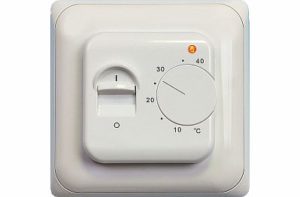
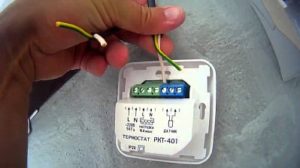
- Install the thermostat. Determine its location on the wall, at least 30 cm above the floor, preferably near the light switch. A recess is made in the wall, into which the thermostat is mounted. A groove is cut from it to the floor, into which a corrugated hose is placed.
- The base is prepared—it needs to be leveled and cleared of debris. If the floor has significant unevenness, it's best to pour a thin layer of subfloor screed.

- Waterproofing and thermal insulation work is carried out by laying two layers of material. First, a waterproofing layer—this can be a polyethylene film—is applied, followed by heat-resistant thermal insulation, preferably with a metallized surface. Before installation, the perimeter of the room is sealed with damper tape to compensate for the thermal expansion of the screed when heated.
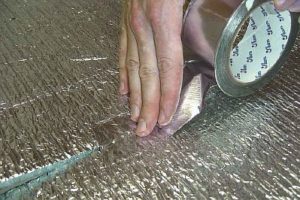
- The self-regulating cable is laid according to the planned pattern (snake or snail). It must be continuous, starting from the thermostat. The spacing of the heating element is crucial. The smaller the spacing, the faster the floor heats up. Larger spacing will result in cold spots. The recommended distance from walls is 15 cm.
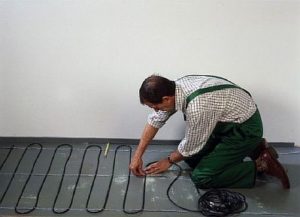
The cable is fixed to the reinforcing mesh, which is laid on the thermal insulation, or to the substrate using special adhesive tape.
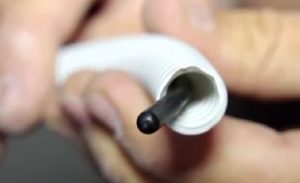
- A floor temperature sensor is installed—its electrical cord should be connected to the thermostat through a corrugated pipe. The sensor is installed in the center of the room, between the two wires.
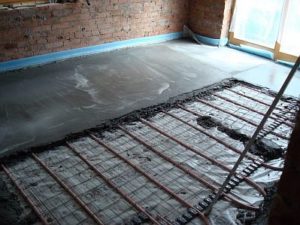
- The final screed is poured—the concrete layer must be at least 6 cm thick. The floor is poured in one go, and after the mortar is leveled, the concrete surface is left for 4 weeks to fully harden.
Important! Apply the screed only after checking the cable for proper operation. The resistance in the wire is checked using a tester. The reading should match the specifications, with a 10% deviation allowed.
- The heating element is connected to the thermostat using special clamps.
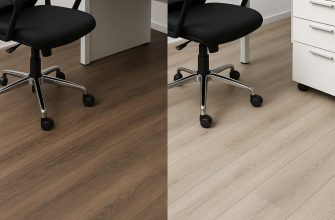
- The final covering is laid - any material (tiles, laminate) that can be adjacent to the heating.

Using self-regulating cable in underfloor heating systems is both cost-effective and convenient. This design eliminates the risk of overheating the heating element, making it safer. And the ability to independently regulate the temperature makes it easy to create a comfortable atmosphere in the home.


What is the purpose of a thermostat if the cable is self-regulating?
Hello. The self-regulating cable doesn't shut off completely when it heats up, and it still consumes electricity. The thermostat saves energy and also protects the cable from overheating.