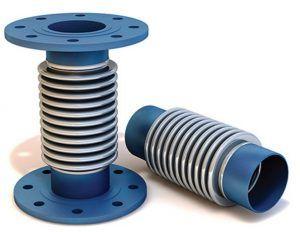
An expansion joint is a device designed to compensate for temperature expansion, vibration, pressure changes, and displacement. It helps avoid, stabilize, or minimize the undesirable consequences of these factors. It is used in trunk pipelines for various purposes.
 Modern heating networks are very extensive, and in our climate, maintaining them in good working order requires significant effort. Therefore, improving the performance and reliability of heating networks is a pressing issue.
One solution to this problem is expansion joints for heating pipes. These expansion joints are used not only on main pipes and distribution networks, but also within building heating systems (and other systems).
Types of compensators
Structurally, such devices come in the following types:
- Gland expansion jointsThese types of expansion joints for pipelines can smooth out thermal expansion in long heating and water supply lines. They are the oldest type of heating main fittings, although they are still used successfully today.
 Compared to bellows expansion joints, these types of heating and water supply system components have more significant drawbacks. These include the need for constant leak monitoring. They also poorly withstand the angular stresses of the system. These drawbacks are compounded by the difficulty of repair and high maintenance costs. Any inexperienced plumber will logically ask: why install these mechanisms in heating and water supply systems if they have so many shortcomings? Is such compensation necessary? The answer is that gland expansion joints boast a very high compensating capacity, and this becomes a priority when selecting them. They are constructed of steel and comprise two shells of different volumes. One shell is inserted into the other, and a special gasket is installed between them. Without it, sealing of the stuffing box and relative movement of the two parts is impossible. The pressure in a pipeline with such an element can rise to 2.5 MPa, and the maximum temperature can reach +300 degrees Celsius. Stuffing box expansion joints are further subdivided into single-ended and double-ended. The double-ended type is distinguished by its three main components (two internal and one external).
 It has already been said that these devices are characterized by a high compensation capacity, and it increases proportionally to the increase in the network volume.

Important! While sealed valves withstand temperature conditions well, they are not approved for use in systems exposed to aggressive chemical environments. This is because their packing is poorly resistant to such influences. In such environments, the use of bellows or rubber valves is recommended.
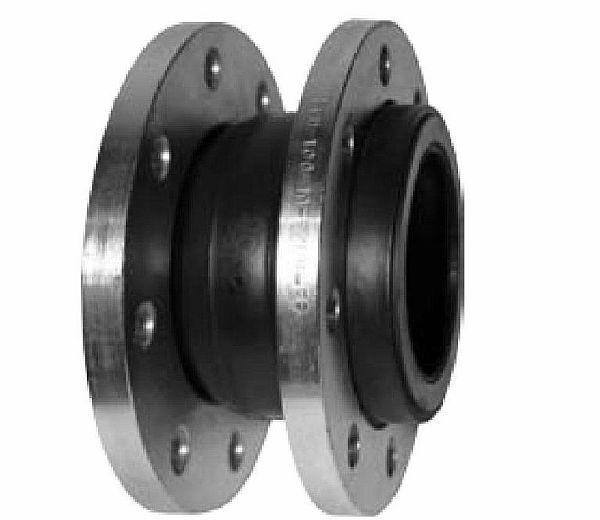
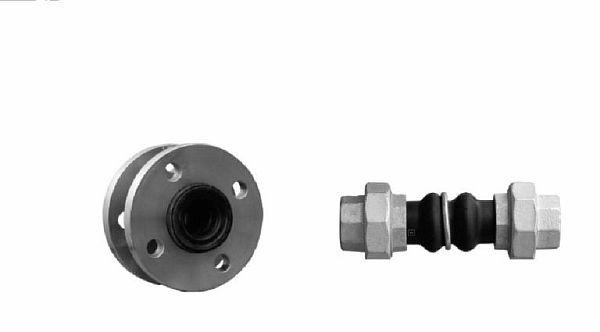
- Rubber expansion jointsThese anti-vibration inserts are also a type of expansion joint that protects polypropylene or any other pipeline. Their distinctive feature is the presence of a rubber working element, which exhibits special physical properties. The estimated service life of these pipeline components is twenty years, during which time no maintenance or repairs are required.
 The advantages in this case include the fact that the U-shaped expansion joint in a heating system is less susceptible to cyclic displacement than when initially installed. Rubber types also better withstand short-term axial deformations (compression or extension). Compared to U-shaped devices, rubber devices better withstand sudden interruptions in circulation and the formation of a vacuum. After flow is restored, they continue to function. These mechanisms can be installed in structures pumping aggressive chemical media. They also maintain their performance when the temperature rises to 200 degrees Celsius. Unlike U-shaped expansion joints, this type of device is preferable for installation in low-pressure systems where vacuum formation is possible. The working element in these mechanisms is located between steel flanges, and the inner layer is a rubber shell. This element, in fact, performs a protective function internally. The maximum pressure in the heating system that these types of compensating elements can withstand is 2.5 MPa.
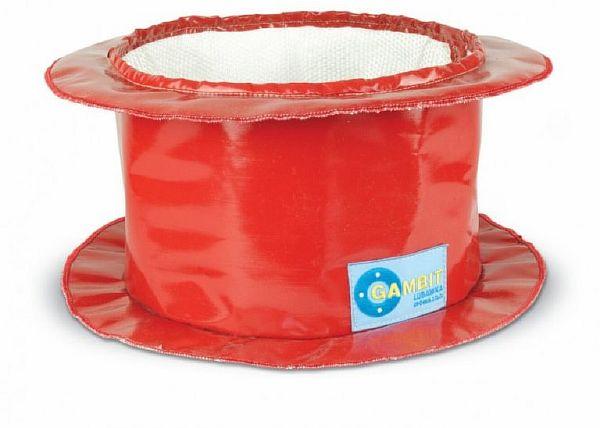
 - Fabric compensatorsThis is a special type of expansion joint that can be used to smooth out thermal expansion in gas pipelines operating under low pressure.
 When manufacturing these elements, special attention is paid to the strength of the base material. This material typically boasts high frost and UV resistance. The insulating coating on these elements can withstand high temperatures and is resistant to mechanical damage to the heating network. These components are complemented by a heat-protective casing. Fabric mechanisms come in the following types: devices for use with aggressive chemical environments; devices for installation in high-temperature pipelines; mechanisms for operation in low-temperature conditions; and multilayer devices with internal insulation.
 - Lens type devicesLens expansion joints for pipelines are distinguished by their effective operation in smoothing out axial or angular displacements of the heating network caused by temperature effects. This mechanism is composed of lenses. Each lens is a semi-lens welded around a circumference of stamped steel. Due to their design, these devices expand and contract, thereby smoothing out the expansion. Compared to bellows-type devices, this type has the advantage. Lens expansion joints for heating or water supply mains better withstand high temperatures and exhibit higher rigidity. However, they cannot function at the very high level in heating mains. This type of mechanism is widely used in industry. Lens mechanisms according to GOST come in the following types: axial KLO; angular mechanism; rectangular PGVU; round PGVU. Lens expansion joints can be found in boiler rooms, small sections of polyethylene mains, and other pipelines where high thermal compensation is not required. In addition, they are found on blowdown lines and near pumping equipment.
- Flanged optionsThese compensators, as the name suggests, are connected to the main line via flanges. The main advantage of these devices is their relatively simple installation. The bolts are tightened using free-rotating flanges.
 However, when using these mechanisms, it's important to remember that they are not repairable. If they break (or become unsealed), they must be replaced. These devices also require regular inspection and tightening of the bolts. Painting these types of compensating mechanisms is not recommended due to the potential for surface damage.
 - Radial options for thermal compensation on pipelinesThese types of expansion joints for heating networks work effectively on heating and water supply mains laid in zigzag, serpentine, or slightly curved compensating sections. In most cases, these types of expansion joints for heating networks are considered the most appropriate because they easily accommodate cleaning devices (such as pistons). This type of expansion joint is advantageous because it can be installed on heating and water supply mains of any configuration. However, experts recommend installing it only after natural compensation methods fail.
- U-shapedThey can be horizontal, vertical, or inclined. Their main purpose is to compensate for thermal expansion and dampen vibrations in the piping system.
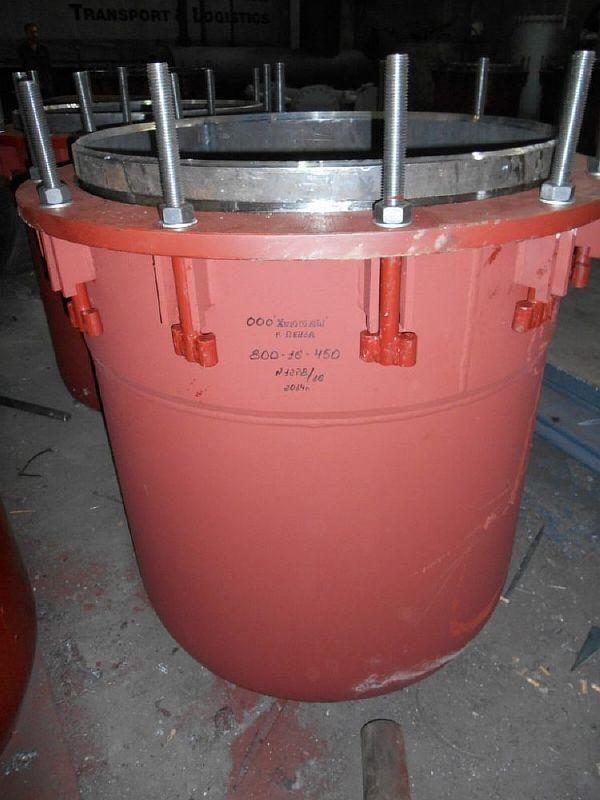
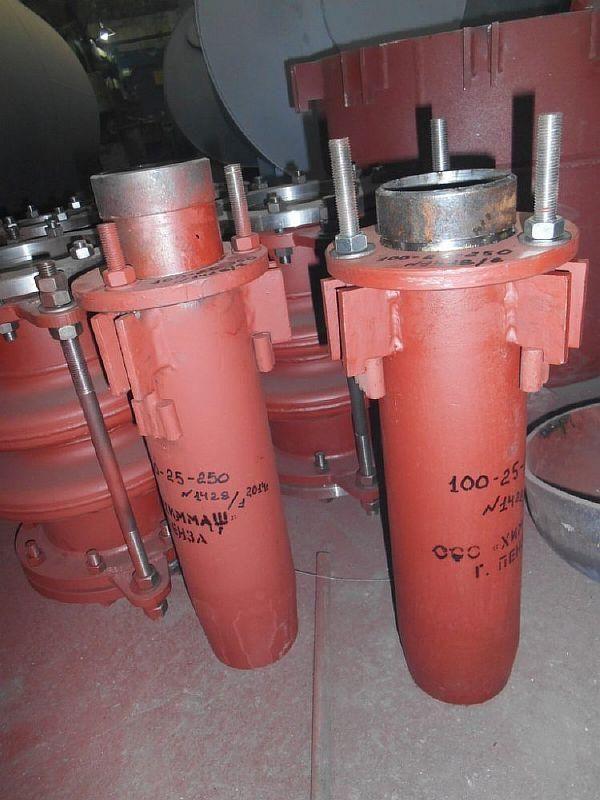
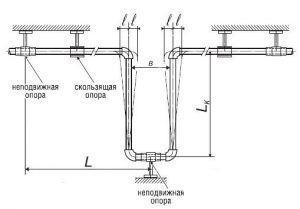
The installation of compensating systems is highly desirable on heating system pipelines and hot water supply distribution systems of in-house heating networks of a private home.
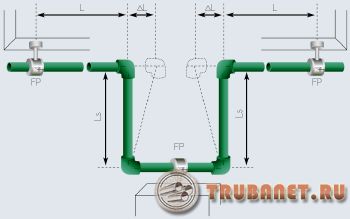
Installation of expansion joints is mandatory regardless of the pipeline material;
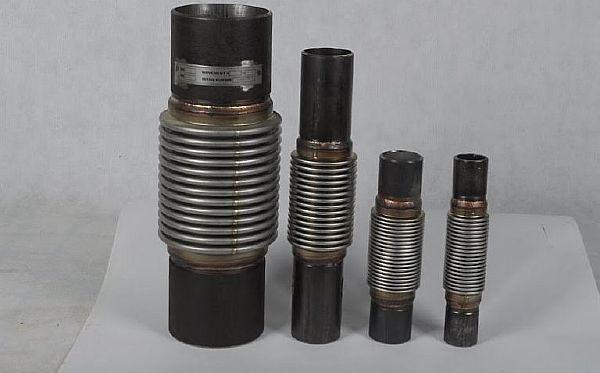
- Bellows devices – a structure in the form of a corrugated, double-layer, thin-walled pipe, the inner part made of 12x18N10T sheet steel, and the outer part made of similar grade St.20. This composite solution provides the product with sufficient strength while maintaining the specified safety properties.
 These inserts respond almost perfectly to the expansion or contraction of the pipe under temperature, significantly reducing vibration. They can be used with pre-tensioning to increase vibration amplitude. The advantage of these mechanisms is their ability to withstand increased loads and their compact size, significantly reducing the amount of excavation work required.
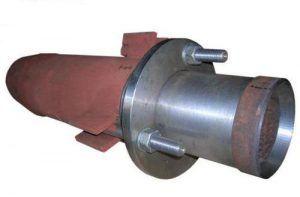
 - gland fuses – are a combination of two pipes of different diameters, integrated into each other via gland packing and a gland follower. The inner part is free to move within the outer part, and leaks are contained by a seal. Structurally, this is the simplest type of expansion joint for heating systems, but it performs its intended function quite reliably.
 When using such devices, there is a need for constant monitoring of their operation with periodic tightening of the bushing, which is carried out during preventive inspections. Thus, there is a need to install inspection wells., as well as premises in the heating main for maintenance;
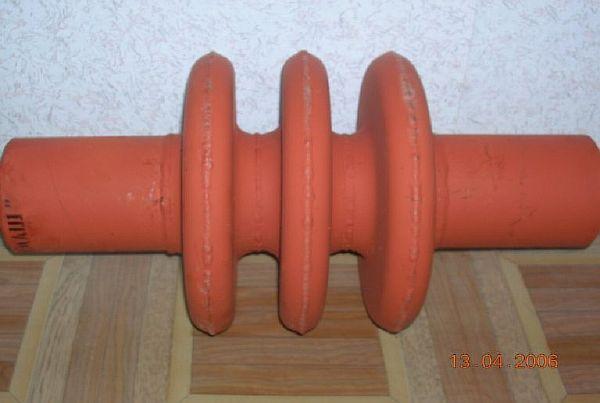
 - lens compensators – are installed on hot water supply pipelines (in particular) to compensate for thermal linear expansion
 These products are constructed from half-lenses stamped from sheet steel and welded along the flange. They are available in single-, double-, triple-, and quadruple-lens configurations. They are attached to the pipe by welding or flanges. Expansion joint sizes range from 100 to 2020 mm in diameter. They are installed on fixed sections of heating pipes. Both angular and straight versions are available. Square and rectangular compensators are also used for high-temperature air ducts.
 - safety rubber structures – are used as vibration-damping inserts in various pipelines to dampen vibrations from pumping equipment when pumping various media, as well as slightly aggressive solutions at temperatures from -10OFrom up to +110 at a pressure of 1.0 – 1.6 MPa.
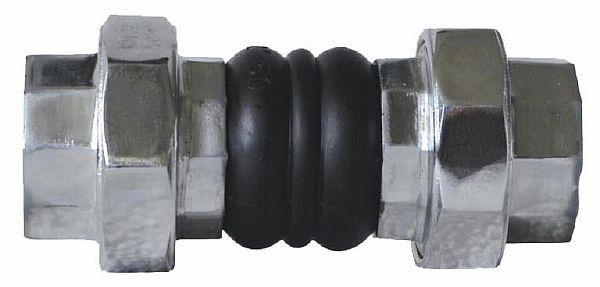
In addition to its primary function of vibration damping, it successfully works with thermal deformations of heating pipes, as well as in the event of radial displacements and angular deformations.
This type of compensator is the most common for use in water supply systems, since, despite its reliability and simplicity, it has the lowest cost.
Why are these devices needed?
Expansion joints for heating mains are crucial components. Not everyone has an accurate understanding of the loads under which a heating main or pipeline operates. Their operation is constantly affected by temperature and pressure.
High loads from pressure, water hammer, and temperature cause compression and elongation of the network material. All these factors lead to deformation and damage to the system. If all this is not taken into account and protective elements are not installed, the system will quickly fail.
It's best to select a special mechanism at the system planning stage, after first calculating the potential overload of the heating or water supply system. Afterward, a flexible structure capable of compensating can be installed.
The use of load-smoothing components is recommended for all main lines. It is important to understand that the trouble-free operation and reliability of heating pipes, whether made of steel or plastic, directly depends on the correct compensation solution.
Compensation mechanisms, in turn, are also made from various materials. Therefore, choosing the right device for a given situation requires careful consideration, as this is the only way to extend the lifespan of a heating or water supply system, thereby saving on costly repairs.
Expansion joints on polypropylene pipelines
Composite materials and plastics are increasingly being used in pipelines. Although the coefficient of linear thermal expansion of plastics is significantly lower than that of metal, compensating for thermal deformations is no less important. Vibrational loads are also highly undesirable for pipelines made of such materials.
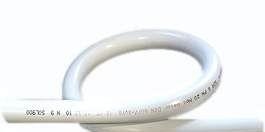 Safety device, The loop-shaped polypropylene pipe loop appears to be an extremely simple design, allowing for easy installation into the heating network. These products are widely used for all types of pipelines.
Using such fuses eliminates the negative impact of water hammer and sudden temperature increases (in the heating system). Thus, they can be considered safety devices that ensure the integrity of the heating or hot water supply system.
Purpose of expansion joints for heating
Devices of this type perform specific but extremely important functions:
- Damping pipe vibrations generated by pumps throughout the network. Even if this phenomenon isn't tactilely or visually perceptible, it's always present. Especially dangerous is when the pump vibration frequency matches the natural frequency of the pipeline. This can cause resonance, which can greatly increase the amplitude of vibrations, quickly damaging the pipeline system.
- Compensation for linear thermal expansion in networks caused by changes in coolant temperature. The resulting expansion or contraction of pipes causes additional stress on welded or socket joints, reducing their service life and potentially leading to their failure.
The use of such fuses on heating system pipes significantly increases their service life and extends the time between repairs on heating mains.
Installation of expansion joints is currently a mandatory measure during the construction of heating networks.
Installation of expansion joints on heating system pipelines
Expansion joints installed in a residential building's heating and water supply systems must comply with design documentation. They are secured by welding the fittings to the pipeline.
Expansion joints are installed in the absence of pressure or pumped products in the pipeline. It is necessary to check the alignment of the pipe with the expansion joint body to avoid radial loads on the system during operation. Such loads can cause jamming and failure of the device's moving parts.
Installation of these structures on heating system pipelines should begin after the section has been secured to fixed supports and only on straight sections. In vertical sections, avoid placing the system's weight on the compensator.
In addition to fixed supports, sliding supports must be installed on the pipeline to prevent its deformation under load due to thermal expansion.
The amount of friction at these nodes is taken into account when calculating the maximum length of the expansion joint section during design. If bellows-type devices are installed, suspension-type supports cannot be used in this section.
When designing fixed supports, the following must be taken into account:
- The force created by the compensator "on thrust".
- Rigidity force of the device.
- Friction force in sliding supports.
The compensators are not serviced and must be replaced with a new one if a malfunction occurs.
Manufacturers
The market for these products is typically filled by domestic manufacturers. Their products are characterized by acceptable quality and reliable operation. Armartek successfully produces rubber vibration inserts; their proprietary products are compact and easy to install.
The production of bellows expansion joints is actively developing, and they are represented by the companies "Metalkomp" and "Kompenz" with quite decent quality.
Conclusion
Various designs of heating compensators significantly increase the service life of heating systems as a whole, eliminating additional loads.
The cost of purchasing and installing them is more than offset by the long life of the heating system. Good luck!