Draft is the natural movement of air from the heating unit to the outside environment, removing combustion products from the living area. The combustion process in the stove depends on its strength: if it is insufficient, the fuel will burn slowly; if the draft is too strong, a significant portion of the thermal energy will be released into the atmosphere.
Insufficient draft is also dangerous because some of the combustion products may enter the living space, causing serious poisoning in residents, even death.
Furthermore, improper chimney ventilation can cause a fire. The flame temperature of burning soot is so high that it can burn through even fire-resistant brick.
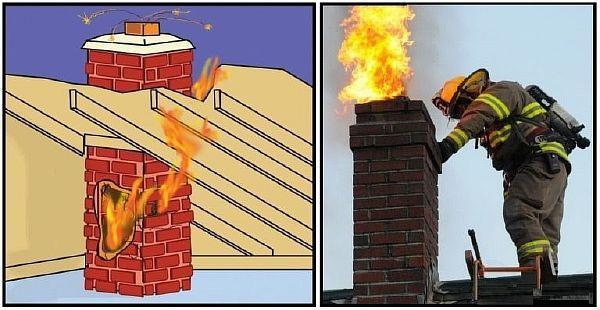
Controlling the hood is an essential condition for safe and comfortable living in the house.
- Poor hood ventilation - causes
- Preventive maintenance of the chimney
- Forced extraction by additional means
- Weathervanes or weather vanes for forced ventilation
- Rotary turbines for forced draft
- Smoke exhausters or smoke fans
- Deflectors
- Umbrellas, chimney caps and hoods for forced exhaust
- How to make a forced-draft exhaust system yourself
- Tips and recommendations
- Video on increasing furnace draft
Poor hood ventilation - causes
Before discussing the use of forced draft chimney exhaust systems, let's take a look at the process itself and the causes of decreased draft in the chimney.
The set of factors influencing the efficiency of a chimney exhaust can be divided into three groups:
- Internal conditions in the house:
- Conditions for the movement of air flows inside the premises.
- Air temperature in the heated area of a residential building.
- The total volume of air inside the rooms that are connected to the firebox of the stove through the ash pit.
- The number of other oxygen consumers living in the house – people or animals.
The draft of a chimney can be affected by secondary factors that depend on the design of the house, as well as any changes made to it.
For example, installing double-glazed windows instead of regular windows leads to a decrease in draft, since the latter are more airtight and reduce the flow of oxygen from the atmosphere into the house.
- External factors:
- Air humidity and temperature.
- Atmospheric pressure size.
- Activity and strength of ascending air currents.
- The intensity of inversion air currents directed from top to bottom.
- Energy and direction of wind flows.
The combined effect of the above factors leads to constant changes in chimney draft; this process must be constantly monitored to ensure optimal removal of combustion products from stoves, fireplaces, and other heating units.
- How do flue design factors influence:
- The location of the chimney is external (wall-mounted) or internal.

- The length of the flue pipe and the number of elbows and adapters.
- The surface quality of the exhaust hood inside the channel is characterized by the fact that rough surfaces accumulate soot more actively, which is the main reason for the deterioration of draft inside the chimney.
- The height of the chimney and the position of the top point of the pipe relative to the roof ridge.
- Chimney shape: a rounded or oval shape works best, while a square or rectangular shape works worse.
- The intensity of heat exchange through the flue gas duct body; the better the insulation of the pipe walls, the better the exhaust.
- The location of the chimney is external (wall-mounted) or internal.
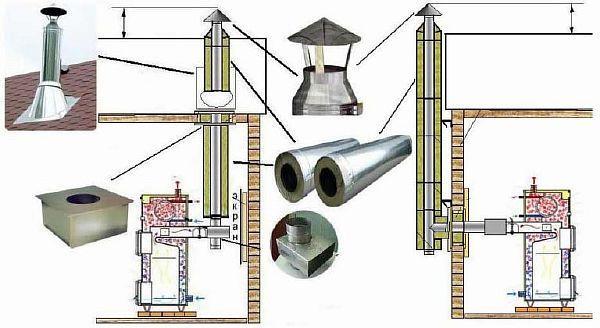
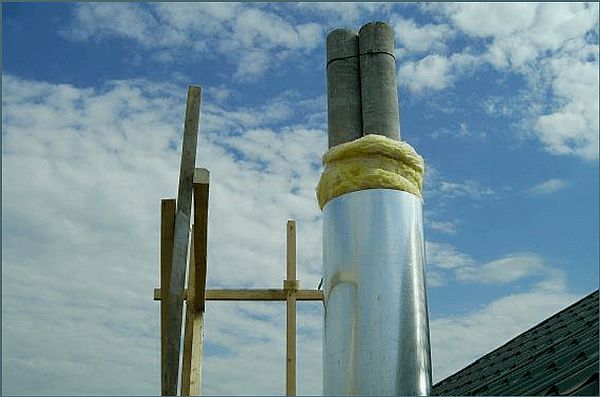
The effects of the factors in the first section can be controlled conditionally, unless the chimney is already installed. The factors listed in the second section are completely independent, but can be easily adjusted to improve exhaust performance.
The factors in the third section are entirely dependent on human intervention and can be influenced from the design stage. Once the hood is ready, any deficiencies can be corrected during repairs by installing a round insert inside the pipe, insulating the chimney walls, or modifying its external structure.
Preventive maintenance of the chimney
To avoid the need to use forced exhaust ventilation for a heat-resistant chimney, it is necessary to use preventative measures to maintain it in working order.
Since the main reason for the decrease in the intensity of flue gas extraction is the reduction in the passage of soot accumulated on the walls of the pipe, we will consider the means of combating this phenomenon.
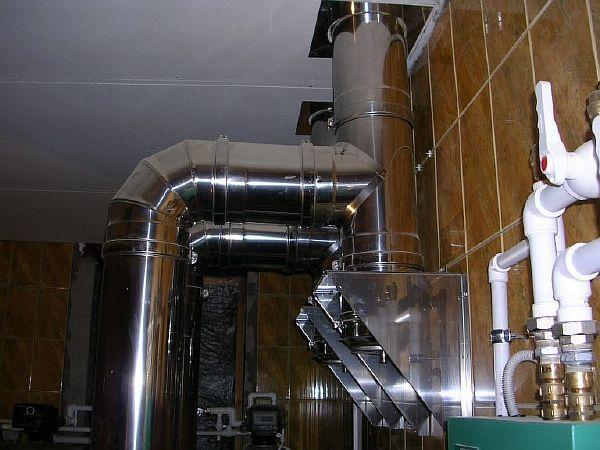
These methods can be:
- Burn about half a tablespoon of naphthalene in the furnace firebox. The naphthalene vapor breaks down the soot into loose particles, with the larger particles falling into the firebox and subsequently removed with the ash, while the smaller particles are expelled through the chimney along with the flue gases. This product should not be used on fireplace flues or open hearth chimneys, as it leaves a characteristic suffocating odor in the room.
- Burn potato peelings in the firebox from time to time. Dry them first. The starch vapors loosen the soot, causing it to fall into the firebox. Pure starch, added to a well-lit firebox in the amount of one tablespoon, has a similar effect.
- Walnut shells are a good way to clean soot from pipes. They burn at high temperatures, removing the soot deposits on the inner walls. A single dose of shells should be no more than three liters. Use as needed.
- Aspen firewood has a similar effect on soot. One or two logs are burned at the end of the last load of wood. They burn at a high temperature.
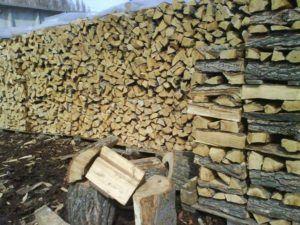 High-temperature cleaners should be used regularly, at least twice a week, to prevent soot from accumulating. Otherwise, a serious fire could occur, as soot burns with the release of a very high amount of heat.
In addition to those listed, there are many soot control products on the market, both chemical and thermal, that break down soot. Preventative measures can eliminate the need for forced chimney extraction.
Forced extraction by additional means
The need to install additional forced ventilation systems may arise for natural reasons, for example, if trees have grown on the site, changing the direction or intensity of wind flows.
Weathervanes or weather vanes for forced ventilation
This device protects the chimney from wind. Like any weather vane, it rotates downwind, protecting the chimney cap from the wind. As the wind flows around this device, it creates a vacuum above the chimney mouth, thus creating a forced draft.
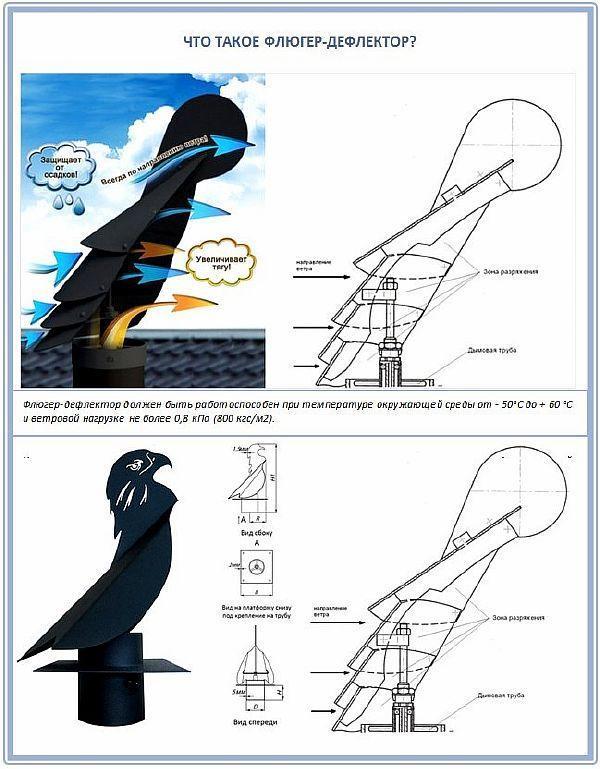
The heat-resistant material used to make such a weather vane is typically stainless steel with a thickness of at least 0.5 millimeters. Rotation around the axis occurs on sealed, maintenance-free bearings. Condensation and soot deposits do not accumulate on the device's body.
However, it requires maintenance to remove ice buildup. Design flaws include unstable operation in strong winds. Under normal conditions, the wind vane fan operates reliably and efficiently, creating forced draft within the chimney.
Rotary turbines for forced draft
These are mechanical devices installed on a chimney stack and use wind energy to generate rotation. They are manufactured by companies like Turbovent, Turbomax, and others. The direction of rotation is independent of wind direction.
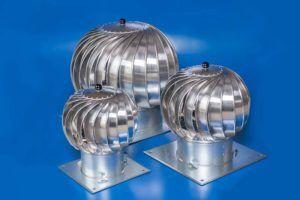
Thanks to its design – a ball formed by a system of petals – the turbine rotor reliably protects the chimney outlet from contamination by debris and leaves, as well as from nesting birds during breaks in the heating season.
A disadvantage of rotary turbines is that they don't operate in calm weather and continue to rotate when not needed—during the non-heating season. They are often used for ventilation systems.
Smoke exhausters or smoke fans
These devices are heat-resistant fans installed in the chimney duct to force the draft to increase draft.
A smoke exhaust fan should not be confused with fireplace fans, which are designed to increase draft in a fireplace or hearth and are installed indoors to supply air to the firebox. Fireplace fans are designed to evenly distribute heated air throughout the room.
A smoke exhaust fan is a 220-volt electric motor with an impeller. It is designed to create additional forced draft within the fireplace's reduced-diameter smoke ducts.
New models of smoke exhausters coupled with a turbofan are now available. This unit operates when there's no wind, and when the wind picks up again, the exhauster shuts off. When the wind speed is insufficient or absent, the fan turns on and creates the necessary forced draft.
High-temperature chimney fans can easily withstand heating of furnace gases up to 600 degrees.
Deflectors
A chimney deflector is a device that operates using the laws of aerodynamics. When air flows around the deflector body, a vacuum is created above the chimney mouth, forcing the chimney to draw air more efficiently.
We invite you to take a closer look at How a deflector works, how to choose the right one, or how to make one yourself.
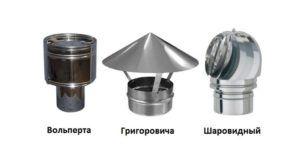
What's simple is perfect. This statement applies specifically to deflectors. Lateral horizontal winds and airflow reflected off the roof surface enhance chimney draft. Deflectors prevent strong winds from reversing the draft, acting as a smoke extractor for the chimney, but they don't work in calm weather.
Initially developed for ventilation systems, deflectors have since been successfully used as draft enhancers in chimney hoods. Stainless steel products resist corrosion and withstand high furnace gas temperatures.
In the absence of wind, the deflectors act as caps, reducing chimney draft.
Umbrellas, chimney caps and hoods for forced exhaust
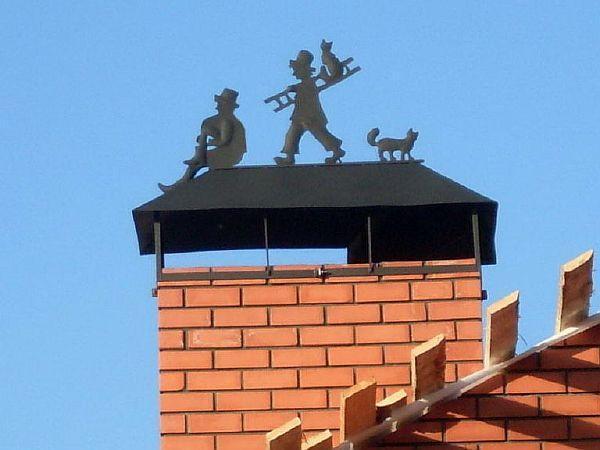
Smoke hoods, caps with mesh debris covers, mushroom caps, and other chimney extensions are the work of blacksmiths and tinsmiths. They certainly serve a useful purpose in protecting the chimney, preventing debris from clogging it.
However, any of these devices becomes an obstacle to the exit of hot gases from the chimney and, under certain conditions, especially in windless weather, reduces the amount of draft and can be one of the reasons for its reversal.
How to make a forced-draft exhaust system yourself
Most weather vanes and deflectors can be made at home using sheet steel and standard fasteners. Calculation procedures for matching pipe dimensions and drawings for these products are abundantly available online. DIY construction requires no special tools or equipment, and basic metalworking skills are sufficient.
Tips and recommendations
From the above, one can draw a clear conclusion: not every device is suitable for improving chimney draft. When deciding on a method to improve draft, the following rules should be followed.
Inspect the chimney to determine the causes of insufficient draft. These may include:
1. Clogging of the chimney walls with a large amount of soot. 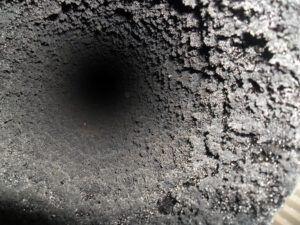 This very circumstance can impair draft, leading to complete blockage of the gas boiler flue. This can be caused by using resinous wood or furniture manufacturing waste (plywood, chipboard, fiberboard, and similar materials) for heating. A cold chimney can also be caused by a lack of insulation.
2. Excessive chimney turns (one turn and no more than two elbows are allowed). It may be necessary to extend the chimney outside and install a wall-mounted version. The use of a chimney fan is also acceptable in this case.
3. Incorrect elevation of the head above the roof ridge, resulting in the draft being “pinched” by air currents.
4. Chimney height. The distance from the firebox to the top of the chimney should be at least 5 meters.
5. The absence of trees near the house that block the flow of wind.
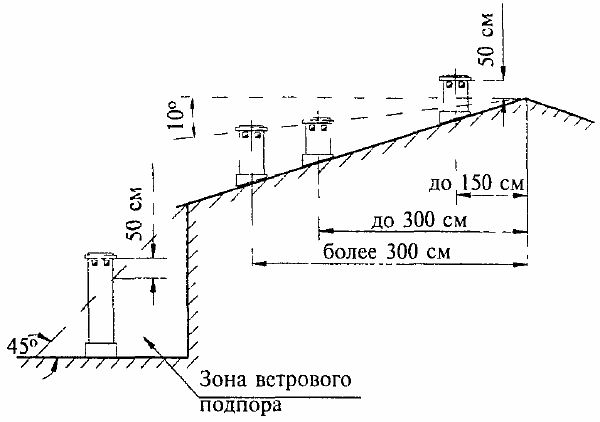
Only after making sure that such obstacles are absent can a decision be made about installing a device to create forced draft.
Installing a round liner inside a square or rectangular pipe can improve draft in a boiler chimney. These products are specifically designed for this purpose and can be purchased at a hardware store. If the resulting cross-section is insufficient for good draft, a ducted flue extractor for a round chimney of a suitable diameter can be installed inside.
It's not advisable to use deflectors as a smoke exhaust for a stove chimney if the climate has many windless days. However, weather vanes at least allow smoke to escape naturally.
Video on increasing furnace draft
In any case, a heat-resistant chimney fan installed in the chimney duct will be effective.