A bathroom design is based on the room's dimensions, personal preferences, and the owner's budget. When creating a design, it's important to consider many factors: the overall style, finishing materials, plumbing fixtures, lighting fixtures, mirrors, and furniture.
Designing a small bathroom is a particularly challenging task, as it requires cleverly and compactly arranging numerous elements without overloading the space.
- Design features of different types of bathrooms
- Space zoning, redevelopment
- Choice of style and materials
- Color solutions and finishing methods
- Decor and accessories
- Selecting plumbing fixtures
- Lighting, mirrors
- Furniture
- Bathroom design of different sizes
- Room 4 sq.m.
- Room 6 sq.m.
- Large bathroom
- Design project with a shower cabin
- Bathroom renovation
Design features of different types of bathrooms
When designing a bathroom, there are several things to consider to make the space as comfortable and aesthetically pleasing as possible:
- When choosing a color palette, it's important to consider the size of the bathroom. For example, a small bathroom with or without a shower is best decorated in light colors, as dark colors will make the space feel smaller.
- It is not recommended to use wood as a finishing material, even if you're implementing a classic or eco-style interior. Due to high humidity, the material will quickly lose its original appearance and strength. If using wood is essential, pre-treat the surface with a specialized product. This will close the pores and prevent water droplets from penetrating, helping to temporarily protect the material from losing its shape.
- It's advisable to install a suspended ceiling during renovations. In addition to other important structural properties (aesthetics, reliability, and durability), it will help save your bathroom furniture and finishes if flooded by neighbors upstairs. Such situations are quite common. Therefore, the best way to minimize damage is to install a suspended ceiling, which will absorb all the liquid and prevent it from leaking further.
- If you have a very small room, it is recommended to choose corner shower or bathtub models, as they take up significantly less space;
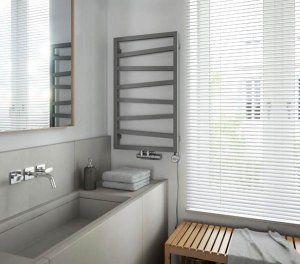
- It is not advisable to place a heated towel rail next to a doorway (especially behind the door);
- When renovating and finishing a bathtub with ceramic tiles, it is recommended to leave a small door so that in the event of a breakdown, you can quickly access the plumbing fixtures;
- When choosing the size of the sink, you should focus on the height of all the people living in the apartment; if you have small children, you can additionally equip it with a small podium;
- To save space when designing a small bathroom, you can consider a sliding door system, but this may not be possible in all rooms;
- When purchasing an acrylic bathtub, it must be reinforced with a frame, as this type of plumbing is quite fragile;
- If possible, it's best to purchase ceramic finishing tiles with a small reserve, as they may be accidentally damaged or preliminary calculations may prove incorrect when carrying out repairs yourself.
Space zoning, redevelopment
Zoning techniques are most often used in combined or large bathrooms. Zoning can be difficult to achieve when designing a small bathroom with a shower. In a medium-sized combined bathroom, the toilet area is typically separated, while in larger rooms, the shower and Jacuzzi/bathtub are often placed in separate zones. Zoning, when used correctly, can visually expand the space.
In most In some cases, zoning techniques are used in combined or large toiletsZoning a small bathroom with a shower can be challenging. In a medium-sized combined bathroom, the toilet area is typically separated, while in larger rooms, the shower and Jacuzzi/bath are often placed in separate zones. Zoning, when used correctly, can visually expand the space.
Techniques for dividing space:
- The simplest option is to use a curtain. If necessary, it can be easily removed without disrupting the design;
- Special screens are ideal for Asian or minimalist decor. They come in a wide variety, so you'll need to choose the right model based on color and texture.
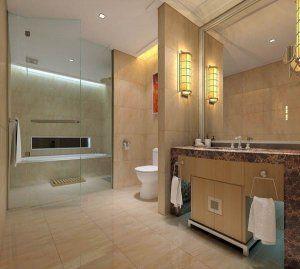
- Lightweight plasterboard partitions. They are easy to install during renovations, but it's important to remember that using floor-to-ceiling partitions is not recommended, as they will visually reduce the size of the bathroom. It's recommended to use partitions no higher than 1.5 m;
- You can divide a bathroom by using different colors and shades in the design. This isn't exactly zoning, but if you don't have enough space for screens and partitions, it's the best solution.
A bathroom remodel can be undertaken even if the renovation is being done from scratch. It's important to prepare a bathroom design plan in advance, either on paper or in a computer program. The design plan should show not only the placement of plumbing fixtures but also decorative elements. A plan will make the renovation much easier.
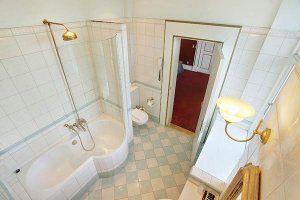
When creating a design project, it's important to make the space as functional as possible. It's recommended to place plumbing fixtures and appliances along the walls to leave the center of the bathroom empty. This will visually enlarge the space.
Choice of style and materials
There are many trends in interior design. The style chosen depends on the owner's preferences, budget, and bathroom size. Currently, the most popular styles are:
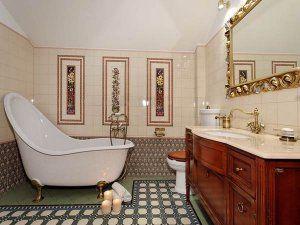
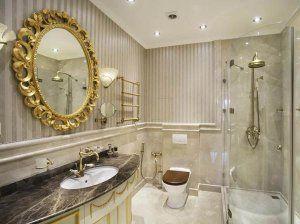
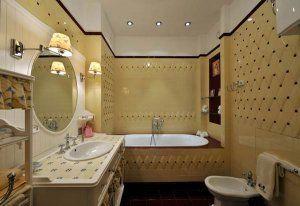
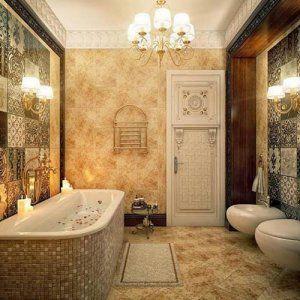
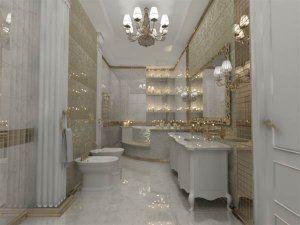
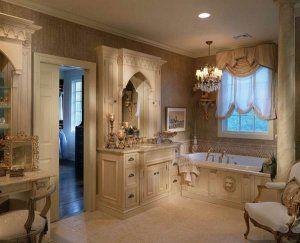
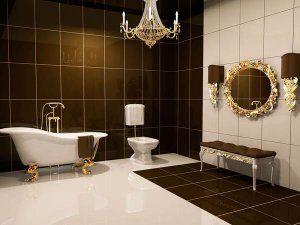
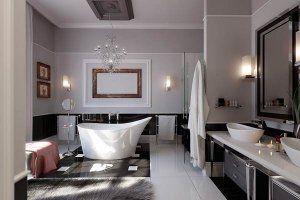
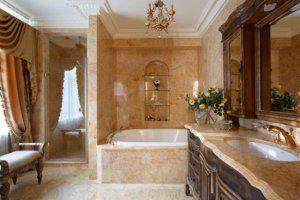
- Classic – characterized by bright gilding and large decorative objects (paintings, panels), as well as a light palette and warm brown tones. Marble-patterned tiles and intricately patterned tiles are used for flooring. Large mirrors in ornate gilded frames and chandeliers are recommended. Furniture should be made of light wood.
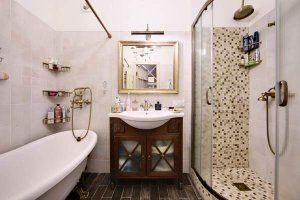
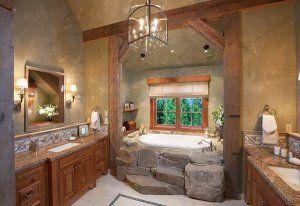
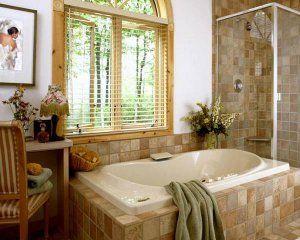
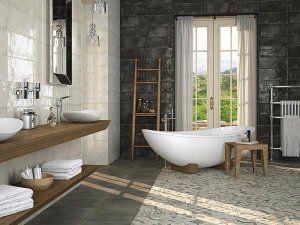
- Country style is distinguished by the use of wood (roughly processed wood) and stone (a preferred option, as stone is resistant to moisture). The main wall is finished with tiles in a color similar to the wood elements. Decorative elements are typically forged and brass. To add a touch of elegance to the bathroom design during renovations, it's best to install a clawfoot bathtub. If you decide to use a shower stall, choose a glass model with a simple design so it blends seamlessly into the overall look of the room.
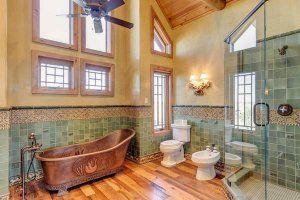
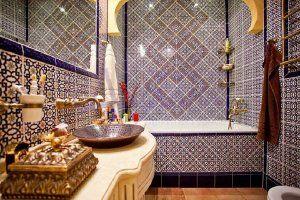
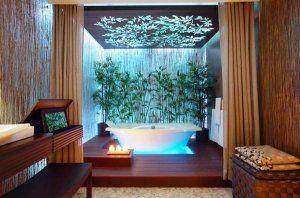
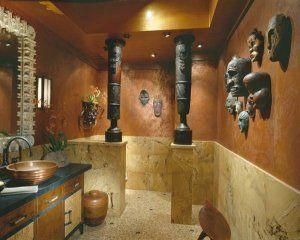
- Ethnicity depends on the locale and the style being achieved. If a Russian theme is desired, consider using wood trim with a veneered timber finish (as in traditional banyas), tiles with painted patterns, or carpeting. A designer can implement either an authentic approach (representing the style of a specific locale) or a mix of elements from different ethnic styles. It's also possible to add a few ethnic accessories and decorative items to a minimalist or modern interior after the renovation is complete.
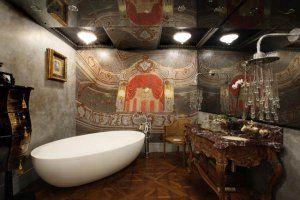
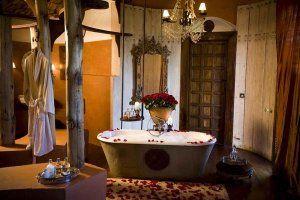
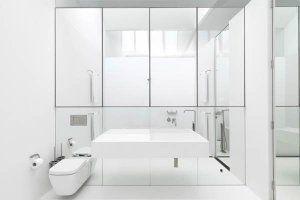
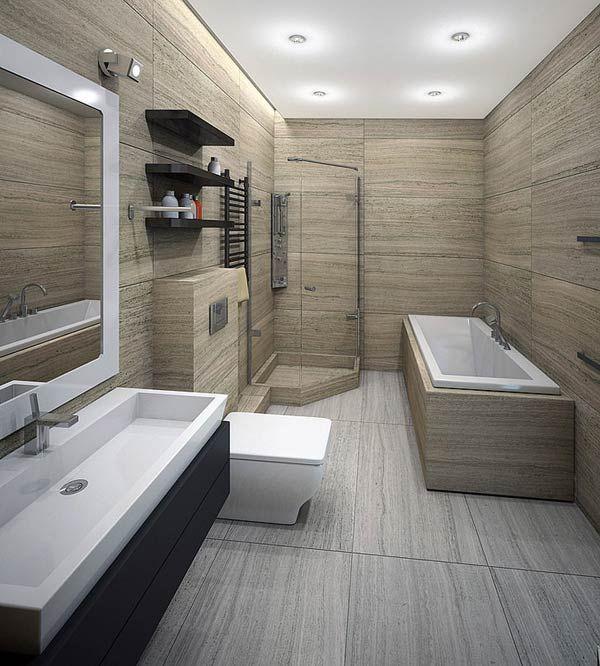
- Minimalism is characterized by the use of a cool white color scheme, minimal decorative elements, and a "sterile" look. This interior is perfect for a small bathroom. White fixtures are used, and a corner shower stall or toilet looks great. Tile is the finishing material. A suspended ceiling with spotlights is often installed, and sometimes a glossy self-leveling floor is installed. A backlit mirror can be an interesting decorative element.
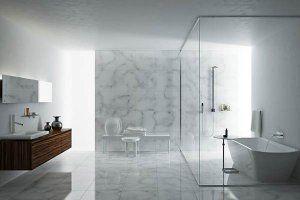
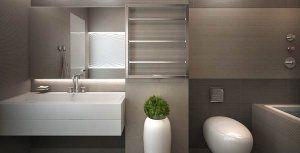
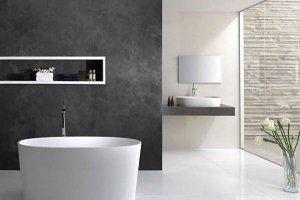
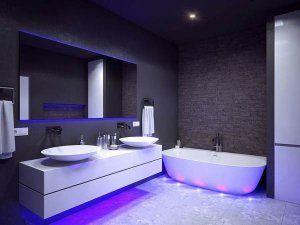
- Art Nouveau is similar to minimalism, but light, cool shades are combined with dark, rich colors or bright accents. Decorative elements should have straight, thin lines; a long vase with flowers on long stems is a good idea. Complex, futuristic shapes and patterns are often incorporated into the interior (for example, in furniture design). A shower stall and wall-hung fixtures (toilets, sinks, and bidets) fit seamlessly into the style.
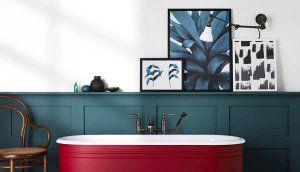
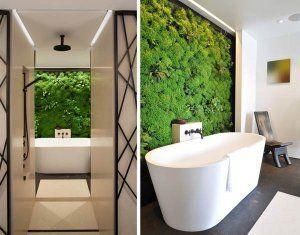
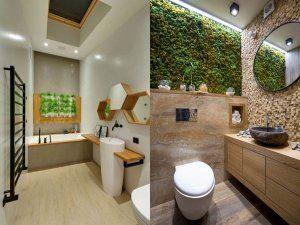
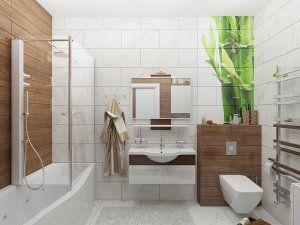
- Eco-style – natural textures and materials (wood, stone, sometimes metal and glass) are used for decoration. The color palette is white, shades of brown, and a few green accents. Small flower pots and stone arrangements are a nice addition. Plumbing fixtures are chosen with a stone-like finish (marble).
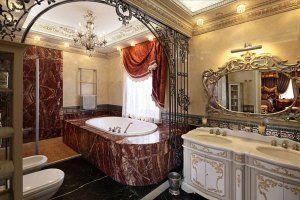
- Baroque is only suitable for large, spacious bathrooms; in smaller ones, such an interior would be too busy. Burgundy and dark brown shades are used, with paintings and mirrors framed in large, ornate, dark, gilded frames. Finishing is done with matte tiles or wallpaper with an intricate pattern.
Color solutions and finishing methods
The color palette and choice of finishing materials depend entirely on the preferred design style. Typically, tiles are used for walls and floors. They are quite durable, do not absorb dirt, and are resistant to chemicals.
The selection of tiles is extensive, with a wide variety of styles available. The tiles reflect light, making the room appear larger, making them ideal for small bathrooms.
You can lay tiles in any pattern, or combine several colors. In a small bathroom, it's recommended to avoid tiles with large patterns or combine more than two colors.
IMPORTANT! We recommend installing a suspended ceiling; it has built-in lighting, and its smooth surface will visually expand the space. In small rooms, the ceiling should be light in color, while in larger rooms, a combination with darker shades can be used.
Decor and accessories
When renovating a small room, it's recommended to keep decorative elements to a minimum, but they should also be functional. Ideally, holders for brushes, towels, paper towels, and soap dishes should be made of metal, unless the interior design dictates otherwise.
In large bathrooms, on the contrary, it's recommended to place plenty of accessories and decorative items. These could include paintings, mosaics, panels, beautiful lamps, etc. Without them, the room will look dull and empty.
Selecting plumbing fixtures
When carrying out repairs, you must follow several rules:
- During renovations, all utilities (water and sewer pipes) should be concealed in special niches behind the walls or in the floor. Open placement will not look good in a room of any size.
- If possible, it's best to combine the bathroom and toilet. This will expand your design options and choice of plumbing fixtures. When renovating a medium-sized toilet, you can install a shower enclosure instead of a shower stall; it takes up slightly more space but offers enhanced functionality.
- For compact placement, it is recommended to choose corner models of sanitary fixtures: toilet, shower stall or bathtub.
- An overhead sink in a small bathroom allows you to effectively use the space underneath it as storage space.
It is recommended not to skimp on quality plumbing, otherwise it will often require repairs.The interior style should be taken into account when choosing not only the body of the sanitary fixture, but also the faucet, mixer, bathtub legs, and material shower stall - find out how to connect to the water supply and sewerage systemIf a classic design is being implemented, brass or bronze components are chosen; if a modern or minimalist design is being pursued, steel elements will look good.
Lighting, mirrors
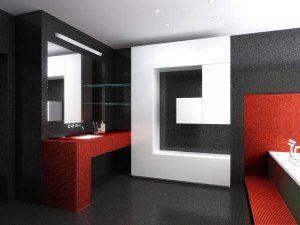
Typically, a mirror is hung above the sink, but you can experiment. In modern interiors, it's sometimes placed next to the bathtub or shower stall. If the room size allows, you can install two mirrors: one large one next to the shower stall and a smaller one above the sink. Backlit mirrors are an interesting solution.
PLEASE NOTE! Bathroom lighting is divided into central and localized. Central lighting includes recessed lights in the suspended ceiling or a chandelier. Localized lighting includes spotlights (sconces, lamps, etc.) in specific areas of the room (for example, near a mirror).
When performing repairs yourself, it is important to select cartridges with additional moisture protection.
Furniture
In small rooms, the design should minimize furniture. It should be multifunctional and compact. Open storage systems are preferable, as too many cabinets will visually reduce the size of the bathroom.
Furniture can be made of plastic, imitation wood, or stone or metal accents. If you decide to use natural wood, make sure it's properly treated and suitable for bathroom use. Otherwise, the furniture will lose its shape over time.
Bathroom design of different sizes
The secret to properly designing a bathroom and creating the best possible layout is the ability to utilize space most efficiently. This is easy to achieve in a large bathroom, but challenges arise when planning a small toilet—4 or 6 square meters.
There are certain subtleties that will allow you to visually enlarge the room, if necessary, and correctly place all the necessary plumbing and furniture.
Room 4 sq.m.
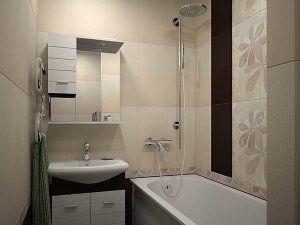
In older multi-story buildings, 4 square meters is the standard size for a combined bathroom. Due to its small size, it's important to adhere to certain guidelines when planning the space and creating a design project. Key principles:
- The standard plumbing set for a small bathroom includes a bathtub, toilet, and a small sink. If you also need to accommodate a washing machine, you can use a shower stall instead of a bathtub.
- When choosing an interior design, choose a light palette with cool tones. Minimalism or modern styles work best, as other design options contain many decorative elements that visually narrow the space.
- Use a large mirror or place several mirrors.
- Install spot lighting with multiple sources. A suspended ceiling with recessed lights is ideal.
- If the design project includes glass elements, they must be made of transparent material.
- Unless absolutely necessary, it's best to avoid adding extra furniture. Small, flat hanging cabinets are an exception; they help free up space.
If you need to increase the working area of the toilet, there are the following approaches:
- Moving the doorway if it is not possible to install a bathtub in the current layout.
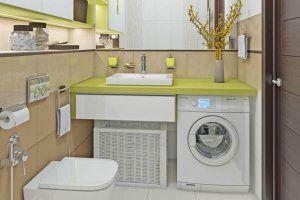
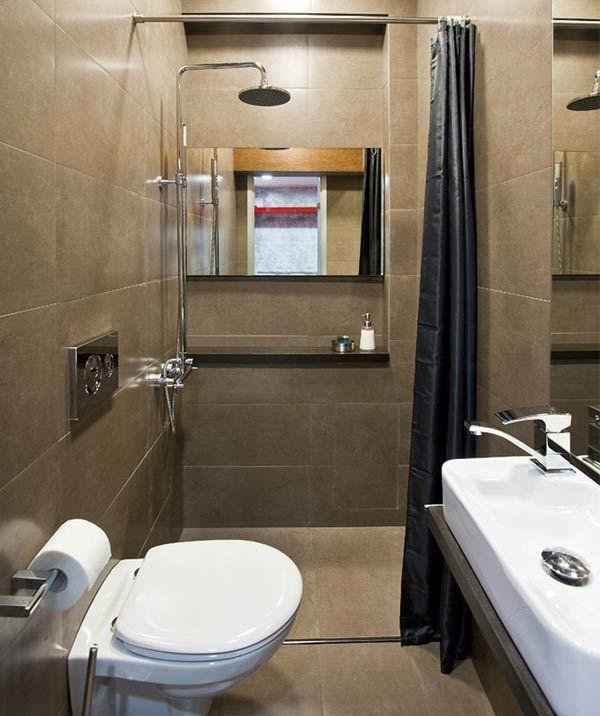
- Choose a wall-hung toilet instead of a floor-standing one. This model features a narrow, compact cistern that fits into a wall niche. Advantages: up to 30 cm of space can be saved; the fixture is durable and can support up to 400 kg. Disadvantages: complicated installation; requires a niche or space for one (if one is not available, no space savings will be achieved).
- The niche for testing the water supply can be equipped as a cabinet and various cleaning products can be stored there.
- Since it is not possible to make a separate cabinet for towels, it is recommended to install open hooks.
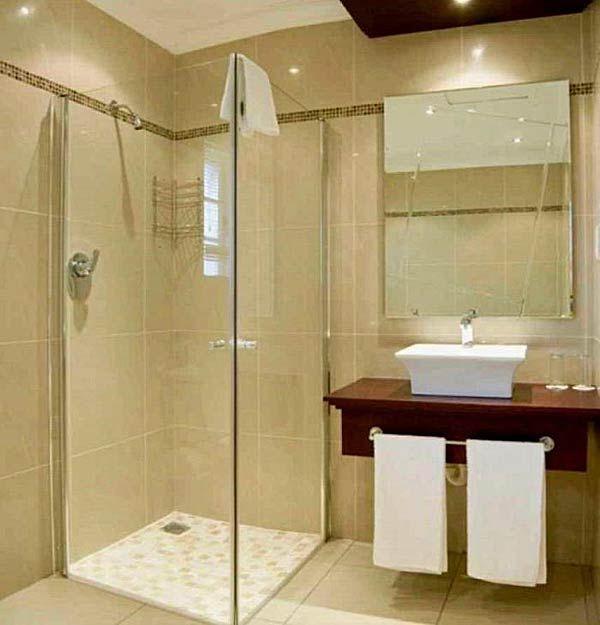
Room 6 sq.m.
A designer 6 sq. m bathroom renovation requires preliminary design work. When creating a design plan, it's important to consider that a bathroom of this size is not very spacious, so it's crucial to carefully arrange all necessary fixtures and furniture. The designer's primary goal is to make the space as functional and ergonomic as possible.
It is necessary to visually increase the size of the bathroom using the following recommendations:
- It is advisable to use an overall light color scheme, but using different shades you can divide the room into zones and add bright accents.
- Decorative items can be made in bright colors, but there shouldn’t be too many of them.
- Install some mirrors and lamps.
- A ceiling with a glossy surface, like a smooth floor covering, will visually increase the space.
- It is advisable to lay ceramic tiles on the floor diagonally rather than straight.
- As a rule, in a 6 square meter room, the floor should be finished with tiles that are several shades darker than the wall color. When choosing finishing materials, it's possible to combine several shades or colors of tiles.
- When choosing plumbing fixtures, we recommend choosing corner or wall-mounted models. Install a shower stall instead of a bathtub to save space.
- It is advisable not to place furniture and plumbing in the center of the room, otherwise it will look cluttered.
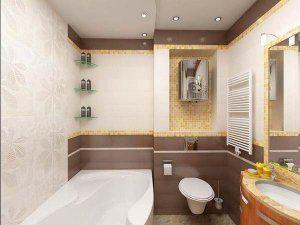
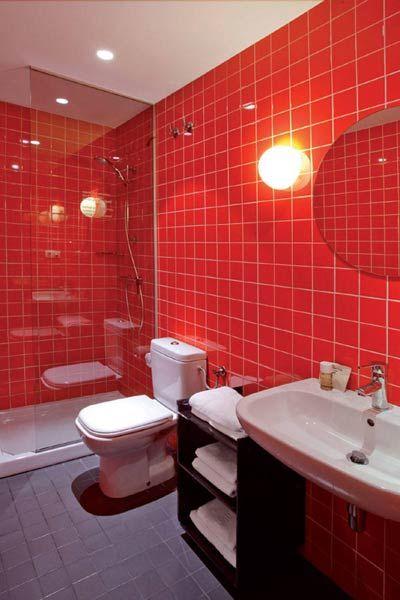
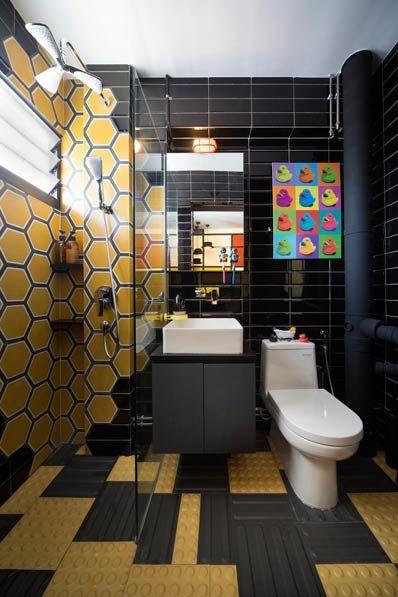
Large bathroom
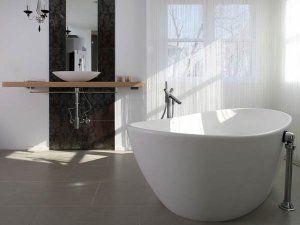
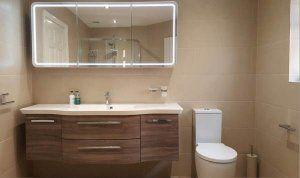
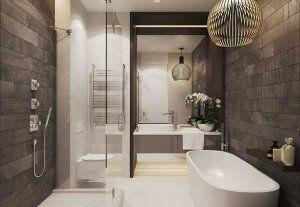
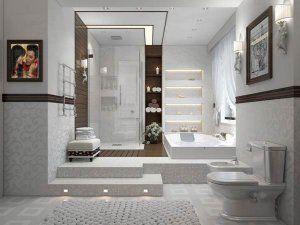
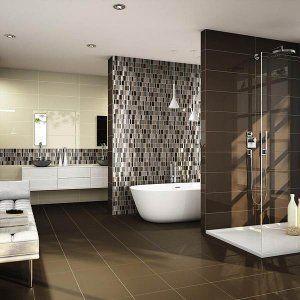
A spacious bathroom removes restrictions on the quantity and size of plumbing fixtures, as well as on interior design style. Such a bathroom often features a jacuzzi or a bathtub combined with a shower. Large bathrooms are rare, most often found in private homes, where the spaces were originally designed according to the owner's wishes.
Ideas for decorating a similar bathroom:
- Zoning the space using color and low plasterboard partitions. Most often, the toilet is separated for hygienic and aesthetic reasons. If the design is in a classical or baroque style, heavy curtains can be used instead of partitions.
- A large bathroom is designed to be a comfortable place to spend time and relax. Therefore, a wall-mounted TV, speakers, a bookshelf, and even a small fireplace with candles can be placed in the bathroom.
- Ornaments and decorative items can be massive. Their choice depends on the chosen style; these can include large paintings, vases, mosaics, and panels. Candlesticks are also popular.
- Natural light is welcome, so a window is installed in the toilet.
- When there's no need to expand the space, spot lighting can be eliminated. A spacious bathroom allows for the use of a large chandelier in the design.
- Install an extended or double sink, jacuzzi, shower stall, bidet, toilet, washing machine.
- If you choose a neoclassical or baroque style, a large mirror with a decorative frame will look beautiful. Depending on the color palette, the frame can be gold-plated or silver.
- Place comfortable furniture: a small sofa, soft ottomans, several spacious cabinets.
Design project with a shower cabin
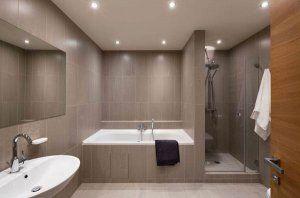
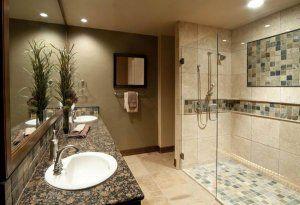
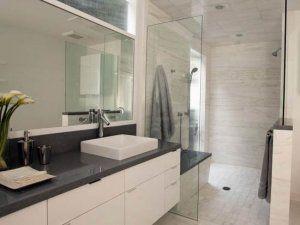
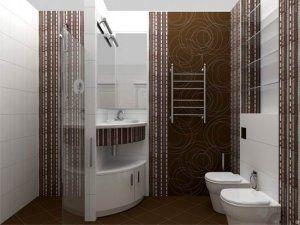
The best way to save space is to design a small bathroom with a shower stall. This type of plumbing fixture is relatively easy to maintain and can be used in any interior style.
When choosing a shower enclosure, it's important to consider how it will look in the bathroom. A shower that's too small will be uncomfortable to wash in, while a large shower will take up a lot of space. If your bathroom is very small, a built-in shower enclosure is the best solution.
To seamlessly integrate the shower stall into the interior, its flooring should match the room's flooring. If the bathroom has niches, it's recommended to build the shower into them. This approach will allow for the most efficient use of the limited space. If niches are not available, a corner shower can be installed to save space.
Bathroom renovation
Once the old plumbing and finishing has been removed, the renovation can begin. The following stages of renovating a 6 sq. m. combined bathroom can be identified:
- Check the functioning of the sewer and water supply systems and ensure there are no leaks. If any problems are detected, it is recommended to replace any faulty components or the entire system. Otherwise, a breakdown may occur after completion, requiring the repairs to be redone.
- Surface leveling, particularly for walls and floors. High-quality leveling is especially important if ceramic tiles are planned as a finishing material.
- If necessary, install a suspended ceiling.
- Finish the walls and floors using the chosen method. When using tiles, it's important to proceed with extreme caution to avoid damaging the fragile material.
- Placement of lighting fixtures if the apartment owner decides not to install a suspended ceiling with built-in lighting.
- Installing a bathtub or shower stall (suitable for a small bathroom) and connecting it to the plumbing and water supply. This is the largest piece of plumbing, so it's installed first.
- Install other plumbing fixtures and connect them to the sewer and water supply. The toilet should be installed last, as it is made of fragile material and can be broken or scratched during the installation of other plumbing fixtures.
- Placement of decorative elements and other furniture: mirrors, paintings, cabinets, etc.
Therefore, creating a bathroom design project requires first and foremost an understanding of how the space should look after renovation. The chosen interior style guides the selection of plumbing fixtures, finishing materials, furniture, and decorative elements. When creating a design plan, it's important to consider the size of the room first. While you can renovate a room yourself, if you have any doubts or lack experience with this type of work, it's best to entrust this process to professionals.




My wife and I are currently planning a major renovation in our bathroom; we want to create a completely new interior for the bathroom.
I'd like to say a big thank you to the author of this article for such an interesting piece with a large selection of designs that you can use for your own inspiration, so to speak.
We'll think about it. 🙂