Pressure testing is a hydraulic or pneumatic test of the strength and tightness of pipelines and other equipment operating under pressure. A pressure of one and a half to two times the operating pressure is generated in the system and maintained for a period of time. If the pressure does not drop, the system is considered leak-proof and suitable for further use.
Hydraulic testing of water supply pipelines is usually the next step after installation. This stage is essential when working with networks operating under pressure.
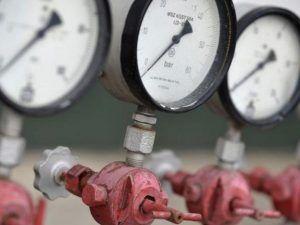 This procedure uses a pump to build up pressure, which facilitates the timely detection of defects.
After the pipeline hydraulic test is completed, the commissioning process begins. Only after this is signed can the pipeline be put into operation.
- The procedure for testing water supply pipelines and its purpose
- Under what conditions is it necessary to carry out hydraulic testing of pipelines?
- Carrying out the procedure at the preliminary stage
- What does the final hydraulic test of water supply mains consist of?
- Equipment cleaning
- About special equipment for crimping
- About regulation and other features of the process
- How to fill out a report with work results?
- About pressure standards for pressure testing
- Private houses: we carry out pressure testing
- Additional information about documents
The procedure for testing water supply pipelines and its purpose
Hydraulic testing is a type of non-destructive testing that is performed to check the strength and tightness of pipeline systems operating under pressure. Test parameters are calculated for each system separately, depending on its type.
When testing water supply pipelines, specialists check several indicators at once:
- Detection of defective areas.
- Tightness.
- Reliability.
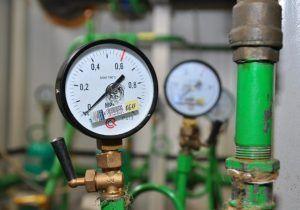 Heating system testing is conducted before a newly constructed facility is commissioned. This applies not only to the installation of new utilities but also to major repairs.
If defects are discovered, they are corrected as quickly as possible. Tests are repeated until the results are deemed positive.
The pipeline tests themselves are carried out in two stages.
- First come the preliminary ones.
- These are followed by the final ones.
The first stage involves pumping water into the pipeline under high pressure. The key is to ensure the pressure is one and a half times greater than the normal operating pressure.
It's important to maintain access to both internal and external system components. This must be done before installing plumbing fixtures.
IMPORTANT! Hydraulic testing of water supply pipelines is also scheduled before finishing work inside the building. Specially trained personnel are responsible for hydraulic testing of water supply systems.
The underground sections of the pipeline are completely sealed before final testing begins. At this stage, all installation work must be completed.
But plumbing fixture installation hasn't begun yet. During these installations, the water pressure is increased by 1.3 times compared to normal.
The methodology allows for the presence of additional rules.
- Hydraulic tests of water supply systems should be performed only 24 hours after installation. The ambient temperature must be above freezing.
- During this procedure, the pipes are completely filled with water until it reaches the top of the risers. Before this, the pipes undergo a visual inspection for verification. Any noticeable defects are corrected immediately. The system is considered to have passed the test if no leaks occur within 20 minutes of operation and if the water level remains at the previously noted level.
Under what conditions is it necessary to carry out hydraulic testing of pipelines?
It's important to understand how complex the hydraulic testing of water supply systems is. The reliability and quality of the system itself largely depend on how competently it's performed. Therefore, this work should only be entrusted to specialists with the appropriate certification.
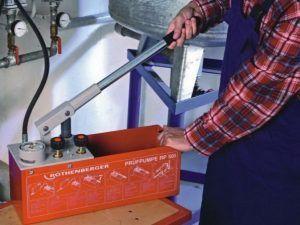
The requirements for the testing itself include several points. This is required by any methodology.
- All points of use in the riser are turned on simultaneously to check efficiency. However, the need for this step is determined individually at each facility.
- The condition of the heated towel rails is tested when the hot water supply is checked.
- Temperature measurements are taken only at the extreme points of the system. Water is added with predetermined characteristics.
- The liquid must be completely drained after completion of all stages of the event.
- Filling the pipelines begins from the lower floors, gradually moving to the upper floors. This ensures that air is properly displaced from the pipes, and there is no risk of air locks forming in the pipeline.
- The first stage of filling the water main involves only the main section. Only in subsequent stages do they move on to smaller local networks and individual risers.
- During work, the temperature outdoors or indoors should not fall below +5 degrees.
Carrying out the procedure at the preliminary stage
Video: Hydraulic testing of water supply and heating systems
Building codes and regulations govern the procedure in which inspections are carried out.
- First, the water supply is filled with liquid and left for two hours.
- They proceed to create increased pressure for two hours. This happens very slowly. At this stage, some leaks can already be detected.
- The pressure is reduced until the design values are reached. Afterwards, the overall condition of the pipeline is examined.
- This pressure is maintained for thirty minutes or more. Without this step, the deformed shape of the pipes simply cannot stabilize.
- The next step is to shut off the inlet valves. The water is slowly drained using a pressure testing pump.
- The route is being checked for any serious problems, as well as the density and strength of all sections.
IMPORTANT! It's best to find out in advance what the standard pressure is for a given line, according to SNiP (Building Code and Regulations). This will allow you to compare the readings with the limits shown on the gauges themselves and follow the instructions precisely.
What does the final hydraulic test of water supply mains consist of?
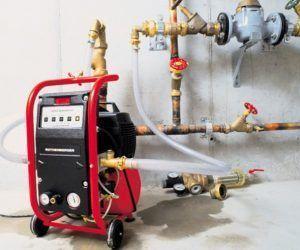
Such hydraulic tests of water supply pipelines are carried out after the completion of installation of plumbing fixtures for hot water.
- Start by building up the working pressure in the water supply system. It should be raised to the initial pressure if the pressure has dropped by 0.02 MPa.
- The pressure rises to test values within ten minutes. The system remains in this state for two hours.
Equipment cleaning
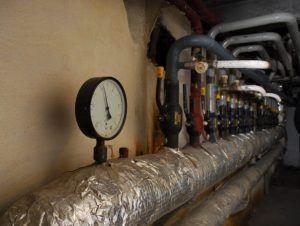 It is organized before it is installed water fittingsAnd here, the pipeline is supposed to be completely filled with water. Then, follow the following sequence of actions.
- They shut off the valve that connects the hot water supply system to the external networks.
- Hoses for draining contaminated water into the sewer are connected to drain valves responsible for emptying the risers.
But even after such a flush, there's no guarantee that all debris will be removed. Therefore, specialists are developing equipment to improve the efficiency of this process.
Video: What is pressure testing of a heating system?
Any such device creates a mixture of air and hot water, which is pulsed into the pipeline requiring cleaning. Once the mixture has passed through the equipment, it is discharged into the sewer. The pulsation rate or flow rate can be easily adjusted by lengthening or shortening the time intervals.
About special equipment for crimping
The design of the pumping mechanism is the main difference between pump models, without which hydraulic testing of water supply lines in accordance with SNiP becomes impossible.
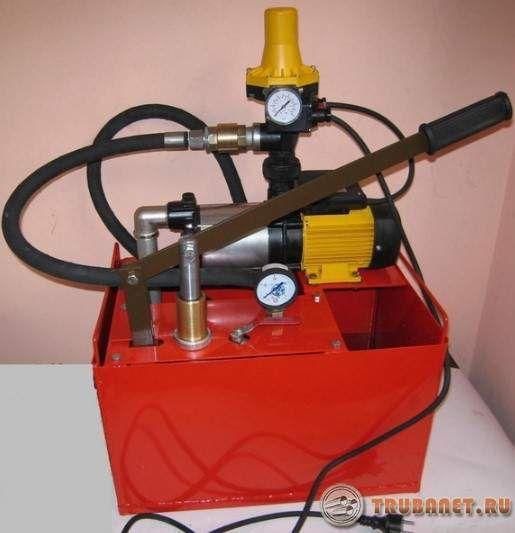 This feature allows for division into the following groups:
- Membrane.
- Vane-rotor.
- Piston.
A manual pressure tester is the most affordable option, suitable for heating and plumbing systems in private homes. Using this device, the operator can pump up to three liters of liquid per minute into the system.
If the house is multi-story, it is recommended to give preference to options with an internal combustion engine drive, or its electric variety.
Two-stage pumps allow for more complex tasks, while their operating method remains approximately the same. the same.
About regulation and other features of the process
SNiPs contain all the information related to conducting inspections for both internal and external networks. Industry-specific standards describe the methodology for conducting inspections at companies in a specific field.
SNiPs also specify the required test pressure. You can download SNiP 3.05.04-85 here. snip_3_05_04_85.
This indicator depends on several factors at once:
- The height difference between the elements located above and below.
- The thickness of the walls.
- The material from which the pipeline is made.
Video: Hydraulic testing of heating pipes
According to SNiP, the pressure value typically does not exceed 10 MPa. The specific value is calculated individually for each type of pipeline and for specific types of hydraulic testing of water supply systems.
How to fill out a report with work results?
The document must display information related to:
- Signs of leaks or leaks in threaded and welded connections, if present. Have any drops appeared on the surfaces of pipes and fittings?
- Results of direct verification.
- Methods for eliminating the identified faults.
- The address and date of the inspection, as well as the names of the individuals who signed the report. Typically, the signatures are provided by the owners of the buildings or apartments. Alternatively, this function is delegated to representatives of the maintenance and repair organization.
- The project according to which the circuit was installed.
- By the crimping method applied in practice.
About pressure standards for pressure testing
When testing water supply systems, the pressure rating according to SNiP depends on what is considered the operating pressure for a given system. In turn, the base materials in the pipes determine the operating pressure itself.

No less attention is paid to the radiators used during installation. When pressure testing new systems, the GOST pressure reading is twice the operating pressure. For existing systems, an excess of 20-50 percent is acceptable.
Each type of pipe and radiator can withstand a specific maximum pressure. This factor must be taken into account when selecting the optimal operating pressure for a given system and when choosing the parameters for pressure testing.
Pressure testing at the input unit deserves special attention. The minimum required pressure for this type of work is 10 atm.
Without special electric pumps, it's impossible to achieve this type of parameter. The result is considered positive if the parameter drops by no more than 0.1 atm within half an hour.
Private houses: we carry out pressure testing
Private homes require closed water supply systems. According to GOST, the maximum operating pressure for these systems is 2 atmospheres.
When carrying out hydraulic tests, one cannot do without pumps with manual and electric drives, which help to build up pressure to 4 atmospheresConnection to the heating main is permitted.
Video: Hydraulic testing of cold water supply systems
Water begins to fill the structure from the bottom, through a drain valve. Next, air flows in, easily pushing the water out. Excess air is removed through air valves mounted at the very top. The same process occurs on each radiator, or wherever air pockets appear.
For testing water supply communications, water with a temperature not exceeding 45 degrees Celsius is used, according to GOST.
Self-pressurization is mandatory if the owner is installing the entire piping system themselves. The same procedure is followed as in multi-apartment buildings.
The water hardness level for hydraulic testing of water supply pipelines must be kept low, if it is then planned to be used as a coolant.
Melt or rainwater can be used. It should be drained completely if no further use is planned.
Additional information about documents
The hydraulic test report must specify the type of pressure gauge used. The pressure readings in the system at the time of testing must also be recorded. The height of the measuring device relative to the pipe axis must also be noted.
The pipeline must be disinfected before being put into operation. This is done using ordinary water with 20-30 grams of active chlorine added, according to GOST standards.
The next step involves flushing the pipeline. The fluid itself can only be used if the bacteriological analysis is positive. Flushing continues for as long as it takes to change the fluid inside ten times.
Trial operation after hydraulic testing of water supply pipelines lasts up to several days.