In some situations, it becomes necessary to install a heating cable for a water supply system inside a pipe. In regions where winter temperatures reach very low levels, people rightly ask: "At what depth should water pipes be laid, since regular insulation in cold regions does not protect them from freezing?".
To prevent this, the main line is equipped with internal heating. This allows the pipeline to maintain the desired temperature even when the temperature drops significantly.
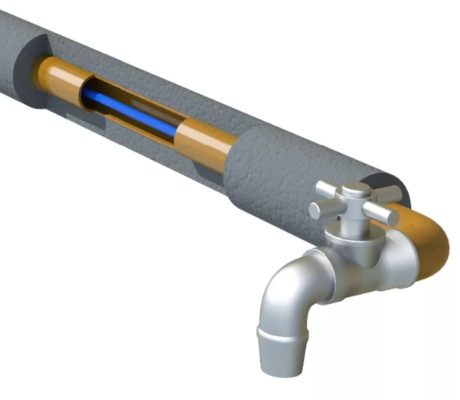
In this article, we'll take a detailed look at what a water pipe heating cable is, how it works, its characteristics, the different types available, which cable to choose depending on the situation, and how to install it inside or outside the pipe.
- What is a heating cable and how does it work?
- Let's consider the design of heating electric wires
- Types of heating cables - resistive and self-regulating
- Selecting a cable by power and manufacturer
- Cable prices
- Installation works
- Purchasing materials
- Preparing the heating cable
- Connecting the power cable to the main cable
- Placing the cable inside the pipe
- Connecting to the power supply
- The answer is a question.
What is a heating cable and how does it work?
Heating external pipelines is very common in many regions of Russia. Heating cables for water pipes can be installed both inside and outside the pipe, and are essentially simple wires. Thanks to the presence of resistance, one of the possibilities was used metal conductor — metal passes an electric current through itself has the ability to heat up.
As the current increases or decreases, the cable's temperature rises or decreases accordingly. Thus, these physical properties make it possible to regulate the temperature limit.
Accordingly, the lower the resistance level, the hotter the device will become. It goes without saying that self-regulating electrical cables must be well-insulated, as they are located in water.
Turn on the heating cable at a temperature of + 5 degrees Inside the water supply system. As the ambient temperature decreases, the resistance in the wire increases, thus maintaining the desired water temperature in the water supply system.
This cable is available in various lengths, ranging from two to twenty meters. It allows you to heat a portion of a water pipe, or the entire main line if it's located in a freezing zone.
However, in order to correctly select and install a heating cable inside a pipe, it is necessary to carefully study all the information that will be presented below.
Let's consider the design of heating electric wires
Heating cable for internal installation is produced in the form of a tape electric heater. The heating device has the following components:
The outer insulation layer on the heating cable has the following characteristics. It is resistant not only to exposure to moisture and high temperatures, is absolutely not afraid of impact aggressive chemical environmentThe cable design may vary slightly; another version of the device is shown below.
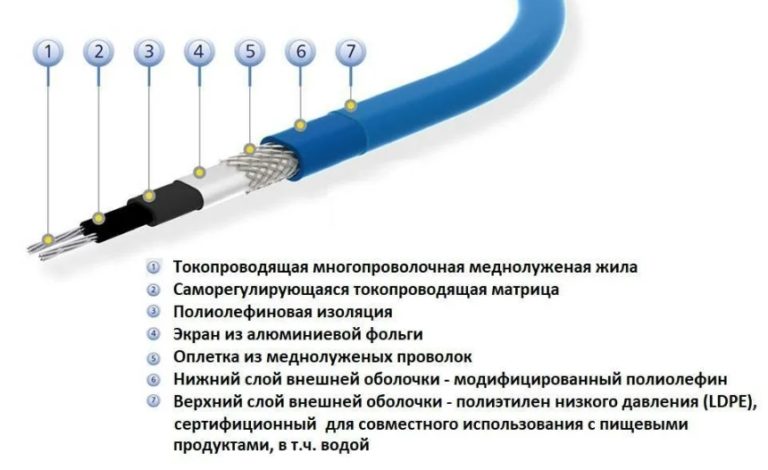
Also, the heated cable for installation inside water pipes is made from materials whose composition is approved for use in the food industry. Therefore, it can be installed in drinking water pipes.
In addition, the heating cable is equipped with a temperature controller, making it self-regulating and capable of independently setting the temperature regime.
This allows for monitoring the temperature inside the water supply system without human intervention. If the temperature exceeds the set parameters, the system is automatically shut off. These features prevent overheating and conserve energy.
- Reliable work.
- High security.
- Possibility of using the heating cable both inside and outside.
- Easy installation and operation.
- The ability to save energy through automation is self-regulating ability.
Perhaps the only drawback of these heating units is their dependence on electricity. For this reason, the installation of additional power sources in the main pipeline sections is recommended.
Types of heating cables - resistive and self-regulating
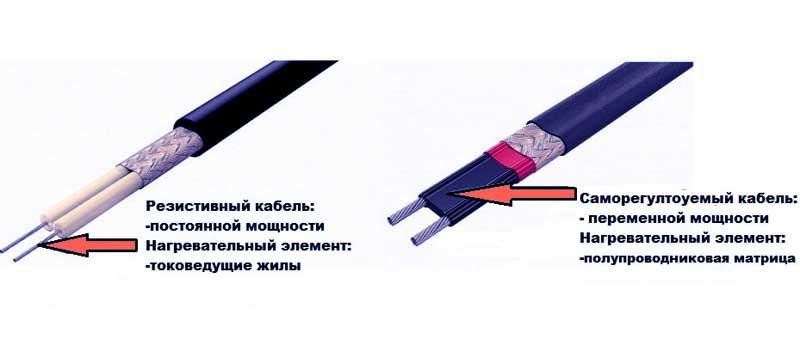
Internal or external heating of the pipeline depends on the method of heat generation and is performed by the following types of devices.
1. Resistive — consist of one or more metal wires. Single-core Due to the complexity of installation, they are used much less frequently. The difficulty lies in the fact that they require looping the circuit around the power source, which is not always possible.
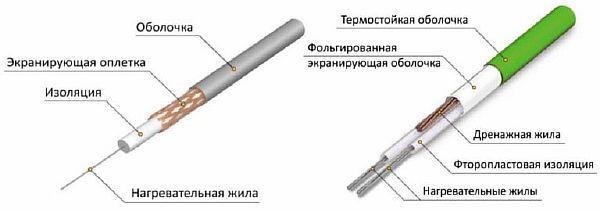
Two-wire— connect to a power source at one end, and install a contact sleeve at the other to ensure the circuit is closed.
Either one conductor (the other only provides conductivity) or both can heat up. In the latter case, the power output becomes significantly higher.
2. Self-regulating — a heating cable designed for installation both inside and outside the water supply system. Its operating principle is similar to the previous type of device. A distinctive feature is the ability to independently regulate the heat supply level as the temperature changes, resulting in significant savings in electricity consumption.
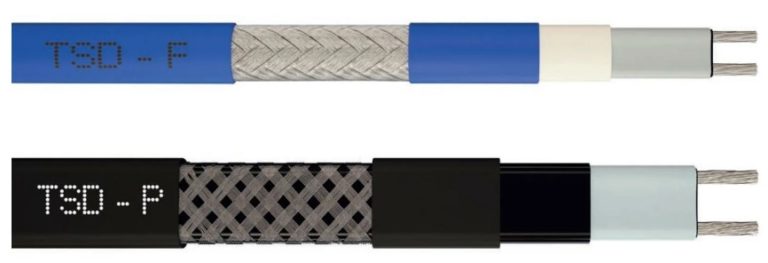
For these reasons, it's ideal for installation in small sections of the pipeline. A thermostat is not required. Self-heating cable-type devices come with not only a thermostat but also various installation components and special glands—adapters for threading through the pipeline.
Self-regulating heating cable has become more widespread.
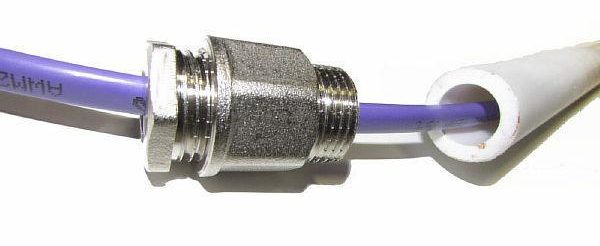
The disadvantages include the high cost of self-regulating wire.
Selecting a cable by power and manufacturer
Internal self-heating cable for heating water pipes is divided according to the type of use according to power ratings.
The power rating depends on the following parameters: the average annual temperature in the region, the pipeline installation method (external or internal), its insulation, and whether the heating will be delivered from inside the pipe or from outside. The pipe diameter is also an important factor.
The amount of heat loss depends on the volume of the pipe and the quality of the insulation layer. For example, a metal pipe 50 mm pipe insulation by 20 mm will be heated effectively by a device with a power at 20 W/m.
A high-power cable system is installed along a critical main heating line. Before installing such a system, it's important to know that the power rating of the heating cable is selected based on the diameter and length of the main line. However, the energy consumption for heating in this case will be significant.
Every cable kit offered by this manufacturer is more expensive than similar options from other manufacturers. However, this is fully compensated by the quality of the product.
Professional craftsmen also include the Russian company "Yulmart" in the line of high-quality products, which quickly gained popularity among consumers.
The German-made "Underlux" pipe heating kit deserves special attention. This kit, designed for installation within the pipe network, is most often used in households.
Underlux products are easy to install, using cast fittings. The main advantage of this self-regulating device is its ability to independently adjust operating parameters depending on the ambient temperature.
This advantage ensures long-lasting and reliable operation. The kits offered by this manufacturer are highly efficient and energy-saving. They can be installed in plumbing and drainage systems, drains, and other applications.
The review of various manufacturers could go on and on. The main thing to do when choosing is to carefully consider the pros and cons of the options. Each model also comes with manufacturer's instructions, which should also be carefully reviewed before use.
Video: Insulating a water supply system from the trench to the house
They will also help you choose the right product at a reasonable price. Incidentally, the best place to buy electrical conduit for pipes is the Leroy Merlin construction hypermarket. It always has a wide selection of high-quality products at reasonable prices.
Cable prices
The price of a heating cable kit is influenced by a number of factors:
- length of the heating product;
- equipment;
- the cost of the gland, which is necessary to insert the heating cable into the water supply;
- model of power cord with plug;
- sockets;
- Price list for assembly services for all components.
The average price per meter of heating cable is 440 rubles. The adhesive kit for connecting the structure starts at 350 rubles. The minimum price for glands is 420 rubles. A two-meter power cord with a molded plug can be purchased for 200 rubles. Assembly of the entire kit costs at least 500 rubles.
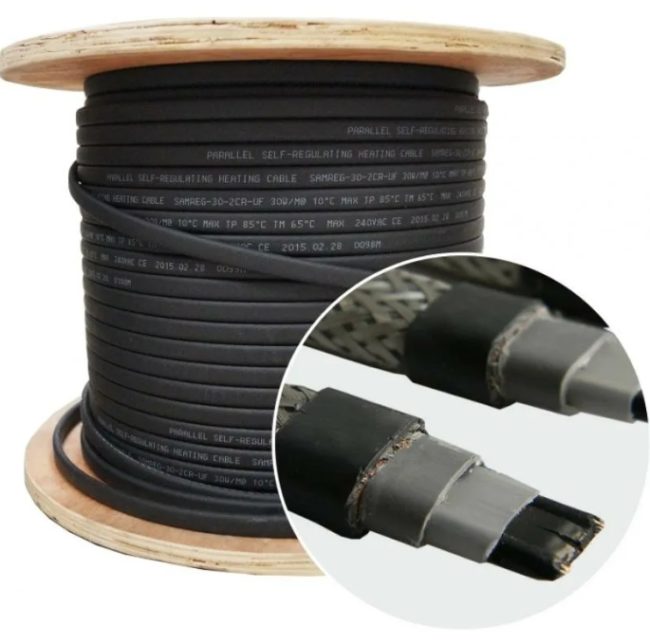
Heating cables are sold in specialized stores, where you can find the right size. You can also order the finished product by courier delivery from companies that sell these products by phone or online.
To reduce the amount of energy consumed when using a water heating cable longer than 3 meters, it is recommended to use it with a thermostat sensor.
Installation works
Installing a heating cable into a pipe should be done by professionals. They will not only accurately determine how many meters to purchase but will also install the heating device in compliance with all safety regulations.
It is important to remember that heating cables for plastic pipelines, as well as for pipelines made of other materials, are constantly operating in water and can become a source of health hazard.
Therefore, if a professional installs a hot water supply system, they will take into account all the installation details. However, for smaller sections of the water supply system, installation can be done independently.
- When installing, it is necessary to install a tee. All sealing standards must be observed.
- A special insert must be screwed into the adapter.
- During installation, a heating cable of the required length is inserted into the cut-in.
- When carrying out installation, it is necessary to accurately measure the length of the pipe prepared for heating.
- It is not possible to install a heating cable through a shut-off valve on a pipe.
- The place where the cable kit enters the pipe is marked with a warning sign.
- Installation must be carried out very carefully to avoid damaging the electrical wire. If the heating wire is damaged during installation, it will need to be replaced immediately.
- Sharp edges and threads on some parts should be covered with tape during installation. This will prevent damage to the wire.
A properly installed heating cable for a water supply system inside a pipe will create a long-lasting, non-freezing water source that will function smoothly on cold winter days.
If you decide to install the pipeline heating system yourself, you should read the instructions carefully before starting work.
Let's look at installing a heating cord, using the example of installing a heating cable inside a water pipe. A self-regulating, heating electric cable with a food-grade sheath must be installed in the water pipe.
Purchasing materials
Before heading to the store, you need to determine the size—its length should match the length of the water pipe being heated. You should also immediately purchase the necessary installation materials: a gland, a section of electrical wire with a plug, and a set of couplings. You'll also need a tee to properly insert the heating cable.
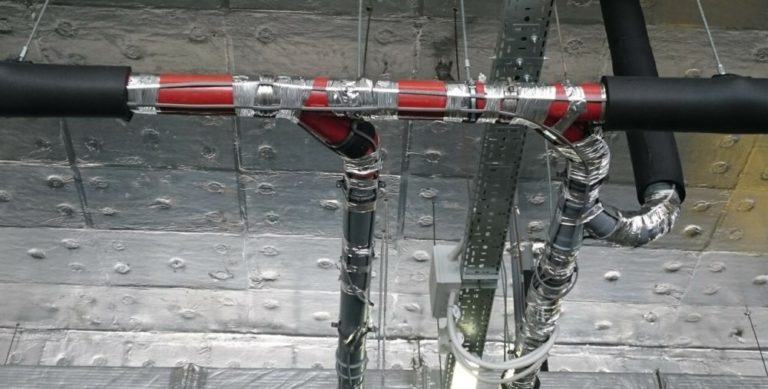
Devi products are ideal for heating wells and water pipes inside during winter. They can independently regulate the heating process depending on temperature changes.
Preparing the heating cable
Preparation involves insulating the heating cable using sleeves. The process involves performing end seals:
- the top protective layer is removed by 4.5 cm, the braided wires are cut off from the insulation sheath;
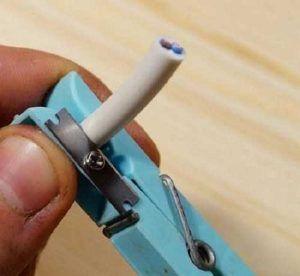
- one side of the matrix is shortened;
- The heat shrink tubing is crimped using a crimper.
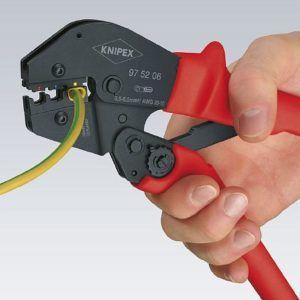
At this point, the work on insulating the heating cable is complete; if all steps are performed correctly, the unit will be completely sealed.
The self-regulating design fails more quickly when frequently switched on and off. Also, improper connection to the power source and poor termination can negatively impact its operation.
Connecting the power cable to the main cable
This action is required to supply the heating wire with electricity, which is necessary for the functioning of the entire device:
- the power cord is prepared - the wires are separated and the insulation is stripped;
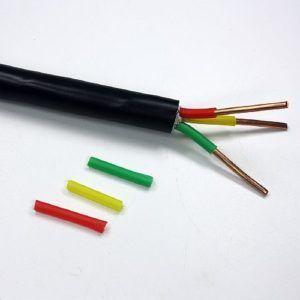
- A pass-through kit (seal) is put on it - each part is put on strictly according to the instructions.
The process of connecting the heating element to the power element looks like this:
- the protective insulation layer is removed;
- the veins are released from the matrix;
- a heat shrink tube is placed on the heating cord;
- the supply and main wires are connected using a crimping sleeve;
- HDPE wires are insulated with a pipe;
- the braid is spliced with the core of the power supply cable;
- the final isolation of the node is done.
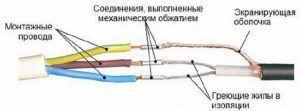
These steps are only necessary if you're building the unit yourself. Purchasing a ready-made water supply heating kit eliminates the need for these steps.
Placing the cable inside the pipe
The cable can be inserted only after the couplings have cooled, by pushing the insulated end of the cable into the water pipe. It is inserted through the installed tee. This should be done smoothly, and sharp corners should be avoided, as this could damage the cable.
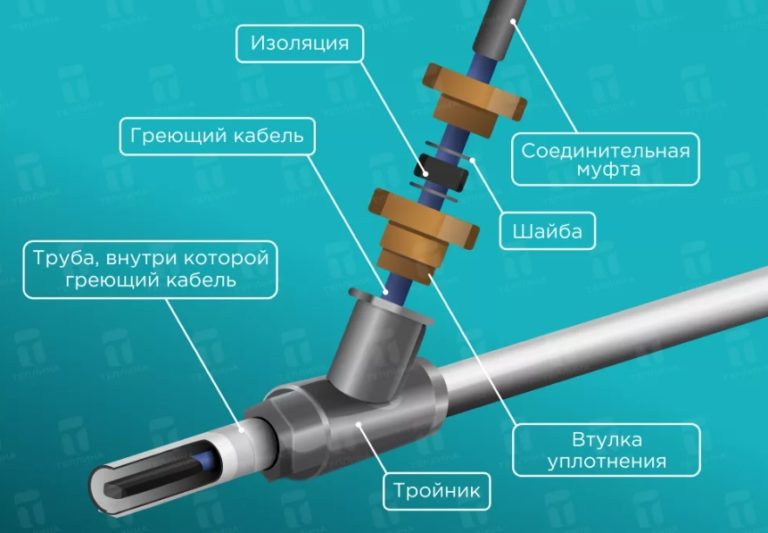
Once the entire wire is inside the water pipe, the entry point needs to be sealed, which is what a penetration seal is for. All fasteners are tightened firmly by hand and then tightened with a wrench. This compresses the rubber insulation inside, thereby sealing the connection.
When placing a heating cable inside a water pipe, make sure that the electrical wire does not pass between the shut-off valves, as this will lead to damage.
Connecting to the power supply
Once installation is complete, you can connect the heating system to the power supply. It's best to use a separate power source. Consider line safety and equip it with a 10 mA RCD.
This will protect against current leakage if the cable is damaged. The device will de-energize the line, thereby protecting the owner from electric shock in the event of a malfunction.
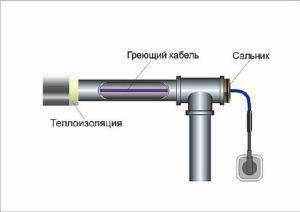
Connecting the heating system is simple. Simply insert the Euro plug located at the end of the power cable, which is connected to the heating wire, into a power outlet.
Since the design uses a matrix, there's no need to monitor the temperature or shut down the system. The self-regulating cable is "smart" and will automatically monitor this process. This completes the connection process.
The heating cable is activated when the temperature of the liquid inside the water supply reaches +5 °C, and the system is switched off at a temperature of +15 °C.
However, it is important not only to connect the heating device correctly, but also to operate it correctly so that it lasts a long time:
- Do not unplug from the socket unless absolutely necessary - this will reduce the life of the cable and the self-regulating matrix will fail;
- If the water supply system is laid on the surface, additional heating of the pipes from the outside should be considered, in the form of a heat-insulating casing; this will reduce heat loss in the winter.
The answer is a question.
Yes, it is possible if you use specialized cables in which all current-carrying elements are covered with a fluorine-containing polymer that is resistant to water.
It is recommended to use a cable with a power of 10 to 30 watts. The power will depend on the diameter. For a pipe up to 25 mm, 10 watts is sufficient; for rolled pipes with a diameter of 25-40 mm, 16 watts; for 40-60 mm, 24 watts; and for 60-80 mm, 30 watts.
To determine the required length, divide the heat loss coefficient by the cable's specific power. However, it's important to consider areas requiring increased heating, such as valves, flanges, etc.
Quote: "Accordingly, the higher the resistance level, the more the device will heat up."
It seems to me that this contradicts Ohm's law, remember the formula:
P = U 2/ R
From which it follows that the exact opposite is true: the lower the resistance at the same voltage, the greater the power, i.e. the greater the heating.
Guys, you've run into a loser. This formula is for load power. Wires heat up due to energy loss, i.e., Q = I2 * R. And since the current in the wires and the load is the same, the higher the resistance, the greater the heating.
Vitaly, you're absolutely right: the higher the resistance, the hotter the wire will be, as the article explains. The amount of heat generated when current flows through a wire is directly proportional to the wire's resistance.
Self-regulating cable of temperature class T6 is used in everyday life. The maximum operating temperature is limited to 65°C when exposed to ambient temperatures no higher than 85°C. During operation, the heating cable strives to achieve the specified parameters but does not exceed the limiting value (65°C). As the matrix heats up, the resistance increases proportionally, and the power decreases. At peak heating (65°C), the power is zero.
Industrial thermal cables of class T3-T5 are designed for peak heating temperatures of 110-150°C. Exposure to ambient temperatures increases to 135-260°C.
Regardless of the elevated temperature thresholds, the processes occurring in T3-T5 thermal cables are similar to those in T6 household cables. That is, as the matrix heats up, the resistance increases, and the power decreases.
"The heat shrink tubing is crimped using a crimper."
What is a crimper?
Hello. A crimper is a tool for manual crimping.
A crimper is a tool used for manually crimping wire connections with terminals.
The semiconductor polymer matrix has a high positive temperature coefficient of resistance, meaning its resistance increases with temperature. The voltage between the metal conductors is determined by the power source and is independent of cable temperature. The power dissipated in any section of the cable is equal to W = U * U/R and decreases (increases) with increasing (decreasing) temperature (resistance) of the semiconductor polymer matrix.
Thanks for the detailed article, explaining everything step by step. The heating cable was definitely not that simple. I compared many brands. Incidentally, I didn't encounter any particular difficulties with the installation. The key is to follow the instructions carefully and take your time, as it's easy to screw up. And the heating cable really does make all the difference. So, be careful.
Hello, I have a self-regulating heating cable installed inside a HDPE pipe from the well pump to the pressure switch in the house. We haven't moved into the house yet; after installing the water supply system, we conducted test runs and drained the above-ground portion of the water supply for the winter. So, 10 meters of the heating cable are in the empty pipe and 10 meters in the well water, with a 20-meter piece of continuous cable. How will the self-regulating process work in this case, or should I avoid using the heating cable?
Hello. The conductors of a self-regulating cable are encased in a polymer matrix. The semiconducting polymer is capable of changing its resistance based on the temperature applied to it. The self-regulating heat transfer process occurs literally at every centimeter of the matrix. The heating cable maintains a preset heating temperature in all sections, depending on the ambient temperature.
In your case, the heating temperature of the cable sections in the empty and filled sections of the water pipe will be the same. You can leave the heating on for the winter, but you'll have to pay for the electricity consumption.
If the water has been drained from the above-ground section of the pipe, it won't freeze. Insulate the well. Another section of the water pipe, embedded in the casing, will prevent freezing. You can disconnect the cable on the sealed water line to save energy. For additional protection, cover the above-ground section of the pipe with any insulating materials you have at home.