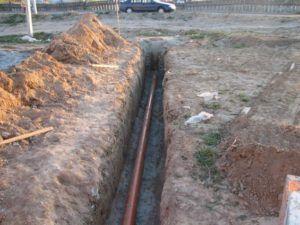
 The depth of water pipes is the first issue to address before installing plumbing. And it requires careful consideration.
Many people mistakenly believe that it's best to install water lines into a house as deeply as possible, hoping for more efficient operation. However, in the event of an emergency, accessing such a water line can be very difficult.
- We calculate the depth of the water supply system and which pipes to choose
- What influences the depth indicator?
- Standard depth indicators by region
- Practical recommendations for laying water pipes
- Features of hot water supply
- To what depth should plastic and metal water pipes be buried?
- Where to start the installation work?
- The distance between two pipes underground
We calculate the depth of the water supply system and which pipes to choose
In-ground water pipes can be made of various materials. However, the properties of the material itself are important to consider. The strength of the pipe is also crucial. After all, underground water pipes must be able to withstand the pressure exerted by the soil.
Cast iron, copper, and steel products can withstand the heaviest loads. However, the high cost of these materials prevents their frequent use. Similarly, buried plastic water pipes can withstand heavy soil loads. However, burying such pipes at a depth of 8 meters will negatively impact their service life.
When calculating burial depth, the pipe markings are also taken into account. These indicate the wall thickness and, therefore, the strength level. For example, orange sewer pipes are recommended to be buried three meters deep, while low-density polyethylene can withstand pressures of up to ten atmospheres.
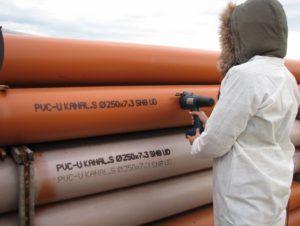
In-ground polyethylene water supply networks can be used for both water supply and sewerage. If there is a risk of heavy soil loads, it is better to install such a system in a steel or concrete casing.
What influences the depth indicator?
Laying a water pipeline underground yourself must be done according to strict guidelines and under certain conditions. Since the pipeline in such a location is exposed to many factors, it's crucial to ensure proper installation.
FirstOne thing to consider when installing underground water pipes is the minimum depth of soil freezing in winter. If this isn't taken into account, the water in the network will freeze and will naturally thaw only in the spring. Also, the water supply must not overheat during hot periods. Overheating will also have a detrimental effect on the functioning of the entire water supply system.
Thus, when laying water pipes underground, several key factors are considered. Consequently, the depth of water pipes depends on:
- Temperature regime in a given area in winter and summer.
- Structural composition of the soil.
- Presence of vegetation.
- What temperature will the liquid be transported by the pipeline?
- Groundwater levels, or lack thereof.
- The quantitative indicator of precipitation typical for a given region.
- Diameter of water supply pipeline

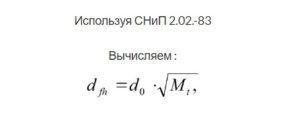
To ensure proper underground plumbing installation, all of the above factors must be taken into account. They are not difficult to determine, and modern methods and technological capabilities make this task quick and easy. The results obtained from calculations are accurate to within tenths of a percent.
Standard depth indicators by region
If you have a database of standard values relevant to the specific region where you plan to install a water supply, there's no need for professional calculations. All regulatory requirements are provided by the relevant authorities.
We've prepared SNiPs for temperature throughout the Russian Federation in .doc format. You can download them from the links below.
Table.-Part 1.-Average monthly and annual air temperature.-SNiP
Table.-Part 2.-Average monthly and annual air temperature.-SNiP
These regulatory frameworks are valued for being developed through research and have been repeatedly tested in practice. One of the key regulations states that the depth of a water pipeline can be determined by adding at least half a meter to the soil freezing depth.
With the initial information, you can use an online service for calculations. Calculation tables are also available in SNiP (Building Construction Rules and Regulations) regulations. This table accurately shows the depth of the water pipeline, significantly simplifying this task.
For example, the depth of water pipes in northern regions, according to SNiP standards, is dictated by special requirements. In winter, the ground in these areas freezes to a depth of four meters. Naturally, trenches for the pipelines will have to be dug using specialized equipment.
Watch the video
- For soft and loose sandy soil, these figures are equal to 1.6 m.
- For medium-loose soil with gravel – 1.7 m.
- Viscous and clayey soil – 1.3 m.
- For coarse-grained, rocky and hard soils, SNiP recommends a depth of 1.9 m.
SNIP also specifies depth parameters for southern regions. This value is approximately one meter. Lower values should not be used, as this could lead to mechanical damage to the pipeline from pedestrian and vehicle traffic.
Practical recommendations for laying water pipes
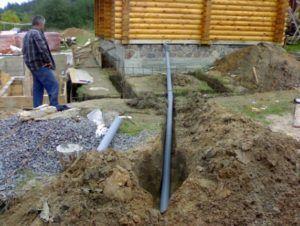 Having determined the distance to which the main line should be laid underground, it is necessary to take into account some more nuances and features.
It's important to know what type of pipe is needed for a given system. For hot water supply, metal-plastic or reinforced rolled pipe materials are the best choice. Polypropylene is not recommended for underground hot water supply systems. Excessive temperatures cause this material to soften, making repairs to the underground structure very expensive.
When installing hot and cold water supply systems, it is necessary to use thermal insulation.. Insulated water pipes used for laying in the ground, allow the system to operate more efficiently.
In an insulated structure, water loses temperature more slowly. Thermal insulation helps maintain temperature even over long pipelines.
Insulated pipelines also fail more slowly. They are protected from damage caused by temperature fluctuations and soil pressure.
In addition, insulated networks have the advantage of reducing energy costs.
When laying underground mains yourself, preference is given to permanent joints. This allows for a monolithic structure.
Water supply networks in areas with high groundwater activity require special attention. In areas prone to frequent flooding, the soil cover should not exceed one meter.
You should also pay attention to the location of the main faucet. It must be easily accessible at all times.
Features of hot water supply
It's hard to imagine modern life without cold, bitter water in the home. When laying hot and cold pipes underground, the freezing depth of the surface is taken into account. However, for hot water supply, a different approach is required when selecting the right pipe.
Here, preference is given to metal-plastic and galvanized products. The primary requirement for hot water supply installations is resistance to high temperatures. The installation itself must be installed below the frost line.
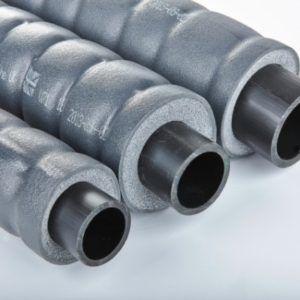 When laying hot pipes, you should take care of their insulation. Various materials are used for this, but the best option is considered to be polystyrene foam insulation.
Polystyrene foam deservedly enjoys high popularityIt's hard to find a better option for protecting a pipeline in a ditch. Expanded polystyrene has only recently come into use, but in a short time, this material has proven its excellent properties. It has low thermal conductivity, reliability, and durability.
If you neglect to insulate the pipeline in the ditch with expanded polystyrene or other material, the water temperature on the way to the tap will drop significantly. Furthermore, protecting the pipeline in the ditch also prevents damage to the rolled pipe due to temperature fluctuations.
The depth of laying water pipes with insulation may be slightly less than without itThis therefore allows for a reduction in labor and time costs.
To what depth should plastic and metal water pipes be buried?
The installation of plastic water supply pipes has already been partially discussed a little earlier. The only thing that needs to be added is that proper thermal insulation must be provided before installing such a system.
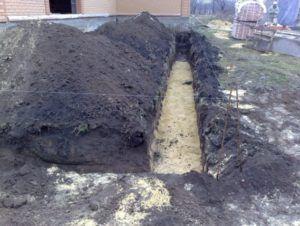
This also applies to metal networks. After backfilling plastic and metal water supply lines, a precise plan for the structure's placement must be developed. These recommendations are dictated by the need for unscheduled repairs.
Returning to metal structures, a few more nuances should be highlighted. It's important to install couplings or adapters on both sides of the distribution valve. This allows for easy replacement of the device later.
The following information complements the practical advice from experts. Metal systems are particularly durable, but even this material is not indestructible. Therefore, before installation, it is best to treat the main line with two coats of anti-corrosion coating.
Also, during installation, it is necessary to carefully check the adhesion of the couplings at the joints.
Where to start the installation work?
Installation work can begin after a detailed plan has been drawn up. This development can identify any potential difficulties that may arise on-site during construction. Addressing these issues during the planning process will reduce the amount of excavation work required and, consequently, the overall installation time.
Watch the video
It's best not to throw away the diagram of the underground water supply system in a private home. This information will be useful during emergency repairs.
The tools for the job should be selected based on the net material. Most craftsmen will have many of these tools at home.
And the most important thing to do at the beginning of work is to divide the territory taking into account the slope of the area.
The distance between two pipes underground
The spacing between two water supply pipes is also regulated by SNiP (Building Code of Practice). According to these standards, water supply and drainage pipes cannot be laid in the same trench. Only water pipes can be laid in the same trench. The distance between parallel lines of the system in the ground must be at least 50 cm.
If you're having trouble calculating the required distance, it's best to seek professional help. They'll not only help you determine the required distance but also provide practical advice on choosing the right material for underground installation.
Watch the video