A country property is not considered sufficiently modern for comfortable living if it is not equipped with a system for draining and recycling water used for household needs.
Essentially, this is a simple sewer tank in a private home, equipped with a whole range of devices for wastewater treatment.
The ancestor of such structures is a simple cesspool, the construction of which is prohibited on sites, but they can still be found in use.
- Types of sewer tanks for a private home
- Advantages and disadvantages of plastic sewer tanks
- Selecting a storage tank for sewerage
- Use of multi-chamber tanks in the sewerage system
- How to determine the volume of a septic tank
- Cost of septic tanks in the Moscow region
- Installation and assembly
- Maintenance during operation
Types of sewer tanks for a private home
The task of processing wastewater is not only its accumulation and periodic pumping; cesspools can cope with this quite well.
The liquid must be purified of harmful impurities and pathogenic bacteria, as dirty and contaminated water is a source of serious illnesses and even epidemics. Therefore, most private homeowners seek to build a stand-alone septic tank.
The most suitable for this purpose are plastic containers specially produced for septic tanks.
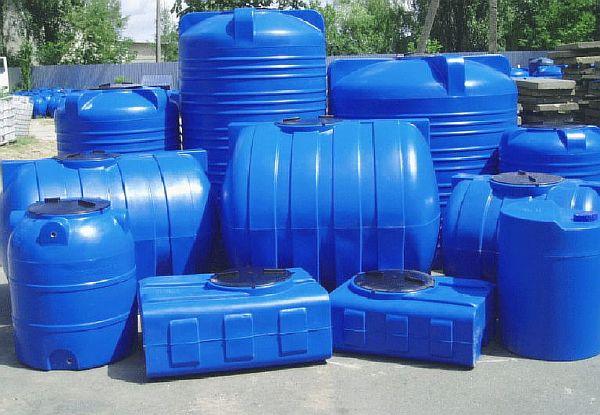
Tanks used to store wastewater generated during their use serve to store the liquid until it reaches capacity. Afterward, it is pumped out by a specially equipped sludge suction truck and transported to a designated site for processing.
Plastic tanks for sewerage in a private home come in various types:
- rectangular shape (Eurocube);
- cylindrical (tank);
- spherical.
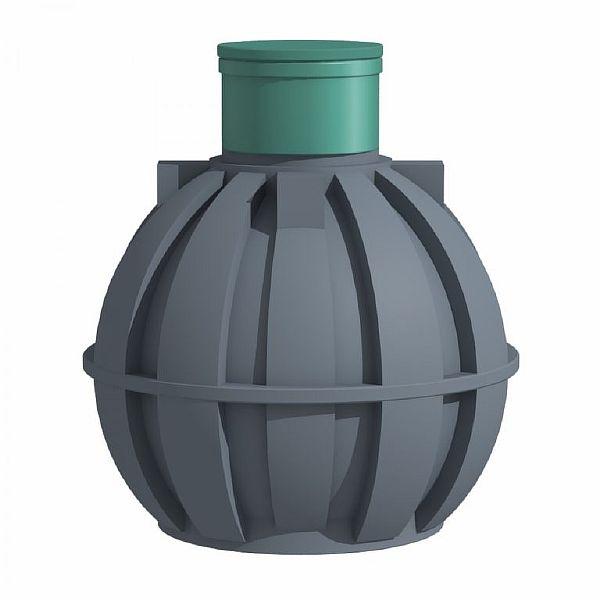
Containers made of plastic always have ribbed walls, which increases their strength and prevents them from deforming when filled with liquid.
The main materials used to make such tanks are polyvinyl chloride (PVC) or polypropyleneHowever, vessels made from composite materials, which incorporate fiberglass or carbon fiber reinforcement, are more durable. However, these products are also more expensive.
Plastic septic tank capacities vary widely, with capacities ranging from 500 liters to 100 tons available in both horizontal and vertical configurations. This allows for a wide range of installation options depending on available space on the site.
Advantages and disadvantages of plastic sewer tanks
Before purchasing a storage tank for a private home, you need to clearly define the ultimate purpose of its installation. The number of residents should also be taken into account. For a family of two or three, a storage tank is quite sufficient, but for a country house with five or more residents, a local wastewater treatment system (LWTS) will be required.
Before purchasing a tank, it's important to understand its strengths and weaknesses. Its positive features include:
- Easy installation – a factory-made vessel can be installed on site in just a few hours.
- Using plastic containers is significantly cheaper than other storage options.
- Simple maintenance involves calling a sewage truck twice per season. A fully qualified sewage pumping service costs between 12,000 and 18,000 rubles, depending on the equipment used and the method used. Vacuum pumping is more expensive. Travel costs are also included, ranging from 20 to 50 rubles per kilometer in the Moscow region.
In accordance with SanPiN regulations, pumping out of storage tanks is carried out at least twice a year.
- Storage tanks can be installed on any type of soil, since their use is not associated with the filtration of wastewater.
- The service life of such installations is 20-30 years.
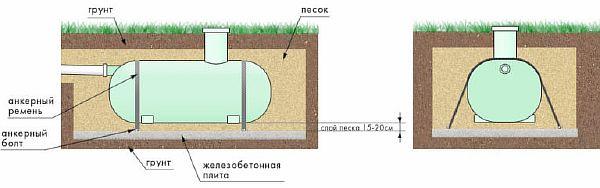
A lightweight plastic tank can be installed by just one person, but this property is also a negative point – the vessel may float up if the groundwater level at the installation site is high, Find out how to install in case of high groundwater levelsTherefore, when installing such a system, it is necessary to use an anchor plate made of solid concrete. The tank is secured to it with steel cables or strips using anchor bolts.
The following points can be considered as disadvantages.
- When using most types of containers, the smell from it still penetrates into the environment, creating an unpleasant atmosphere.
- The need for regular cleaning of the waste container.
- The limited capacity of the vessel, which in any case must be cleaned twice a year.
Plastic products are quite durable, especially fiberglass-reinforced versions. However, the material is fragile and susceptible to impact, requiring special care during installation.
Selecting a storage tank for sewerage
- First of all, the depth of soil freezing is taken into account. To prevent the barrel and its contents from freezing during winter cold, most of it must be located in the ground below this level.
- Each wastewater collection vessel is equipped with a filler neck for servicing. It must also be completely buried in the ground. Only the top lid protrudes, otherwise it will also freeze. After measuring the overall dimensions of the vessel, add about half a meter to them to give an idea of the excavation pit's dimensions.
- The septic tank's size is determined by its volume, which also needs to be calculated. Approximate daily water consumption per person is 180-200 liters. Therefore, the total septic tank capacity for a family of three should be at least 600 liters. If the home is used occasionally, a smaller tank can be used. The tank's size determines its cost and installation costs.
- When installing it on a site, consider accessibility for a tanker truck. The hose length is limited. It's best to locate the pumping point no more than 6 meters from the installation site.
- Unlike a cesspool, a septic tank is sealed, so it's not subject to regulations requiring a specific distance from most buildings. However, it's best to install it no closer than 10 meters from a residential building.
- The use of plastic septic tanks eliminates the need for waterproofing, but the connection point of the pipes to the tank must be carefully sealed.
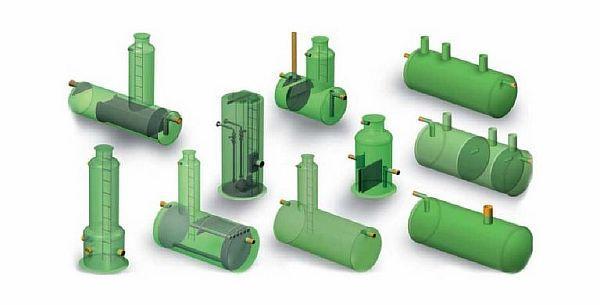 It's worth noting that a homeowner typically doesn't limit themselves to installing a holding tank. A holding tank is typically only the first step in creating a custom wastewater treatment system.
Next, a tank is installed for biochemical wastewater treatment, which significantly accelerates the decomposition of harmful components, increasing the system's throughput. Aerobic and anaerobic bacteria cultures are readily available in specialized stores and are readily available.
Besides, Aeration promotes accelerated decomposition of biomass in septic tanks, as a process for post-oxidation of wastewater. Wastewater treated in this way is 95-98% purified of contaminants and becomes suitable for industrial uses, such as garden irrigation or car washing. If necessary, this water can be discharged directly into the ground, where it undergoes additional treatment.
Pumping out the contents of the wastewater treatment system can be done once every 2-5 years, depending on the amount of accumulated sludge that slows down the filtration rate.
Use of multi-chamber tanks in the sewerage system
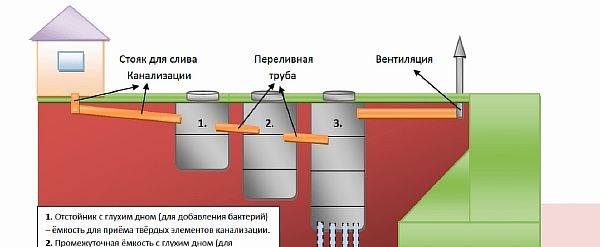
Local treatment facilities consisting of several chambers allow for the thorough purification of wastewater. Each chamber has its own unique processes that not only maximize the removal of harmful impurities but also significantly increase the rate of wastewater treatment. This allows for the use of smaller tanks, saving on purchase and installation costs.
The size of the sewage tanks in a permanently residing private home must be quite substantial. As we've already calculated, even three people can produce up to half a ton of waste per day.
Therefore, even with a 5-cubic-meter storage tank, it's impossible to avoid pumping it out every ten days. And that's a significant expense: a single such operation costs at least 12,000 rubles.
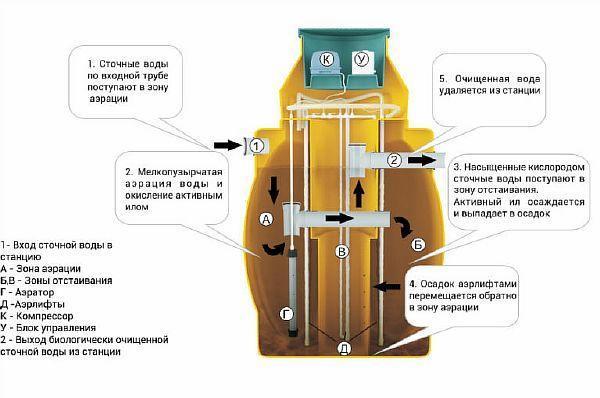
Therefore, multi-stage wastewater treatment technologies are used to ensure that wastewater can be disposed of directly on-site. This places additional responsibility on the user, not only for themselves but also for their neighbors.
Improved wastewater treatment methods make it possible to eliminate the need for liquid pumping altogether. After passing through the station, it can be safely discharged to the ground for final filtration as it passes through the soil.
It should be noted that this cleaning method is not used on clayey base soils, since they are generally waterproof.
How to determine the volume of a septic tank
Let's define what constitutes such an indicator. The volume of such a device is defined as the sum of the capacities of all its sections, with one of the dimensions—the vertical—meaning the distance from the overflow pipe to the bottom of the tank.
In accordance with the requirements of SNiPs, the volume of water consumption by one person is about 200 liters per dayThe septic tank should hold at least three times the water volume. It's easy to estimate the total water consumption in a country house: 2.4 cubic meters for a family of four.
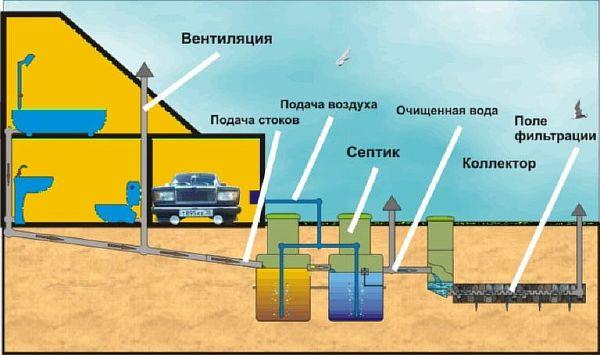
At the same time, according to sanitary standards, the filtration process in wells must take place for at least 14 days, which allows for proper wastewater treatment.
It's easy to see that for a family of four, the estimated required volume is 11.2 cubic meters. Of course, no one builds such septic tanks for a private home's sewer system, using methods to increase treatment efficiency.
As you can see, wastewater treatment costs can be quite significant, but it's not a case where it makes sense to skimp. Wastewater contains plenty of substances that can be broken down by bacterial treatment.
IMPORTANT TO KNOW! These are heavy fats that sink to the bottom and gradually mix with sludge deposits. To remove them, it's advisable to use special filters that work with pumps, thereby increasing energy consumption. But safety comes at a price.
Cost of septic tanks in the Moscow region
Septic tank prices vary widely due to the variety of designs and configurations. Tanks of the same capacity can vary significantly in price. However, if you take average values, the following figures can be used as a guide:
- capacity 1.7 cubic meters – 10900;
- capacity of 3 cubic meters – 21000;
- 5.3 cubes – 33400;
The data provided corresponds to the price list of the Anion company for plastic products.
Fiberglass products from the company "Germes-Plast OC" cost 60,300 for a three-cubic-meter container, 78,900 for a five-cubic-meter container, 124,100 for a six-cubic-meter container.
The prices given do not include delivery to the installation site and the installation of the system itself.
Installation and assembly
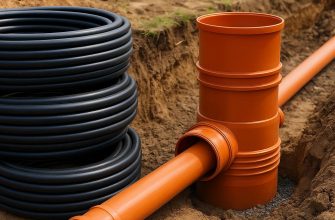
The largest portion of the cost of installing a septic tank is related to excavation work, as the tank is completely buried in the ground. It's important to ensure that a concrete anchor plate is installed at the bottom of the excavation pit at the beginning of the process to prevent the tank from floating to the surface during floods or significant groundwater rises.
The distance from the house to the septic tank should be at least 5 meters, find out more detailed information about the distances from the septic tank to other objects on the siteThe slope of the connecting pipes should be 1-2 millimeters per meter of length. Reliable sealing of the connections is essential to prevent wastewater leakage into the ground.
A preliminary soil survey is a crucial step. The quality of the substrate largely determines the septic tank design. For example, if the substrate is clay and has virtually no filtration capacity, only infiltrates in the form of filter beds are used to discharge the treated liquid.
If the seasonal groundwater level rises above 2 meters, only treated wastewater can be discharged directly to the ground. The groundwater level can be determined by the maximum water level in nearby wells and boreholes.
The quality indicators of soils are determined by drilling an exploratory well.
Maintenance during operation
A distinctive feature of a private home's sewer system is its active nature. This means that it undergoes active processes to process its contents, with the goal of achieving a specific result—disposal of wastewater. Plastic sewer tanks in country houses contribute significantly to this.
In this regard, the main rule for servicing a sewer system is the cleanliness of the contents of the drains in relation to substances that interfere with the work or simply destroy the environment of anaerobic and aerobic bacteria.
Next, you need to prevent things like:
- remains of rotting vegetables;
- contents of construction waste in the form of sand and cement;
- non-biodegradable substances – packaging waste, film, candy wrappers and other similar items;
- water from water treatment plants containing potassium permanganate;
- garbage and water after washing forest mushrooms;
- residues of bleaching agents (Persol, Belina, etc.);
- medicinal preparations;
- derivatives of fuels and lubricants;
- toilet paper;
- washing machine drain;
- drains from the kitchen, bath or shower.
Septic tank maintenance includes mandatory restoration of the bacterial environment by adding pure cultures approximately every two weeks. Repairs and cleaning of sludge deposits are performed as they accumulate.
Autonomous sewerage, cesspools, local sewerage - installation and maintenance of treatment facilities, septic tanks Topas, Unilos