 The selection of piping materials for water supply, heating networks and sewerage systems in our region is quite extensive.
But just recently, steel and cast iron were predominantly used for such construction.
Polymer pipes have only recently entered our everyday life. They began to be produced alongside polyethylene bags and sacks, greenhouse film, and so on.
Today, manufacturers even offer window frames made of polymers. All of the above are characterized by reliability and a long service life.
Many consumers question polymer pipes, saying that the colored coils resemble noodles, while the traditional, thick, and reliable cast iron ones look much more solid.
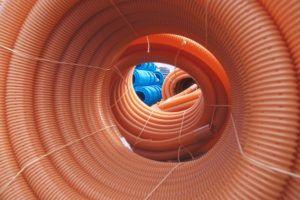
What do the statistics say about this? European consumers in their copper pipes are installed in houses or made of polymer. Only 20% of these consumers install pipes made of other materials.
To say whether a product is good or bad, you need to First, understand their characteristics.
It should be immediately noted that the polymer is an organic substance that has all the disadvantages and advantages of natural high-molecular substances: leather, wood, wool.
- Advantages
- Flaws
- Polymer in Russia
- Types of polymer rolled pipes
- Polymer products for water supply
- Pipe rolling diameters
- Sewer pipes
- Installation of P pipe-rolling materials
- Welding of these pipe materials
- Some installation features
- Polymer and drainage network
- New type of blanks – flexible
- Polymer transformed into a profile
- Polymer pipe as insulation for metal workpieces
- Where else are polymeric materials used?
Advantages
- Universal resistance to chemical reagents.
- Light weight without compromising strength and elasticity.
- Ease of processing and painting.
- Low thermal conductivity.
Flaws
- When heated, strength decreases.
- Like other organic substances, they burn.
- Under the influence of ultraviolet radiation they become brittle and deteriorate.
- The coefficient of thermal deformation is high, but elasticity compensates for this disadvantage to some extent.
Polymer in Russia
There are more than eighty polymer preform manufacturers in our country. They produce up to 300,000 tons of preforms annually. During the same period, these factories import up to 25 extrusion lines for the production of P pipes.
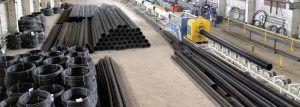
Conventionally, these manufacturers are divided into three categories: large, medium, and smallPrice indicators have become more uniform in recent years, as consumers have begun to pay greater attention to product quality and service levels.
The range of these products requires expansion. This is precisely why our market is so oversaturated with imported products in this range.
Almost half of the imported goods are this is a high volume productThe key is that production of this type requires high quality standards and adherence to geometrical specifications. Among Russian companies, the following have mastered this type of production:
- Klimovsky Plant of Polymer Products;
- OJSC Kazanorgsintez;
- OOO Borodino-plast.
Types of polymer rolled pipes
The construction market offers the following main types of plastic:
- Polyethylene (PE)
- Pex. (PEX cross-linked polyethylene).
- Metal-polymer pipes. This is a multilayer polymer pipe. It is classified as a complex structure consisting of five layers: cross-linked polyethylene, an adhesive layer, an overlap-welded aluminum blank, an adhesive layer, and cross-linked polyethylene.
- Polyvinyl chloride.
- Polypropylene. Reinforced polymer pipes are considered the most durable and strong of this type of pipe.
When talking about types, it is necessary to separately mention the methods of protection.
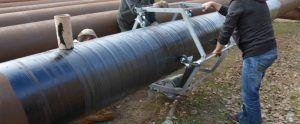
For example, a pipe bitumen-polymer treat well-protected materials from the effects of corrosion. It is coated with a special bitumen-polymer mastic.
Successfully used in pipelines transporting natural gas, oil, and petroleum products, polymer coating of steel pipelines provides excellent protection for the outer surface.
Polymer products for water supply
Pipes for water supply They are produced in straight lengths and coils of 100 and 200 meters. They have smooth surfaces.
GOST 18599-2001 is widely used in the installation and repair of water supply networks, in automatic irrigation systems, in the construction of swimming pools, etc.
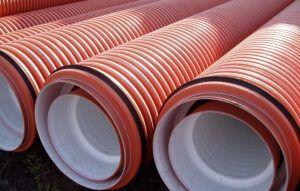
They are divided according to the main parameters that influence the scope of use:
- Marking of the material used for production.
- An indicator of resistance to internal pressure.
- Diameter.
They happen black colors or black with blue longitudinal stripes.
Pipe rolling diameters
The diameter of polymer pipes is one of the important characteristics; it plays a significant role in the construction of pipelines.
- Interior.
- Outer.
- Nominal.
- Conditional.
On domestic products, the external volume is indicated on the markings, while foreign manufacturers indicate the internal parameters.
The minimum diameter is 1.6 cm. Such products are used for laying water supply and heating networks.
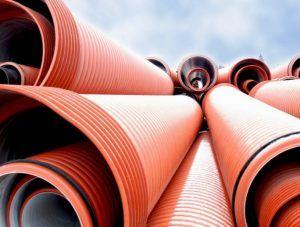
With a volume of 6.3 cm or more, they are used for sewerage, and with a volume of more than 12 cm (these are large-diameter pipes) they are used for installing gas mains.
Sewer pipes
Sewer pipes are made from complex polymer compounds., this guarantees reliability and durability.
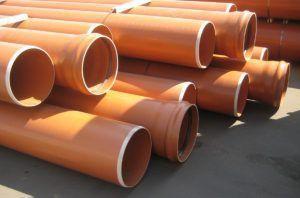
Sewer pipes are available in various sizes, for both heavy and light loads. 20 cm diameter pipes are used in hotels, hospitals, and other institutions, while 15 cm diameter pipes are used for private construction.
Installation of P pipe-rolling materials
Polymer pipes are easy to install. Although these materials are new to the construction market, a number of advantages have quickly elevated them to a leading position.
The initial stage of work is the development of a project, during the preparation of which it is necessary take into account thermal change.
Next you need to select a device for soldering these rolled pipesIf this is a one-time job, it's better to rent such a device from a hardware store.
Welding of these pipe materials
A high-quality connection of the pipeline is created by welding.
For this work you will need:
- Welding machine.
- Special cutter.
- Marker, tape measure.
- Degreasing liquid.
Soldering with electrofittingThe device is prepared as in the previous method. Then the workpiece and parts are inserted into the electrical fitting and secured there. The device and the electrical fitting are connected with a special cable. To begin operation, press the "start" button, and the mechanism shuts off automatically.
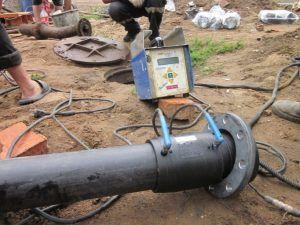
Cold weldingIt's not used often. The process involves applying an aggressive adhesive to each of the elements being joined.
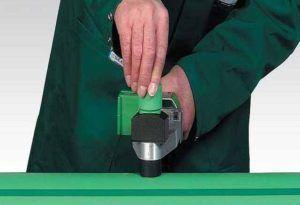
This job is not at all difficult and anyone can handle it. A plastic welding machine is a simple device that's easy to operate.
Some installation features
- The ease of laying polymer blanks makes these products very convenient to work with. Cutting is done with small scissors, and this can be done directly on-site. Larger pipes can be cut with a standard hacksaw.
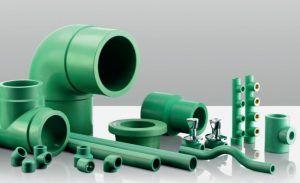
- Bending these materials is also easy. Furthermore, bending is not necessary, as there are a variety of adapters available that allow you to create any angle in the network.
- When melting small-volume pipes with a welding machine, a blockage may occur. Afterward, the workpiece must be checked for leakage. This is done by applying air. If a blockage occurs, the work must be redone immediately, otherwise it will cause problems with the main line.
- After cutting the blank, remove any burrs from the end pieces. This can be done with a simple utility knife.
- When performing the initial connection, it must be done dry. Only two-thirds of the pipe should fit easily into the adapters, and then some force is required to enter.
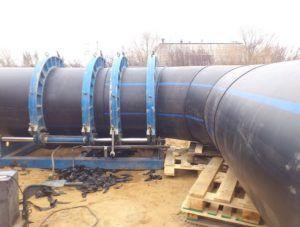
Keeping these tips in mind will only result in positive results. And your pipe materials will provide reliable service for a long time.
Polymer and drainage network
External drainage is considered the most practical option for removing precipitation from a roof. Gutter systems are made from a wide variety of materials.
Most often, drainpipes are used for this purpose. made of galvanized steel with a polymer coatingThese products serve for a long time and give the house an attractive appearance.
New type of blanks – flexible
All types of polymer blanks are conventionally divided into rigid and flexible. This determines the degree of deformation of the blank in its cross-section.
Flexible pipes have been available on the domestic market for a couple of years now. Leading manufacturers of these products are European companies.
This building material allows for work in challenging, dense urban environments. These options include all small-volume PE blanks.
Such products do not wear out at all on the inner layer, unlike a hard product made of classic material.
And that's not the only advantage of this option. Rigid products, under increased loads, don't become oval-shaped, but rather crack and break. Flexible ones do not lose their properties even when deformed by 50%..
The concept of a system in this situation includes: fittings, components and special equipment for laying such a pipeline.
Polymer transformed into a profile
The most common pipe shape is round, but other cross-sections (square or rectangular) are also available. These blanks are produced using extrusion. This process produces seamless polymer profile pipes in a variety of shapes.
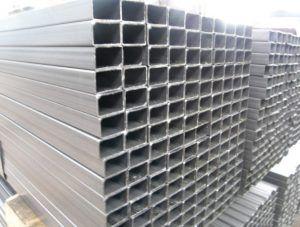
The application of this type of pipe is slightly different from the similar products described above. They are rarely used for drainage systems, but are widely used for cable and electrical insulation.
Very often, profile polymer tubes have begun to be used in the construction of veranda or gazebo frames.
The great popularity of this type of pipe-rolling materials is due to their wide range of positive characteristics and a small number of disadvantages.
Polymer pipe as insulation for metal workpieces
Recently, they have become frequently used for insulation and protection of metal workpieces.
These actions are dictated by a logical decision, because metal polymer coatings are capable of protecting against many things.
Such blanks can be used:
- For hot water supply networks, because these blanks reduce heat loss during transportation.
- If such pipes are used for a network that supplies cold water, then there is no need to worry about condensation.
- The noise during operation of such a pipeline is practically absent, thanks to insulation.
- If the main line is laid in the ground or a wall, then you don’t have to worry about it being damaged by corrosion.
- Such products are not susceptible to abrasive wear, which can lead to their destruction.
It is necessary to separately highlight the advantage of polymer insulation in terms of resistance to chemical reagents.
Because any metal workpiece can't withstand such influences. This type of protection extends the service life, which is very cost-effective.
Where else are polymeric materials used?
These rolled pipe products are used not only in various types of pipelines; craftsmen have found applications for them in many other areas.
From such blanks, a variety of small items are made for use in the home:
- chairs;
- shelves;
- clothes hangers;
- clothes dryers;
- shoe stands and much more.
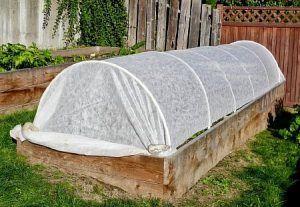
This material is also successfully used in the construction of gazebos, large and small greenhouses.
Polymer frames for such structures are durable, beautiful, and long-lasting. Furthermore, the cost of such a structure is significantly lower than that of a store-bought version.
Polymer pipes, thanks to their superior properties, quickly gained popularity among consumers. This material will remain a leader for many years to come.