Living in a country house can sometimes be associated with the rather unpleasant consequences of a lacking or inadequate sewer system. These defects can manifest themselves in the form of fumes penetrating into the living space. unpleasant odors (find out the reasons for their appearance) or the sound of water draining. These inconveniences in a private home can be eliminated by ventilating the sewer system.

This article covers in detail all aspects related to the installation of a sewer ventilation system.
We'll cover in detail how to install a ventilation system, its different types (vacuum-valve, natural, forced, etc.), its various installation schemes, the materials and tools required for installation, how to make a deflector, and the potential disadvantages of ventilation in a private home.
- Ventilation pipe installation diagrams
- Ventilation through a vent pipe
- Ventilation with vacuum valves
- Natural ventilation of sewerage facilities
- Forced ventilation of sewerage systems
- Exhaust ventilation
- Ventilation schemes for a country house
- Materials and installation of sewer ventilation
- How to make a deflector yourself
- Model selection
- Development of drawings
- Preparing the tools
- Materials for making a deflector
- Making a device
- Significant deficiencies in sewer system ventilation
Ventilation pipe installation diagrams
This is a reliable way to eliminate the effects described above, removing odors through the ventilation system. This also eliminates unpleasant sounds, as an additional air flow is created, eliminating the siphon effect.
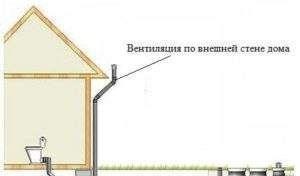
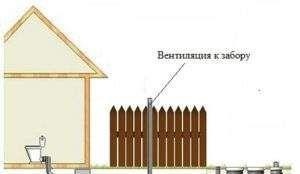
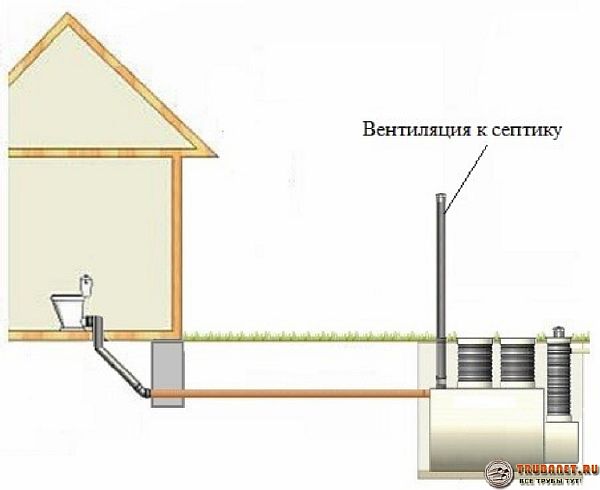
Several ventilation schemes for sewerage systems in a private home are used:
- wall-mounted external installation, in which the pipe is led outside the house and secured with brackets;
- remote location – the pipe is located more than 5 meters from the house and is attached to any convenient object, such as a fence;
- installation of a ventilation pipe in the septic tank body, which is located at a distance of 5–20 meters from the house.
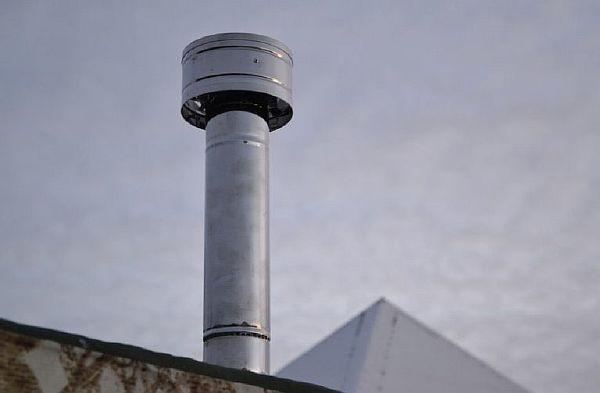
For all of the above ventilation systems, protecting the top end with a cap is mandatory. Deflectors are most often used as the cap, improving ventilation conditions in the room.
Ventilation through a vent pipe
This term refers to a pipe that is an extension of a riser. An inspection port is installed at its upper end, and the vent pipe is an extension of this port.
Obviously, the cross-sectional size of the waste duct must correspond to the cross-sectional size of the riser, of which it is an extension. The most common size is 110 millimeters.
Find out! How to do it right ventilation in a private house: what to choose, how to arrange it, which type to choose - natural, forced or combined, arrangement schemes.
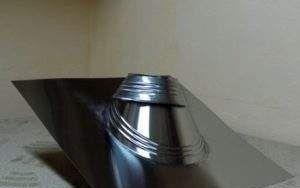
A fan outlet is essentially a type of ventilation with an internal location. The main problem with this type of ventilation installation is the intersection with the ceiling and roofing pie.But the construction market is fully equipped with devices for such a transition for roofs of any pitch.
Ventilation with vacuum valves
Unpleasant sewer odors are caused by malfunctioning traps in toilets, sinks, or washbasins. This can occur when wastewater suddenly discharges into the riser.
For a period of time, it is completely blocked by wastewater, creating a vacuum in the riser. This vacuum naturally draws liquid from the water seal into the drain, creating a channel between the drainage system and the living space.
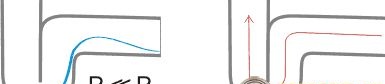
This phenomenon can be successfully countered by installing a waste pipe, which equalizes the pressure in the riser. However, let's imagine installing it across two ceilings. It's a hassle and an expense!
Instead of such a device, you can get by with a vacuum valve, which is installed instead of the fan channel.

As pressure in the riser increases, the shut-off valve presses tightly against the seat, preventing air from escaping. When a burst of discharge occurs, the valve opens slightly, compensating for the pressure change within the system. The siphon valves are not damaged.
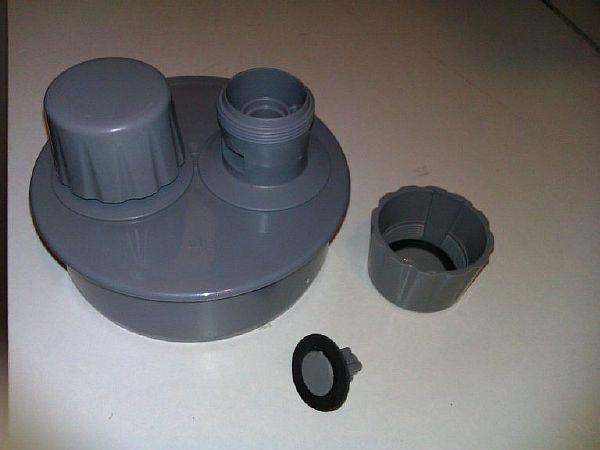 The shut-off valve cover operates solely under its own weight, which is sufficient to perform its intended functions. It should be noted that over time, the cover may become contaminated with dust deposits on its surface, as it operates in high-humidity conditions.
Therefore, it must be periodically removed and cleaned of deposits. The vacuum valve should be installed directly on the top of the drain after inspection.
This device can only be used in heated rooms.Otherwise, it will freeze and will not be able to perform its intended functions.
The valves available on our market are produced by various manufacturers in Russia and Europe. The price range is surprising, ranging from 170 to 1,400 rubles. A careful examination of the designs and practical applications reveals no justification for this.
Natural ventilation of sewerage facilities
Ensuring spontaneous air circulation in the ventilation system of drainage systems is ensured by the generation of heat in the mass of sewer products through natural processes of their decomposition.
In this case, the gases produced have a higher temperature and rise upward, ensuring circulation and their release into the environment.
But they have one unpleasant feature – flammability.
Therefore, waste storage and accumulation facilities are flammable, and if large quantities are present, they can even be explosive. Cesspools are particularly dangerous in this regard.
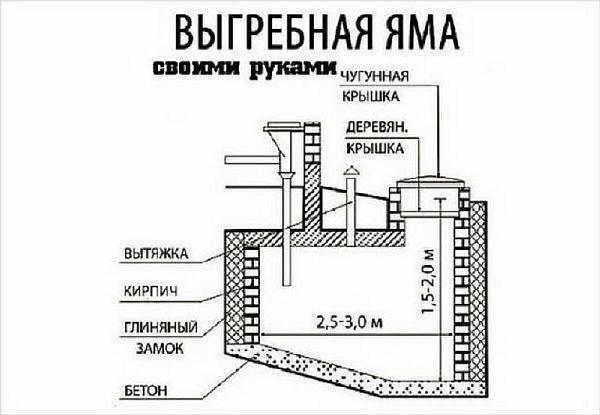
Therefore, ventilation is essential in such facilities. Currently, the primary material for ventilation is plastic pipes with a diameter of 100-110 millimeters. The pipe extends from under the cesspool cover to a ventilated area 4-5 meters away.
To improve the efficiency of the exhaust system, a deflector is installed on it. In addition to protecting the upper end of the pipe from clogging with leaves and other debris, this device actively increases air flow. However, active exhaust through deflectors only works in windy conditions.
In windless regions, it is advisable to use low-power axial fans for exhaust to ensure forced removal of gases from the sewer.
External ventilation is arranged in the same way. in filter wells and septic tanks.
To eliminate strong odors in the cesspool itself, chemicals can be used.
Forced ventilation of sewerage systems
According to current building codes, low-rise individual buildings can be used without installing a waste pipe. This depends on the number of residents and the number of plumbing fixtures in use.
Exhaust ventilation
As noted above, the main reason for a leak in the sewer system is a broken siphon, which results in sewer odors penetrating into a private home.
However, this isn't the only cause. In homes frequented periodically, such as a summer house, a malfunctioning trap can be caused by dryness. When the plumbing is left idle for long periods, the water in it dries out, opening the channel to sewer gases. When the owners return, they are greeted by an unhealthy atmosphere.
To eliminate this cause of sewer gas breakthroughs, an exhaust ventilation system is installed in the house.
It can be located in ventilation ducts installed during construction, and if these are not provided for in the project, in square or rectangular pipes.
Grilles equipped with a shutter mechanism are installed along the entire length of such a duct. This allows the airflow to be completely or partially blocked as needed. The upper end of the ventilation pipe extends above the roof ridge and is protected by a cap.
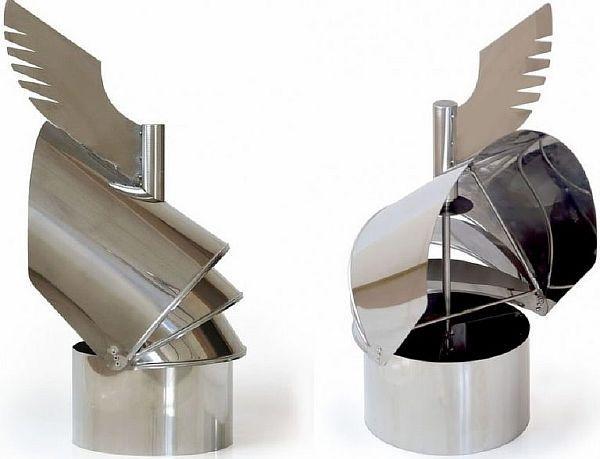 Deflectors are often used as such a cover. When used, the exhaust becomes forced, operating intermittently only in windy weather.
However, in calm regions, deflectors are ineffective because they only create draft in the presence of horizontal airflow. Deflectors installed in wind-protected areas are generally ineffective.
In such cases, it's necessary to use motorized fans. Their power is low, and for a small private home, a 200-250-watt unit is sufficient. Fans come in several types:
- field - in them, an impeller is installed on the motor shaft, enclosed in a snail-shaped housing;
- Axial – installed directly in the ventilation pipe, the air flow is generated by the action of the screw.
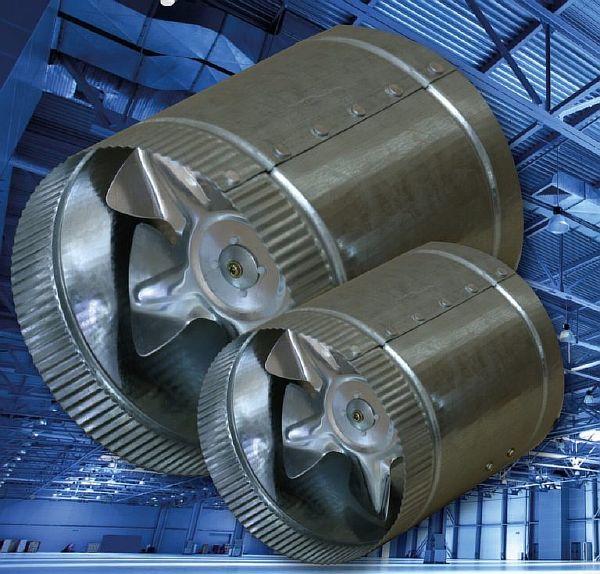
Using exhaust ventilation ensures constantly clean air in all rooms of the house.
Ventilation schemes for a country house
The modern trend in suburban construction emphasizes maximum airtightness. This undoubtedly has a positive impact on the financial and economic performance of the building.
But at the same time, air exchange and living safety are compromised. After all, one person needs approximately 30 cubic meters of air per hour to function normally.
- The quality of indoor air is significantly influenced by the external conditions of the construction region and the composition of the materials used during the construction process.
- Methods of controlling heating systems, air conditioning and ventilation devices are important.
- Do not use household chemicals that emit harmful substances and are not recommended for use in a closed environment.
- There are specific standards for the air composition in different rooms, such as bathrooms, bedrooms, gyms, and others.
- It is necessary to take into account the physiological characteristics of each person living in the house, for example, the presence of allergic reactions to certain substances and materials.
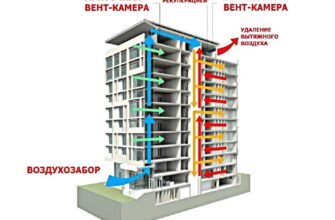
For high-quality ventilation of the premises of a country house, combined supply and exhaust systems are used, which operate according to the scheme below.
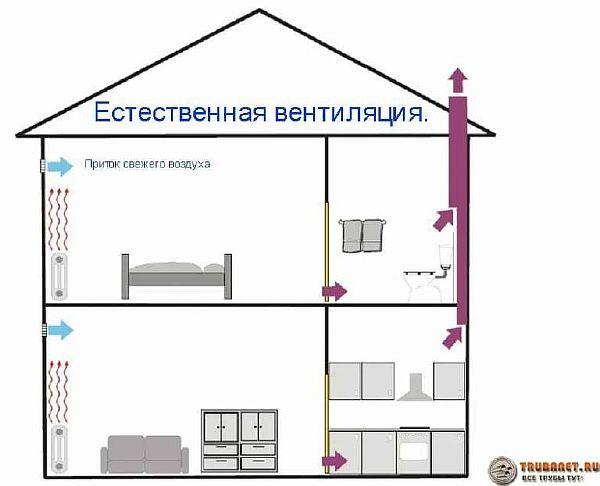
Ventilation problems can arise for various reasons, but most often they are caused by long horizontal sections of piping and numerous bends. In such cases, forced ventilation is used.
Materials and installation of sewer ventilation
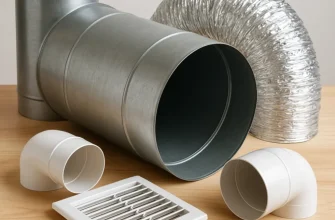
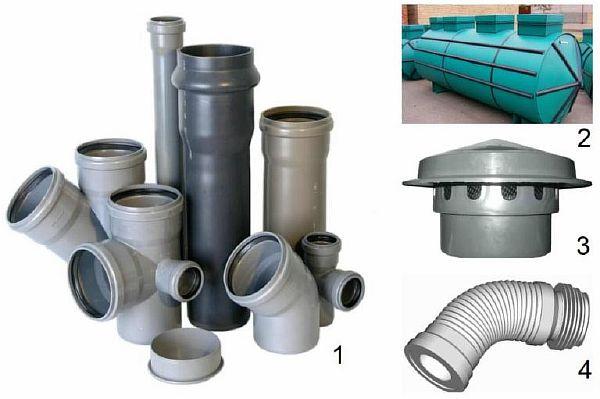 The same materials are used for sewerage systems in low-rise suburban homes as in urban housing. Polyethylene pipes are generally the most popular, but their dimensions are minimal.
So, for the riser, pipes with a diameter of 110 millimeters and corresponding fittings are used. Naturally, the vent outlet is made with the same pipe. If a private house doesn't have a special shaft for such ventilation, a bend is made from the upper end of the riser and the air duct is routed along the wall of the house.
The top end of the pipe with its cap extends above the roof ridge. For a small building, a 50 mm ventilation pipe is typically chosen to match the riser, but this is rarely done. In this case, the risk of backing up with the drain is too high, leading to the loss of the water seal in the trap.
How to make a deflector yourself
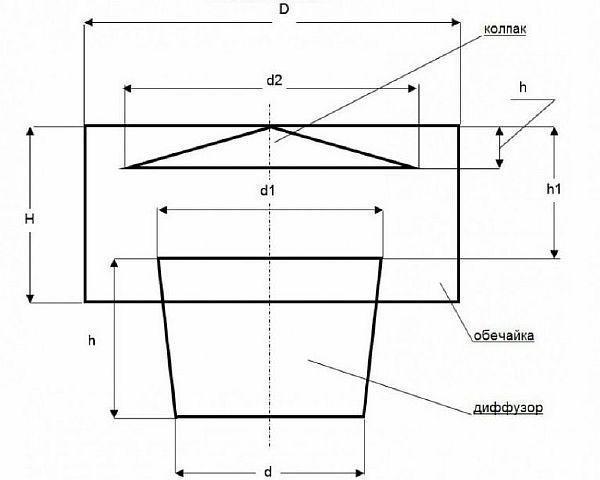
DIY sewer ventilation in private homes typically involves the use of a deflector. This is necessary to increase the draft in the ventilation ducts.
To make a deflector yourself, you need to complete a series of sequential steps:
- Select its model.
- Make drawings in dimensions, scale 1:1.
- Prepare the necessary tools.
- Select and purchase materials.
- Make patterns of the parts from cardboard.
- Assemble a deflector model from cardboard, changing the dimensions of the parts if necessary.
- Make the deflector parts using the patterns.
- Assemble the device in metal.
Model selection
For self-assembly, it's best to choose the simplest model that provides effective extraction from the sewer system in a private home.
Development of drawings
First, you need to draw an assembly drawing of the product and calculate the connection dimensions, as well as the parameters of each individual part. Then, you need to create unfolded drawings of all the parts in actual dimensions and to scale. The drawing should be transferred to cardboard.
Preparing the tools
As the deflector is designed, the assembly technology and the tools needed for manufacturing are considered. However, in any case, it is necessary to have:
- The simplest drawing tools for creating technical documentation are a ruler, 30- and 45-degree squares, a protractor, and a compass.
- Metalworking scissors for cutting sheet metal.
- File – for removing burrs.
- Marker used for marking parts.
- Drill for drilling a hole for fasteners.
- Drills for metal.
- A mechanic's hammer.
- Bench vice.
- Awl.
- Cardboard scissors.
The listed tool is available to any practical owner.
Materials for making a deflector
The main material is sheet metal. The selection criteria are availability and budget. You can make a deflector for ventilation of a sewer riser in a private home yourself. To do this, you will need:
- Stainless steel sheet, 0.25-0.5 mm thick. This is the best choice in terms of durability.
- Aluminum sheet, 0.4-0.8 mm thick. It's nearly as durable as stainless steel.
- Sheets of other metals – copper, titanium, zinc and the like.
- Galvanized steel sheets, 0.4-0.6 mm thick. The most common material in terms of price, quality, and affordability.
- Cardboard with a thickness of 1.0-1.5 mm for making models and unfolding of parts.
- Rivets are standard aluminum or pull-out.
As the work progresses, other auxiliary materials may be needed.
Making a device
First, you need to cut out cardboard mockups of the device's parts. Then, assemble them into a mockup of the deflector, attaching the parts with a stapler.
Next, it is assembled.
Significant deficiencies in sewer system ventilation
Inadequate ventilation of a sewer riser in a private home quickly manifests itself as unpleasant odors. The most common causes are:
- insufficient size of the sewer riser pipe, leading to the breakdown of siphons;
- long-term downtime of plumbing equipment, leading to their drying out;
- the occurrence of cracks in sewer pipes due to violation of installation rules.
A sewer exhaust hood in a private home is crucial to creating comfortable living conditions.
I have a ventilation pipe installed in the septic tank housing. We've been using the septic tank for about a year, and occasionally there's an unpleasant odor coming from the sewer. I was wondering how to solve this problem, and this article came at just the right time. I'll install a second, additional ventilation system, located remotely. I think it would be practical. It's located right there, in a well-ventilated area, and that would solve the odor problem.