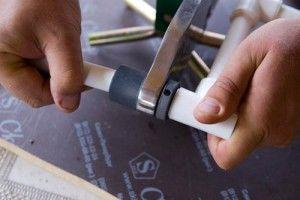
 In the plumbing and heating industries, plastic quickly displaced metal from its leading position. Plastic products proved to be much more practical and convenient than metal.
When working with sewer systems, you can't avoid the process of soldering PVC pipes. Like any sewer system project, it has its own nuances.
Joining pipes made of this material is easy if you take the basic steps into account. However, welding must be done responsibly to avoid serious errors.
- About the main methods of soldering PVC pipes
- We purchase the necessary equipment
- Features of the welding process
- Brief instructions
- About cold welding technology
- What mistakes do professionals make most often?
- Tips for choosing a welding machine
- About power
- What about the attachments?
- Additional recommendations
About the main methods of soldering PVC pipes
To perform welding, craftsmen use the following basic techniques.
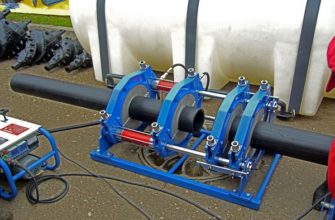
- "Butt".
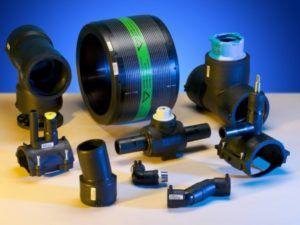
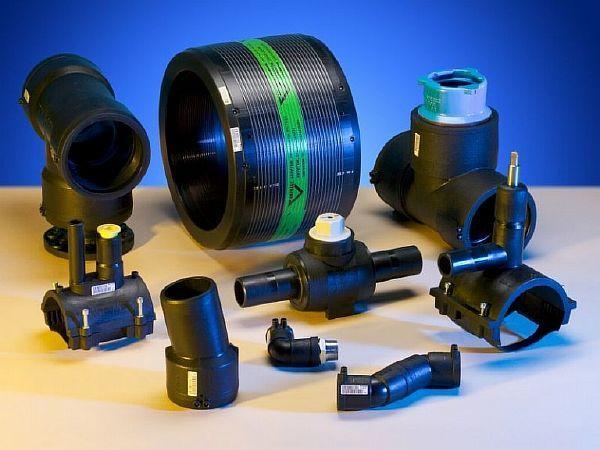
- "Electro coupling".
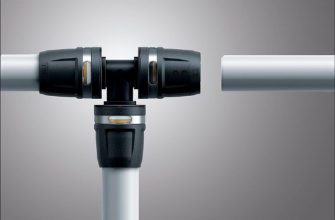
- "Coupling". The connecting coupling is purchased separately.
- Using so-called aggressive glue. One of the safest methods, it's also distinguished by its simplicity.
- The most common option is to use a specialized soldering iron.
These are different options, but their essence remains roughly the same. Due to diffusion, polyvinyl chloride compounds are very durable.
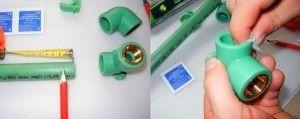
This occurs when the material is coated with glue or one part is welded to another. These steps are part of any DIY soldering of PVC elements.
Each welding process has its own advantages and disadvantages. Conventional soldering is suitable for structures with varying characteristics. A great choice for DIYers is using a specialized adhesive.
There are exceptions, but specialized adhesive is generally not suitable for systems that may experience high pressure. Couplings can also be used.
We purchase the necessary equipment
Video 1. DIY PVC soldering process and the tools you need
- A soldering iron that comes with several attachmentsThe main thing is to ensure that the soldering iron tips match the diameter of the pipeline.
- Cutting scissorsThe main thing is that the tool is sharpened, then the parts will not deform.
Every action and decision must be carefully considered. Soldering technology provides up to 15 years of trouble-free system operation if done correctly.
Therefore, it makes sense to properly understand this, How to properly solder PVC pipes.
Video 2. Soldering a PVC pipeline with a Chinese soldering iron
Features of the welding process
There are some nuances that, if observed and taken into account, will help you achieve maximum results, regardless of the soldering method you use.
- It is necessary to thoroughly clean all connection points from dirt and dust.
- The joint will need to be degreased. Soldering is impossible without it.
- Pipes do not need to be pushed all the way into the structure. Fitting joints require careful preparation. The coupling is no exception.
- Chamfers are always removed. This is necessary to ensure that the pipe fits snugly into the fitting without any additional force.
The actual soldering process begins once the preliminary preparation steps are complete. Soldering can be divided into four stages. It doesn't matter whether a coupling is used or not.
- Slicing.
- Warming up.
- Compound.
- Cooling.
Special types of scissors designed specifically for this purpose are used for cutting. Using the right tool will prevent future deformation of the pipes.
The required diameter must be oriented and a device used for soldering.
Be sure to wear thermal gloves to protect yourself. Welding PVC pipes yourself isn't all that difficult.
Brief instructions
First, prepare the fittings and pipes that require processing for welding. If the components are reinforced, the foil layer must be removed. All parts that will be soldered must be degreased.
Video 3. Soldering a PVC pipe to a wall with a soldering iron
A connecting element is mounted on one end of the welder's heater, and the pipe itself is secured to the other end. The coupling is used slightly differently.
The key is to adhere to the time required for processing specific parts during welding. Manual repositioning, fixing, and heating require adherence to specific time intervals.
The parts will only deform if each step is performed smoothly. The welding machine must be set to the operating melting temperature. This is usually 260 degrees Celsius. Otherwise, soldering is impossible.
After the process is complete, allow the structure to cool for a while. Follow the same guidelines when using a coupling.
Video 4. DIY PVC Pipe Soldering
About cold welding technology
This welding method involves the use of a so-called aggressive adhesive. It's simpler than the previous method. Almost all the work can be done independently, without assistance.
- Pipes and fittings should be prepared as if they were being used on reinforced polypropylene components. First, mark the surface of the structure to indicate the correct placement of the components.
- The adhesive is applied to the parts involved in the joining process. They must be pressed together very quickly and firmly. The coupling is treated in the same manner.
- We fix the pipes in the desired position with our hands for literally fifteen seconds.
- The water should be turned on one hour after the process is complete. The system must remain completely still until this time has passed. The video tutorials on our website will make the explanations more clear.
Video 5. Soldering PVC pipes with a minimal set of tools
What mistakes do professionals make most often?
Haste and inexperience lead to improper execution of even processes such as soldering polypropylene products. We'll describe the most common problems and their characteristics.
- Most often, defects in products arise due to improper placement of connecting elements during soldering. For example, gaps appear when the component is not fully inserted into the fitting. This reduces the working pressure and wall thickness. This problem is especially acute for those who insert the pipe into the fitting directly after heating, without applying sufficient force.
At the same time, excessive force must be avoided during soldering. Otherwise, another problem arises: excess molten material begins to squeeze out from the gap between the end face and the internal stop of the structure.
Such surpluses are also called gratomAfter this, the flow rate of the working fluid through the system decreases. The connecting element begins to experience more severe stress.
- Some people don't always set the temperature correctly. The required temperature is 260 degrees Celsius. The acceptable tolerance is minus or plus ten degrees Celsius. This value is optimal for any type of product, regardless of diameter. The main thing is to keep the soldering iron from overheating. This will allow the required pressure to be maintained in the material. At the same time, the surface shouldn't cool too much before all the elements are joined together.
- Another common problem is improperly selected equipment. Soldering irons should be selected based on the power of the pipe diameter being processed. For example, 500 watts is best for a 50 mm diameter pipe. A 1000 watt power iron is required if processing a 100 mm diameter pipe.
Video 6. Errors in selecting connecting fittings for soldering + welding time table
Tips for choosing a welding machine
Before purchasing suitable equipment, it is recommended to pay attention to the following characteristics:
- Manufacturer. What determines the cost of the device and its quality?
- The material the device is made of and the build quality. Soldering cannot be done without taking this into account.
- Complete set, additional attachments.
- Power. Depends on the diameter of the parts being soldered.
A soldering iron for PVC pipes is a tool with the simplest operating principle.The heating element is located in the very middle. It is responsible for creating the optimal temperature during soldering..
Video 7. Review of a soldering iron for PVC welding
It's best to perform this procedure with an assistant rather than alone. One should operate the tool, while the other prepares and installs the parts.
Only experienced specialists can solder everything from start to finish on their own.
About power
Equipment with a power rating of 1.5 to 2 watts is most common on the market. This may even be too much for home users.
680 watts is enough to solve this problem, at least for parts with diameters of 16-63 mm. 850 watts is optimal for parts with diameters of 63-75 mm. Finally, 1200 watts or more is required for parts with diameters of 125 mm, as this will make soldering easier.
What about the attachments?
It's best to buy larger sets. The optimal choice is tools with tips for almost every diameter, in pairs. Many soldering irons allow you to install two or more tips at once. However, these are professional-grade units, so they're not cheap.
Additional recommendations
For diameters of 5 cm and larger, the optimal solution is to use a butt joint. However, this advice is intended as a recommendation, not a binding axiom.
We apply the socket of the fitting to the surface, which has been brought to a certain temperature. After this, we move on to working with the pipe itself. It's important to maintain the holding time precisely. Videos will add clarity to the story.
The resulting connection should be visually inspected. Has any polypropylene overlay appeared? This means the pipe is being pushed onto the hot nozzle too deeply.
The main advantage of this technology is that fittings are not required on straight sections. The key is to ensure that the cuts on the structures are as straight as possible. Special tools will help with this.
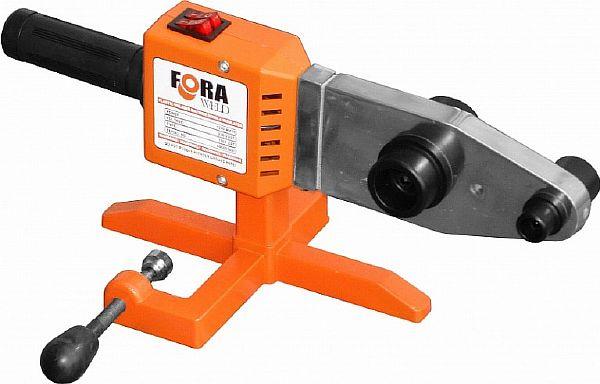 They are connected to the soldering iron's heating elements, aligned with each other; this rule must also be strictly adhered to. These devices make centering easier for better results. Each step is clearly visible in the video.
An indispensable tool during the process is a flat surface, such as a special disk. After that, the process is the same as for a coupling connection.
Some soldering irons have special sound signals, indicating the start or end of a particular stage. This makes soldering PVC pipes more efficient.