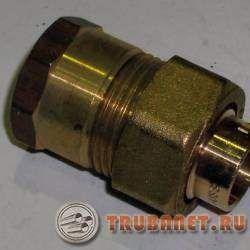
What is an American union nut? It's a fitting consisting of a coupling with an end thread and a quick-release union nut. It usually comes with a Teflon gasket.
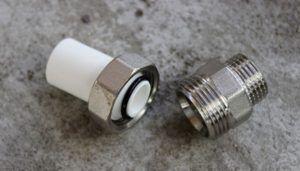 This is the name given to a type of threaded pipe connection used in water supply and hot water supply systems. Since its introduction, the American threaded connection has quickly gained popularity among plumbing professionals due to its ease of installation and reliable connection of pipeline components.
If you need to connect pipes, a union nut is the ideal option. This eliminates the need to dismantle part of the network during subsequent repairs.
It's impossible to assemble a pipeline from a single pipe. Pipe components must be turned and connected to achieve the desired configuration. Fittings have always been used to make joints.
Installation can also be accomplished using a coupling, which in its standard form is a threaded part. When connecting, it is screwed onto the threaded part.
The next part is screwed into the coupling by rotation, and such an operation (especially if all the elements are large) presents quite noticeable inconveniences.
We suggest you read the article where it is described Methods for connecting metal pipes to polypropylene pipes + video instructions.
What is an American woman?
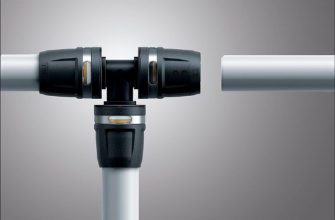
The connecting piece in this design consists of three parts:
- threaded fittings – are attached to one part of the water supply at the connector point;
- a counter branch pipe with a flange – installed on the second end;
- union nut – installed on a flanged fitting before it is installed in place.
Next, when tightening the nut, applying pressure to the flange pulls the fittings together, compressing the two parts. To ensure a tight seal, gaskets are used with a coupling. For a conical joint, a gasket is not necessary.
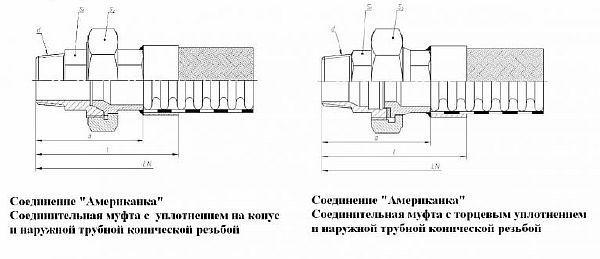
If it is necessary to dismantle a section connected using an union nut, simply unscrew the nut, while the mating elements of the pipeline remain stationary.
Types of connecting joints. The number of design installation solutions corresponds to the number of types of moldings.
By type of materials used
Installation of water supply systems using a coupling It involves the use of homogeneous elements, primarily to avoid electrolytic corrosion, therefore fittings are produced in various designs:
- Steel – the main disadvantage of the material is its susceptibility to corrosionThe life cycle of such parts is also limited by the tendency for limescale deposits to form from water on the internal surfaces.
- Copper – less susceptible to corrosion, used only on pipelines made of the same material.
- Brass – the most popular in use, resistant to oxidation, durability is at least 50 years.
- Polypropylene – in terms of strength characteristics and ease of use, they are increasingly becoming competitors to metal products.
- Polymer – have all the advantages of plastic products. For polypropylene pipes, the union nut is the best connection type.
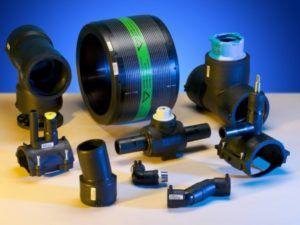
- Combined – used as adapters when connecting metal pipes to plastic ones during partial pipeline replacement. To manufacture these fittings, a metal threaded section is pressed into a plastic housing.
By type of assembly method
In addition to differences in the materials used, threaded connections differ in the design of the connecting units.
They come threaded, with various thread directions, and with internal or external threads on each side. Models with a conical joint are also used, which are used to create a union nut connection using a thrust collar under the nut.
By surface protection method
What types of American style fittings are available based on the type of protective coating? Steel and cast iron fittings are coated with a protective nickel or zinc coating to prevent corrosion.
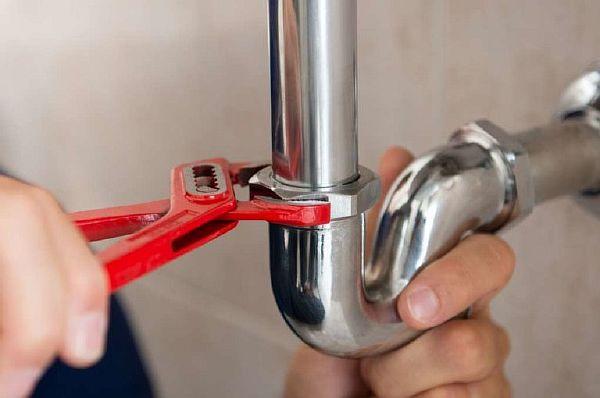
For plastic or stainless steel counterparts, protection is not applicable. Therefore, the use of pipe wrench chocks or special internally engaged wrenches is recommended.
Joining metal components
 Metal pipes for various purposes remain widely used in plumbing. Therefore, metal pipe installation is also widely used in a wide variety of applications.
For simple joining, threads must be cut on the ends of the assembled components using a standard thread-cutting tool. The union nut is screwed onto the prepared ends, and the threads must be sealed with FUM tape or flax fiber strands.
The final connection is made by tightening the nut and installing the gasket. When reusing the coupling, the gasket should be replaced. The connection is reliable and repairable. Types of union nut for metal components:
- direct connection of metal pipes;
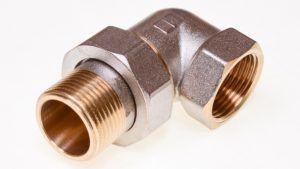
- installation carried out at right angles, as well as at angles of 30 and 45 degrees;
- installation of console water supply elements with pipes, such as taps, mixers, air vents;
- threaded connection for transition to a different diameter;
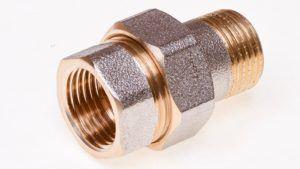
Connecting pipes using American women allow you to obtain a sealed joint in pipelines of any configuration.
Joining plastic components
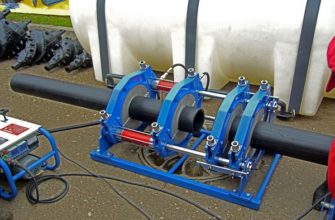
Connecting composite pipeline components has its own unique challenges. Polypropylene pipes are joined using welding equipment. The process is very simple and is performed on-site during installation.
Connecting polypropylene pipes with an American fitting is the most reliable and perhaps the only method of joining using a detachable coupling, including connecting a heated towel rail.
 Several types of connections are used for polypropylene pipes:
- coupling with external thread;
- coupling with internal thread;
- a device with simultaneous use of internal and external threads;
- angular, produced at angles of 30, 45 and 90 degrees for installation in hard-to-reach places.
Installing a towel dryer
Installing such a device in a bathroom is an example of using a threaded connection for installing additional equipment. The heated towel rail is connected to either the heating system or the hot water supply.
The work can be performed in the following order:
- Install the dryer in its permanent location.
- Make a cut into the hot water supply or heating riser with the installation of threaded fittings for the inlet and outlet flows.
- Install corners with ball valves on them.
- The heated towel rail connection should be made using plastic pipes. The critical temperature for these pipes is 95 degrees Celsius, which is not used in either system.
- Install a valve on the upper register to bleed air from the system, otherwise an air lock may impede the circulation of the coolant.
- Check for leaks in the dryer by opening the inlet and outlet ball valves. If leaks are detected, recheck the joints, applying additional seals to the threads. Flax tow, fluoroplastic sealant (FUM) in the form of tape or cord are suitable for this purpose.
- Installing ball valves will allow repairs to be carried out without shutting off the riser. It should be noted that connecting the heated towel rail to the polypropylene pipe requires careful handling, as the pressure ring cannot always be reused due to deformation.
Connecting a heated towel rail to a riser with polypropylene pipe using conical unions eliminates the need for pipe benders. This reduces the labor required for installation and adjustments.
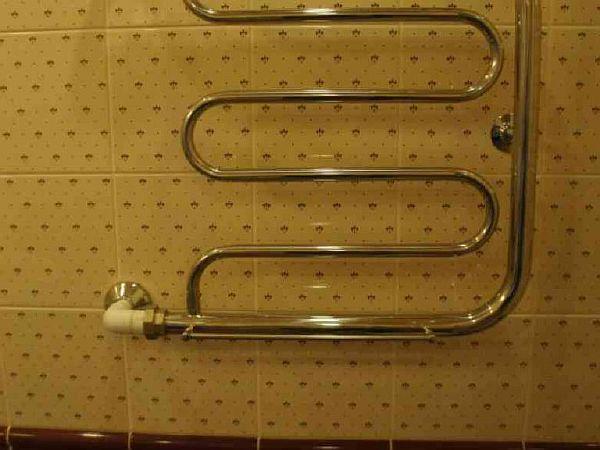
An example of connecting a heated towel rail via a threaded connection is shown in the figure.
Dimensions of coupling elements
In domestic plumbing standards, American fittings are classified as “coupling connections with a union nut.”
Naturally, their size range corresponds to that of the linear elements of water pipes. The types available depend on the method of connection to the main pipeline or cantilever element.
When installing a faucet or mixer tap as part of a plumbing fixture, union nut sizes from 3/8" to ¾" with tapered threads are used. This allows for secure installation with just a few turns of the nut.
For water pipes, they are used within the range of 10–50 mm, the maximum indicator is typical for connection with a heated towel rail.
To connect polymer pipes, special couplings are used – conical union nut fittings, onto which the plastic shell is literally pulled by the force of a tightened nut through a thrust ring, ensuring a tight joint that is several times greater than the pressure in the system.
Pipe sizes
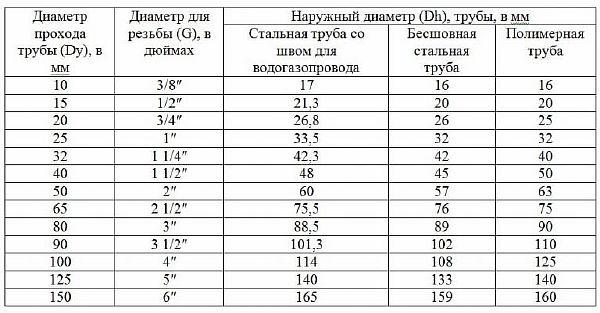
For an American plumbing fitting, the thread can be selected based on the data provided in Table 1.
Tips and recommendations
When using plastic pipes, the properties of the material must be taken into account. Polypropylene is a material with a number of specific properties., such as elasticity, plasticity, chemical resistance.
For installation using a union nut, its dimensions must be adequate for the pipes being used. For cold and hot water supply systems, this is an inch or an inch and a quarter; for heating systems in a private home, 1.5-inch fittings are best.
When using plastic products for drip irrigation systems, half-inch sizes are sufficient.
It's important to remember that a temperature of 95 degrees Celsius is critical for polypropylene pipes. This parameter must be monitored when connected to heaters. The outlet temperature of the device may exceed the permissible limits.
When partially replacing a water pipe with a plastic one, an American union nut is used as an adapter.
When installing union nut fittings with a protective coating, it is necessary to use a special tool that does not damage the coating layer.
When selecting pipeline components, it is necessary to consider their location in terms of accessibility and functionality.
Conclusion
The invention of the "American" method for connecting pipe elements was a revolutionary development in the installation of plumbing systems of any complexity. As a result, this complex process became accessible even to those with minimal skills.
Without a doubt, equip yourself with this type of connection and good luck to you!