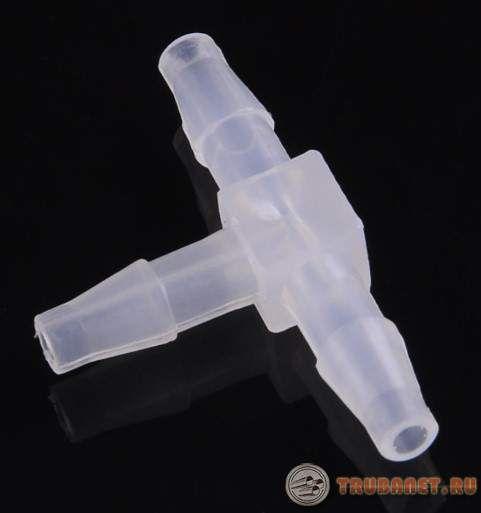
 Plastic piping materials have confidently taken a leading position in pipeline networks for various purposes. They are used in water supply, heating, ventilation, drainage systems, and more.
They offer a wide range of positive characteristics and are affordable. Connecting these pipes requires specific knowledge and skills, and their specific features and characteristics dictate differences in the connection methods and connectors used.
The choice of the type of joint and connectors for plastic pipes depends on many factors, but the most important of them are the conditions and characteristics of operation. Connectors for plastic pipes are related to pipeline fittings.Without them, it is impossible to install any plastic pipeline.
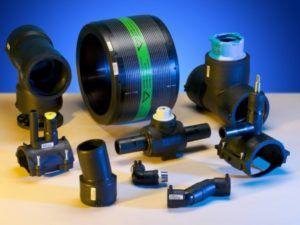
They have gained widespread popularity due to their versatility, low cost, and ease of installation. These products for plastic systems allow for connecting entire trunk sections.
Connectors (fittings) for plastic pipes are selected based on the technical characteristics of the system, and are used for:
- Branching executions;
- Connections of pipes with different diameters;
- Disassembly and assembly of pipelines;
- Sealed ceiling structures.
If we talk about the advantages of these parts, it should be noted that there are many of them in this case, these are:
- Resistance to water temperature changes, and stable cross-sectional dimensions during temperature fluctuations.
- High level of resistance to impacts and other types of mechanical influences.
- Resistant to bending and abrasion.
- Long period of use.
- Resistance to corrosion processes.
- Low vapor permeability, etc.
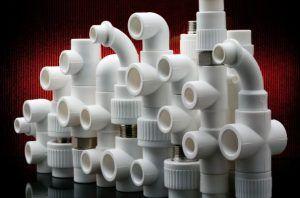
It's no coincidence that they're called universal: they're installed not only in cold water supply systems but also for hot water supply. Tests have shown that these products can last up to half a century. This means you don't have to worry about repairs for that long.
Types of connectors
To install a pipeline at a non-standard angle and still be sure of its tightness, you can use the following types of connectors (fittings):
- corners;
- "Americans";
- taps and valves;
- plugs, tees and crosses;
- couplings;
- supports and contours.
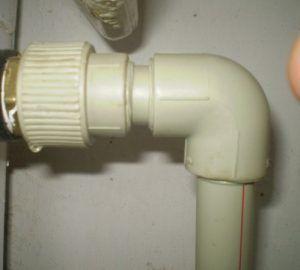 Corner connectors Also called elbows, this type of fitting is the most widely used. These parts are used to make turns in a pipeline. Creating angles is essential when installing a pipeline of any size.
For ease of use, elbows are manufactured with a variety of angles (30, 45, and 90 degrees). This allows for the installation of the desired angle of any complexity.
«American women" are most often used for plumbing connections. The required level of tightness in these parts is ensured by a plastic cone equipped with a silicone or rubber sealing ring.
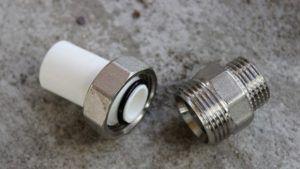 These fittings come in two types: angled and straight. The former is convenient for joining pipes running at different angles. These fittings can also be threaded internally and externally.
Valves are often installed in front of the American pipes to cut off the required section if necessary. and dismantle the plumbing fixture for replacement or repair work.
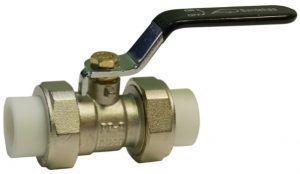 Taps and valvesWhen using a fitting such as a valve or tap, remember that these shut-off and control mechanisms are designed for both cold and hot water. When installing, do not install fittings for one type of water supply on a main line serving a different type of water.
These products for plastic pipe rolling materials come in straight, angled, and combination versions. Their use allows for the construction of complex systems.
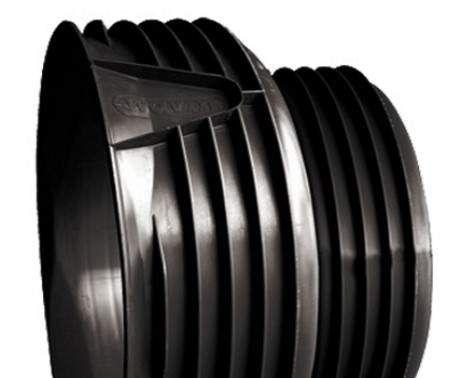 PlugsThese are threaded, dead-end connectors. They are designed to protect the system from foreign components. If there is a risk of foreign objects entering the system, there is no better protection than a plug.
If necessary, caps are connected to other types of fittings. For example, a cap can be used to convert a cross into a tee or a cross-joint into a joint.
Tees with crosses These connectors are used to form branches and merge multiple pipelines. These connectors are designed for threaded or welded fastening.
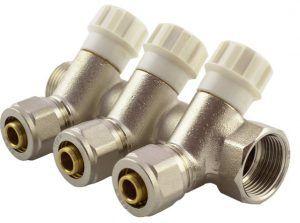 Connecting a system and its components often involves joining pipes of varying volumes. For this reason, crosses are manufactured for soldering and threaded connections. There are also modifications that combine the capabilities of an adapter between systems of different volumes.
Tees, like crosses, are installed in areas where branching occurs. To facilitate installation, tees are manufactured at various angles, and there are also models called adapters.
CouplingsThey are designed to connect individual parts of plastic systems. These elements are indispensable on long pipelines and in situations where it is impossible to install standard-sized components. They come to the rescue in situations where conventional welding is not feasible.
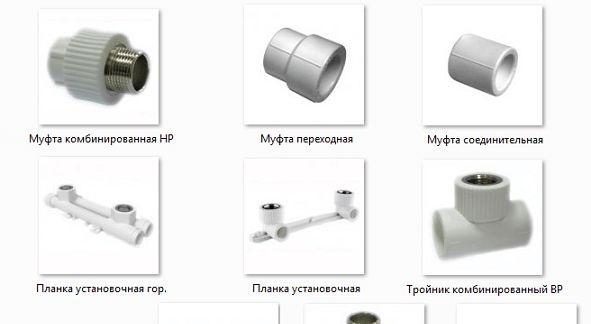
Couplings are produced in the following types:
- To pipes made of the same material and identical volume. They are connected to the pipes by soldering.
- For rolled tubular products made from various materials.
- A transition coupling is designed for pipelines of various diameters. These products can be soldered on both ends or threaded on one side.
- For sealed structures. These elements are installed in areas of the system subject to high loads. These couplings are equipped with special silicone rings and are tightened with special nuts during installation.
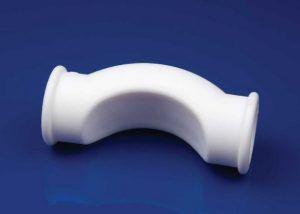 ContoursThese include a special type of connector that allows for bypassing pipeline obstacles without the need for numerous elbows or other types of fittings. The bypass is installed where plastic pipelines intersect but do not connect.
SupportsThey are often used when installing large plastic hot water pipes. This is because these components are designed for rigid fastening, which is essential when the temperature of the pipes increases.
On domestic mains, the expansion rate is not very high, so installing supports is not necessary. However, for hot water supply systems with remote heating equipment, experts recommend installing them.
Connecting square pipes
Plastic connectors for square pipes are essentially fittings that allow the connection of multiple systems made of square pipes. These elements are also used to connect multiple sections of a single, larger system.
Video
The advantage of this type of part is that it is designed for a specific number of square tubes—for example, two, four, eight, etc.
These crosses consist of elbows positioned at right angles to their neighbors. The overall result is a unified structure of square pipes in mutually perpendicular systems.
Connectors for square pipe systems are a practical solution when it is necessary to connect pipes of different diameters.
Solderless pipe fittings
Solderless connectors for plastic pipes are called universal designs. These mechanisms are characterized by their strength and durability.
Solderless components are most often used for repairs to plastic piping systems, which are characterized by low internal pressure. The convenience of working with these components lies in the fact that the work can be completed not only without soldering, but also without welding.
Video
The elements of the solderless clamping mechanism are designed as follows:
- The cut clamping ring is made of steel and galvanized. When the nut is tightened, the coupling is pulled toward the outside of the pipe and tightened tightly. Simultaneously, the teeth on the clamping ring "bite" into the pipe, locking the joint.
- The second pressure ring (gasket) is the next component in the design. It creates the required level of pressure and protects the sealing ring from mechanical impact.
- The sealing ring helps seal the joint. This element is made of high-quality rubber and meets the relevant standards.
Universal solderless clamp connectors are used in the following areas:
- To make a thread transition from a cut piece of plastic blank.
- For joining a pair of cut pipes.
- For the assembly of plastic pipes.
These parts are easy to find and available at any online store. This product line offers reasonable prices and high quality guarantees. Fast delivery and generous discounts on bulk purchases make this a great deal.
Video
Plastic pipe connectors are an extremely practical solution. These products combine high quality and affordability. Polypropylene connectors have an impeccable reputation for durability and complete environmental safety.
The wide variety of these components allows for the installation of plastic pipelines to be adapted to any residential or industrial building conditions. Installation of connectors for plastic products does not require insulation and is quick and easy.
When we installed the pipes in our apartment, we used plastic pipes. I must say, your article was very helpful, as the connectors are inexpensive and last a reasonable amount of time. And the variety of these components is also an important consideration during installation. Although, we didn't really need to make many transitions.