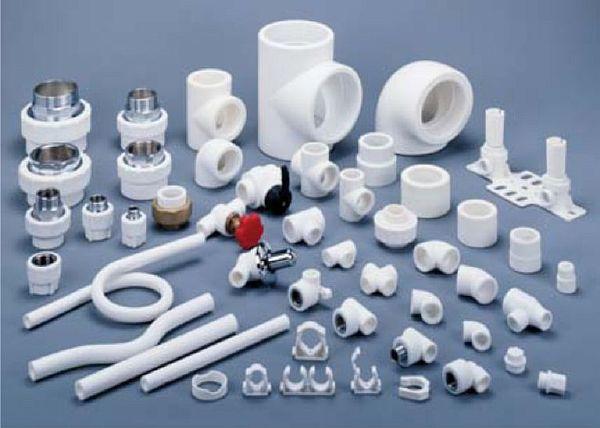
 Fittings for plastic pipes are an important structural component. First of all, it's important to note that any material used to produce pipe products has certain advantages. This also applies to plastic products. Their advantages include:
- light weight;
- affordable price;
- resistance to corrosive formations;
- plastic indicators;
- simple gasket;
- excellent dielectric properties that increase product safety;
- low thermal conductivity.
As is clear from the list, the range of functional characteristics is quite large, and this makes it possible to use these products for the arrangement of water supply, drainage, and gas piping systems. What professionals particularly appreciate is the ability to install plastic pipes without the need for welding.
How to produce connecting a metal pipe with a plastic pipe, and a polyethylene pipe with a polypropylene pipe.
This significantly reduces the financial costs of the work. A striking example of this savings are the fittings, without which no plastic pipeline can be imagined.
Good connections mean a reliable highway
These connecting components ensure the connection of communication lines. They are classified according to many criteria. The most important ones are:
- Features of form (configuration).
- The purpose of the element.
- Type of installation.
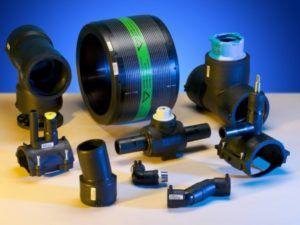
Types of fittings for plastic pipes come in the following shapes:
- a device with or without threads;
- tee-shaped devices;
- bends;
- flange types of mechanisms;
Experts emphasize the importance of classifying equipment by installation type, although ordinary consumers also need to be aware of these nuances, otherwise they won't be able to carry out repairs correctly. So, According to this criterion, shaped elements are divided into the following types:
- compression;
- cast;
- electric-welded.
Watch the video
- Couplings. These are the simplest type of mechanism. They are shaped like a barrel with a hole inside and are used to work with pipelines of a corresponding volume.
- Adapters. These also fall into the category of simple fittings. These devices have different diameters at each end, allowing for joining tubular products of different cross-sections.
- Elbows. These mechanisms are installed at the bend in the main pipe. The desired angle is created without causing any deformation to the pipe. These types of couplings feature a 45- or 90-degree bend and can connect sections of pipe with different volumes. Elbows are threaded on the outside, allowing them to be connected to a bathroom faucet or other plumbing fixtures.
- Tees. These components allow for the connection of multiple pipelines. These can be parts with different volumes and internal contours.
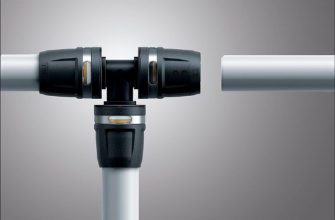
Compression (or crimp) fittings for plastic pipes They are installed on pipelines for various purposes. Compression fittings for plastic pipes are distinguished by their design. This involves pressing a compression ring onto the pipeline, thereby achieving the required level of tightness between the installed components.
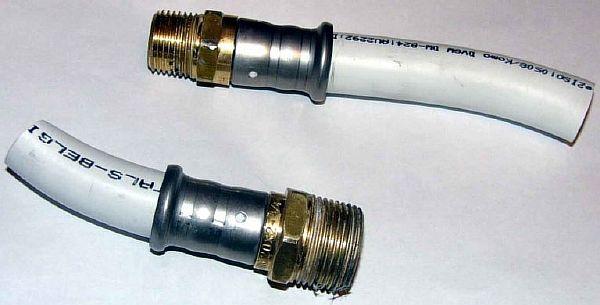 The compression couplings themselves are designed as follows:
- frame;
- sealing ring;
- clamping ring;
- sleeve;
- a nut that serves as a lid.
The tight seal on compression fittings is achieved by a flexible rubber sealing ring held in place by a press-fitted sleeve. The clamping ring prevents spontaneous loosening due to vibration or water hammer. Even if the pipeline is kinked, the compression fittings maintain their sealing integrity.
Professional specialists highlight the following advantages of compression devices:
- ease and speed of installation;
- repeated use;
- resistance to corrosive formations;
- high level of joint reliability, which in this case exceeds the strength of the pipe range itself.
Compression tools are available in a wide range, making it easy to find the right crimping tool.
Corner fixtures
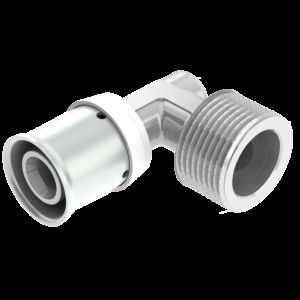 Angle fittings for plastic pipes effectively solve the problem of turning pipelines. The angle mechanism not only performs the turn, but also protects the system from stress and strain. These fittings are available with both external and internal threads, eliminating the need for additional adapters when using an angle mechanism.
What is convenient about working with these elements is that the rotation can be done with any level of complexity.
There are also combined corner elements, they allow you to combine parts of the main line with different volumes.
How fitting mechanisms work
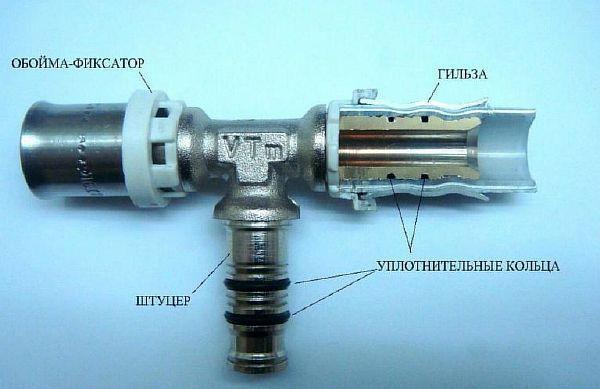 When considering the design of fittings for plastic pipes, first of all, it is necessary to highlight the simplicity of each such mechanism, and, consequently, the ease of their installation.
Now a few words about the structure of some types:
- Compression versions are distinguished by the presence of two rings. One serves as a seal, while the other acts as a clamp. Both elements seal the joint and provide high load-bearing capacity.
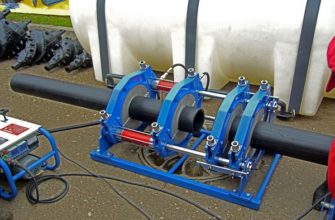
- The distinctive feature of cast versions lies in their manufacturing method. Installation in this case is accomplished using butt or thermistor welding. The material used in manufacturing is very dense, guaranteeing a leak-free environment.
- Thermistor devices made of polyethylene are designed with a heating element. These fittings can be used not only in domestic mains but also in industrial pipelines.
Watch the video
Sewer couplings
Plastic sewer lines have been installed recently More often than others. Such systems are distinguished by their chemical inertness and resistance to decay, as well as other positive characteristics of plastic.
However, the required level of tightness in a sewer system can be achieved with high-quality fittings. These fittings are actively used in sewer networks during assembly and disassembly of the main line.
Experts say that fittings for plastic sewer pipes are excellent resist corrosion processes, and are resistant to oxygen diffusionThe internal cross-section of sewer fittings does not change with temperature changes, meaning they can last for very long periods. Plastic couplings are the most economical option, making them an ideal solution for this application.
Fittings for plumbing systems
Fittings for plastic water pipes are subject to the same requirements as rolled pipe materials—first and foremost, a properly installed water supply system. These requirements apply to any building.
Trying to cut corners on any small item, including water supply fittings, never ends well. Poor-quality water pipe components lead to rapid network failure, and consequently, unplanned financial expenses.
Experienced plumbers strongly recommend purchasing plumbing fittings only from a reputable manufacturer. While these materials may be slightly more expensive, the reliable operation of your plumbing system will fully justify the expense.
Watch the video
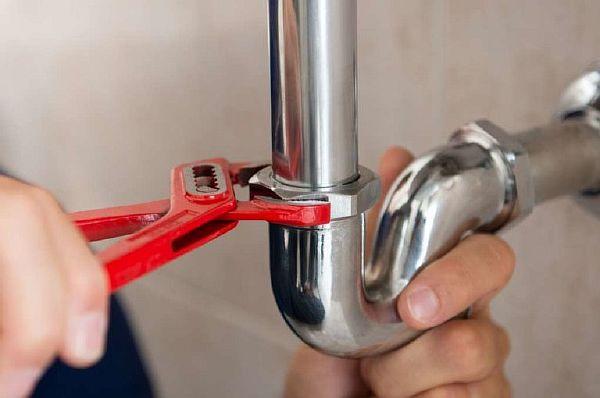
- Compression fittings. This type is installed using a wrench. This water supply device uses a compression ring tightened from the inside, which essentially secures it to the pipeline. The disadvantage of this type of fitting is the need for constant tightening.
- Press fittings for plastic pipes. This type of water supply connection is considered the most reliable. Press fittings are installed using an electropneumatic press clamp, which reduces the surface area of the coupling connected to the pipe. Press fittings provide a highly secure clamping.
It should also be added to what has been said that press fittings can be installed not only on plastic networks, but also on metal-plastic and copper ones.
- Adhesive fittings. These also allow for secure connections. These fittings are most often used on PVC pipelines.
- Threaded mechanisms. As the name suggests, these elements are threaded, located on both sides of the structure. This type is used less frequently than others, as it is not well suited for modern pipe materials.
Taps and valves
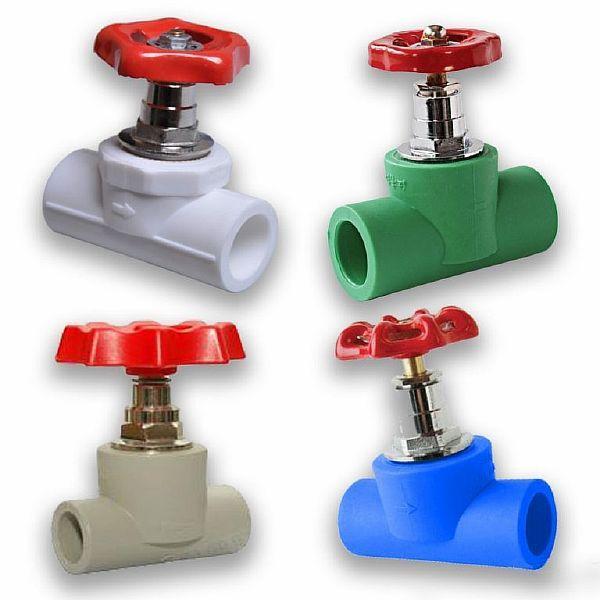 Taps are fittings for plastic pipes, which are classified as shut-off and control valvesThese mechanisms are of the following types:
- thermostatic valves;
- hand taps.
The valves are manufactured with a polymer or metal body equipped with threads. These union-type connections are particularly convenient because they allow the valve to be removed or installed without disassembling the entire system.
These fitting mechanisms are classified according to their level of tightness, and this is a determining factor for the area of application.
IMPORTANT! Fittings of this type must be used strictly according to the manufacturer's instructions. If this is a cold water faucet, it should never be used with hot water.
Tees
Tee fittings for plastic pipes are designed to connect three main lines. Connecting multiple pipelines simultaneously is often necessary, and a tee is a typical example.
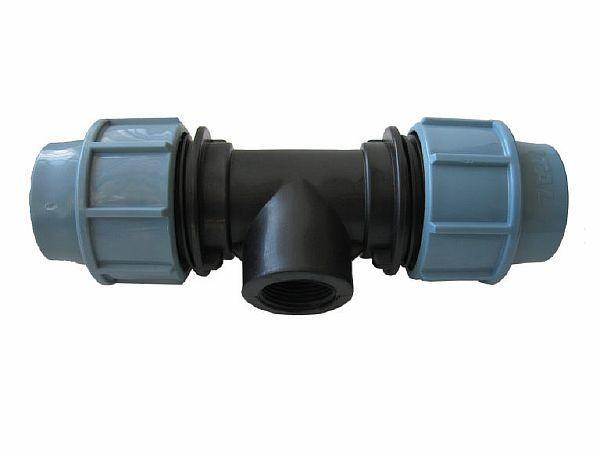
Tees expand the scope of imagination with their diversity. These elements come in a wide variety of configurations. These include options with different diameters, fittings with threads on various parts, and products for various types of tubular products.
However, overly "exotic" tees are not often found on sale, so an adapter is often used when joining dissimilar pipes.
Diameter
The diameter of plumbing fittings for plastic pipes is closely tied to the dimensions of the pipeline.
To be more precise, this connection is based on highway capacityTo accurately select the right plumbing fitting, keep a few recommendations in mind:
- Thick walls. When marking a pipe, the diameter is indicated, and plastic blanks can have thick walls. For this reason, a pipe product labeled with a diameter of 32 may have different levels of throughput.
- The main sizes of plumbing fittings are: 2; 2.5; 3.2 and 4 cm.
Adapter
Adapter fittings for plastic pipes are very similar to couplings.But they have a significant difference: the diameters on each side of the barrel are different.
In addition, adapters are available with threaded connections, and the threads on such adapters are applied on the external and internal sides.
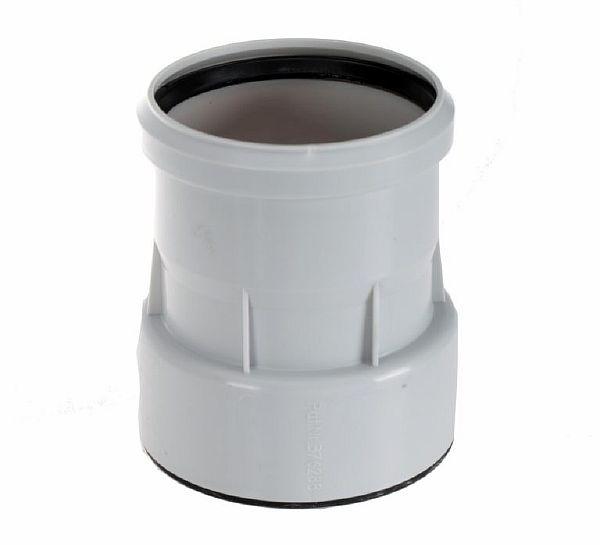
A novice plumber often asks, "Why do adapters need threads?" The answer is very simple. A diameter transition can be found, for example, at the end riser of a heating main. They can also be located where the riser meets the horizontal pipework (the name for the horizontal routing of a heating system).
Watch the video