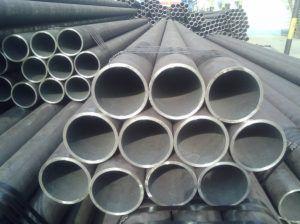
 Pipes are often used during renovations and construction. They not only provide the ability to supply heat, gas, and water to a building, but have also proven themselves to be a durable and reliable building material.
For example, Metal pipes are often used in the construction of fencesAsbestos-cement pipes allow for the construction of roof decks, while reducing the overall structural weight. To choose the right pipes, you need to know the pipe diameter classification.
These parameters must be known precisely, and only then can the heating, plumbing or any other system be correctly installed.
Regardless of the material used for the rolled pipe range, the choice is made based on the type of system being constructed. For example, for For sewerage systems, plastic is considered the most suitable material.
These products are lightweight and easy to install. If an emergency occurs in such a pipeline, repairs can be carried out very quickly; simply replacing the faulty part is all that's required.
Classification of steel products
Steel pipes are also classified by diameter, which becomes their main characteristic.
The diameter of steel pipe materials determines the purpose and length of the pipeline, and the system's capabilities for transporting various media also depend on this.
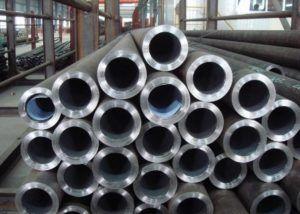
All dimensions of steel products are regulated by the normative requirements of GOST, and each type of rolled pipe meets its own standards.
Diameter formulas use simplified values, but in practice, things are a bit more complicated. Here, when classifying diameters, the following types are distinguished:
- Outside diameter. This diameter is designated as DN. Small sizes range from 5 to 102 mm. Medium sizes range from 103 to 426 mm. Large sizes include pipes 427 mm and above..
- Average (Average). This physical characteristic is expressed in mm. It is very important for classification, as it determines the overall system's throughput.
- Nominal bore. These internal pipe dimensions are shown in mm. Inch numbers are rounded and used for connecting the pipeline to fittings.
- Nominal. This value is equivalent to nominal bore, but it has a higher level of accuracy.
- Wall thickness (S). This physical characteristic is expressed in millimeters and affects the system's flow capacity and diameter. When classifying the dimensions of steel tubing, this figure is determined by calculating the difference between the inner and outer diameters.
Classification of metal products
Classifying metal pipes by diameter is very important. This rolled product size affects its flow capacity and application. These dimensions also determine the cost of metal pipes.
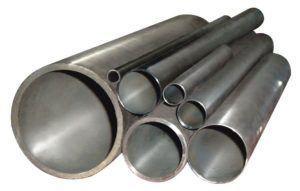
Metal tubular products are widely used in various fields, including construction, chemical and food production, agriculture, mechanical engineering, and more.
This list could go on, but it's clear that these products are very popular with consumers. Consequently, they come in a wide range of configurations and sizes.
Nowadays, they produce seamless and welded metal products with a circular cross-sectionThe welded product line features a simple manufacturing process, and therefore is less expensive than its seamless counterparts. However, the latest versions demonstrate greater reliability and are significantly more resistant to mechanical stress.
Video
The most important criterion when selecting these products is the cross-sectional dimensions. To create a reliable and durable joint, the size of the metal pipes must match the dimensions of the fittings.
IMPORTANT! Along with the cross-sectional dimensions, the wall thickness is also important. Knowing this precise measurement allows you to determine the maximum possible load on the structure during the design phase.
Typically, steel and cast iron products are marked using the internal dimension, while copper products are marked taking into account the external girth.
Tables of classification of pipe assortment
Tables are very useful for determining the precise dimensions of products to be joined. For example, steel tubing is specified in inches.
Video
The classification of pipes by diameter is presented in the table provided:
| DN of pipe assortment | Thread Volume (inches) | External diameter of steel water and gas pressure pipes | External Ø of seamless steel pipes | External diameter of polymer pipes |
| 10 | 3/8 | 17 | 16 | 16 |
| 15 | 1/2 | 21.3 | 20 | 20 |
| 20 | 3/4 | 26.8 | 26 | 25 |
| 25 | 1 | 33.5 | 32 | 32 |
| 32 | 1 1/4 | 42.3 | 42 | 40 |
| 40 | 1 1/2 | 48 | 45 | 50 |
| 50 | 2 | 60 | 57 | 63 |
| 65 | 2 1/2 | 75.5 | 76 | 75 |
| 80 | 3 | 88.5 | 89 | 90 |
| 90 | 3 1/2 | 101.3 | 102 | 110 |
| 100 | 4 | 114 | 108 | 125 |
| 125 | 5 | 140 | 133 | 140 |
| 150 | 6 | 165 | 159 | 160 |
This table provides UD values in mm and the corresponding external dimensions for various types of pipe: seamless, electric-welded, and metal-plastic. The difference in this case can be as much as 1.7 cm.
IMPORTANT! When converting inches to millimeters, all rounding is performed in the direction of increase..
The following table will help you select the correct components for your gas and water supply lines:
| Volume in inches | Volume in mm |
| 1/2 | 15 |
| 3/4 | 20 |
| 1 | 25 |
| 1 1/4 | 32 |
| 1 1/2 | 40 |
| 2 | 50 |
| 2 1/2 | 65 |
| 3 | 89 |
| 4 | 100 |
Standard diameter designations for steel pipes are as follows: 6, 10, 15, 20, 25, 32, 40, 50, 65, 80, 100, 110, and so on. The diameter of a given pipe, shown in inches, is rounded up when converting to metric.
Video
- water supply;
- gas pipelines;
- drain;
- irrigation.
Small-diameter pipes are used for networks supplying water and heat to multi-story and private homes. Medium-diameter pipes are used for risers in city infrastructure and in the oil industry.
Similar tables are used to determine the diameters of copper, brass, and plastic pipes. Using this data, it's easy to connect elements made of different materials. If fittings are used, the joining process is easier, as these connecting elements already take these nuances into account.
Classification of pipes for water supply networks
Many people have encountered problems or repairs to their water supply network. Therefore, classifying water pipes by diameter will be useful information for many.
Video
- Metal.
- Plastic.
- Metal-plastic.
Today's market offers a wide variety of options, and when constructing plumbing systems, it's necessary to connect elements made of different materials. When working with the metric system, its many conventions must be taken into account. The most important ones are the nominal diameter and the nominal diameter.
The methods used to determine them are slightly different, but as a result they determine the external size of the pipeline.
The water supply network's capacity depends on the diameter of the rolled pipe used. Tables and various formulas are used to calculate capacity.
All this helps simplify the calculation process. However, this work is not so simple, so a different approach is used for water mains in apartments. For indoor distribution, 3/8" and ½" fittings are used, while for risers, ¾" or 1" fittings are used.
Video
Classifying pipes by diameter allows you to select various bends, adapters, and other components with the same internal diameter. As a result, both experienced and novice professionals can correctly assemble a main line.