The main advantage of ceramic tiles is that they can be installed on any existing heating system: water or electric, as they have high thermal conductivity.
If the question is, what type of underfloor heating is best to choose under tiles, then our answer is - electric, because it is easy to install and does not put pressure on the ceiling, like a water heating system.
Let's take a closer look at all the underfloor heating devices used under tiles to determine which is best in each specific case.
Types of Electric Underfloor Heating: Pros and Cons
One of the best combinations is tile with electric underfloor heating. This type of system is easier to install than hydronic underfloor heating, as most types don't require a concrete screed. We conducted a comparative analysis and determined Which floor is better: water or electric?.
The main advantage of an electric system is its ability to operate year-round. Electric underfloor heating systems vary in design, heating method, and installation.
Cable floors
Cable-based electric underfloor heating is the most affordable and simple model, requiring no additional maintenance. It's suitable for both apartments and private homes and has a long service life. It looks like a simple wire, which is secured to the floor 10 cm from the walls and sealed with screed. Electric devices of this type are classified as:
- Resistive heaters are made from single- or dual-core cable. The difference lies in the connection method, but they operate on the same principle. Current flows through the cable, heating the conductors, which transfer heat to the screed. The warm air then spreads throughout the room, evenly heating the area. Dual-core heaters are better suited for bedrooms, while single-core heaters can be installed in the living room, where people spend less time, thereby saving money.
Resistive electric heating systems are much less expensive than other types. Furthermore, this type of flooring can be installed in rooms with non-standard layouts.
- Self-regulating conductors differ in their operating principle from resistive conductors. In this design, two wires run parallel within a single braid. A polymer semiconductor is placed between them, which carries a transverse current.
In a self-regulating device, heat output is affected by the ambient temperature. This option is best used under tiles, as it prevents overheating of the underfloor heating surface.
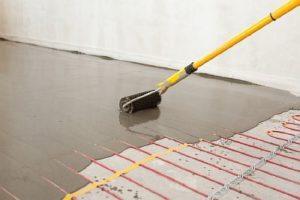
Before laying the cable type of underfloor heating under the tiles, it is necessary to carry out calculations and draw up a circuit layout diagram. In this the structure requires a screed, its thickness should be 3 - 5 cmso that it completely covers the heating elements.
The presence of a concrete layer significantly increases the load on the floors and raises the floor level, but the concrete layer is not as thick as when installing a water-based underfloor heating system. When using a thin cable under the tiles, it can be installed in a layer of tile adhesive.
The main drawback of this type of underfloor heating is that if the heating element is damaged, the entire structure fails. Major and expensive repairs will be required.
A square meter of cable costs 1,500 rubles, and laying a square meter will cost 1,000 rubles.
Heating mats
This is a type of cable flooring, but with a more convenient shape, making it considered the best option. The cable is secured to a special fiberglass mesh in a serpentine pattern, significantly simplifying the installation process.
Another advantage is that heating mats can be installed only in the specific area where heating is required. The mesh thickness is only 3 mm, making them ideal for rooms with low ceilings, as they don't reduce the floor-to-ceiling distance.
Electric heating mats come in:
- single-core - they are not expensive;
- two-wire - their price is higher, but they are safe, since they do not emit electromagnetic radiation.
Heating mats are the best option for underfloor heating. No screed is required. Installation is simpler than cable management, but they are just as effective. The mats are laid on the subfloor, secured with adhesive, and covered with decorative tiles. If necessary, the mesh can be cut to adjust its direction, taking care not to damage the cable.
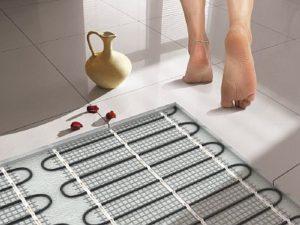
The positive aspect of mats, which distinguishes them from cable floors, is that when mats are connected in parallel, the failure of one element of the structure does not lead to a stop in the operation of the entire device.
Their main disadvantage is the high price.When comparing cable floors and heating mats over the same area, heating mats will cost 30% more. Installation of the mats averages 750 rubles per square meter, while the price for a complete set ranges from 2,000 to 2,500 rubles per square meter.
Film systems
Infrared film is produced in 1 mm thick mats. This is the best option for rooms with low ceilings, as the film's thinness means it doesn't take up valuable space. The heating element consists of carbon strips connected by copper busbars, sandwiched between layers of heat-resistant polyester.
The device works by emitting infrared waves that warm the flooring surface. The resulting electromagnetic field is weak and therefore poses no harm to humans.
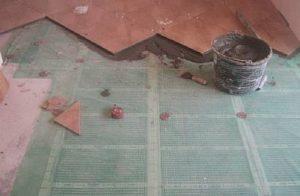
Underfloor heating is controlled using a temperature sensor. Some models can be programmed to operate continuously.
The main advantage of this type of heating is its ease of installation and the fact that the temperature of the heating elements themselves does not increase, meaning no energy is wasted. However, it's worth noting that this type of underfloor heating is not recommended for installation under tiles, as it will result in poor adhesion of the film to the tile adhesive, thereby reducing the floor's efficiency.
In addition, the film is exposed to moisture and has no grounding, so installation with screeds or in rooms with high humidity is not acceptable.
You can choose infrared film underfloor heating for tiling, but this requires a few additional steps. You'll need to lay a fiberglass mesh and a gypsum fiberboard underlayment on which the tiles will be installed.
However, this system should only be used if other options are unsuitable, as installation is complex and the film is expensive. Film costs start at 450 rubles per square meter, and installation costs 500 rubles per square meter.
Rod infrared heated floor
Rod heated floor This also refers to an infrared heating system. It consists of two conductors arranged in parallel, with heating rods located between them. When current is applied, infrared waves are emitted, which heat the surrounding space.
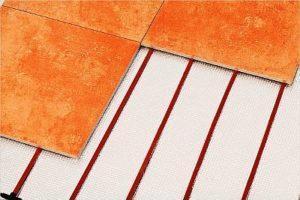
The best aspects of the device:
- the rods are independent - if one breaks, the entire structure continues to function;
- self-regulation - when the temperature rises or overheats, the device switches off;
- placement under heavy objects is permitted, which allows for rearranging furniture.
Electric-water heating
Electric-water heating is constructed from 2-cm-diameter polyethylene pipes. Antifreeze circulates within the circuit, and a nickel-plated, seven-core, Teflon-coated cable runs through it. This type of underfloor heating requires a poured screed.
If the integrity of the communication system is damaged, antifreeze seeps onto the surface, thus identifying the location of the fault. This facilitates diagnosis and repair of the structure.
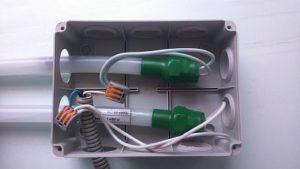
The heating is controlled by a thermostat, which automatically switches on when the temperature drops. The average power consumption of an electric water-based floor is 14.4 W/m2. When current is applied, the heating elements heat up, transferring heat to the antifreeze, which boils almost instantly.
Therefore, the floor surface heats up quickly, retaining heat for a long time. The model is resistant to overheating, so it can be placed under furniture without fear of damage.
Please note: Since antifreeze cools down slowly, energy consumption is low.
Let's determine the optimal type of underfloor heating for tiles
Watch the video
Since ceramic tiles are a durable and environmentally friendly surface, installing electric underfloor heating underneath them is the best option, offering a wide range of possibilities. The key factors in choosing a high-quality underfloor heating system for tiles are proper operation and efficient, even heat distribution.
Experts advise considering the following points when choosing electric underfloor heating for tile:
- Functions. The power and type of model depend on whether the underfloor heating is primary or supplemental. There's a much wider selection of underfloor heating options as a supplemental heating source.
- Screed. It's important to decide whether or not a concrete screed will be poured when constructing floors under tiles, and its thickness.
- Premises type. Owners of private homes have unlimited choice, but apartment owners in high-rise buildings must consider many factors: the floor, the floor structure, and the possibility of connecting to a permanent heating system when installing underfloor heating.
- The cost of the system and its operation. A low-cost device doesn't necessarily mean it's economical. When choosing a floor, consider the cost of the device itself, the installation method, and the operating conditions.
It's difficult to say definitively which electric floor model or installation method (in screed or not) is best for under-tile installation. Each system is suitable in its own way, for different spaces:
- If the height of the room is not critical, then it is better to choose a cable floor, it is also perfect for a complex room shape;
- Self-regulating infrared rod type - it is expensive, but for a large heating area it is the best option;
- Heating mats are the most suitable type for under tiles, as they are easy to install and have a thin pie layer.
As for film infrared floors, as mentioned above, it is better not to purchase them for installation under tiles, and to use them only when other types cannot be installed.
Please note! If you're having your electric flooring installed under the tiles professionally, you can opt for an inexpensive cable model. However, if you're installing the structure yourself, it's better to purchase heating mats.
It is important to choose correctly tiles on a heated floor, because not every tile can withstand sudden temperature changes.
Top 10 Best Flooring Manufacturers
Today, many companies specialize in producing high-quality underfloor heating systems, using the best European technologies. Furthermore, while leveraging international experience, manufacturers also employ their own developments in this area, enabling them to produce affordable, competitive products.
Let's take a closer look at several brands of underfloor heating, their pros and cons, to make it easier for you to choose a system for under the tiles.
The leading Russian manufacturers of the best underfloor heating systems at affordable prices:
- Thermo (Russia) — the very first company in Russia to manufacture products in this segment. The product range is vast, offering cable-based underfloor heating systems with various wattages for tile installation, allowing you to select the perfect unit for any space. They are equipped with proprietary thermostats that efficiently utilize the generated heat and set the desired temperature. The device monitors the temperature and prevents the heating elements from overheating.
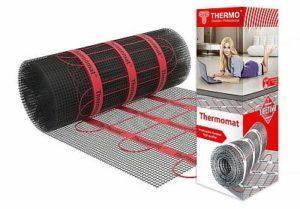
The company has released a catalog with calculations of thermal options, which simplifies the calculation of the amount of material required for a specific room.
Thermo manufactures heating cables and mats suitable for both indoor and outdoor installation. This technology eliminates the risk of ice forming on steps. A separate sensor monitors the ice buildup.
- «Teplolux (Russia) — a major European manufacturer of heating equipment, owned by the Special Systems and Technologies group of companies. This brand is one of the best, so it's worth considering when choosing electric underfloor heating for tiled floors.
Our production facilities are equipped with automated equipment from renowned global companies, enabling us to manufacture 400 types of heating devices. All models are high-quality and have a long service life. They can operate in high-humidity environments (such as bathrooms) thanks to the use of two-wire shielded cables.
The company also produces a Teplolux Glims compound for cable installation. It protects heating elements from mechanical damage.
The range offers a choice of warming designs for rooms of varying sizes and temperature requirements. For smaller rooms, the "Mini" is suitable, while the "Tropix" is ideal for increased heating. All models have an average service life of 50 years, 20 of which are covered by a warranty. Prices start at 1,800 rubles per square meter.
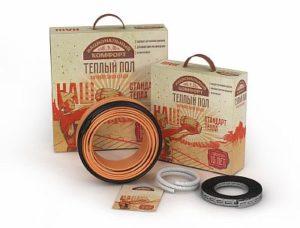
- National Comfort (Russia) — is also a branch of the Special Systems and Technologies group of companies. The company not only manufactures cable products but also designs new heating systems. Its product range includes single- and dual-core cables, as well as single-core mats.
Product quality is achieved through teamwork and a series of sequential processes: calculations, testing, and only then is the product launched into production. Therefore, the product has a long service life. A vast network of dealerships ensures seamless service and warranty coverage. Prices start at 1,650 rubles per square meter.
Among foreign companies, the most popular on the market are:
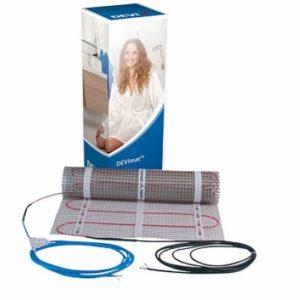
- Devi (Denmark) — This brand's cable and heating mats are guaranteed for over 20 years, during which the company provides free repairs. According to user reviews, these are the best products in this segment, reliable and effective. Prices start at 2,500 rubles per square meter.
- Caleo, manufactured in South Korea, produces its own patented thermal film model. The film is 0.4 mm thick, requiring careful construction. Prices start at 1,300 rubles per square meter.
- Energy (United Kingdom) — The company's heating mats and cable systems are renowned for their eco-friendliness and energy efficiency. They offer a wide range of products, with prices starting at 1,900 rubles per square meter.
- Esto, manufactured in Finland—this company's products are renowned for their superior moisture resistance and reliable operation under all conditions. Heating mats and cables range in price from 3,000 to 11,000 rubles per square meter.
- Rehau (Germany) — marketed as heating mats and heating cables, both based on a two-wire shielded cable. Suitable for installation under any floor covering, including tiles. Prices start at 1,600 rubles.
- Unimat (South Korea) — specializes in all types of electric underfloor heating: cable, heating mats, infrared film, and rod-based systems. 20-year warranty. Prices start at 2,200 rubles per square meter. In Russia, the company's products are popular for installation under tile.
- Raychem (USA) — produces various underfloor heating devices. Their products are highly efficient and provide consistent surface heating. The minimum price per square meter is 2,200 rubles.
The brands presented have a good reputation in the market; their products undergo constant quality control, and are therefore considered the best.
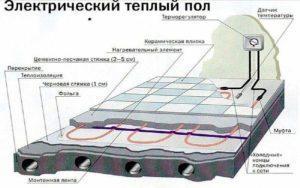
Each electric underfloor heating system has its own installation, base, and compatibility with the flooring. Therefore, before deciding which underfloor heating system is best for underfloor heating, it's important to read the manufacturer's instructions included with the product. This will help you create the right heating system, thereby creating a comfortable atmosphere in your home.


Good afternoon. We've decided to go with heating mats. While they're more expensive, they're easier to install, and if one of the mats breaks, the others will continue to work.
I have a friend who did a brilliant thing to save money: he heated up two tiles by the toilet and two by the sink, and left the rest unused. So, while sitting on the toilet and brushing his teeth, he could still get warm. He used heating mats, I think.