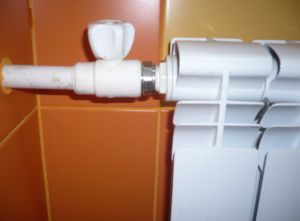
 The metal-plastic heating system is very popular, although it has its drawbacks, which will be discussed below.
The unique features of metal-plastic heating pipes and their technical specifications have made them so popular.
They conduct liquids with temperatures up to 1100 They can be bent to the required angle without damage, are inexpensive and lightweight.
Technical specifications
The flexibility of this type of rolled pipe allows for minimal use of welding equipment and various fittings, making it suitable for:
- When installing underfloor heating systems;
- To hide the water main inside the walls;
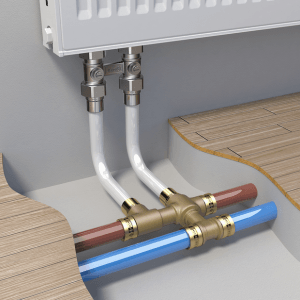
- When connecting the heating system to the radiators;
- At summer cottages, these pipes are used to build irrigation systems.
Metal-plastic pipes are installed for heating and water supply systems with the following coolant parameters:
- The highest working temperature is 95 degrees, and the maximum working pressure for this temperature is 10 bar;
- And at temperatures from 0 to 25 degrees, the highest working pressure is 25 bar;
- The permissible short-term temperature is 130 degrees.
Video 1.
Manufacturing process
The properties and characteristics of metal-plastic heating pipes are not widely known. To choose the right quality materials, it's important to understand how they are manufactured.
They consist of two layers of polyethylene with a thin layer of aluminum sandwiched between them. The layers are bonded with a special adhesive, which varies from manufacturer to manufacturer.
Thin aluminum strips are welded together using an overlap or butt joint, using ultrasound.
Then, layers of polyethylene are applied to the inside and outside of the blank using a special adhesive. The products are then labeled and wound into coils.
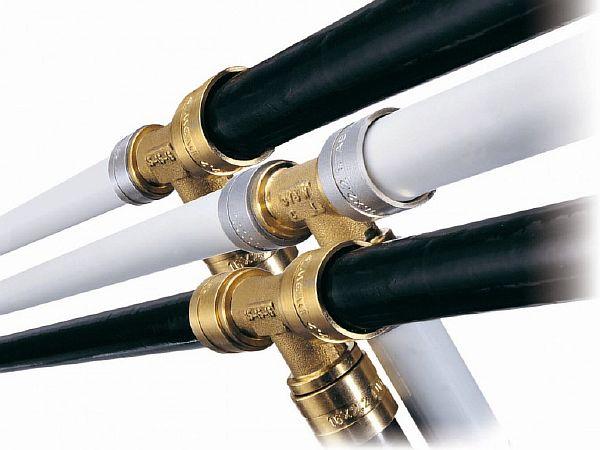 The pipe's design allows for the stabilization of the linear expansion of the metal and polyethylene. The top layer is painted white, eliminating the need for constant touch-up painting.
The coating on the top and inside of the products has a smooth structure that prevents scale and other substances from settling. This also protects the foil from galvanic processes when in contact with metal parts of the line, preventing condensation.
All this significantly extends the service life of these materials.
IMPORTANT! Polyethylene is durable, resistant to aggressive substances, and can withstand temperatures up to 110 degrees Celsius. Foil allows it to withstand high pressure and provides the necessary strength.
Having absorbed all the best technical characteristics of polyethylene and aluminum, metal-plastic pipes for heating systems can be used for almost 50 years.
Where are metal-plastic pipes used?
This type of rolled pipe material is used not only for plumbing, heating, and sewerage systems. It has also found application in:
- When installing a compressed air pipeline;
- When installing air conditioners;
- In the installation of high voltage electrical networks;
- In agriculture and industry, in pipelines for transporting liquids and any gaseous substance.
Diameter of MP pipes
Manufacturers offer these products in diameters ranging from 16 to 63 mm. They are marked by their outer diameter.
TIP: For a water main in a private home or apartment, the best option is a system with an outside diameter of 16 to 26 mm. For a larger water main, a pipe with a diameter of 32 to 40 mm is used.
Advantages of MP pipe rolling
The excellent quality and technical characteristics of metal-plastic pipes give them the following advantages:
- Long period of use;
- Environmentally friendly and corrosion resistant;
- No internal corrosion;
- Chemical resistance;
- Higher throughput capacity when compared to metal pipes of the same diameter;
- Easy installation, no special skills or knowledge required;
- Light weight and flexibility of the material;
- This rolled pipe is used with almost no waste;
- Pipes can be laid in cement mortar and concrete;
- Low thermal conductivity;
- High sound insulation properties;
- These materials do not accumulate static voltage;
- It is easy to carry out repair work with these materials, because there is no need to use welding machines and pipe bending devices;
- Attractive appearance;
- Affordable price for every consumer.
But we shouldn't forget about the disadvantages either.
Flaws
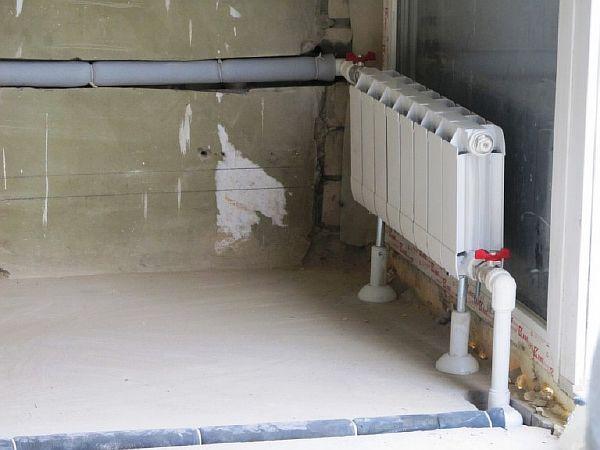 Along with an impressive list of positive technical characteristics, metal-plastic heating pipes also have disadvantages:
- Disadvantage 1. During sudden temperature changes, which happen very often, joints may leak. This occurs because aluminum and polyethylene have different thermal expansion rates. Plastic expands faster than aluminum. This disadvantage negatively impacts the integrity of the joints.
- Disadvantage 2. These products can be bent, but only in certain quantities and to a specific radius. Repeated bending leads to the destruction of the aluminum layer, which, in turn, destroys the polyethylene layer.
IMPORTANT! One of their disadvantages is that they cannot be bent or twisted around their own axis.
Restrictions on the use of MP materials
- Central heating system network with elevator units;
- Premises with category "G" for fire safety;
- For a main line with a pressure above 10 bar, if the pipes are of small diameter;
- Places located near heat sources with radiant temperatures above 150 degrees.
Connection of MP products with fittings
For any pipeline containing metal-plastic pipes, connecting them to fittings is crucial. There are three main types:
- Detachable;
- Compression;
- Press fittings.
DetachableThey are the most expensive, and with their help, elements can be connected to other devices or fittings multiple times, because they have threaded connections.
CompressionThey are difficult to disconnect; if necessary, the crimping ring is replaced.
Press fittingsThey can't be disassembled at all. The system is permanently pressed into place. This can be considered a drawback.
Advice: You should buy metal-plastic pipes and fittings from renowned manufacturersOnly then can you guarantee the reliability of each connection and the uninterrupted operation of the entire network.
Compression and detachable fittings are used for exposed heating mains; these connections must be accessible. Press fittings, however, require no further maintenance after installation, making them suitable for concealed networks.
Connection is permitted with fittings made of various materials:
- Plastic;
- Brass;
- Bronze.
Installation of metal-plastic pipes in a heating system
The ease and convenience of installation is a very attractive factor. Rolled metal tubing bends perfectly and can be formed into various shapes. The pieces are connected using threaded connections, meaning no pipe bender or soldering iron is required.
Heating system installation sequence:
- Prepare with cutting scissors blanks of the required size;
- Sharp protrusions are removed from the edges of the workpieces so that they do not damage the rubber seals later;
- The sealing ring installed on the fitting is used to create a seal;
- A nut and clamp are placed on the workpiece;
- The end of the pipe is flared using a calibrator and placed onto the fitting nipple;
- The fitting coupling is aligned and the clamp clamp is returned;
- The fitting nut is tightened and the workpiece can be connected to the system.
IMPORTANT! When installing metal-plastic products, remember safety regulations and ensure all work is performed only with properly functioning tools.
Metal-plastic pipes for heating, characteristics which were discussed above, have become an indispensable part of any household piping system.
Of the varieties of plastic modifications provided, these metal-plastic ones have gained the greatest popularity.
I installed underfloor heating at my dacha using metal-plastic pipes. They were inexpensive and had some of the best thermal conductivity. Even the contractor recommended them to me. They were easy to adjust to the right size.