A sewage pump is installed in the kitchen of an apartment to increase the pressure of wastewater and force it into the sewer system. It also serves other functions, such as preventing clogs in the pipeline.
There are several types of pumping equipment, each of which has certain features and technical characteristics.
You can install the device yourself, but first, you need to select the right equipment and read the installation instructions. To ensure long-term operation, you must adhere to the operating instructions.
When is it necessary to install a kitchen pump?
If, for some reason, it's impossible to place the sink near a wastewater drain, wastewater will drain quite slowly on its own. Given that wastewater often contains solid waste and fatty particles, after some time, the flow slows down further or stops completely.
The main cause of this situation is the narrowing of the pipeline's working space due to the deposition of fatty deposits and the formation of solid residue on the pipe walls. This results in the need for frequent inspection. Sewer cleaning - see how to perform hydrodynamic sewer cleaning yourselfA foul odor may begin to spread throughout the apartment and kitchen in particular.
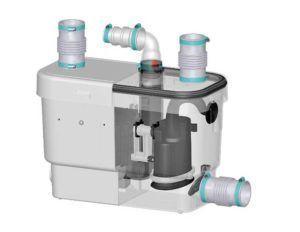
To avoid this situation, you can redesign the room and move the sink closer to the riser, but this is quite laborious and expensive. It's better to opt for the second option—using auxiliary tools, such as installing a kitchen septic tank pump.
The equipment will forcibly push waste liquids into the sewer system, which will prevent the formation of a fatty layer and deposits inside the pipe.
Also after installing the system it is possible to connect a washing machine to it and the dishwasher. Using a sanitary pump will allow all waste liquids to be drained at once much more quickly.
However, this device can be installed not only in the kitchen but also in the bathroom. In this room, wastewater is removed from the sink, shower/bath, and toilet. In the latter case, the water also contains solid waste, so a macerator pump is often installed for the entire room.
Design and operating principle
Kitchen sewage pumps are generally quite similar, with the main differences being in their functionality. For example, many types of equipment differ in whether or not they can grind solid waste.
High-end kitchen models often feature this feature, which significantly reduces the risk of clogged pipes.
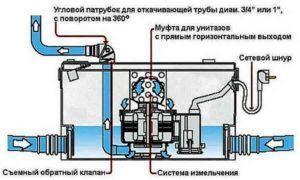
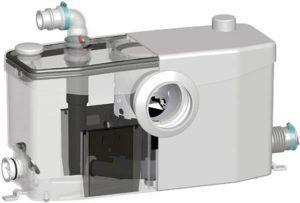
The design of a kitchen sewer pump in most cases has the following elements:
- a sealed housing (usually made of hard plastic) with a water reservoir;
- a diaphragm valve that activates and stops the system;
- electric motor with automatic starting function;
- openings for the entry and exit of various communications, they can be located horizontally or vertically;
- A ventilation filter valve that prevents unpleasant odors from forming in the room and spreading throughout the house.
High-quality equipment typically requires little maintenance. Rinsing the tank occasionally and replacing or cleaning the filter is sufficient. A kitchen sewage pump with a disposer also includes disposing blades.
How it works: Wastewater from plumbing fixtures flows into a special tank. When the volume reaches a certain level, a diaphragm valve is activated, and an electric motor automatically turns on. The waste is ground and the liquid is forced into the sewer pipes. The wastewater level then decreases, causing the unit to shut off.
Types of pumping equipment for the kitchen
There are several types of devices, depending on the tasks they perform. All models pump wastewater, but different types are more effective in different situations. They are divided into the following types:
- sanitary;
- stationary;
- pumping stations.
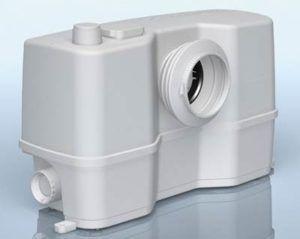
Sanitary models are considered the easiest to install; they have low power and are usually mounted under the sink. They typically do not have grinding blades. The wastewater temperature cannot exceed 40 degrees Celsius, and these models are only capable of draining wastewater from one fixture.
It is not possible to connect a washing machine or dishwasher. The advantages of this type are its small size, ease of installation and removal, and low energy consumption. This type of sewage pump is often installed in small apartments.
We invite you to read the step-by-step instructions connecting a built-in dishwasher.
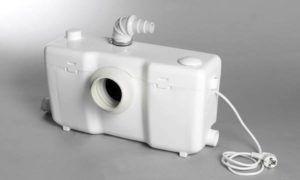
The stationary type is usually connected to several devices at once and installed away from all plumbing fixtures. These units are suitable for treating hot water (up to 75 degrees Celsius) and have greater power. They are typically equipped with grinding elements.
Domestic sewage treatment plants have the highest capacity. Their maximum vertical travel is approximately 10 meters, while horizontal travel can reach 100 meters. These models are rarely installed in apartments, but are more often found in country houses and cottages. They are adapted to high water temperatures and can operate continuously for long periods.
Popular pump models
Before installing a sewage pump for your kitchen, it's recommended to first familiarize yourself with the features of all available options. The most popular models are:
 Grundfos Sololift2 C3. While they lack a grinding component, they can withstand wastewater temperatures of up to 90 degrees Celsius and operate multiple sanitary appliances simultaneously.
- SFA Sanivite Silence. The main advantage of this kitchen sewage pump is the use of high-quality soundproofing materials in its design. As a result, the noise level from the unit is significantly lower than other options. It lifts liquids up to 5 meters vertically and up to 50 meters horizontally.
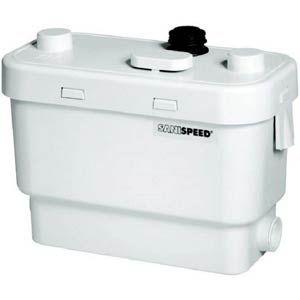
- SFA Sanispeed. These pumps offer increased power and are often used in large homes with multiple bathrooms. They can pump wastewater through small diameter pipes (32-50 mm).
- Unipump Sanivort 250. These kitchen sewer pumps have a long service life and are often installed in small apartments. They are practical, and their housing is easy to clean.
- SFA Saniaccess Pump. These pumps are designed without cutting elements. These models are designed for situations where the bathroom or kitchen needs to be located far from the sewer riser. They are suitable for short-term liquid temperatures up to 75 degrees Celsius.
Kitchen pump installation recommendations
Although in most cases installation is carried out by a specialist, if you have the necessary knowledge, you can do it yourself.
Watch the video
Before starting the procedure, it is recommended to study certain subtleties of the procedure:
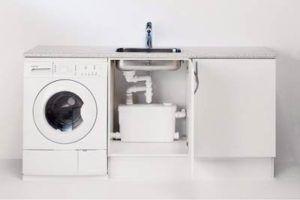
- A kitchen sewage pump can be installed anywhere in the apartment. Most often, this is done in special niches, under the sink, or in completely open spaces. However, it's important to keep in mind that wastewater flows independently before reaching the pump, so it's advisable to install the pipes at a slight slope (approximately 2-4 cm per meter) or vertically.
- Avoid using supply pipes that are too long, as this may require the installation of multiple kitchen sewage pumps.
- The efficiency of the device depends on the size of the outlet.
- It is strongly recommended not to connect multiple pumps to a single network. Each pump must have its own outlet into the pipeline.
- If the drain pipe is long enough and is located below the level of the pumping equipment, it is recommended to install an air valve to bleed the pipeline.
- The pump operates on electricity, so the power supply must be connected to a separate, dedicated line. If the equipment comes with a cord and plug, the outlet must be connected to the control panel and a residual-current device (RCD) (30 mA).
- The supply pump pipes cannot be cast iron or corrugated models; it is advisable to use only high-strength polypropylene pipes.
- If you plan to use only one sewage pump for the kitchen and additionally connect a dishwasher there / washing machine, it's important to ensure the selected equipment is capable of handling multiple plumbing fixtures. It's also important to know the maximum permissible wastewater temperature before installation.
How to connect the pump to the sink
Watch the video
To ensure a smooth installation, we recommend following the instructions precisely. Here's the procedure:
- Disconnect the supply pipe from the sink.
- It is necessary to install the mounting bracket from the pump equipment kit onto the rubber gasket.
- Using supply pipes made of polypropylene, it is necessary to connect the sink drain to the body of the installed sewage pump.
- On the other side of the body, connect to the outlet of the central sewer system using plastic pipes.
- Connect the device to the power supply.
How to choose pumping equipment
To ensure the device functions properly over a long period of time, it is necessary not only to carry out high-quality installation, but also to select the most suitable model for a specific situation.
When choosing a model, it is recommended to adhere to certain rules:
 First of all, it's advisable to check the capacity and capacity of the tank of the selected model. It's important that the equipment can fully handle the volume of waste liquid. The optimal value is considered to be 25 cubic meters per hour for a family of 4-6 people;
- Determine the appropriate pipe diameter. This depends, for example, on the cross-section of the sewer riser and the nature of the wastewater. The most popular kitchen pumps have a diameter of 80 mm;
- Consider the degree of adaptation to hot water. This is especially true in situations where apartment owners plan to connect several appliances, including washing machines and dishwashers, to a single pump. When hot water is supplied to a pump designed for cold water, it will quickly stop working properly.
- It is advisable to purchase equipment with a built-in thermal fuse. This automatically shuts off the pump when the water supplied reaches an elevated temperature.
- Pay attention to the method of connecting the outlet pipes to the housing. If the outlet pipes are vertical, this is not a problem; installation of this model is quite simple. However, if the connection is horizontal, an additional adapter pipe will be required.
Watch the video
Advantages and disadvantages of kitchen pumps
Like any other appliance, a kitchen sewage pump has its advantages and disadvantages – let's take a look at them.
Advantages:
- simple design that will fit into any interior without standing out too much;
- Its small weight and dimensions create a variety of placement options. In most cases, it's mounted under the sink;
- the ability to install the equipment yourself;
- availability of a wide selection, assortment of models with different characteristics, functionality and in different price segments;
- prevents clogging of sewer pipes and reduces the likelihood of grease and dirt deposits forming on the walls of the pipeline;
- no expensive and frequent maintenance of the device is required;
- During installation, there is no need to spend money on additional tools and materials; improvised means and a pump kit are sufficient;
- prevents the occurrence and spread of stench;
- allows you to equip the kitchen and install the pump at any distance from the central riser;
- there is no need to manually start and stop the system, monitor its status and operation;
- can be used to connect small diameter sewer pipes.
 Flaws:
- It requires electricity, so it won't work if the power goes out. This also means additional energy costs;
- It is prohibited to drain liquids containing strong chemicals, as this may damage the structural components;
- It will be necessary to ensure that waste that is too hard to crush does not fall into the drain hole;
- It is important to follow all operating rules and control the temperature of the drained water;
- Excessively polluted wastewater is sometimes the cause of the device's failure.
Watch the video: Common mistakes when moving a kitchen
Proper installation and a high-quality kitchen pump will ensure trouble-free operation for a long time. There are cases where pumping equipment is critically needed, and in such cases, it is recommended to promptly install it.
Sewage pump repairs are rarely required; in most cases, the need arises due to violation of operating rules.
Thank you for the detailed information. A kitchen sewer pump is truly a simple and practical solution to the problem of periodic clogged drains. I couldn't figure out why clogs in the kitchen drain were so common. I read up on it, figured it out, made a decision, and installed the pump station. Everything works perfectly, and the problem is now solved.