Toilet septic tanks come in three different designs, depending on their operating principle: a sealed tank, a septic tank with filtration fields, and a biological treatment plant. When choosing a septic tank, consider the following factors: water flow rate, site geology, and the budget for construction.
The use of wastewater treatment devices in a country house is becoming a conscious necessity, as dirty water immediately returns to the person who drained it, causing considerable harm.
In an effort to reduce treatment costs, many residents of country houses install systems that operate on the principle of a septic tank without pumping.
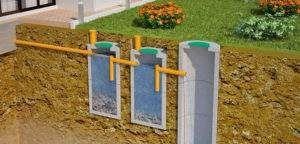
In addition to reducing wastewater disposal costs, these devices can ensure a water purification level of up to 98% at the outlet. We recommend you familiarize yourself with the information How to choose a septic tank for your summer house.
- Types of storage tanks and their operating principles
- How a cesspool works
- The operating principle of a two-chamber storage tank
- The operating principle of three-chamber storage devices
- Let's look at the design of the device
- Pros and cons of septic tanks without pumping
- Performance and capacity of septic tanks without pumping
- How do septic tanks work without pumping?
- Termite
- Septic tanks Topas
- External sewerage devices "Tank"
- Septic tank "Triton"
- Septic tank Ecopan
- Rodlex septic tanks
- Fast Cleaners
Types of storage tanks and their operating principles
First of all, we need to agree on the terms:
- pumping out is an action associated with the complete removal of the contents of a septic tank or cesspool using special equipment, in particular a sludge suction truck;
- Cleaning – removal of solid sediment from the storage chamber that has accumulated at the bottom of the tank during long-term operation.
While a septic tank without pumping is a feasible structure, such devices without solid waste removal simply do not exist, as the formation of sediment is part of the wastewater treatment process and must be removed promptly to avoid disrupting the process.
How a cesspool works
These are storage devices whose contents must be pumped out regularly.
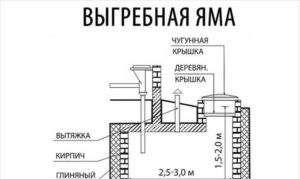
Such structures are typically installed on summer cottages, where waste accumulates slowly. However, in a permanent residential setting, even a family of two or three people produces so much wastewater that pumping will require almost monthly removal.
 The frequency of waste disposal can be somewhat reduced by using special bacterial solutions to treat sewage discharge. Currently, the construction of cesspools is prohibited, but those previously constructed continue to be used.
Instead of traditional cesspools, septic tanks without pumping are often installed at summer cottages. The design and operating principle of this device are similar to filter wells up to 2.5 meters deep.
Its filtering capacity is extremely limited, and the proximity of aquifers does not guarantee that even minimal water quality requirements will be met.
It is important to be sure that the aquifer in this area is at a greater depth during the period of maximum seasonal level.
The operating principle of a two-chamber storage tank
Construction of a two-chamber storage tank This is the first step to a septic tank without pumping and odor., since at this stage the following are put into effect: bacterial preparations for wastewater treatmentAnaerobic compounds are used here, which work without the participation of oxygen.
In this case, live bacteria are introduced directly into the wastewater mass and decompose solid organic inclusions, releasing carbon dioxide and forming a sediment called activated sludge.
It is so because biobacteria live, work, and reproduce in this environment. Along with the decomposition of feces in the wastewater, the unpleasant odor is also neutralized.

The settled, clarified water then flows through the external sewer system via the overflow. In a single-chamber septic tank, divided into separate chambers by partitions, the relatively clean liquid is transferred between them via the overflow, while in multi-chamber systems, the connection between the individual tanks is made via pipes.
For this purpose, plastic pipes with a diameter of approximately 110-150 millimeters are used in most cases. The pipe connections to the septic tank bodies are sealed.
The operating principle of three-chamber storage devices
Final wastewater treatment is carried out in septic tanks consisting of three chambers (they operate without pumping and without emitting an unpleasant odor). Additional capacity allows introduce another cleaning method – aeration.
During this process, air is blown through the septic tank's contents. Excess oxygen in the water activates aerobic bacteria, which further break down the wastewater's constituents. The wastewater purification rate is 98-99%, and naturally, there is no specific odor.
Such liquid can be safely discharged into the nearest body of water or simply onto the ground, through which it undergoes additional filtration.
Septic tanks without pumping are popular, in which final treatment of wastewater occurs in a filter well. This well is installed as the third section of the external treatment network and is a well up to 2.5 meters deep.
The lower section of the drainage well is perforated, and it is from these holes that the formation of the filter zone without pumping begins.
The filter consists of the following elements:
- The bottom layer is best made of crushed red brick, 5-15 mm in size, and should be at least 30 centimeters thick.
- The middle layer is formed from gravel of the same fraction up to 50 centimeters thick.
- It's best to fill the top layer with blast furnace slag granules up to 10 millimeters in size. This material has strong adsorbent properties and traps dirt and harmful impurities.
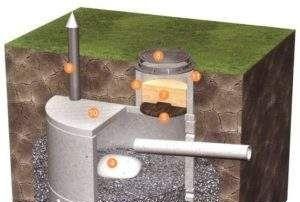
- Drainage chamber;
- Working chamber;
- Filtering, sealing soil;
- Neck;
- Inspection hatch;
- Relief plate;
- Sealing;
- Sealing the hatch;
- Container ventilation;
- Top plate;
- Waterproofing material.
An external sewerage system without pumping can be equipped with a number of auxiliary devices that increase the degree of purification and disinfection of wastewater.
Fine filters trap fine particles. They are manufactured as an airlift system and installed immediately before the water is discharged into the ground or a body of water.
Drainage is treated with ultraviolet radiation to kill any remaining bacteria. Special emitter lamps are used for this purpose. They are placed in a sealed flask that is installed in the drain pipe.
During operation, activated sludge settles in septic tanks. While the liquid fraction can be safely drained after treatment, the sediment must be removed using technical means. This procedure will need to be performed regularly, at least once or twice a year, depending on the sewer system's load.
Let's look at the design of the device
The construction of an external sewer system has one sole purpose: to dispose of human waste. But before doing so, the wastewater must be safe to avoid contaminating the water that will be used.
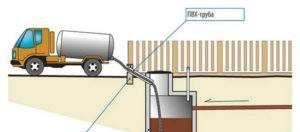
Traditionally, cesspools, used for waste collection, have been used for this purpose. Depending on the intensity of use, such devices require regular pumping of their contents. According to sanitary regulations, this should be done at least once every six months or as soon as they fill up.
Watch the video to learn about the operating principle, diagrams, and experience using a sewer system without pumping.
In some cases, the regularity of such an operation occurs within a month or two, and its cost is from 12,000 rubles.
The main components of a storage tank with pumping are:
- A durable, sealed enclosure capable of containing its contents without leaking into the soil outside the cesspool. This requires careful waterproofing.
- Natural ventilation system for the tank. Storing fecal waste produces methane gas, which, when mixed with air, forms a flammable or explosive mixture that must be regularly vented from the chamber.
- A double lid on the neck: an inner wooden one and an outer metal or plastic one.
- A drain pipe through which wastewater flows from the indoor sewer system to the outdoor sewer system.
The principle of a septic tank without pumping is somewhat more complex, since the processes occurring in wastewater during its processing are important.
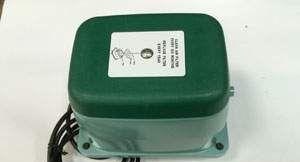 Therefore, the main components of such devices are:
- A drain pipe between the building's exit and the outdoor sewer system's holding tank. Its diameter should be 100-110 millimeters and its length should be at least 10 meters. For cost and technological reasons, plastic pipes are usually used.
- Next comes the storage tank, which performs several functions. The first is to break up the wastewater flow, using a baffle plate that directs the stream downward and breaks it up. Heavy impurities settle to the bottom, where they are processed by aerobic bacteria.
- When the liquid level rises to the overflow pipe, it begins to flow into a second container. This container contains an air atomizer and a low-power compressor for pumping the atomized air.
Sufficient oxygen in wastewater initiates the process of aerobic bacteria, which further process organic matter in the purified liquid, bringing its purification level to 98-99%.
Further, various devices can be used in the form of chlorine cartridges, UV emitters, and additional filters for final cleaning and disinfection of the drain.
Pros and cons of septic tanks without pumping
Construction of treatment facilities requires careful design and precise execution, otherwise all sorts of problems are guaranteed. However, a properly designed storage tank provides the user with a number of advantages during operation:
- There are no unpleasant odors from the sewerage system on the site.
- There is no need to call out sewage disposal equipment frequently, since almost the entire volume of waste passing through the sewer system is rendered harmless technologically.
- The risk of soil contamination is significantly reduced due to the high level of disinfection. However, it is important to comply with the requirements for removing septic tank components from drinking water sources such as wells and boreholes without pumping.
- The service life of treatment facilities can last for decades.
However, septic tanks without pumping also have specific disadvantages that can affect their performance:
- Before choosing a sewerage system design, it's essential to examine the soil conditions on the site. There are situations where installing a custom treatment system is simply impossible, for example, if the installation site has dense clay soils that prevent filtration.
- The treatment system must be designed correctly, taking into account the slopes of the connecting pipes.
- It's important to ensure the entire system is completely watertight, taking seasonal ground movements into account. In this case, it's preferable to use one-piece plastic systems.
If all calculations are carried out correctly and the project is implemented precisely, there will be no problems with the use of wastewater treatment plants for 25-30 years.
Performance and capacity of septic tanks without pumping
To fully treat wastewater passing through an outdoor sewer system, it must remain in the storage tank for at least three days without pumping. This time is considered sufficient for complete processing of contaminants.
On the other hand, the established daily water consumption standard for a country house is 200 liters. This takes into account not only direct consumption but also laundry, cooking, dishwashing, and other needs.
If three people live in a house, the total water requirement will be 600 liters. This amount must remain in the septic tank for three days to be fully processed. Therefore, the minimum capacity of this tank is 1.8 cubic meters.
However, let's look at this issue from a different perspective. Bacterial activity remains stable in the temperature range of +3 to +30 degrees Celsius, so it's reasonable to assume that in cold weather, the capacity to process wastewater will decrease.
Considering the above considerations, it is better to be on the safe side and double the septic tank capacity by 2-2.5 times. We suggest using online calculator for determining the volume of storage capacity.
How do septic tanks work without pumping?
Outdoor sewerage systems vary widely in design, but they all operate on the same principle: separating media by density for the purpose of recycling one of them. When using bacterial treatment, the drain is simultaneously disinfected.
Most pump-less septic tanks for private homes or cottages are energy-independent, as there's no way to regularly monitor their operation. Using such treatment facilities doesn't achieve a purification rate exceeding 70%; final filtration occurs in the soil.
After several years of use, the soil becomes so saturated with untreated water that a persistent sewer smell appears, and it can only be eliminated by replacing the top layer of soil to a depth of up to half a meter.
In energy-dependent septic tanks without pumping for summer cottages, the degree of purification is much higher, since additional treatment of wastewater with aerobic bacteria is carried out, additional airlift filtration and UV irradiation of purified water are often installed.
Termite
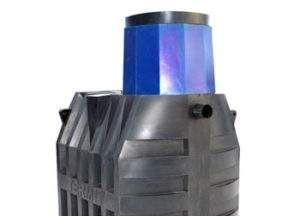 A number of products with this name are manufactured in a single housing divided into three chambers, interconnected by overflow pipes. The first two act as settling tanks for separating wastewater into fractions, while the third chamber performs bacterial treatment of the wastewater.
The purification efficiency of this device does not exceed 78%, which prevents the liquid from flowing freely into the ground without additional treatment. Further treatment occurs in a specially designed filter.
Finely crushed pumice is used as a filler. This results in 95% purification, allowing runoff water to be diverted to the ground for further purification through natural filtration.
The service life of the Termit septic tank reaches 45-50 years, the cost of the product is up to 24,000 rubles.
Septic tanks Topas
 Autonomous treatment plants with this name are single-body units, divided internally into four chambers. Each chamber performs a specific purification stage.
All sections of the unit are equipped with aeration devices, allowing for a purification rate of up to 98% using bacterial preparations. The septic tank operates as follows:
- in the first chamber, contaminants are crushed and partially processed by bacteria under aeration conditions;
- in the second - further processing under the same conditions;
- The third and fourth compartments are arranged similarly.
As a result of intensive processing with aeration, the degree of purification at the outlet is up to 98%.
This type of system is energy-dependent and can only operate with electricity. If left unattended for 4-6 hours without power, the bacterial environment dies and must be regenerated.
A sudden discharge of wastewater from such a device is unacceptable, so the tank should be selected with a solid reserve in volume, or the number of guests received at the same time should be regulated.
The cost of such a device is approximately 82,000 rubles. If you want more details To learn how the Topas septic tank works, read the article..
External sewerage devices "Tank"
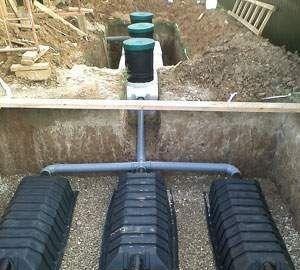 Almost all septic tanks of this type are three-chamber and operate on the following principle:
- in the first of them, accumulation and settling of filtered masses occurs;
- in the second chamber, chemical neutralization of wastewater and its biological disinfection take place;
- In the last container, final filtration and additional purification are carried out using biobacteria.
After completing all stages, the purification efficiency reaches 74%, and then the wastewater undergoes additional filtration as it passes through the soil. For this purpose, filter fields using infiltrators are installed.
They are box-shaped containers installed upside down. The filters are made of sand, gravel, and geotextile.
Cleaning devices, which are block-type designs, can be supplemented with standard elements and additional equipment.
By their nature, Tank devices are energy-independent and have the following advantages:
- Durability: seamless housings made of thick plastic can last up to 50 years.
- Easy to maintain.
The volume of fecal waste processing in such a septic tank ranges from 600 to 1800 liters, and accordingly, the price, taking into account the configuration, ranges from 20,000 to 69,000 rubles.
Septic tank "Triton"
Triton, a well-known brand of sewage systems in the Russian market, offers a variety of treatment capacities. Miniature models have capacities ranging from 0.45 to 0.75 cubic meters.
These systems are sufficient for homes with one or two residents and fully meet their needs. For larger households, a range of tanks up to 40 cubic meters can be used.
The septic tank body consists of a single chamber, with a biological filter with floating biomass installed before the outlet. This design ensures that the entire wastewater passes through the biomass, ensuring complete treatment.
The water undergoes final filtration in the infiltrate, after which it can be discharged into the ground without fear of contamination of groundwater.
The service life of the filter field is about 10 years.
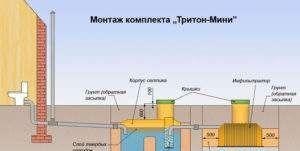
Depending on the volume, such a device can be purchased for a price ranging from 9,000 to 25,000 rubles.
Septic tank Ecopan
Despite this name, this product is a fully-fledged VOC, distinguished by the following positive qualities:
- The degree of wastewater purification is 98% regardless of the nature of the contaminants.
- Can be used in difficult geological conditions – on heaving and clayey soils.
- The use of stiffening ribs ensures greater mechanical strength of the body.
- Easy installation and operation.
- Resistant to external and internal corrosion.
- The use of double walls ensures operation in severe frost conditions.
The disadvantages include the need for regular cleaning of the brush loading.
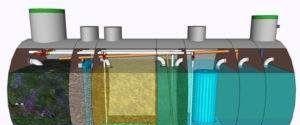
Reliable and durable sewerage devices from the Ecopan series can be purchased for prices ranging from 82,000 to 265,000 rubles.
Rodlex septic tanks
To accurately describe the full range of products of this brand, a much larger volume would be required than is provided by the framework of a short message.
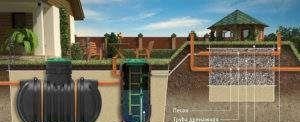
But we recommend paying close attention to these products. Simple yet reliable technical and technological solutions place these products among the leaders in their class.
Fast Cleaners
This product from an American manufacturer appeared on the domestic market just over 10 years ago and immediately became popular with our developers.
It is notable for the fact that its installation does not require obtaining a special permit - the supplier provides a "Declaration of Conformity" and this is sufficient.
Taking into account the harsh Russian conditions, the manufacturer has provided for all operating conditions, including permafrost.
The advantages of the devices include the following points:
- During installation, no addition of bacteria is required – those present in wastewater are used.
- Volley discharges of up to 80 liters are permitted.
- Cleaning is carried out using a combined method – aerobic and anaerobic bacteria work simultaneously.
- Self-regulating system - if there is a deficiency of one type, it is replaced by another.
- The maximum degree of wastewater purification is 99%.
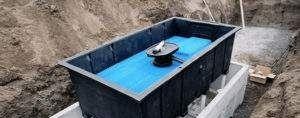
Of course, not all models are listed here, and which septic tank without pumping is best for a summer house or private home is up to the consumer to decide.
crap from the web archive
but in essence?)
Needed