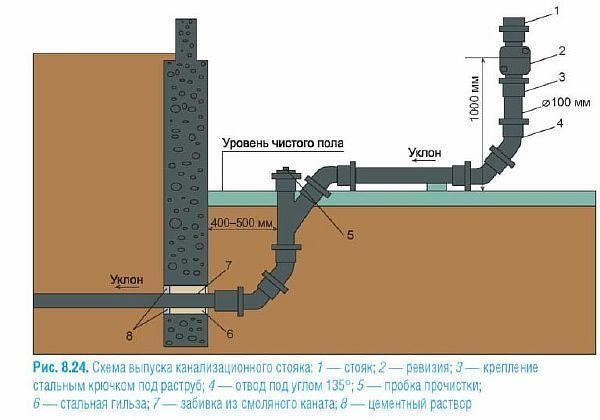
To install a sewer system in a private home, it is necessary to install a central riser using a 110 mm diameter pipe. To allow gases to escape, the riser is positioned so that its top extends above the roof of the house.
After this, according to the scheme (see below) and SNiP standards are used to carry out sewerage.
Disposal of human waste products is essential for comfortable living in a private home. Therefore, developing a sewerage system plan for a private home is a particularly important step in installing a drainage system.
Where to go to install a sewer system? A centralized sewer system must be nearby. The following documents are required for connection:
- from a surveying company - on the site plan and the house plan, a diagram of the sewer pipes;
- sewerage system maintenance organization – technical conditions for connection;
- design specialist – project for connection to the central system based on the situation plan and technical specifications;
- permission from the services under whose communications (electric cables, gas pipes, highways, etc.) the new line runs;
- signatures of neighbors agreeing to carry out the work.
- Types of sewerage systems for a private home
- How to create a sewer system diagram for your home yourself
- Factors influencing the composition and design of sewerage in a home
- Elements of the internal sewerage system
- How to make a diagram of the internal sewerage system of a house yourself
- Features of the sewerage system in a two-story private house
- Elements of the external sewerage system
- Design of external sewerage
- Factors influencing circuit design
- Types of sewerage facilities and their operation
- Laying depth and angle of inclination of pipes to the tank
- Pipe routing and installation
- Insulation of sewer pipes
- Septic tank capacity calculator
- Septic tank and cesspool
- Filter wells
- Calculating the volume of filter structures for a home's sewerage system
- Principles of sewer pipeline design
- Which pipe products should you choose for your home?
- Laying a pipeline from the house to the tank
- DIY installation cost
- How to improve efficiency
Types of sewerage systems for a private home
Water is essential in your home or garden; there's no arguing with that. But too much is even more harmful than too little. An overly waterlogged area is even more useless than a dehydrated one. Therefore, special systems are created to remove excess moisture:
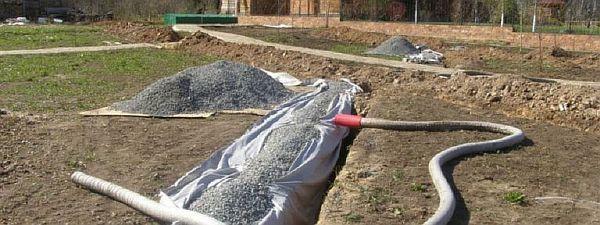
- A drainage sewer system designed to collect and remove liquid from moisture-saturated soil layers.
- A storm sewer system that collects rainwater and meltwater, drains it into special storage tanks, and then discharges it into storm drains or into devices for use in dry periods.
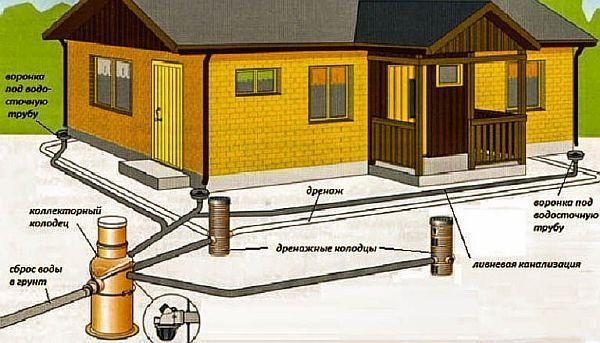
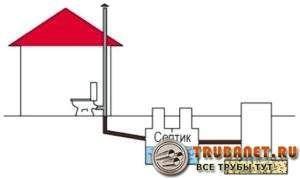
- A fecal sewer system is responsible for the collection, treatment, and disposal of household waste and human waste. We suggest you read the article about it. How to choose a sewage pump for a private home.
Each of these devices performs a specific function and has its own design differences in accordance with its purpose.
The nature of the wastewater in each system requires separate collection and sewerage of liquid from each type of specified device.
How to create a sewer system diagram for your home yourself
This document is a graphical action plan. A sewerage plan allows you to accurately calculate the materials needed to install a sewer system for your home.
The basis for drawing up drainage schemes is a building project, which clearly indicates the installation locations of plumbing fixtures and their names, which allows for the correct selection of materials.
Factors influencing the composition and design of sewerage in a home
To determine the size and placement of key components when installing a sewer system in a private home, it's essential to determine the water consumption rate. Average consumption data is used in the calculation.
As a rough guide, a standard of 100 liters per person can be used. When designing, adhere to the basic rule of placing the main outdoor sewer system no closer than 4 meters from the property line and no closer than 10 meters from any residential building.
In this case, the distance to the nearest water intake (well or borehole) must be at least 35 meters.
If your neighbors complain about you, the inspection authorities (the sanitary and epidemiological service) will demand that the distance be no less than the figure specified above!
Below is an example of a project.
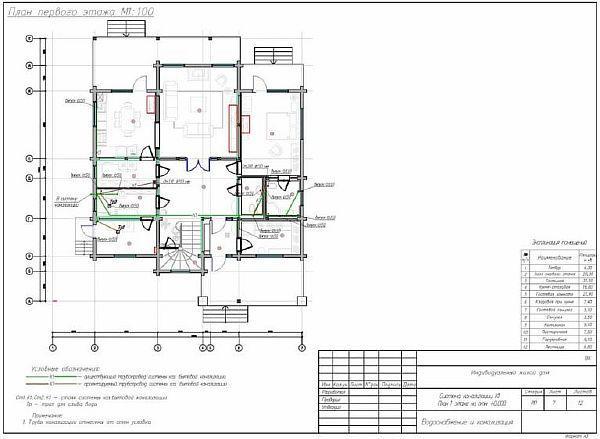
The purpose of drawing up a plan is to locate the main equipment of the drainage system, determine the cross-section of sewer outlets and select appropriate fittings for the installation of a gravity drainage network.
Elements of the internal sewerage system
These include the following details;
- Siphon and drain pipe of a kitchen sink.
- The same device for the washbasin in the bathroom.
- There is also a siphon and drain pipe from the bathtub, and a drain with a siphon from the shower stall.
- The drain pipe and the bidet trap are in the toilet. The trap and elbow connecting the toilet to the wastewater drain are also there.
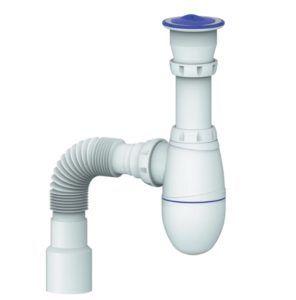 In a two-story house, these elements may be repeated on each floor, but they may also be absent, in which case the list provided must be adjusted accordingly.
All of the above components are connected to a horizontal drain pipe. Since this is a gravity-fed drainage system, the drain pipe is installed with a 2-5 mm slope toward the drain and connected to the drainage system riser.
The size of the branch pipe can vary within the nominal bore 32-50 millimetersIn practice, it's usually preferable to use a single, maximum diameter, which simplifies fitting selection. See the diagram below.
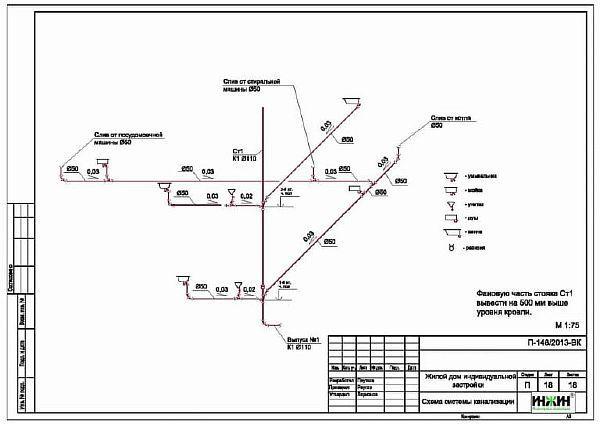
All data on the use of plumbing elements is summarized in an axonometric drawing, according to which the calculation of the need for materials must be made.
When laying sewer pipes in a country house, all connections must be made at an angle of 135 degrees, for which appropriate fittings are available.
How to make a diagram of the internal sewerage system of a house yourself
This graphic document provides for the display of all utilities in the building, including a drainage diagram. The following factors are taken into account:
- All plumbing fixtures are installed on the floor along one wall, common to such rooms as the kitchen, bathroom and toilet.
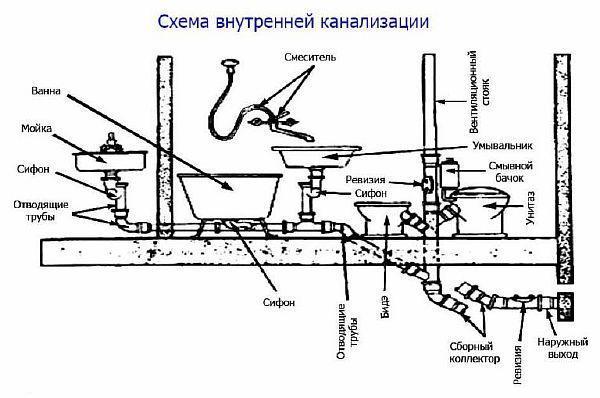
- The kitchen is equipped with a sink, dishwasher and washing machine.
- The specified units are connected to a common drain pipe through siphons, which prevent air from the sewer with characteristic odors from entering the room.
- The drain pipe passes through a hole in the wall into the bathroom, where the following plumbing fixtures can be connected: a washbasin, a bathtub, a washing machine – each device with its own siphon.
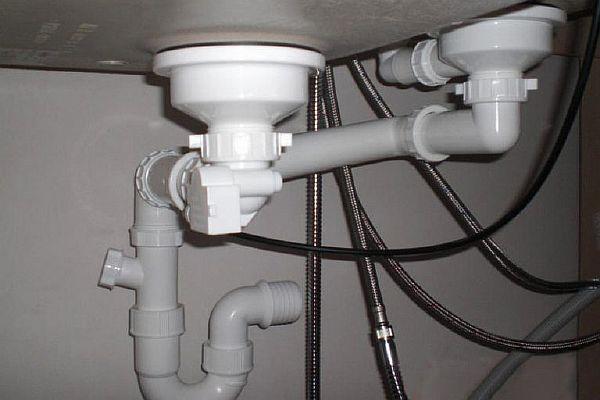
- The next hole in the wall leads to the toilet, where a bidet and toilet can be placed.
- All connections are made to a 40-50 mm diameter branch pipe using 135-degree tees. Socket connections are required, equipped with a sealing collar to ensure a watertight seal.
The wastewater collection and disposal system is non-pressurized, so the drainage main installed with a slope of 1-2 millimeters per meter of its lengthThis rule must be followed very scrupulously.
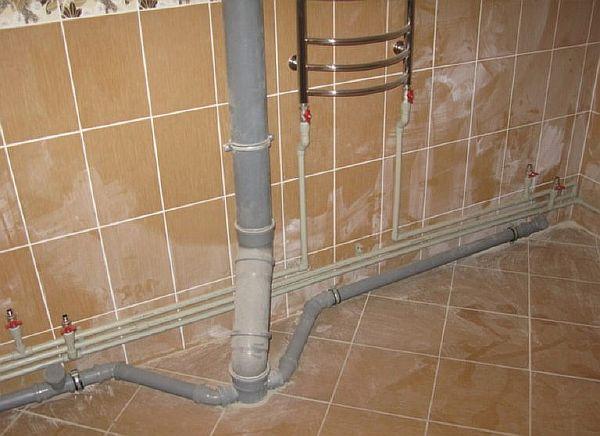 If the slope is insufficient, water drainage will be difficult or impossible, while if it is too steep, the drain will accelerate. As a result, the water will drain away, but some of the contaminants will remain in the pipe, creating the potential for future clogs.
The second important component of the indoor sewer system in a private home is the riser, which receives wastewater from the drain pipe. There may be several such outlets.
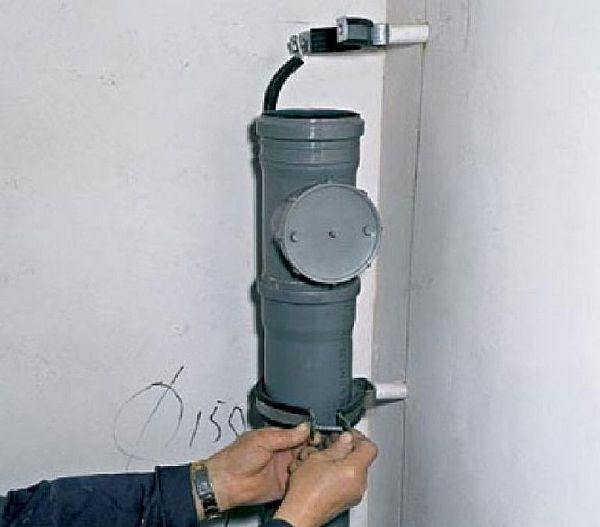
For this reason, the riser pipe diameter is selected between 100-150 millimeters. The riser must be equipped with an inspection port to monitor its condition and ensure cleaning.
But functionally, this element of the system performs another important task – its extension provides ventilation in the sewer system. and it's called a waste pipe.
Another inspection hatch is installed at the top of the riser in the house, to which the base of the waste pipe is attached. It exits through the ceiling and roof slabs. The top end should be at least half a meter above the roof ridge to ensure reliable removal of unpleasant sewer odors.
In addition, when the riser pipe is completely filled with waste water, the siphon may break off.
A vacuum is created in the filled riser pipe, causing the water traps in the traps to be sucked into the riser. Air, not at all odorized, enters the home's living space through the empty water traps. The result is obvious.
This unsightly situation can be completely resolved by installing a vent pipe through which air enters the system, equalizing the pressure.
The waste pipe must be protected from clogging by debris and leaves by a cap. These caps are most often designed as a deflector, creating an upward air flow for ventilation.
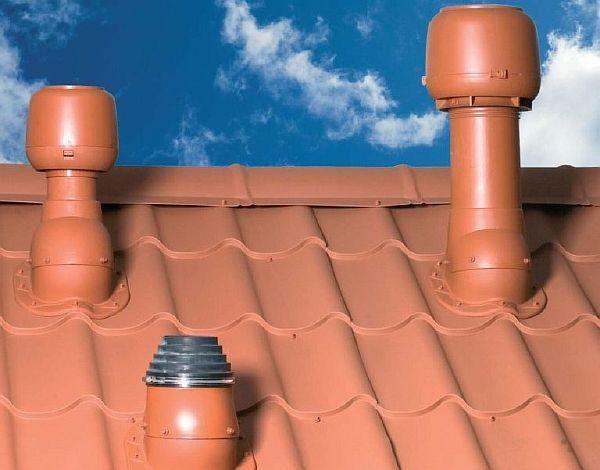
Thus, the riser plays a crucial role in the overall drainage system, and all the features of its design must be taken into account when designing the sewerage system.
Features of the sewerage system in a two-story private house
The top floor of a country house also includes a drainage system. It has fewer drainage points, typically a shower and toilet.
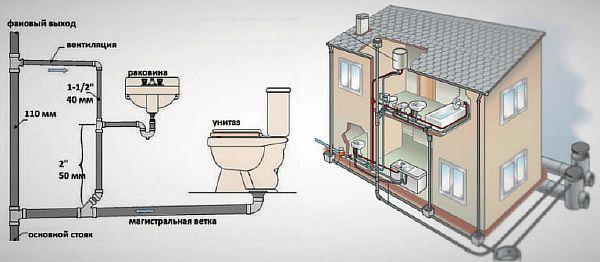
To save money, the second-floor sewer system is installed parallel to the same network on the first floor. This simplifies the design and installation of the system, as there is no need to install a second riser—the drain is connected to the existing one.
Elements of the external sewerage system
The external wastewater treatment and disposal system consists of a number of units whose action is aimed at disinfecting wastewater.
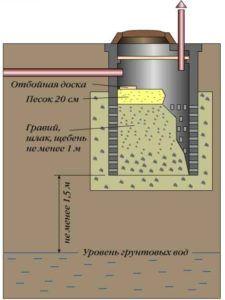 The main ones are:
- Filter wells or septic tanks. The former are the simplest to construct and operate. They consist of a pit in the ground up to three meters deep. The cross-sectional area can be up to two meters, regardless of its shape. The pit walls are reinforced with concrete or brickwork. They can be solid or perforated with 40-60 millimeter openings. A filter up to 80 centimeters thick is installed at the bottom of the well.
Cinder, gravel, and broken brick can be used for this purpose. The latter is placed on top of a layer of broken brick with a grain size of approximately 50 millimeters. For a gravel filter, material with a grain size of at least 15 millimeters is used.
- Septic tanks. The tank is divided by one or more partitions.
The drained liquid fills the first chamber. A protective plate should be installed where the liquid jet falls to prevent it from eroding the sludge layer. A cartridge containing a bacterial culture should be placed in the chamber, which will serve as the basis for the aerobic filter.
Within it, biological matter decomposes contaminants. Water overflows the top edge of the partition and enters the second chamber, where an aerator is installed and atomized air is blown through the water. This process oxidizes the contaminants and further processes them, this time by anaerobic bacteria in the presence of oxygen.
When using a septic tank, the degree of wastewater purification reaches 75–90%, which indicates the need for additional post-treatment for complete disinfection.
- Soil field filtration
- Sewerage installation projects are carried out individually depending on actual conditions.
This method is used for post-treatment of wastewater as it passes through the soil. From the septic tank, the liquid enters the drainage system, passing through a gravel filter and a double layer of geotextile.
At the same time, all fine particles are retained in them, and the degree of purification reaches 98%.

A limitation to the use of this additional wastewater treatment method is the soil characteristics. Fields are ineffective on low-permeability soils, such as dense loams and clays. Sandy, gravelly, and sandy soils are most favorable, allowing for high-quality wastewater filtration.
- Infiltrators. Infiltrators are installed on low-permeability soils. These are box-shaped plastic devices with side grates, closed at the top and open at the bottom. Depending on the processing volume, up to three or four devices can be installed in series.
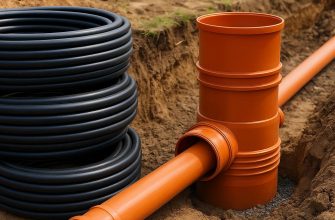
Any of the described objects can be used either together or in a configuration chosen by the buyer. The objects are connected using plastic pipes with a diameter of 100-150 millimeters; less commonly, for larger objects, 200-millimeter pipes are used.
In addition, each external sewerage facility is equipped with a ventilation system; inside the building, waste pipes are used for this purpose.
The use of septic tanks is most popular in areas with insufficient rainfall, and the purified liquid is actively reused for household needs.
Design of external sewerage
These two components of a single task are completely opposed. While the internal sewer system is designed to collect wastewater, the external one is designed to disinfect and dispose of it.
Therefore, the rules for its construction have only one similarity with the internal requirements: the slope from the foundation of the house towards the storage tank should be 1-2 millimeters per meter for the same reasons (see above).
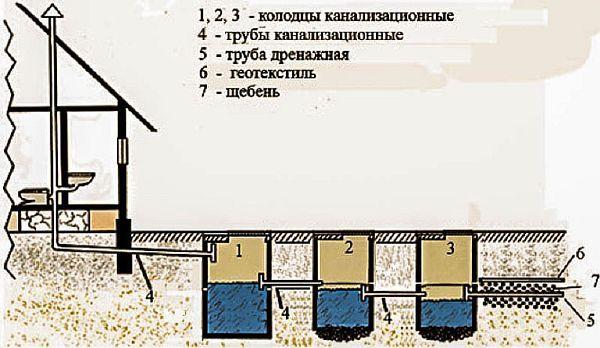 The tasks performed by outdoor sewerage systems include processing wastewater for disinfection. Water discharged into the ground after treatment must be absolutely safe, as it is returned to the consumer after final purification by ground filtration.
Since the structure is exposed to the outside environment, the depth of soil freezing must be taken into account. The pipe must be located below this level.
But, even if this condition is met, it is advisable to insulate the sewer pipe in case of extreme climatic conditions, which have been happening with enviable regularity lately.
And to ensure the integrity of the pipeline, it is better install a heating cable in the sewer pipe, operating in automatic mode when the temperature drops critically.
Factors influencing circuit design
They can be either objective, caused by specific conditions, or subjective, arising from the corresponding attitude of the designer.
The first one includes the already mentioned depth of soil freezing, which affects the depth of laying the external part of the sewer pipe.
Objective reasons also explain the choice of filtration method for liquid purified by septic tanks. When installing sewer systems on clay soils with low permeability, the infiltrate method is necessarily chosen.
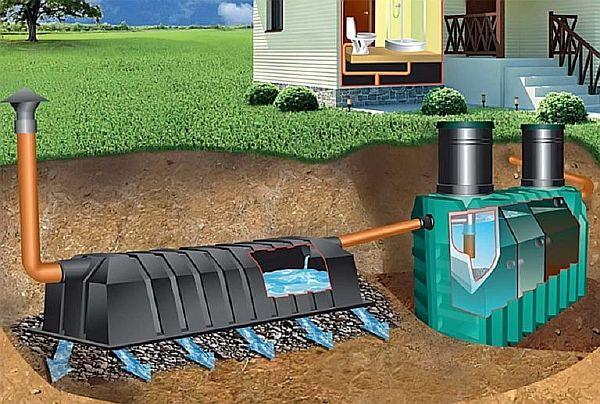
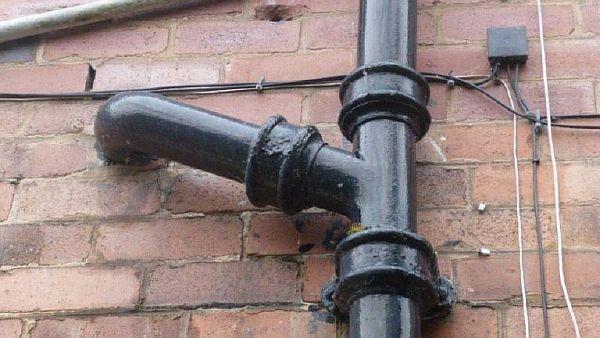
The first group of factors includes the lack of a dedicated, enclosed shaft for the waste pipe. We've already established its necessity. In this situation, it is installed with an outlet through the wall, using a wall-mounted version, and is secured to the wall using brackets.
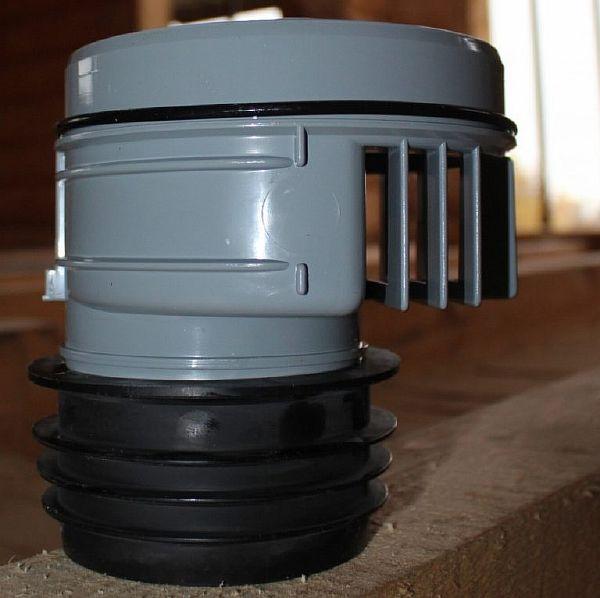
If installing a waste pipe in this way is also undesirable, you can use an air valve to relieve pressure in the sewer drain.
Types of sewerage facilities and their operation
Several methods are used to disinfect and purify wastewater from a private home:
- Liquid is collected in a special container. This is where the primary separation of the wastewater into solid-liquid fractions occurs. Chemical and biological agents are used to liquefy the mass and partially digest it with active bacteria. The culture can be purchased at specialty stores or at a hardware store.
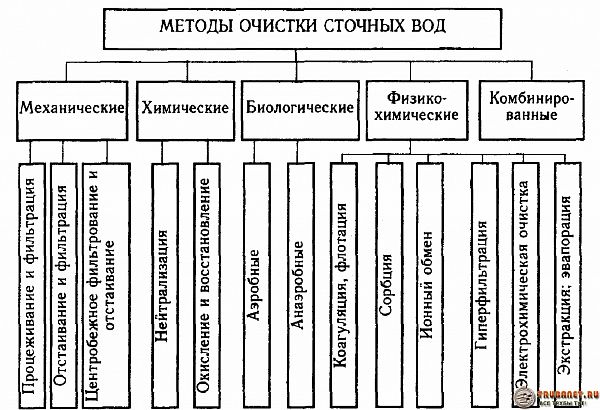
The given cleaning scheme is used in industrial conditions, but most of the operations in one form or another are also carried out on home cleaning devices.
HELPING INFORMATION!!! Chemical and bacteriological treatment of wastewater occurs in the storage tank. Further purification takes place in the filter well. The filter in this case consists of gravel and sand. Granulated slag and crushed brick, which are good adsorbents, also produce good results.
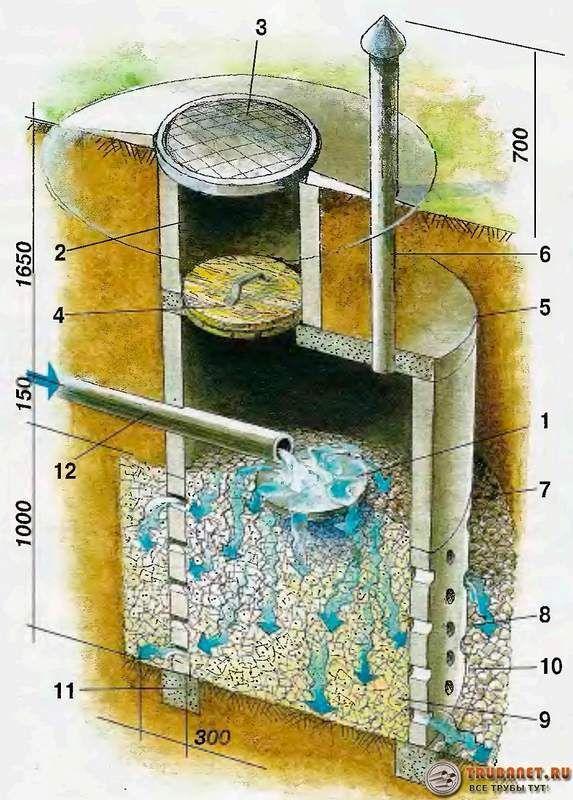 The well body was made from a concrete ring up to 2.5 meters in diameter and up to 2 meters high. A manhole was installed at the top so that only the metal cover remained above ground level.
A filtering compound is poured around the ring. It is also common practice to construct the body using brickwork.
A further development of filter devices is the production of septic tanks with several chambers intended for different purposes.
The first tank is used for wastewater collection, primary separation into fractions, chemical and biological treatment, and aeration. Treatment with atomized air is used to further oxidize the wastewater's decomposition products.
For this purpose, a compressor operating in continuous mode is built into the cleaning system.
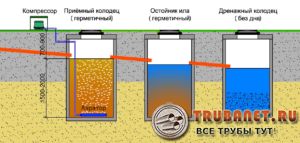 In the last section of the treatment plant, a filter well is installed, in which additional treatment of wastewater occurs.
The design of a stand-alone treatment system may vary, but the operating principle remains the same. Modern septic tanks achieve a wastewater purification rate of up to 98%, which is a very high figure.
However, the most modern device requires periodic pumping and cleaning from sludge.
Laying depth and angle of inclination of pipes to the tank
The depth at which external sewer system components need to be installed depends on the climate conditions of the construction region. One thing is clear: the most dangerous risk to a pipeline is freezing, especially if it is made of metal.
This phenomenon most often leads to its destruction. But the most frustrating thing is that until warm weather returns, you can forget about using the sewer system. Only after it becomes possible to excavate the system will it be time to spend money on repairs and restoration.
Pipe routing and installation
Based on accumulated experience, specific rules for installing internal and external pipelines during sewer installations have been developed. They are as follows:
- Regardless of the location and method of installation, the type of pipe, and other conditions, it is essential to maintain a slope toward the drain when laying the pipe. Construction Norms and Regulations (SNiP) requirements should be followed, as each pipe size requires a specific slope. Failure to comply with the slope requirements typically leads to blockages.
- Distances between sewer lines should be optimally long; if they exceed 4-5 meters, an inspection hole is required. An inspection manhole should be installed on 10-meter sections.
- When laying a sewer system in a country house (underground installation), it is necessary to be guided by the requirements of SNiP 2.04.03-85 and 2.04.01-85 in terms of maintaining distances between individual objects of the sewer network.
- In Russia, placing the pipeline below the freezing point of the soil is an important factor. To ensure this, the trench must be sufficiently deep, but insulating the sewer system, including using heating cables during installation, is an option.
- Sewer pipes are laid only on a sand bed and covered with sand. This stage is crucial to their integrity.
When using plastic pipes, carefully compact the sand layer. The best results are achieved by generously watering the cover. This ensures the best compaction, after which you can backfill with soil.
A properly installed, autonomous sewer system for a country house can last a long time if installed properly and maintained.
Insulation of sewer pipes
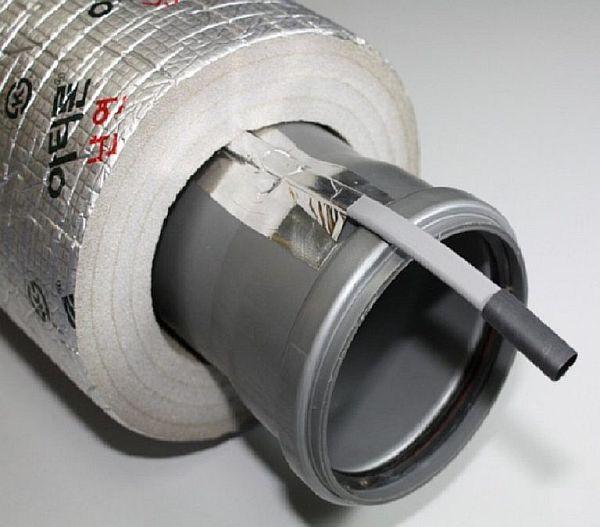 This measure avoids extensive excavation work when laying utility lines in regions with harsh climates and protects shallow pipes from freezing. Various insulating materials are used for this purpose:
- glass wool;
- mineral wool;
- expanded polystyrene, and many others.
For complete security, you can also install a heating cable with a sensor that activates when the temperature drops critically. This investment will eliminate the need for repairs and associated costs. A sewer line installed in this manner does not require deep burial.
We've already discussed the requirements for the slope of gravity sewer pipes for indoor systems. These requirements also apply to outdoor systems: 1-2 millimeters per meter of pipe length.
Septic tank capacity calculator

A septic tank is a treatment facility that must accommodate and process the required volumes of household wastewater. First and foremost, it's important to remember that, in accordance with sanitary requirements, a septic tank must be capable of handling at least a three-day wastewater treatment/clarification cycle.
Simply put, the minimum volume of a treatment plant's chambers corresponds to the total three-day water consumption of all residents of a private home. There should also be a certain operating reserve in case of an increase in the family, i.e., an increase in the number of consumers.
Determining the actual daily water consumption of one person is not a simple matter; according to SNiP, it is 200 liters; this figure is now considered obsolete due to the widespread use of various types of household appliances that use water.
For example, it is believed that:
- Taking a shower for 7 minutes will require 70 liters;
- using a bidet for 5 minutes - 40 liters;
- a single bath or jacuzzi session - about 110 liters;
- one dishwasher cycle consumes 15 liters;
- One toilet flush consumes up to 9 liters of water.
Taking the above into account, this calculator asks you to select and enter into the calculation parameters the daily water consumption of one person from a range of 260-370 liters; this is the average range of recommendations.
SNiP 2.04.03-85, depending on the wastewater flow rate, distinguishes:
- single-chamber types - for wastewater consumption of up to 1 m3/day;
- two-chamber - up to 10 m3/day;
- Three-chamber - over 10 m3/day; therefore, the diagram attached above is not mandatory, but serves only to demonstrate one of the possible options for septic tank design.
For small farms, reinforced concrete rings are most often used as concrete anaerobic tanks. Reinforced concrete sewer systems are distinguished by their reliability and virtually unlimited service life. The problem they previously faced—insufficient watertightness—is now solved by modern waterproofing methods. MDS 40-2.200 recommends locating tank bottoms no lower than 3 meters from the surface, which limits the number of rings in a single septic tank section (chamber).
The active volume of a septic tank (Vak) is determined as the product of the daily water consumption per user (Q liters), the number of users (K), and the number of days (D) of wastewater clarification (settling): Vak = Q * K * D. According to the recommendation of SNiP 2.04.03-85, with annual sediment discharge, the minimum D is: 3 if the wastewater inflow is up to 5 m3/day, or 5 if the inflow is more than 5 m3/day. In addition, if the tank is planned to be cleaned less than twice a year, Vak should be increased by 20 percent to account for sediment.
When determining the height of chambers (for example, made of concrete rings), it should also be taken into account that, according to clause 3.35, MDS 40-2.200, the height of the air volume above the liquid level cannot be less than 500 mm.
The septic tank's capacity must be sufficient to handle the daily volume of wastewater. The amount of wastewater treated directly depends on the number of people living in the home. As a rough guide, it's estimated that one person consumes up to 200 liters per day.
These expenses are quite traditional and related to household and sanitary consumption. Thus, a family of four consumes approximately one cubic meter of liquid per day.
You can determine this indicator more accurately using the built-in online calculator.
Septic tank and cesspool
The most important device in the outdoor sewer system is the septic tank or other wastewater filtering device. Installing a concrete or brick structure does not require any special considerations.
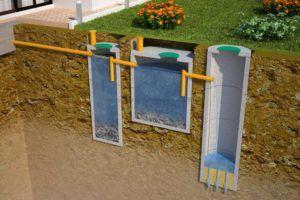 However, the currently popular, high-precision plastic devices require additional attention. In areas with seasonally high groundwater levels, the tank may float.
In this case, the slopes are violated, and the system stops working. For such cases, a concrete anchor plate is used. It is installed at the bottom of the pit, and the septic tank is secured to it with steel ties.
The most cost-effective solution is to construct a sealed wastewater collection tank or filtration cesspool. This requires digging a pit of the required dimensions and placing a tank made of concrete rings or brickwork inside.
In a filtration device, some of the contents escape through permeable soil. This allows for shorter intervals between pumping out the tank's contents, and this article describes the frequency with which this should be done. sewage pumping and methods, How to do it correctly.
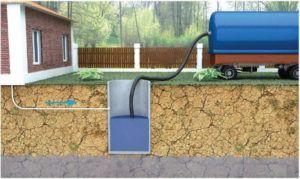 Sealed cesspools retain their contents between pumpings. Large families require frequent pumping, as each person produces approximately 100 liters of wastewater per day.
The cesspool is located in a place convenient for access by a sewage truck, no more than 6 meters from the boundary of the site.
The danger of cesspools lies in their inadequate wastewater treatment. While sealed cesspools don't address this issue at all, filter cesspools achieve a purification rate of approximately 75%, which is clearly insufficient, leading to a gradual buildup of contaminants in the soil.
It is strictly forbidden to construct a cesspool if the groundwater depth is less than 2.5 meters.
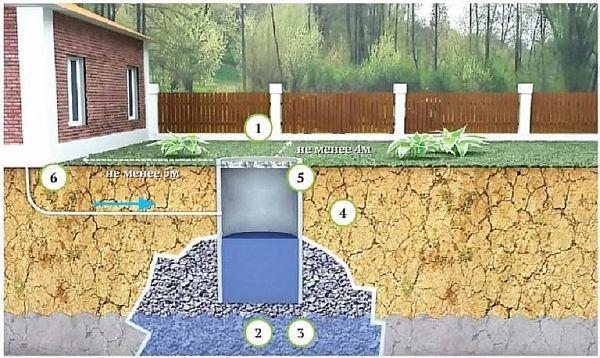
Filter wells
There are other ways to install a sewer system for a private home yourself. For example, the external part can be constructed as filter wells. This is possible on highly permeable marl or sandy soils.
The composition of the filter in this case is not uniform:
- a layer of blast furnace slag up to half a meter thick is poured into the lower part;
- then comes a layer of gravel with a fraction of 15 millimeters;
- The top layer should be made of broken brick, which exhibits strong adsorbent properties.
Large filtrate components settle in the upper layers of such a filter, followed by smaller ones. Filtration wells are effective when biological wastewater treatment is used. Aerobic bacteria, capable of processing the organic matter contained in the wastewater, gradually develop within the filter.
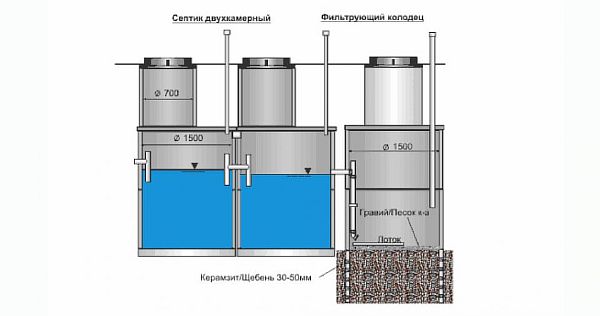
Disposing of filtered liquid through drainage ditches into a nearby body of water is possible and often used. Wastewater in the drainage ditches undergoes additional treatment by passing through a gravel and sand filter.
The degree of purification in a filter well, depending on the throughput characteristics of the soil, can reach 90-95%.
In general, a filter well is a transitional stage between a cesspool and a septic tank. By adding another compartment with an aeration unit, a full-fledged septic tank can be created. The atomized air actively oxidizes the wastewater biomass, forming another bactericidal sludge layer, in this case, composed of anaerobic bacteria.
Calculating the volume of filter structures for a home's sewerage system
Residents of a building must understand their responsibility for the environmental health of their surroundings. This depends largely on the purity of groundwater. Therefore, a number of documents have been developed regulating water consumption and water treatment:
- Building codes and regulations 2.04.03.85, regulating the installation of external sewerage systems in private homes, as well as the arrangement of sanitary protection zones for small protective structures;
- SNiP 2.04.01.85 for internal networks and water supply systems in terms of determining the volume of wastewater;
- A manual on the procedure for designing engineering support systems MDS 40.2.200, which provides calculations for calculating the volume of wastewater in private housing construction.
Septic tank volume calculations can be performed for both single-chamber and multi-chamber designs. With a daily consumption rate of approximately one cubic meter, one chamber is sufficient to fully cover the septic tank's contents.
For larger volumes of wastewater, two or more tanks must be installed in series. Septic tanks with two or more chambers are divided equally, but units in which the first chamber occupies up to 75% of the volume are possible. Important: sanitary regulations prohibit the use of cesspools!
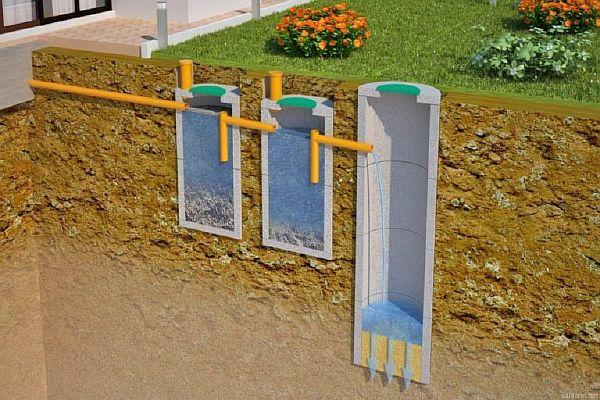 The most important factor when developing a septic tank design for a country house is its working volume, which can be calculated using the following algorithm:
- as the daily volume of incoming wastewater, multiplied by the time of its anaerobic processing in days;
- as the total amount of liquid in all compartments of the septic tank;
- the distance from the bottom of the container to the lower edge of the spout pipe is taken into account;
- The height of the sediment layer, which can be up to 20% of the tank's depth, must be subtracted from the volume. If cleaning is carried out in accordance with the regulations - 2 times a year, this indicator can be ignored.
When calculating the cost of your own water treatment system with final purification by filtration through the soil, it is important to remember that this is realistic with a liquid consumption of 3-5 cubic meters per day.
If it is higher, it is necessary to use SBR reactors or apply a combined design with treatment by both anaerobic and aerobic bacteria, not excluding the use of aeration.
The use of biochemical materials for wastewater treatment increases the degree of wastewater purification and accelerates its processing by tens of times.
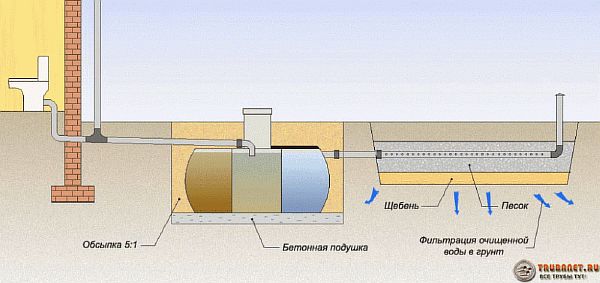
Biochemical wastewater treatment allows for purification up to 98%, making it suitable for garden irrigation and yield increases. The resulting sludge can be used as a soil fertilizer.
Principles of sewer pipeline design
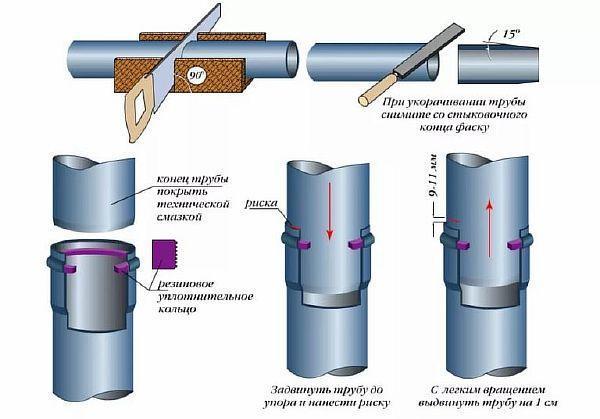 The main difference between drainage systems and other pipelines is the following features:
- Gravity flow under atmospheric pressure. Fluid flows through rolled tubing products under the influence of gravity at a predetermined slope.
- The flow rate is determined by the pipeline's inclination toward the outlet. This value must be strictly within 1-2 millimeters per meter. The reasons for this have already been discussed above.
- Sealing. For a gravity-flow pipeline, this is ensured by a socket-and-socket connection of the elements using a rubber cuff for sealing.
When installing a sewer system, do not connect pipes at an angle to the common axis. Otherwise, a gap will form between the wall of the part and the seal, allowing the transported fluid to leak.
Which pipe products should you choose for your home?
Pipelines made of various materials are used for wastewater disposal systems:
- Ceramic. This material is very durable and is not susceptible to any aggressive environments. Disadvantages include complex installation and difficult logistics.
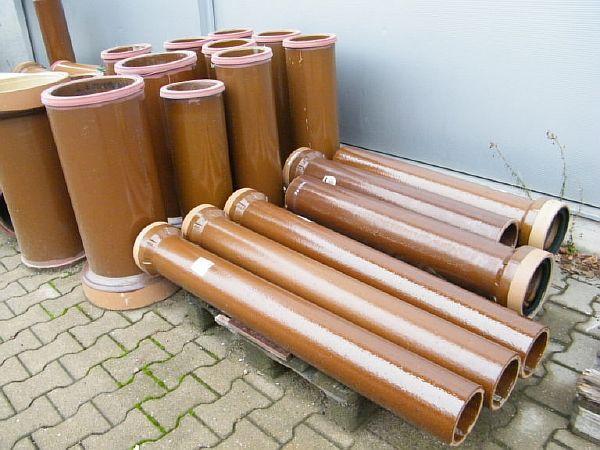
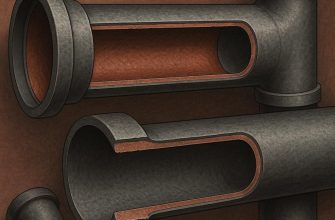
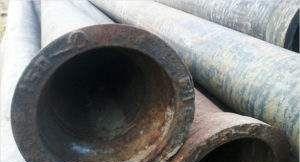
- For many decades, cast iron sewer pipes have been the market leader. This material is virtually ideal for this application. It is corrosion-resistant in most environments and has relatively high strength properties. The precision of the socket joint is ensured by the casting process. Furthermore, the use of cast iron pipes allows for the use of calking during installation to improve the tightness of the joint.
To facilitate the installation of cast iron pipelines, a wide range of fittings is produced.
- Asbestos pipes. Some positive characteristics of asbestos pipes do not offset their main drawback: these materials are prohibited for use in residential construction.
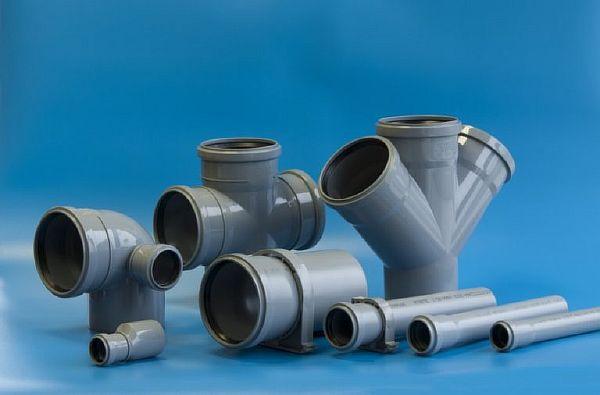
- Plastic sewer pipes have practically replaced all other types today. Their ease of delivery and unloading, ease of installation, and durability have made them the primary choice for DIY sewer pipe installations. The primary method for assembling pipes is socket-style. For indoor systems, the basic dimensions are:
- For branches from plumbing fixtures – diameters of 40 or 50 millimetres;
- For riser and waste pipe – size 100 or 110 mm;
- For the drain pipe from the house to the septic tank 100, 110 or 150.
Laying a pipeline from the house to the tank
A wastewater tank represents the first risk point in a sewer system, where a leak can occur. In such a case, some of the contents may leak into the environment, potentially contaminating the surrounding area and drinking water sources.
Therefore, a rule has been established that requires the storage tank to be installed at least 10 meters from a residential building. However, some sources specify a minimum distance of 5 meters.
It's important to understand that this is a random discrepancy, but it's best to stick with the first installation option. In this case, it will be impossible to file a claim. However, strictly speaking, the correct installation of the tank depends on the permeability and filtration capacity of the soil on the site.
It is mandatory to maintain the slope within the parameters mentioned above.
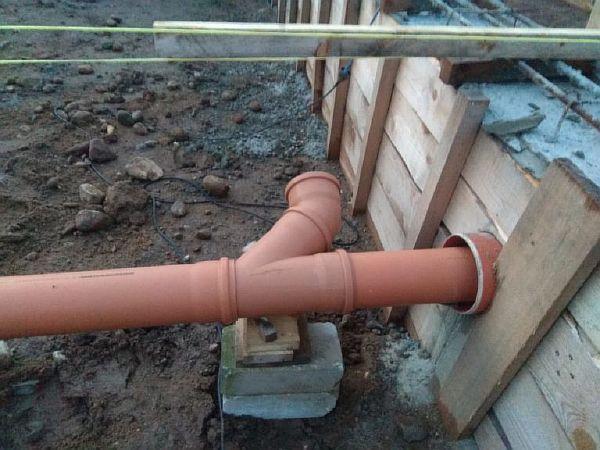
To install a sewer outlet pipe, a trench must be dug to the required depth, determined by the soil freezing level. Consider the labor involved in meeting this requirement, as the thickness of the drainage layer must also be considered. If the soil freezes to a depth of 1.8 meters in the Moscow region, the trench depth will be more than 2.2 meters. Therefore, many prefer shallow ditches, insulating the pipes with a protective jacket and heating cable.
 The order of execution of works is as follows:
- The route is marked with pegs or cord.
- Excavation of soil to a connection depth of approximately 60 centimeters.
- Drainage backfill - about 20 centimeters of gravel and 10 centimeters of sand on the bottom.
- Filling the drainage with water to seal it.
- The slope is marked using a cord and a spirit level. The upper end at the building exit should be 20 centimeters higher than the opposite end at a distance of 10 meters.
- The pipes are laid section by section at a depth according to the laying pattern, the position is regulated by bricks placed under them and sand backfill.
- The heating cable is installed and secured with tape.
- During the installation process, a heat-insulating casing is placed on the pipe.
- The pipe with cable and insulation is filled with sand, then with previously removed soil.
Using plastic pipes for an outdoor drainage system will ensure its integrity during seasonal ground movements, as they are flexible enough to withstand such loads. Installing a sewer system in your home using this material ensures its functionality for up to 50 years.
DIY installation cost
Hiring specialists is quite expensive. But if you analyze the installation process using the sewer system layout diagram, it becomes clear that there's nothing you can't do yourself.
The cost of materials can be calculated at the design stage, once the detailed design is complete. The total cost depends on logistics, including delivery to the installation site.
How to improve efficiency
The uninterrupted operation of the drainage system is primarily ensured by high-quality installation.
The only recommendation I can give to the user is to install a waste disposer under the sink in addition to the sewer system. This is easy to do correctly. This will significantly protect the system from clogging.