You need to insulate it, but you don’t know what is the best way to insulate the ventilation pipe – use mineral wool, polyethylene foam, spray polyurethane foam, or shaped shells.
Secure rolled materials with tape and cable ties. Apply spray-on polyurethane foam with a spray gun or hire professionals with industrial equipment. Glue shaped shells with foam.
In this article, we'll explore the reasons and methods for insulating ventilation systems. We'll also discuss the requirements for thermal insulation and explore the nuances of installing rolled, profiled, and sprayed insulation.
- Why insulate ventilation pipes?
- Thermal insulation requirements
- Rating of popular insulation materials for ventilation pipes
- Mineral wool
- Styrofoam
- Foamed polyethylene
- Spray polyurethane foam
- Thermal insulation installation technology
- Insulation of pipes by spraying polyurethane foam from a can
- Insulating pipes with rolled materials using mineral wool as an example
- Insulation of pipes with shaped shells
- Answers to frequently asked questions
- Video about insulation
Why insulate ventilation pipes?
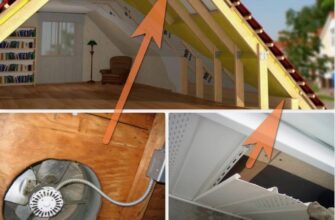
Natural and mechanical ventilation circulate air currents of varying temperatures. Warm exhaust air is removed from the room. As it passes through the ductwork in the unheated attic, the air encounters a cold environment. The temperature difference causes condensation. Water flows through the ducts and into the house through the ventilation grilles, leaving streaks on the walls.
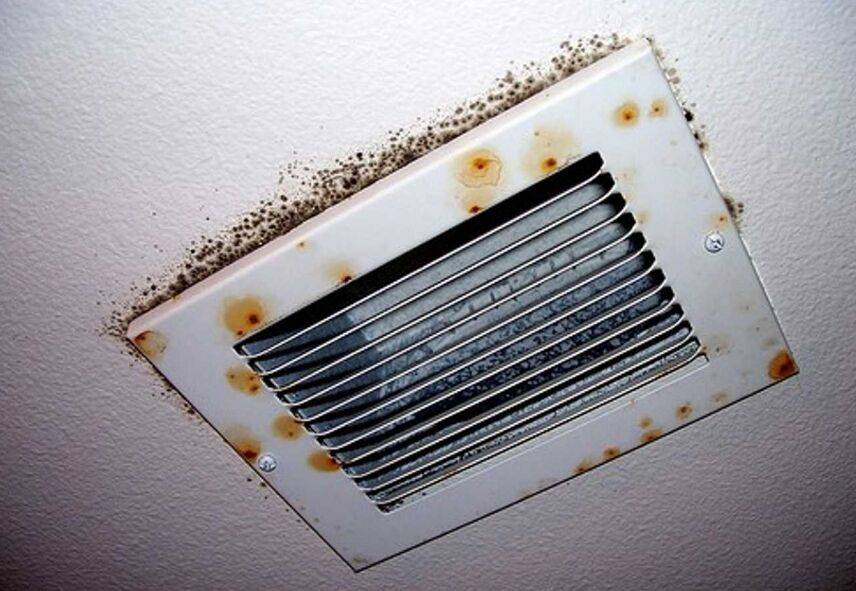
Some of the condensate freezes in the uninsulated section of the duct. The resulting ice plug obstructs airflow. The hood stops functioning. The expanding ice buildup tears apart the duct joints and pipe walls.
A similar situation occurs with the outlet of an uninsulated exhaust hood on the roof. The pipe with the cap becomes coated with ice in winter. In addition to the air duct riser, the ice can also damage a section of the roofing.
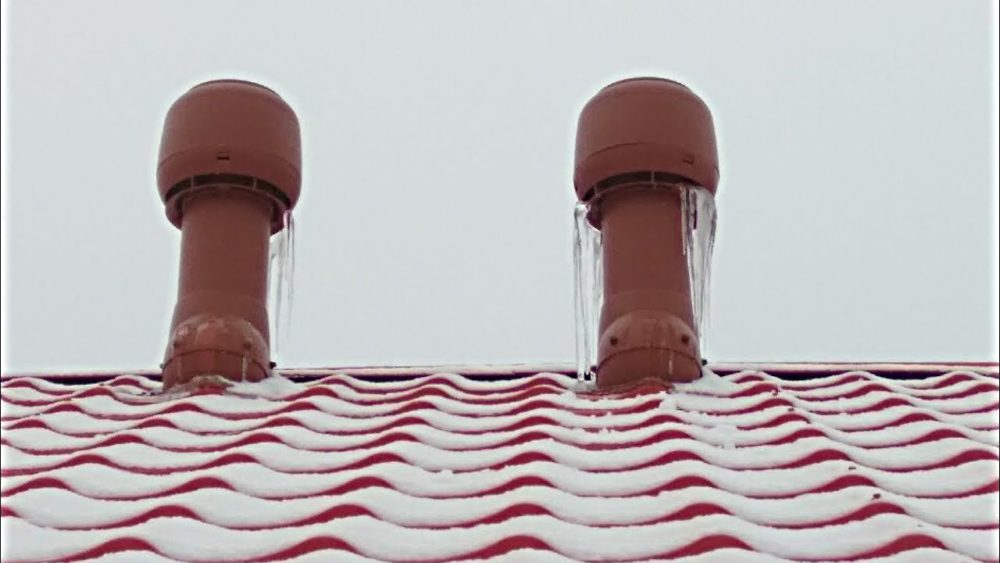
Throughout the cold section, the channel must be insulated:
- to prevent the formation of condensation and ice;
- to prevent the formation of an ice plug that blocks the passage of air flows.
Owners of private homes wonder whether it's necessary to insulate the ventilation in an unheated attic when the ambient temperature doesn't drop below freezing. A slight temperature difference sometimes doesn't cause condensation, but it does reduce draft.

This problem is relevant for natural ventilation systems. Warm air flows, by the laws of physics, tend to rise. Heated air enters a cold environment, reducing its velocity or creating a return path through the duct. When the pipes are insulated, the draft in the hood is stronger.
Thermal insulation requirements
Air ducts should not be insulated with just any material. Incorrectly selected insulation will impair ventilation performance and accelerate duct deterioration.
For example, polyethylene foam melts when exposed to high temperatures. Mineral wool absorbs water in a humid environment, losing its thermal insulation properties.
Thermal insulation for air ducts is selected taking into account operational requirements:
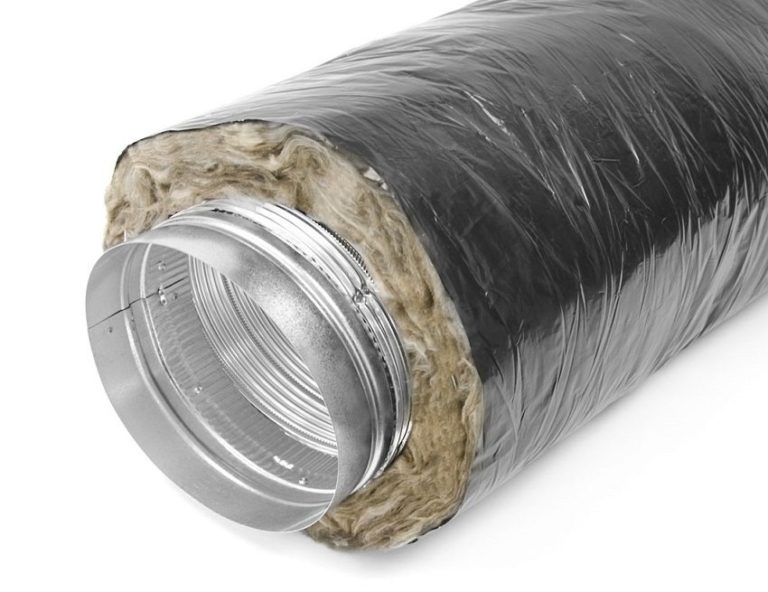
- Thermal conductivity coefficientThe indicator is expressed in W/m•OC determines the amount of heat transmitted. The thermal conductivity coefficient determines the rate of air cooling inside an insulated ventilation duct. This value is determined by the material's properties, density, thickness, and porosity. Insulation based on thermal conductivity is selected based on operating conditions. In a dry, spacious attic, it is convenient to insulate the ducts with several layers of mineral wool. When air ducts are installed in narrow shafts or under ceiling sheathing with limited space, the insulation thickness must be reduced without sacrificing thermal conductivity. The duct is insulated with foil-coated foam roll material or with high-density shaped insulation.
- Vapor permeability coefficientThermal insulation is affected by moisture vapor from two sources: condensation from the duct walls and humid ambient air. As the vapor permeability coefficient increases, the material's thermal insulation properties decrease, and metal ducts rust. In damp attics, it is advisable to insulate pipes with foam plastic or polyethylene foam. Sprayed polyurethane foam insulation has a high vapor permeability coefficient. The solution must be prepared in special equipment before application. The foam adheres tightly to the pipe surface, creating a dense, vapor-impermeable shell.
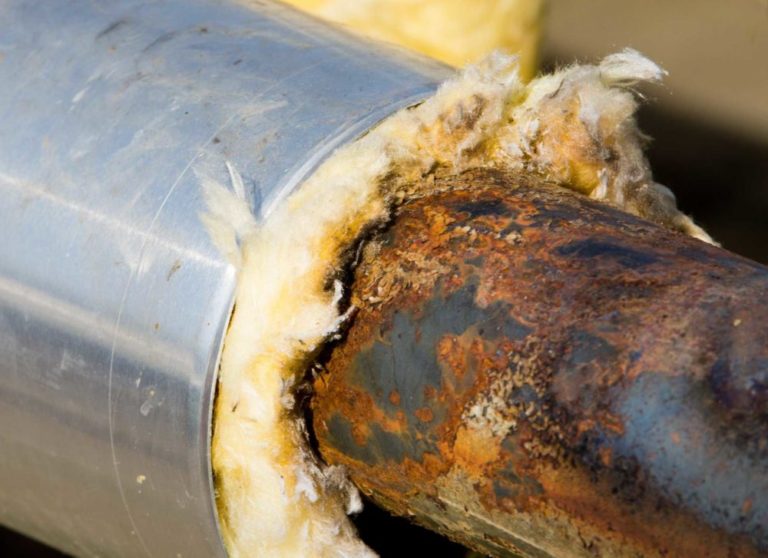
- Noise absorption coefficientThis indicator is important for residential and public spaces where people live. An operating ventilation system creates a hum and unpleasant acoustic effects. The higher the ventilation insulation's sound absorption coefficient, the fewer sound waves will penetrate the room.
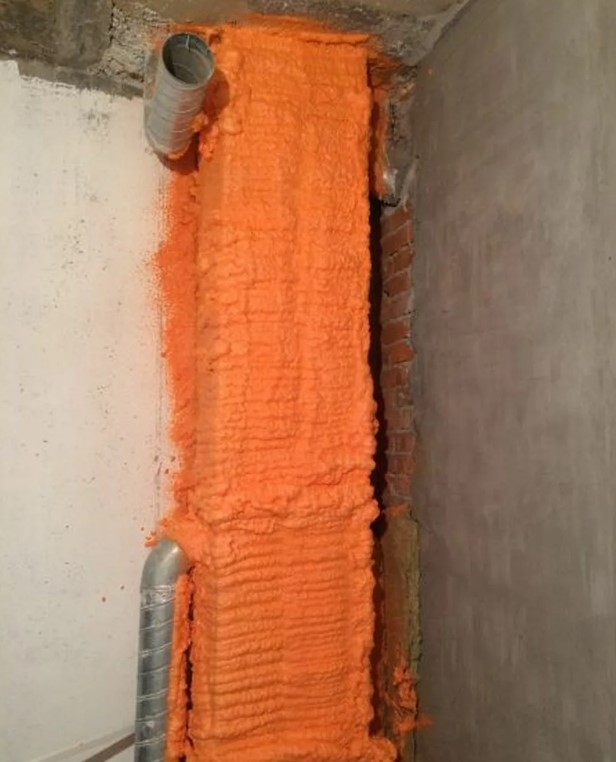
- Resistance to biological influencesThis indicator affects the service life of the insulation and the insulated object. Loose materials in a humid environment are favorable for mold colonies. Microorganisms destroy the insulation and the walls of galvanized metal air ducts. It is advisable to insulate ventilation ducts in damp basements, attics, and underfloor spaces with materials resistant to biological attack. Polyurethane foam, foam plastic, rubber, and foamed polyethylene are suitable.
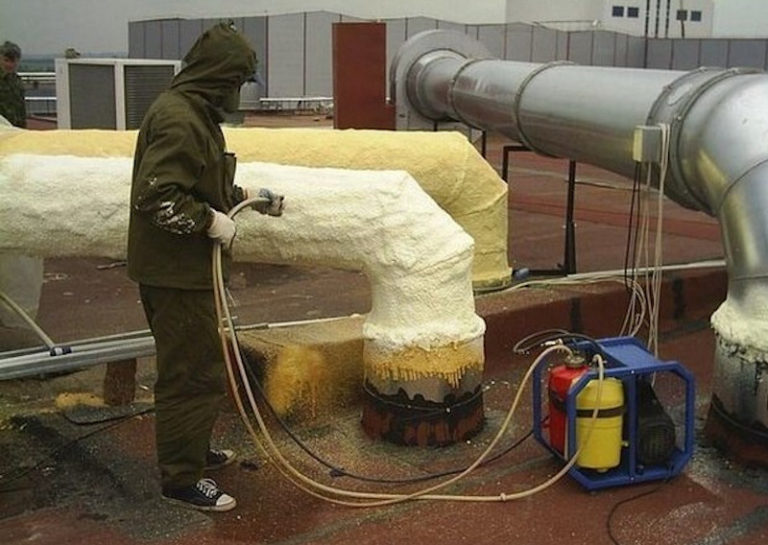
- Operating temperature rangeVentilation systems do not operate at extremely high temperatures. All types of thermal insulation that can withstand average temperatures ranging from -35°C to +60°C are suitable for insulation.OC. Chimneys are excluded. The walls of metal pipes are heated by exhaust gases, which leads to the melting or ignition of foam plastic and other combustible materials.
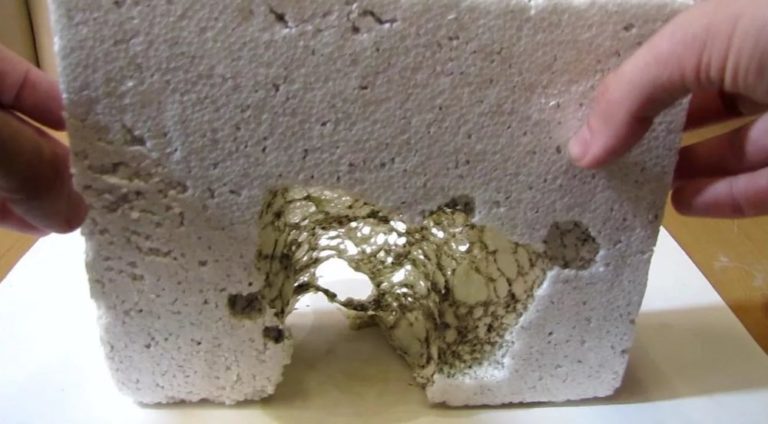
Paying attention to the sanitary and hygienic properties of insulation used for wrapping indoor ventilation pipes is essential. The insulation must not emit toxins. Felt and other materials containing natural components are the leading options.
Rating of popular insulation materials for ventilation pipes
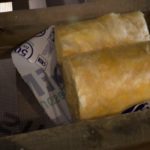
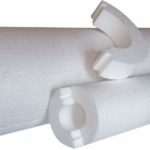
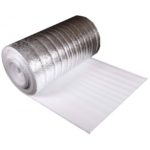
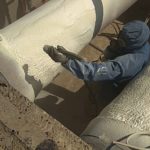
They produce insulation for ventilation pipes rolled and in the form of shaped elementsThe shell is selected to match the diameter of the pipeline. The rolled material is wrapped around the air ducts lengthwise, in a spiral, or in a circle.
Spray-on compounds are applied using specialized equipment. It makes no sense to rank thermal insulation products by brand, as a vast number of domestic and international companies produce them.
The materials comply with generally accepted standards and sanitary regulations. It's advisable to consider the rating by type of thermal insulation material.
Mineral wool
This general term refers to insulation materials that differ in composition. The base is made from natural fiber. Additives, which are not always environmentally friendly, are used for bonding.
Glass wool is considered dangerous as an outdated insulation material that is gradually disappearing from the construction market.
The base is made of glass fibers, which are irritating to the skin and respiratory tract. The adhesive is a phenol-formaldehyde resin, which contains toxins.
Glass wool is no longer used for insulating ventilation ducts. It is occasionally found in attics and basements of old apartment buildings and industrial buildings.
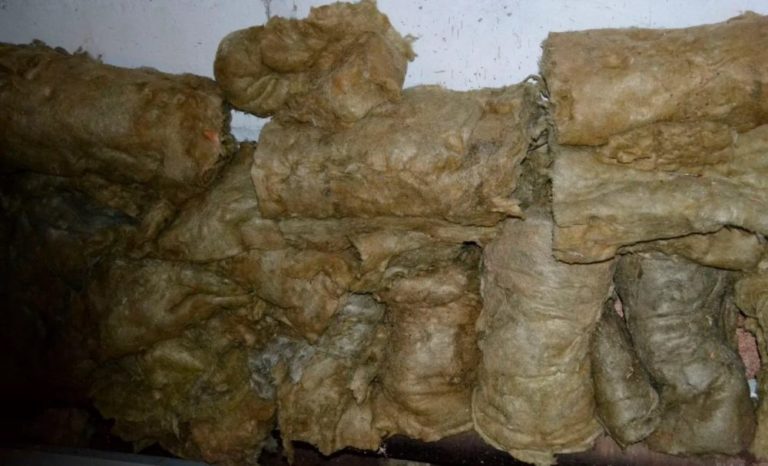
Stone wool, also known as basalt wool, has replaced outdated glass wool. This material, composed of basalt fibers, is available in slabs, rolls, and shells. Slab products are used for thermal insulation of rectangular ventilation ducts.
Shaped shells and rolls are used to insulate round ventilation pipes in dry attics and rooms under suspended ceiling sheathing. Stone wool with a foil layer has the best performance properties.
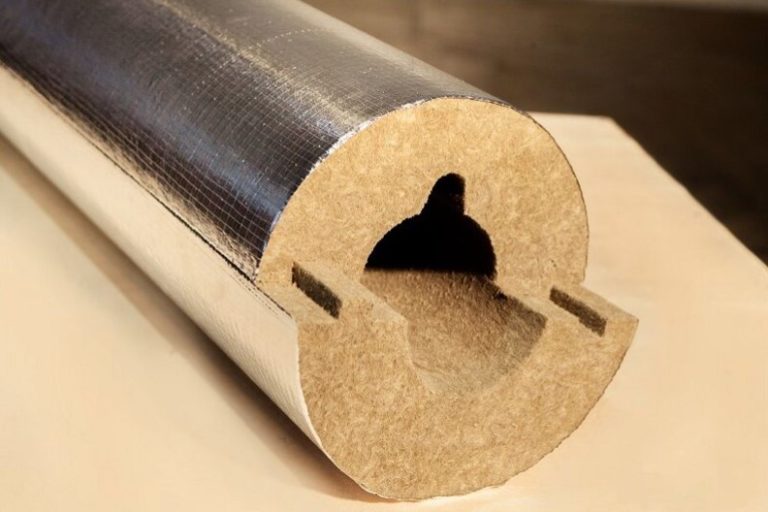
Insulation took first place in the ranking due to its advantages! But there are also some downsides, so let's explore them.
Pros and cons:
- Budget cost.
- Easy to install.
- Resistance to fire, high and low temperatures.
- High thermal conductivity coefficient – up to 0.038 W/m•°С.
- Resistance to deformation and mechanical impact.
- Tendency to caking.
- In a humid environment, stone wool becomes saturated with water and loses its thermal insulation properties.
- Cheap basalt wool may contain phenol-formaldehyde bonding resins.
Stone wool is less prickly than glass wool, but installation is less enjoyable. Flying fibers irritate the body and respiratory tract.
Styrofoam
This rigid yet moisture-resistant insulation ranks second in popularity. The boards are used to insulate rectangular ventilation ducts. A shaped shell consisting of two mating halves is used to insulate pipelines.
The analogue of foam plastic is extruded polystyreneThe material has improved performance characteristics.
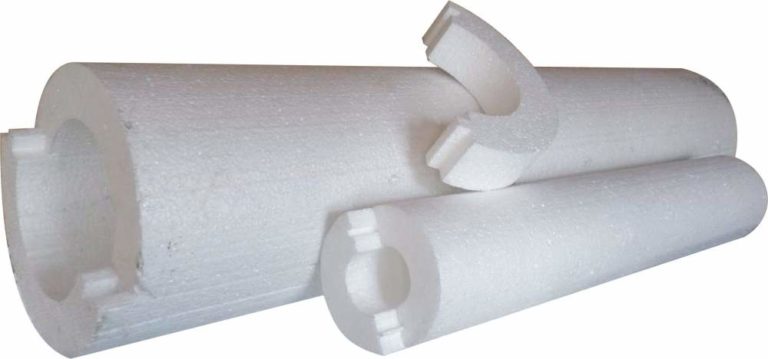
Foam plastic and extruded polystyrene have common advantages.
Advantages and disadvantages:
- Budget price.
- Easy to install due to light weight.
- Resistance to moisture and fungi.
- High thermal insulation properties and service life.
- Resistance to caking.
- Low flammability class.
- Ignition on contact with open flame.
- Release of toxic smoke during melting and burning.
- Melting due to exposure to high temperatures.
- Destruction by rodents and mechanical impact.
A lightweight, foam-insulated ventilation pipe requires no reinforcement. This insulation is ideal for installation in damp attics and basements.
Foamed polyethylene
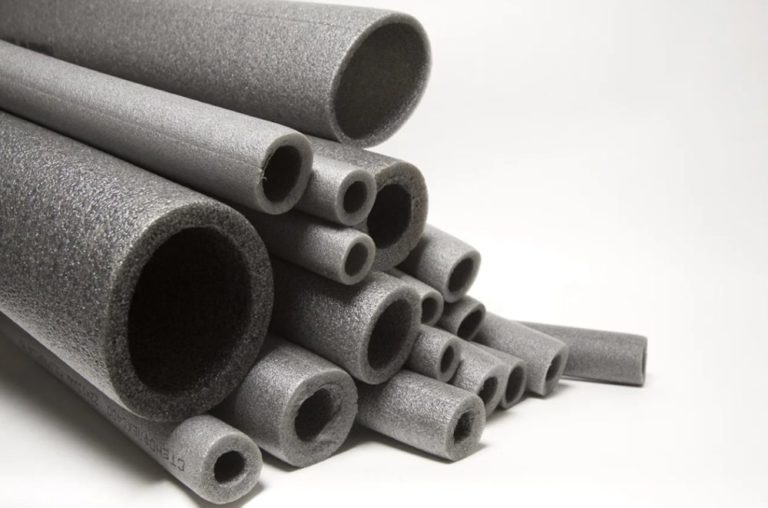
The insulation's structure resembles foam rubber, but the original material is polyethylene. After foaming, large air cells form, acting as a thermal barrier.
Non-crosslinked polyethylene foam according to European standards It is prohibited to use it for insulation of indoor ventilationThe use of cross-linked polyethylene insulation is permitted.
The rolled material is available with or without a foil coating. Foamed polyethylene is used to wrap sections of ventilation pipes in a circle, lengthwise, or in overlapping turns. The thermal conductivity coefficient varies from 0.031 to 0.051 W/m•°C, which depends on the thickness. The recommended operating temperature range is from – 60 to +100OWITH.
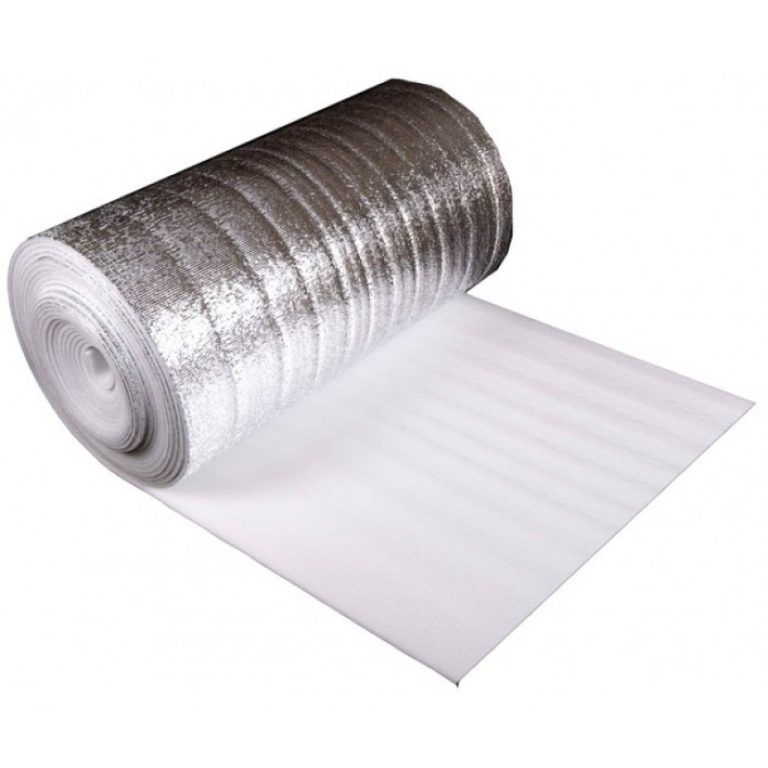
The shaped elements resemble elastic stockings. The casing is placed onto a pipe of the appropriate diameter and secured with tape or clamps. Sometimes, a foil-coated polyethylene roll is wound over the casing to improve thermal insulation.
Advantages and disadvantages:
- The insulation will last for 10 years without deterioration of its thermal insulation properties.
- High moisture resistance. Water absorption rate does not exceed 1%.
- Elastic lightweight material is easy to install.
- High resistance to biological influences.
- Roll insulation and shaped stockings are suitable for repeated use.
- Polyethylene is flammable and belongs to class 2G. After heating above +100OThe melting process begins.
- When burning, it produces smoke from acrid toxic smoke.
- In nature, polyethylene takes 200 years to decompose, causing harm to the environment.
Flexible polyethylene foam is convenient for insulating ventilation ducts in areas with bends, turns, and branches. Working with the material does not cause allergic reactions. It is lint-free, making it safe for the respiratory system.
Spray polyurethane foam
In terms of performance and durability, polyurethane foam outperforms all other types of thermal insulation. It was relegated to fourth place in the ranking due to its high cost and installation complexity. Spraying the solution onto ventilation pipes requires hiring professionals with specialized equipment. The insulation has a G1 flammability rating.
Pros and cons:
- Thermal conductivity is 0.019-0.04 W/m•°C, which depends on the thickness of the sprayed layer.
- Wide range of operating temperatures – from -160 to +150OWITH.
- The service life while maintaining the original characteristics reaches 20 years.
- The foam is easy to apply to complex areas of ventilation units.
- The foam adheres tightly to the pipe walls without seams that create thermal bridges. The insulation is water-resistant and prevents moisture from reaching the duct surface.
- It is impossible to carry out installation independently without experience and equipment.
- High cost.
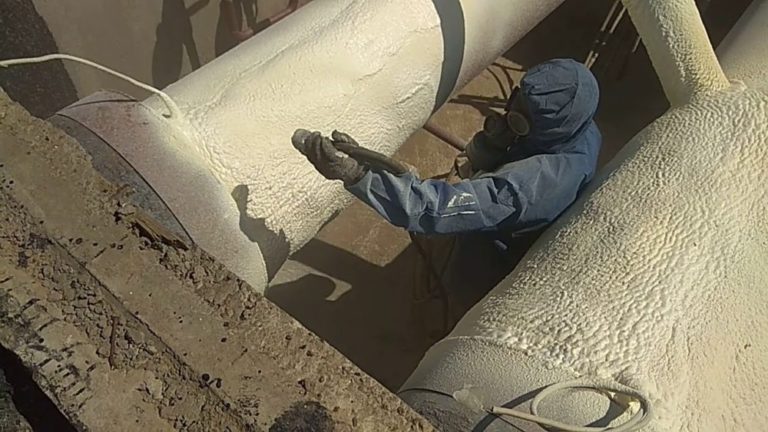
During spraying, foam will splash onto adjacent objects and building components. Areas that are undesirable for contamination will need to be covered. Protective clothing and hand and head protection will be required for this work.
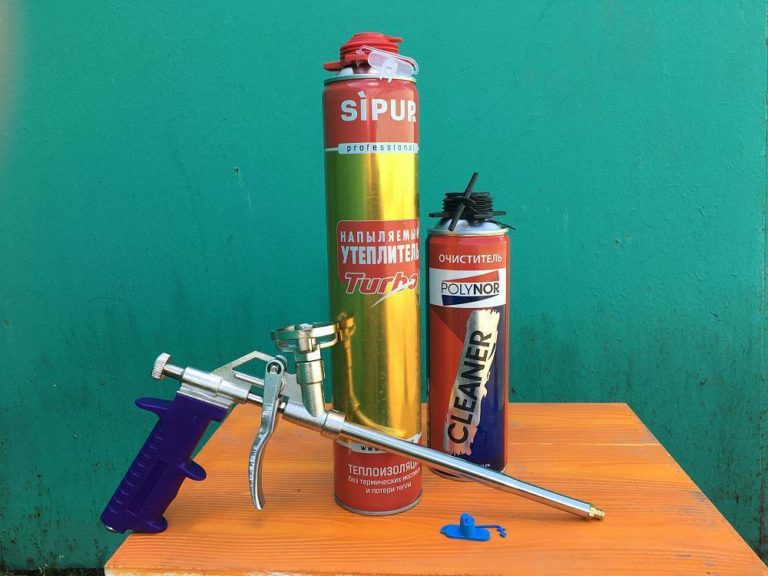
Small sections of pipes are insulated using spray foam, without the use of specialized equipment. Foam is purchased in cans and applied through a gun. This method is convenient but expensive. Due to the small volume of foam produced, multiple cans must be purchased. Gun cleaner is also required.
Thermal insulation installation technology
Supply and exhaust ventilation pipes must be insulated. Insulation is applied to sections of ventilation ducts that pass through cold areas, such as the street, attic, basement, and unheated rooms.
Insulation of pipes by spraying polyurethane foam from a can
- For exhaust ducts routed through the attic to the outside, seal the pipe joints with metal tape. Carefully insulate the area where the duct exits through the roofing sheet. Bend back the edges of the cut vapor barrier and tape it around the pipe.
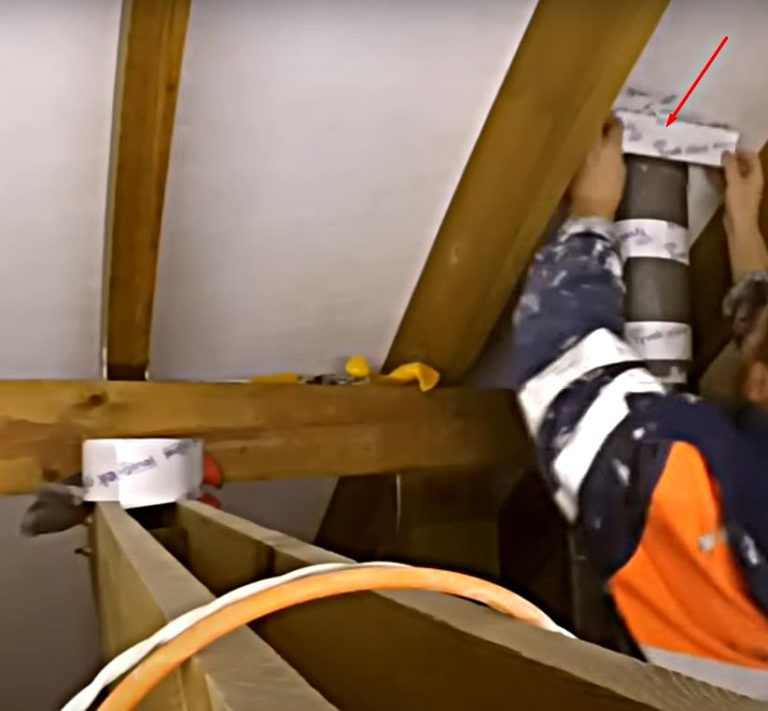
- The foam adheres tightly to the pipe surface. To make the penetration suitable for repair, first insulate a 50-80 cm section of the riser from the junction with the roof vapor barrier with a shaped sleeve made of foamed polyethylene. Cut the sleeve lengthwise with scissors, slide it onto the pipe, and secure it with tape. When the penetration needs to be accessed for repairs, the foamed section over the sleeve can be easily removed from the pipe along with the shaped sleeve.
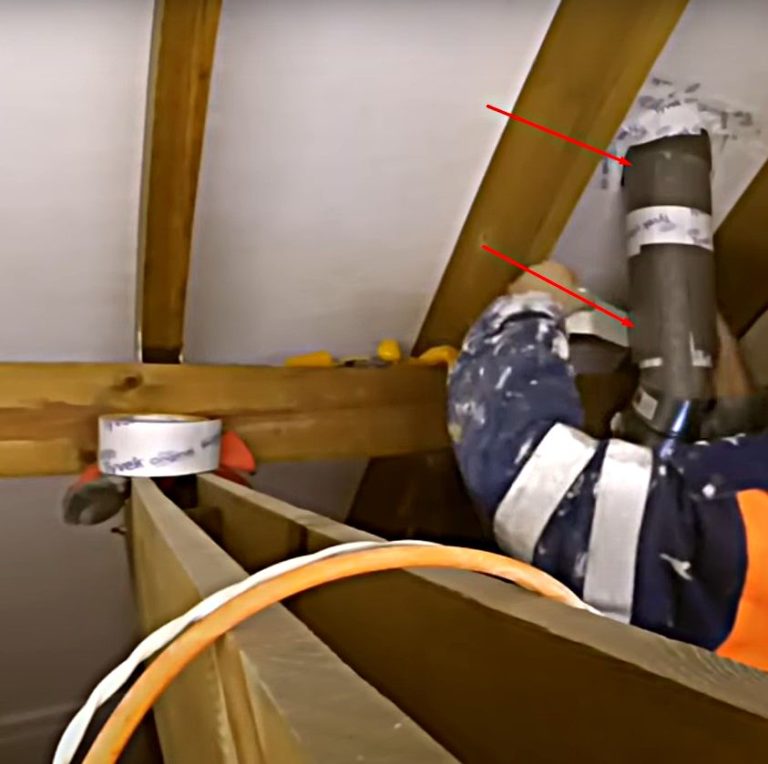
- Screw the foam can onto the gun. Shake the contents thoroughly. Apply a layer of foam of approximately equal thickness from top to bottom around the pipe.
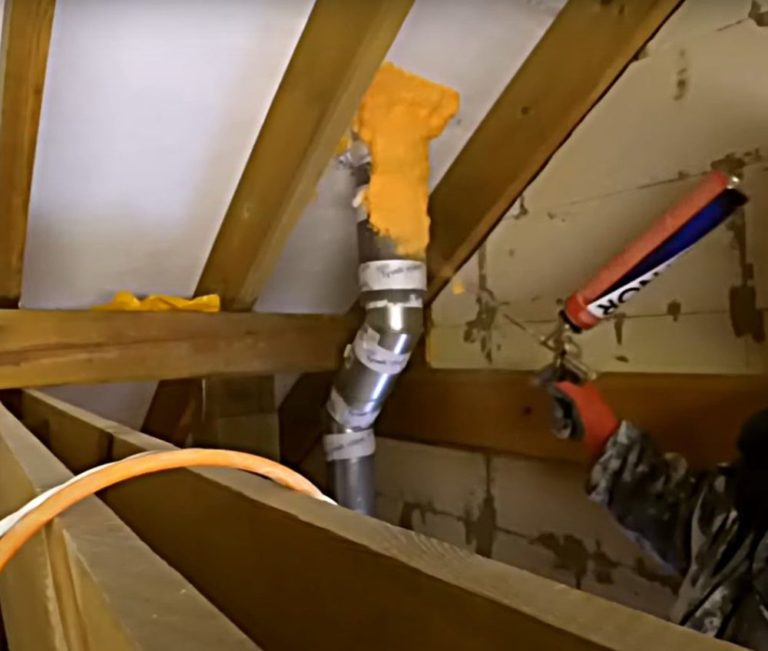
After foaming the riser, allow the manufacturer's recommended time for the foam to expand and harden.
Insulating pipes with rolled materials using mineral wool as an example
- Prepare rolls of mineral wool and additional material for the surface shell. If the ventilation ducts are insulated in a dry attic, you can wrap the main insulation with a vapor barrier film. For ease of installation, cut the mineral wool rolls to a smaller width. The length of the roll should be sufficient to encircle the pipe.
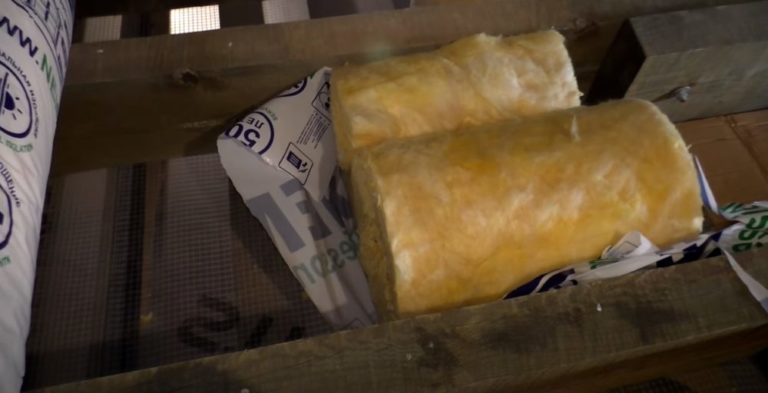
- Wrap the pipe section by section with pieces of mineral wool. Cover the insulation with a vapor barrier film and secure with tape.
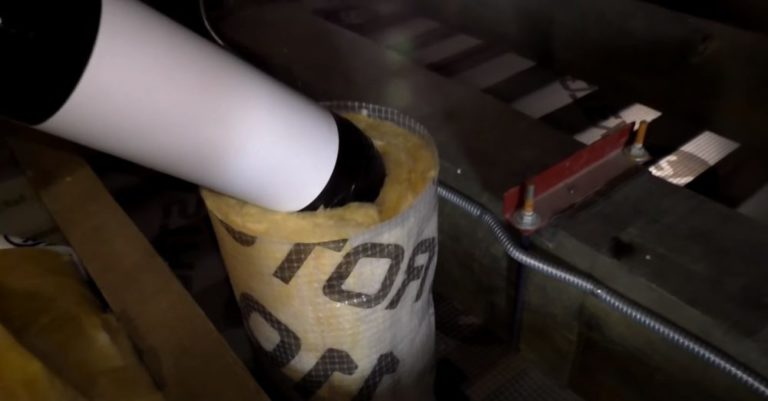
- Place the resulting barrel-shaped pieces of film-wrapped insulation tightly against each other on a flat section of the pipeline. Tape the joints. A gap will form between the insulation pieces where the bends occur. Fill the space between the ends of the barrels with a piece of mineral wool, wrap it with film and tape.
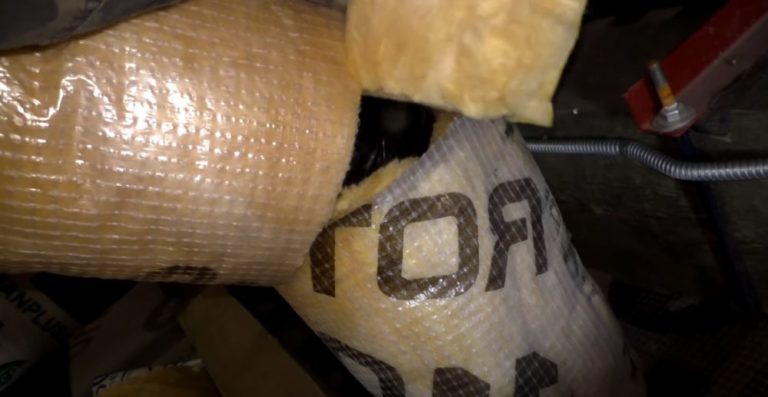
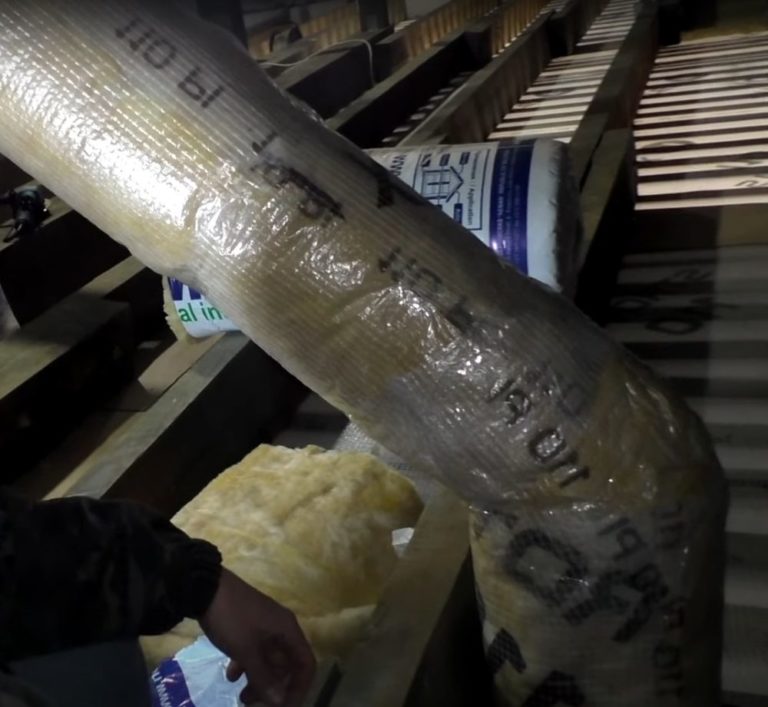
In the attic, the mineral wool insulation and vapor barrier film are not susceptible to damage from harsh environmental factors. Additional protective layers must be installed on the exterior.
In winter, the outside temperature is lower than in the cold attic. For additional insulation, wrap the mineral wool with a foil-faced foam roll. Seal the joints with tape.
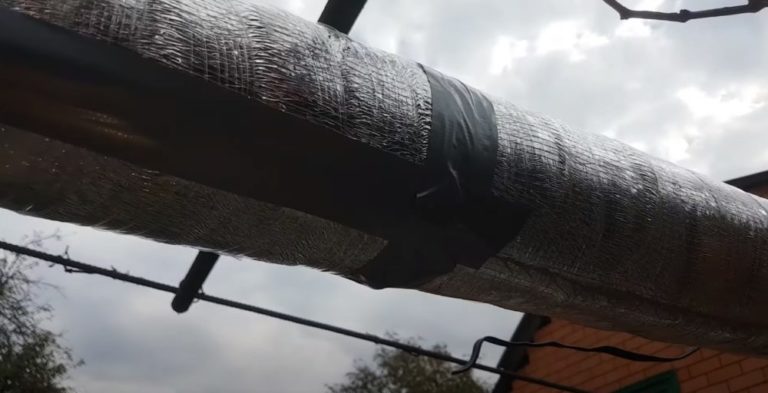
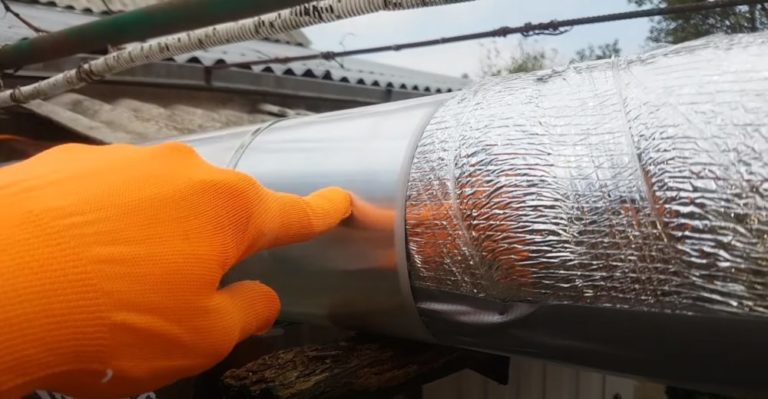
Scotch tape and polyethylene foam are destroyed by ultraviolet rays. Birds peck through soft insulation. Hail and other mechanical impacts can cause holes. For reliable protection, wrap ducts insulated with mineral wool and rolled polyethylene foam with aluminum sheets. Secure the casing with clamps.
Insulation of pipes with shaped shells
- Use a shaped shell made of foam, rock wool, or another type of insulation that matches the pipe diameter. The shaped element consists of two halves connected by a lock. For installation, separate the shell pieces. Treat the interior and the locks with foam adhesive.
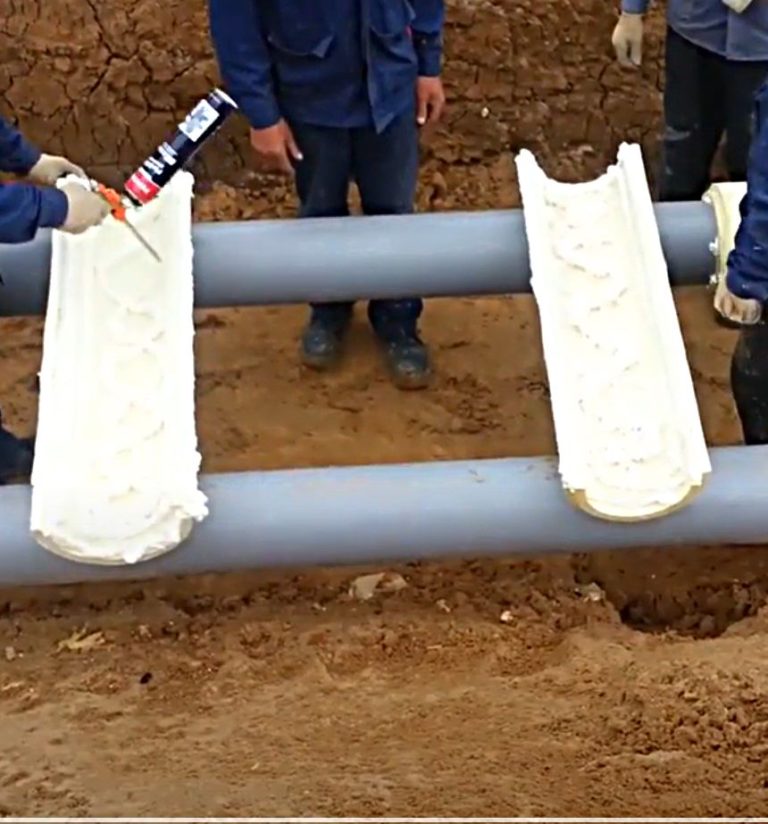
- Glue the two halves of the shell onto the pipe so that the locks are tightly connected.
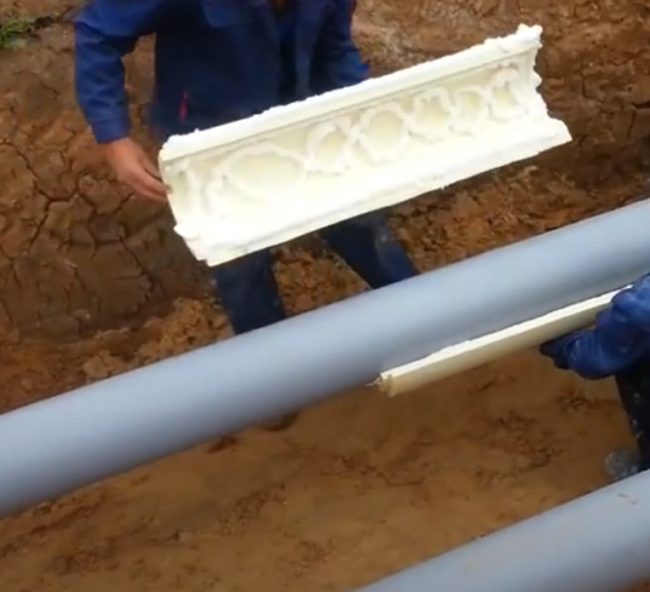
- Continue installing the subsequent shaped elements in a similar sequence. Additionally, apply foam to the ends of the glued-on barrel to ensure a tight seal with the new adjacent shell fragment.
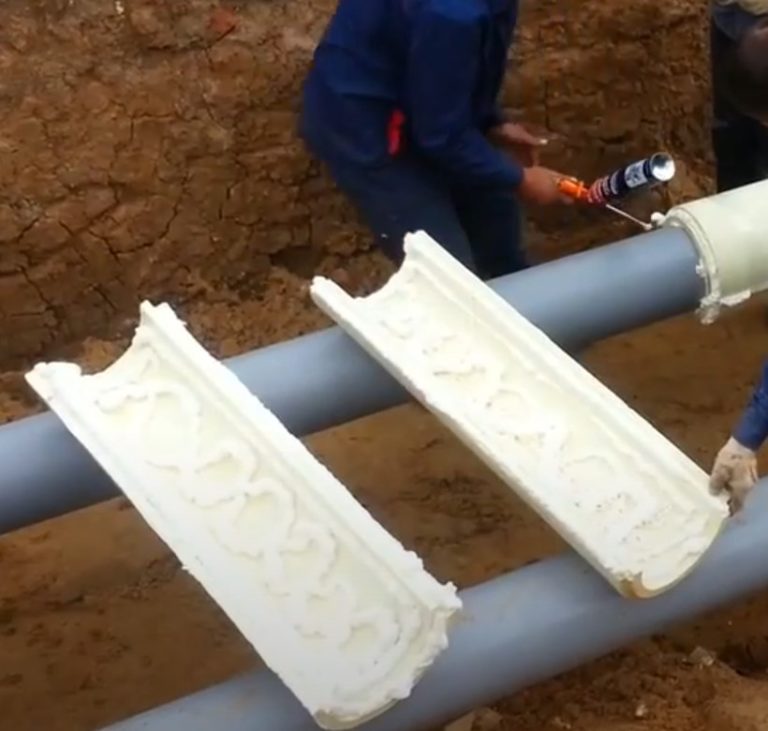
After gluing the shell along the entire length of the pipeline, a foil material selected for the operating conditions of the utility network is attached on top.
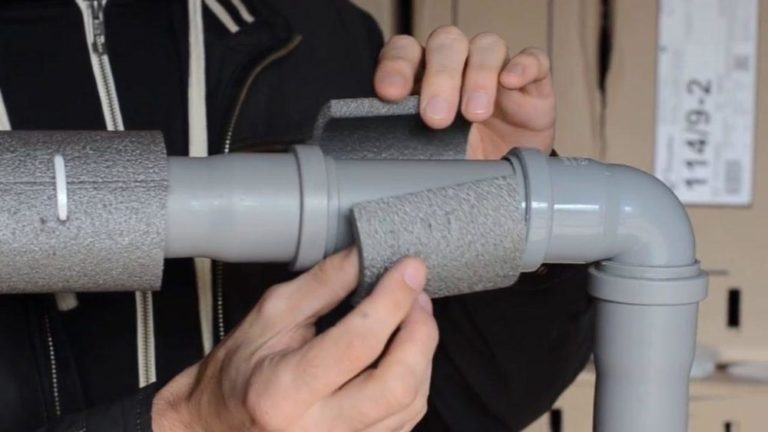
Shaped polyethylene foam is not glued to the air duct. The insulation is produced as an elastic hose. If the ventilation pipe is not connected to the main pipeline, the hose is inserted like a sock. For ease of installation, short sections are used.
The joints are insulated with tape. Once the pipeline is installed, the foam polyethylene hose is cut lengthwise with a knife. The slit in the liner is then placed over the pipe. The joints are sealed with tape. For security, the flexible casing is secured with plastic clamps or staples at the cut.
Answers to frequently asked questions
For wrapping, use roll materials: mineral wool, foamed polyethylene.
When using mineral wool and polyethylene foam, additionally install a protective casing made of aluminum sheets to protect against damage from mechanical impacts and UV rays. The best thermal insulation for outdoor use is a shaped shell made of moisture-resistant materials.
Insulate the hood first. The pipe condenses in cold areas due to the warm air being released.
The roof outlet needs to be insulated to prevent condensation from flowing down the riser into the house and to prevent the formation of an ice plug in the winter.