A clear answer to the question of how industrial premises should be equipped with a supply and exhaust ventilation system is provided by SNiP 41-01-2003. In the updated version SP 60.13330.2020 The standards, recommended types of ventilation systems and equipment for their installation are indicated.
For a detailed explanation of the issue, please contact the site's expert group with a request to be interviewed. We I contacted an engineer. A leading specialist in the design and installation of ventilation systems in industrial and residential buildings, he has 11 years of experience in the housing and utilities sector.
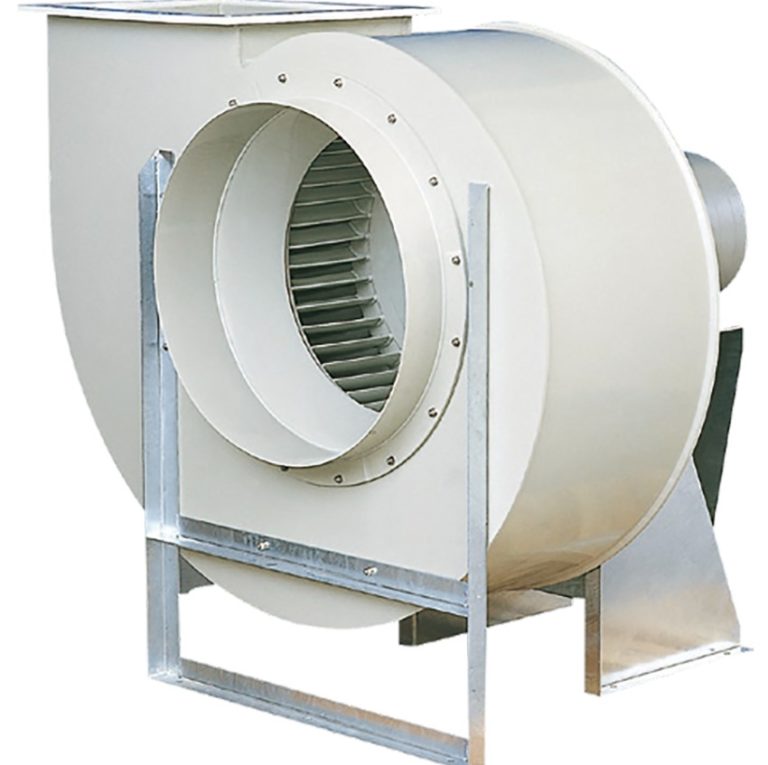
Industrial ventilation is used in factories as supply, exhaust, and combined supply and exhaust systems. To forcefully remove contaminated air, the production area should be equipped with an exhaust hood connected via ducts to a fan-assisted exhaust system (a "snail").
- Industrial ventilation requirements and standards
- Types of ventilation systems for industrial premises
- Types of ventilation
- Application area of supply and exhaust ventilation
- Calculation of supply and exhaust system for production
- Supply and exhaust ventilation: equipment for installation, types
- Types of hoods
- Forced air movement equipment
- Answers to current questions
- Video materials
Industrial ventilation requirements and standards
Question: What are the established ventilation standards and requirements for industrial sectors?
Answer: The SNiP reflects the standards for air conditioning systems, ventilation and heating. According to the regulations, the multiplicity is calculated air exchange in industrial premises - m3/1 hour. The number of people working is taken into account. For one person in a ventilated building, the established air exchange volume is 30 m3.3/1 hour. If the production area is not ventilated, the standard per worker is doubled – 60 m3/1 hour.
Standard requirements vary for production facilities in different industries:
- The temperature in the optics production premises must be maintained at +25OC, humidity 70-80%;
- The temperature in food industry production areas should be maintained at 22-27OC, humidity 60-70%;
- The temperature in painting production areas should be maintained at 22-24OC, humidity 50-70%;
- In production facilities of the paper industry the following must be maintained: temperature 22-24OC, humidity 50-65%.
Temperature and humidity requirements vary due to the specific nature of industrial processes. Materials, raw materials, and equipment can absorb moisture and change their properties when exposed to heat and cold.
Types of ventilation systems for industrial premises
Question: What types of ventilation systems are used in production facilities?
Answer: Ventilation systems are usually grouped according to similar characteristics and divided into 4 types:
Natural ventilation in industrial premises operates on the principle of ventilation. Air masses are moved by thermal and wind pressure. Humans have little influence on the rate of natural air exchange.
Forced ventilation operates through the use of fans. Humans have direct control over the speed and volume of air flow.
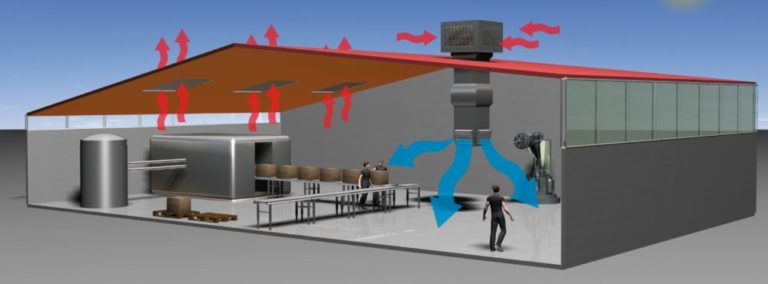
Types of ventilation
Question: What type of ventilation is best for a production facility?
Answer: According to SNiP 41-01-2003, ventilation systems are designed and calculated for each production area. A natural system is suitable for workshops that do not produce hazardous emissions and where the building is located within the site taking into account the wind rose.
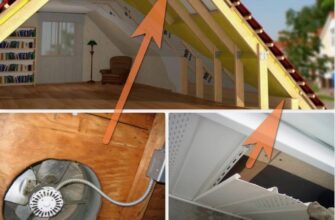
In large-scale production facilities with significant heat generation, where mechanical ventilation is not feasible, a natural ventilation system is installed with aeration. Ventilation is provided through windows and skylights.
Air currents are driven by temperature and wind pressure.


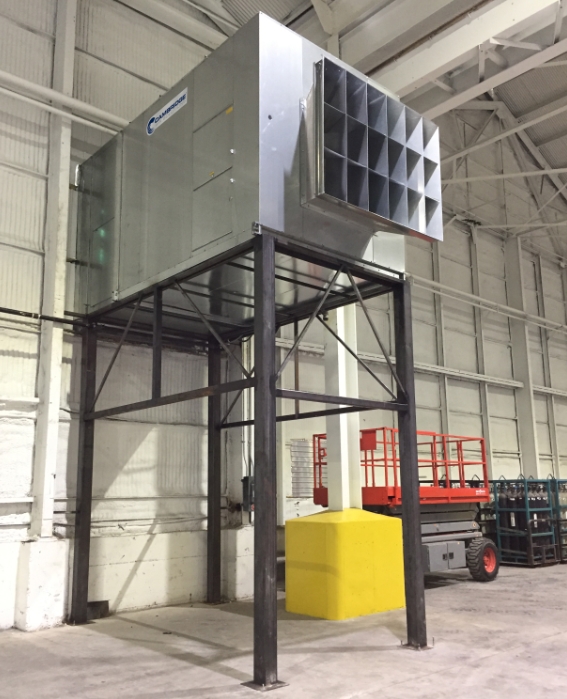
A mechanical system should be installed in all production facilities where it is technically feasible. Depending on the specific industry, either an inlet or an exhaust system is used for air exchange. These systems often operate in tandem.
A single air supply should be installed in a room where large amounts of heat are generated during production without harmful or hazardous emissions. The purpose of the engineering system is to provide workers with clean air.
One exhaust ventilation of industrial premises A hood should be installed where polluted air needs to be removed. Pollutants include odors and dust, but not harmful or hazardous emissions. Hoods are typically installed in warehouses, utility rooms, and other utility spaces.
A point system is installed in a work area where localized removal of contaminated air is required. Examples include a small cafeteria with a range hood over the cooktop, or a repair shop where soldering fumes need to be removed from the work area.
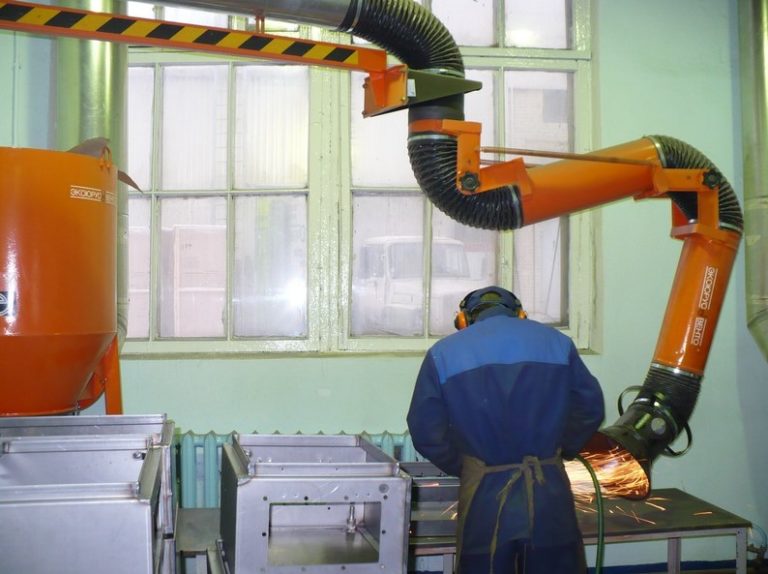
A general exchange system or a combined system with spot ventilation should be installed in large production facilities where air exchange is required throughout the entire premises and locally at each workstation.
Operating (working) ventilation is installed in all industrial facilities. An emergency system (usually an exhaust system) must be installed in industries with hazardous and harmful emissions.
Application area of supply and exhaust ventilation
Question: Where is supply and exhaust ventilation best suited?
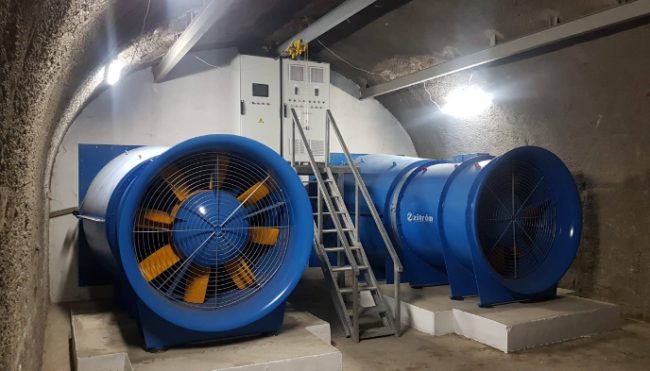
Answer: The supply and exhaust type must be equipped ventilation system in production, Where reliable and active air exchange is required, the combined ventilation process helps isolate the low-pollution workshop from the general area with high levels of harmful and hazardous emissions.
Intake and exhaust vents should be installed at different heights to ensure that moving air currents do not alter their natural trajectory. In hazardous environments, emissions can have a higher specific gravity than air.
They are not directed upward toward the exhaust vent. To collect heavy emissions, receiving devices must be installed in the lower zone.
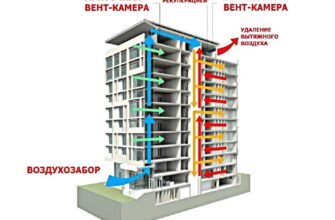
During the fall and winter, the supply and exhaust unit should supply warm air into the room. Heating helps reduce heating costs. The supply and exhaust unit should be equipped with a heat recovery unit, which:
- more than 10% of clean outside air enters the workshop;
- dirty air containing up to 30% of pollutants is removed from the room.
It is prohibited to install a recuperator with recirculation in production facilities with explosive and microbially contaminated emissions.
Calculation of supply and exhaust system for production
Question: How to calculate supply and exhaust ventilation for a production facility?
Answer: The engineer must calculate the air exchange standards individually, taking into account the amount of harmful substances emitted into the atmosphere of the production facility.
The specifics of the industrial sector and its temperature and humidity requirements are taken into account. The number of people working per shift is also taken into account.
For calculation of the ventilation system An engineer uses mathematical formulas and computer programs to evaluate production facilities. They utilize the results of measurements of harmful and hazardous emissions into the atmosphere of the workshop and take into account the area and volume of the premises.
To avoid going into complex calculations, I'll give an example with a simple formula. The required volume of incoming air masses (V) can be calculated by multiplying the number of workers on a shift (N) by the recommended norm for 1 person (m m3/hour).
Formula: V = N x m
In addition to hazardous emissions, production facilities may also release toxic and explosive substances. A different formula should be used for calculations:
V=k x Emax/C1– C2
The coefficient k denotes the uneven distribution of toxic substances inside the premises and has a range of values from 1.1 to 1.4. Under Emax refers to the maximum value of the harmful component (g/hour). C1 – concentration of toxin in the air (g/m3)3), C2 – concentration of toxin in the influx (g/m3).
When moisture vapors pose a hazard to the production process, the formula V=W is applicable for calculations.max/ρ x (X1– X2). Under Wmax refers to the emitted steam flow (g/h). The ρ value denotes the air density (kg/m3)3). X1– X2 – steam concentration in the outflow and inflow, respectively (g/kg).
Excess heat can also be detrimental to the production process. The following formula is suitable for calculations: V = 3.6 x Qmax/p x cp x (t1– t2). Under Qmax the total value of heat inflows (W) is implied. t1and t2 – inflow and outflow temperatures, respectively (K).
The air density p is taken as average – 1.2 kg/m33The specific heat capacity of air cp equals 1005 J/(kg x K).
If a production facility is contaminated with multiple harmful or hazardous substances, the calculation must be performed for each emission. The volume of incoming fresh air is determined relative to the sum of the results obtained for the contaminated exhaust air from the room.
Supply and exhaust ventilation: equipment for installation, types
Question: What types of supply and exhaust ventilation exist, and what equipment is used to install them?
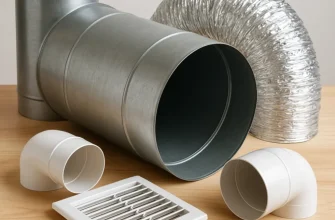
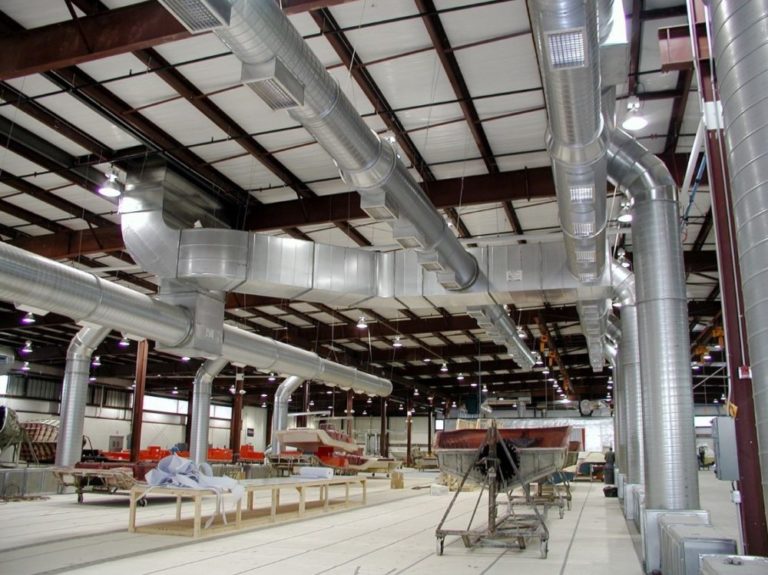
Answer: Based on their design, supply and exhaust ventilation systems for industrial premises are classified as ducted or conventional. Ducted ventilation is the most common type.
The production facility is equipped with round or rectangular air ducts. If the contaminated air contains explosive impurities, the system is equipped with a duct with an ejector unit or a fan.
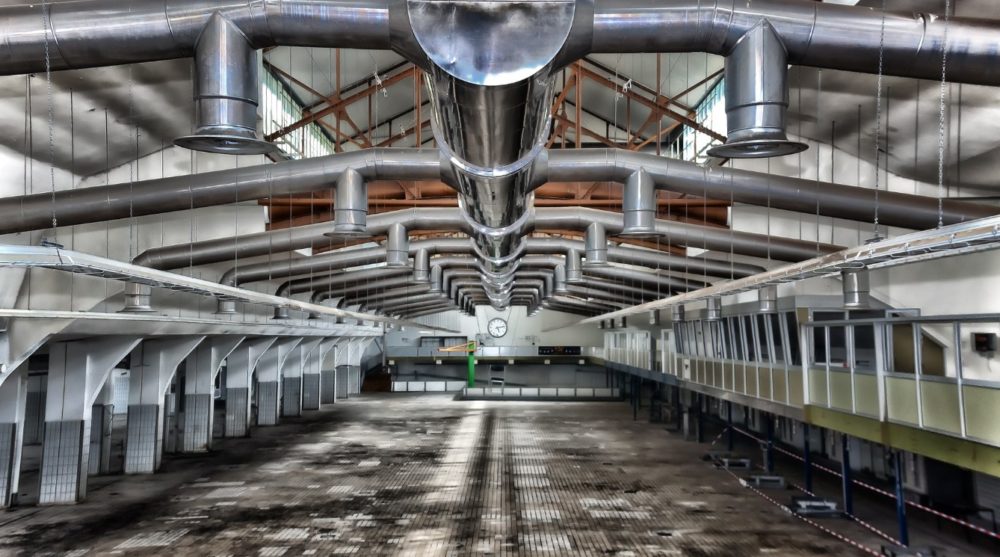
Conventional engineering systems do not have ducts. Equipment for forced air movement is installed in the building's wall or ceiling.
Installing a recuperator allows you to warm and humidify air masses, bringing them to the required temperature and humidity levels. The operating principle is as follows:
The supply and exhaust engineering system can be open or closed. First type The ventilation system consists of an independent supply and exhaust system. Second type – these are systems with a recuperator that can reuse indoor air from the room for recirculation.
Types of hoods
Question: What types of hoods are there?
Answer: The supply and exhaust system must be equipped with a hood. Depending on the required airflow method, the equipment is installed with or without a fan. Hoods are classified by design:
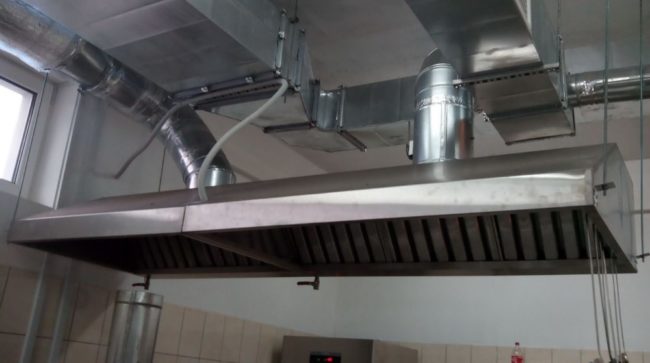
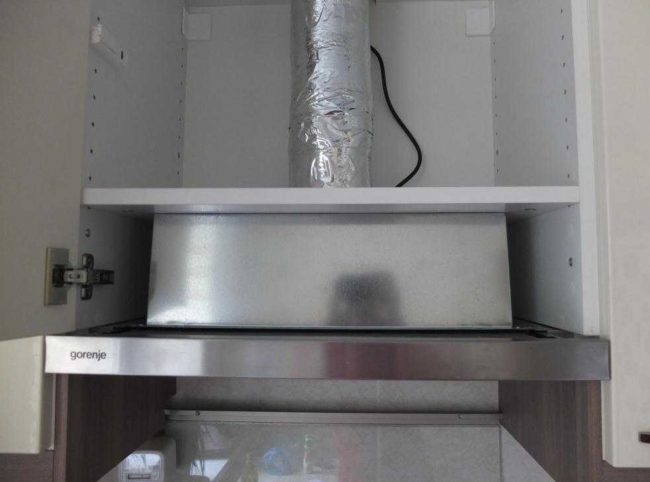
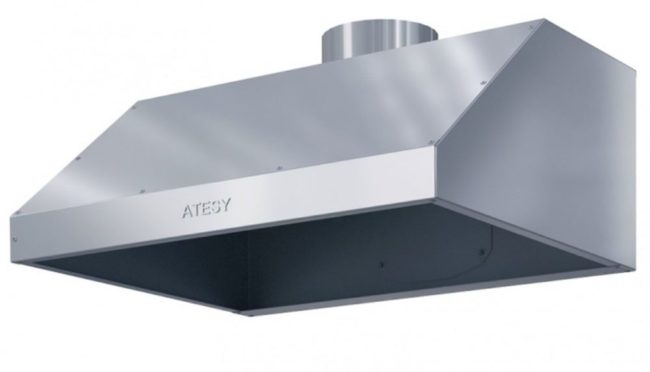
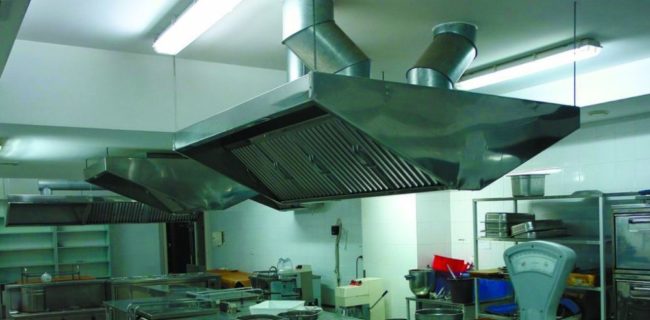
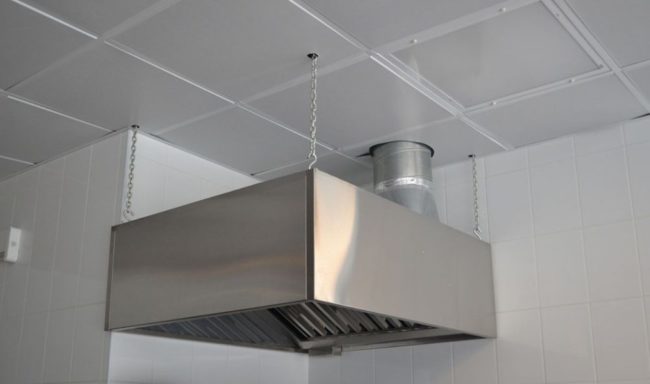
A production facility can be equipped with one or more types of hoods. The installation plan is developed taking into account the specifics of the industry.
Forced air movement equipment
Question: What equipment is used for forced air exchange?
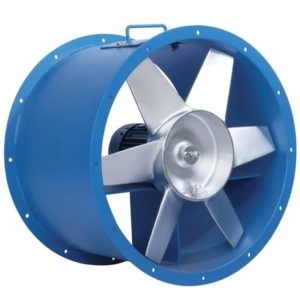
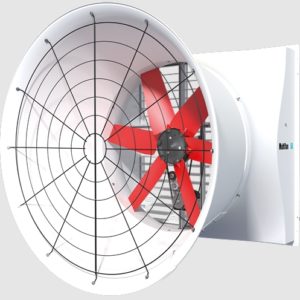
Answer: Forced type supply and exhaust ventilation of industrial premises The unit must be equipped with mechanical components. The exhaust hoods are connected to a "volute," where an exhaust fan is installed inside the housing. Depending on the volume of air being pumped, the impeller diameter ranges from 25 to 150 cm.
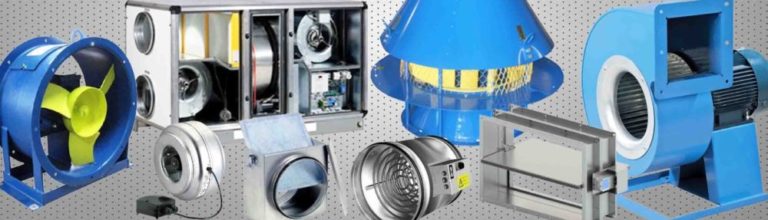
Classification of "snails":
The snail impeller is manufactured taking into account the hazardous environment in which the equipment is intended to be operated.
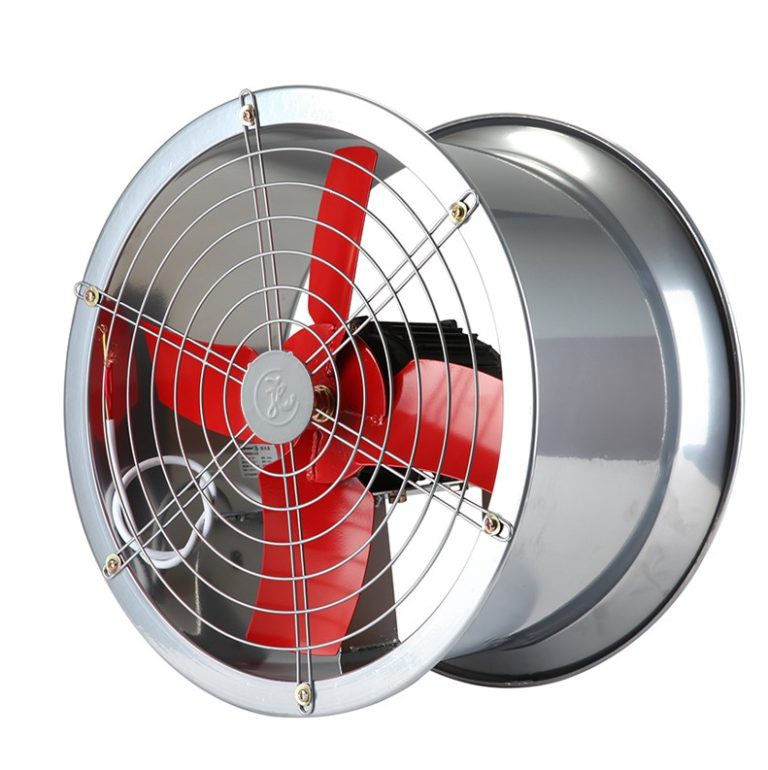
Mechanical ventilation must be equipped with a fan. Depending on the design, the equipment can be:
- wall-mounted with connection to air ducts for cleaning and changing the temperature of the air flow;
- window for removing dirty air through the window without connecting to air ducts;
- axial for removing smoke and dust through an opening in the wall;
- floor-standing, movable around the workshop area;
- centrifugal for removing smoke from hot shops.
Based on operating conditions, the following classification of fans is adopted:
- standard – pump air with a temperature of up to +80OWITH;
- corrosion resistant – suitable for use in humid environments;
- heat-resistant – pumps air at temperatures above +80OWITH;
- explosion-proof – must be installed in workshops with emissions of flammable gases, vapors, and flammable particles;
- Dust removal – cleaning the pumped air from mechanical contaminants.
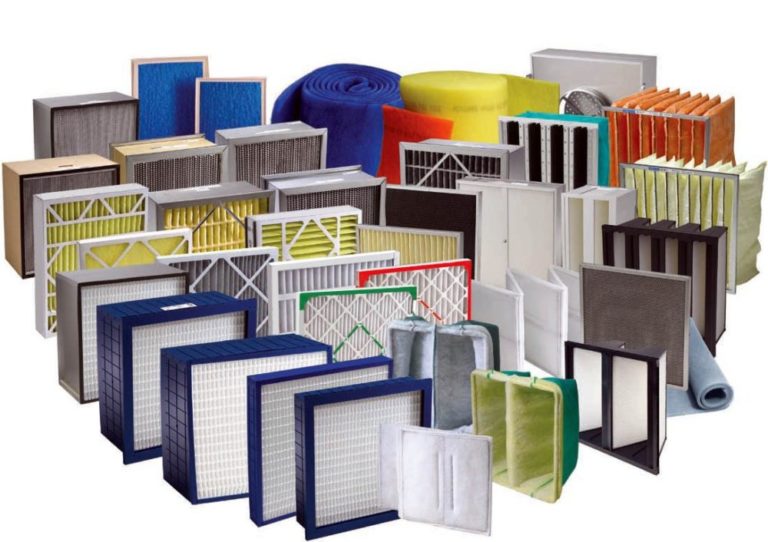
To purify airflow, ventilation systems must be equipped with filters. Depending on their design, filters can be classified as: those that absorb harmful impurities, porous filters, or fabric filters that trap solid particles.
Answers to current questions
Ventilation of the space leads to the creation of a safe environment for working personnel and maintaining a high level of the production process.
Class A cleanrooms must be equipped with separate ventilation systems. These include food service areas, laboratories, operating rooms, and other sterile facilities.
An emergency exhaust system must be installed in any workshop where hazardous emissions, which are lighter than air, are possible. Switching to the emergency system is automatic.
According to SNiP, the air exchange rate is established for each type of production. For example, in rooms with gas-powered equipment, the air exchange rate is three times per hour.