Hydronic underfloor heating is a modern heating system. The comfort of your apartment depends on its efficiency.
Our article provides information on underfloor heating systems and current temperature standards for residential spaces. You'll also learn the operating temperature of hydronic underfloor heating and how to regulate the coolant temperature.
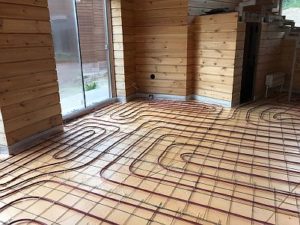
- The structure of a water-heated floor
- Is there a temperature standard or not?
- Temperature of the coolant for underfloor heating
- Maximum temperature of water heated floors
- Optimum coolant temperature depending on the coating
- How to regulate the temperature of a water-heated floor?
- Weather-dependent automation
- Thermostats
- Changing the serving temperature
- Using a thermal head
- Setting the pump speed
- Floor switching frequency
- What temperature can a warm water floor reach?
- What temperature should be set on the boiler for optimal heating of the coolant?
- Recommendations
The structure of a water-heated floor
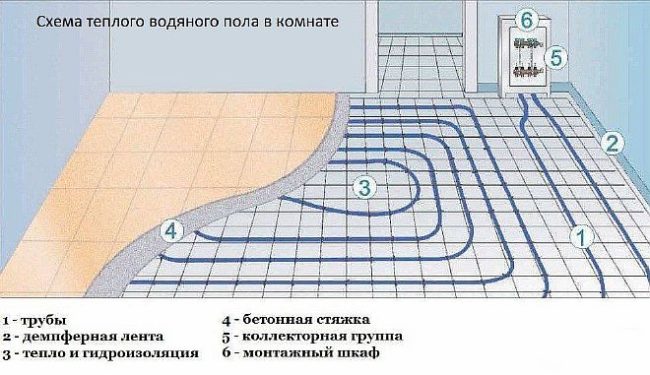
A warm water floor is a multi-layered “pie” that includes:
- base;
- warm and waterproof material;
- heating element (pipeline) - the coolant circulates through it;
- concrete screed;
- floor covering.
In addition, a collector group is required, which is responsible for distributing the coolant through the circuits and for regulating the temperature.
Is there a temperature standard or not?
Regulatory documents have been developed that establish standard temperature values for various rooms.
| Living rooms | 20° - 22° | 18° - 24° |
| Kitchen, bathroom | 19° - 21° | 18° - 26° |
| Bath | 24° - 26° | 18° - 26° |
| Corridor | 18° - 20° | 16° - 22° |
According to SNiP (Building Code of Practice), the maximum and minimum heating temperatures are between 26 and 36°C. The temperature level should be determined based on the type of room.

Temperature of the coolant for underfloor heating
A comfortable temperature for people is when the floor is heated to +22 - 25 degrees, and in the head area, the readings are around +20. In hydrofloors, the distribution and transfer of heat energy depends on the diameter and material of the pipeline, the installation pitch, the finishing material, and how flow meters are set up correctly.
When choosing the coolant temperature, you need to take into account
- type and thickness of screed;
- terms of Use;
- is there an additional heating system;
- type of finishing;
- desired heating level.
In a water-heated floor system, the standard temperature of the supplied coolant is +45 - 50 degrees, the limit is +60.
These values allow the entire area to be heated to the required level without exceeding the optimal values. This means that overheating and damage to the finishing material are prevented.
The acceptable difference between the water inlet and outlet temperatures ranges from 5 to 15°C. A temperature difference of less than 5°C is unacceptable, as this will increase the circuit's heating fluid consumption, reducing pressure. A difference of more than 15°C is also not recommended. This may result in different levels of floor heating in different areas.
The most optimal differences are within the range of 10 - 12 °C.
Maximum temperature of water heated floors
The permissible temperature level for consumers is defined by SNiP 41-01-2003. According to it, the maximum temperature of water-heated floors in rooms where people spend long periods of time should not exceed 26 degrees Celsius. In rooms with high humidity, this temperature should reach 31 degrees Celsius. In kindergartens and schools, the maximum standard is 24 degrees Celsius.
If the maximum water temperature in the heated floor is +55°C, this will ensure that the surface is heated to +28°C, which is considered a comfortable heating level.
Specifics floor finishing material This also affects the heating level. Typically, all finishes can withstand temperatures of 27°C, but when varnishing, the limit is 21°C, as this will damage the varnish. Furthermore, if there is carpet in the room, an additional 5°C should be added.
It is not recommended to exceed these standards, as this may lead to:
- unpleasant tactile sensations;
- overconsumption of thermal resources.
Optimum coolant temperature depending on the coating
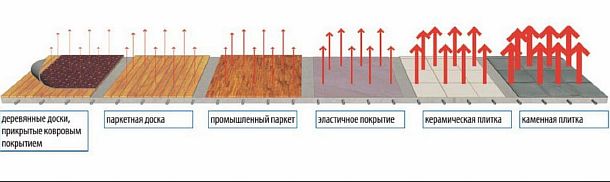
A hydronic heating system is most often installed in a concrete screed, which has a high heat transfer rate. If the screed is thick, the floor surface will not heat up as well. Furthermore, different flooring materials have different thermal conductivities.
The optimal temperature for underfloor heating, when installing laminate or parquet flooring, heated by hydronic heating, is considered to be +28°C. Exceeding this temperature can cause deformation of the material.
If the hydrofloor is located under tiles, the acceptable temperature is +33°C. When laying carpet, the maximum heating medium temperature is +27°C. When using linoleum, overheating is not recommended, and the temperature should not exceed +26°C.
In any case, it is necessary to choose a material that is intended for heating systems, otherwise toxic substances may be released.
How to regulate the temperature of a water-heated floor?
To ensure your underfloor heating system operates efficiently and to its full potential, it must be properly adjusted. There are several ways to adjust the temperature of a hydronic heating system.
Weather-dependent automation
The essence of the PZA system is that it changes system settings depending on the outside weather. However, this requires a temperature controller to manage these functions.
Furthermore, the design of the mixing group for such automation is more complex. Therefore, it is easier and cheaper to install room regulators.
Thermostats
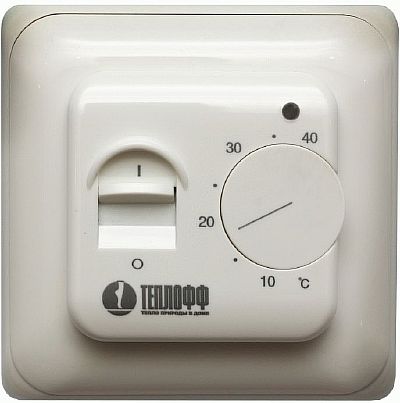
Thermostats — devices for regulating heating systems. There are several types of temperature controllers for underfloor heating, differing in both characteristics and price:
- mechanical - adjustment is only possible manually, the degree of energy savings is low;
- electronic - equipped with a digital display and several control buttons, the settings are more precise;
- Programmable - have a setting button or touch panel, equipped with a variety of functions, which simplifies the adjustment process.
In terms of price, the cheapest models are mechanical, and the most expensive are software-based, but they allow you to save heat and, consequently, money.
Changing the serving temperature
The heating level of hydronic heating systems can be adjusted by controlling the supply temperature of the coolant. This involves changing the parameters on the heat generator (boiler).
This method is suitable, if a separate boiler is installed, which will supply hot liquid to the heating element. This method is simple, but not very effective.
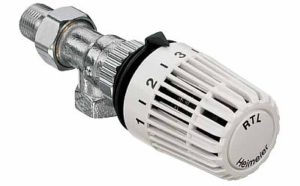
Using a thermal head
The thermostatic head can also be used to set and control the heating temperature of the coolant. This can be achieved in two ways:
- By installing a three-way valve with a thermostatic head in the manifold's supply unit, where the return flow is mixed in, the device operates based on the temperature of the coolant, not the air, while maintaining low fluid consumption.
- By controlling the hot water supply to the pipes, a thermostatic valve is installed on the valve, allowing it to limit the return flow. The return and supply valves are connected by a bypass, through which the flow is regulated.
In both options, the operation of the thermal head depends on the degree of heating of the return line.
Setting the pump speed
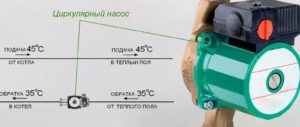
Another way to lower the system temperature is to lower the temperature of the coolant in the pipeline. That is, the greater the volume of water passing through the circuits, the smaller the temperature difference on the floor surface.
Therefore, the pump capacity should be set taking into account the difference in flow between the inlet and outlet. It should be within 3–5 degrees, depending on the piping layout.
To properly adjust the pump, you need to set the expected motor speed. After an hour of pumping, measure the difference between the inlet and outlet. If it's significant, increase the pump speed. The smaller the difference, the more evenly the room will be heated.
Floor switching frequency
The water floor is adjusted for cleanliness using a servo drive.
A servo actuator is an electromechanical device (an electric actuator and a push rod) that opens or closes the return flow line. The rod actuates the valve in the manifold, which opens or closes depending on the thermostat's status. The device is installed on the return line.
What temperature can a warm water floor reach?
As mentioned above, the standard temperature for a hydrofloor is 27°C, with the acceptable limit being 33°C. Any higher temperature will cause discomfort when in contact with the floor, and the room will be too hot. Furthermore, this isn't very healthy, especially for those with varicose veins.
The temperature of the coolant moving through the pipeline should be between 45 and 55 degrees Celsius. Higher heating levels are not recommended, as this can cause deformation of the pipes and their rapid failure.
What temperature should be set on the boiler for optimal heating of the coolant?
A boiler is a device that heats water. Boilers can be gas, electric, or fueled by burning solid fuel.
The temperature regime depends on the season (weather conditions) and the quality of the house's insulation. Therefore, it is recommended to select the boiler settings individually, but based on the established values:
- 40 degrees Celsius is not an economically viable setting. If a gas boiler is used, the coolant may not reach the required temperature in this mode. This will prevent the heating and pump from shutting off, increasing fuel costs. Furthermore, power outages will cause the water heated to this temperature to cool quickly, leaving the room cold.
- 50 degrees Celsius—at this setting, resource consumption is low. However, the pump runs longer, which increases electricity consumption. However, during power outages, the coolant heated to this level retains heat in the floor longer.
- 60 is the most economical mode, but it's a possible heating mode for the heating substation. Heating is better, and the boiler will consume less overall energy.
- 70 and above — this mode is only set for combined heating (radiators and underfloor heating). Since underfloor heating allows for water heating up to +55 degrees, installation of a mixing unit is required.
It is not recommended to set the boiler sensor to a value higher than 70, since this is quite sufficient for heating a home using radiators and underfloor heating.

Recommendations
To avoid problems with water-heated floors caused by improper temperature control, follow these rules:
- use high-quality thermal insulation, at least 5 cm;
- pour the screed 3–5 cm higher than the pipe;
- Make the laying step of pipes no more than 15 cm.
Underfloor heating can create a comfortable atmosphere in your home, as long as you set the temperature correctly. If you're unsure, consider calling a professional.