Installing underfloor heating in homes is becoming increasingly popular in our climate. This system must include a thermostat to control the hydronic underfloor heating, as this heating system is very demanding in terms of heat output.
Regardless of whether underfloor heating is the primary or secondary method of maintaining acceptable temperature conditions in a room, specific requirements are imposed on it.
The point is that it must have a limited maximum temperature. Dust is always present in any room, and, according to the laws of physics, it settles on the floor. It has been established that when the surface of a heated floor heats up, convection currents of heated air are generated.
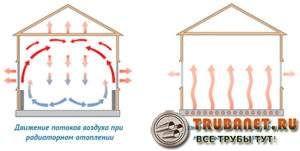
If temperatures exceed 30 degrees Celsius, air currents stir up dust, forcing us to breathe it in. This has a negative impact on the overall health of the human body, leading to the use of thermostats to maintain the desired temperature.
To control the temperature regime, a thermostat for the water floor is connected, which is considered a control device.
- Design and operating principle
- What is heating distribution?
- How does temperature control work?
- Adjustment parameters
- Types of thermostats
- How to adjust the temperature in your home – 3 methods and determining the optimal setting
- Wiring diagram for a thermostat for a water-based underfloor heating system
- How to choose thermostats for hydronic underfloor heating
Design and operating principle
The comfort of indoor living depends largely on the heating system used. The temperature of hydronic underfloor heating is controlled using specialized devices called thermostats.
There are many designs of such systems in use, but in most cases they employ only a few fundamentally different adjustment methods.
Watch the video - setup process
But, before considering the operating principle and design of thermostats, it is necessary to understand the object of regulation.
What is heating distribution?
There are various ways to heat a room with a hydronic floor. One is to use the heat of heated water as a coolant. This heat is transferred through pipes. While steel pipes were previously used for heating, they have now been replaced by modern plastic pipes.
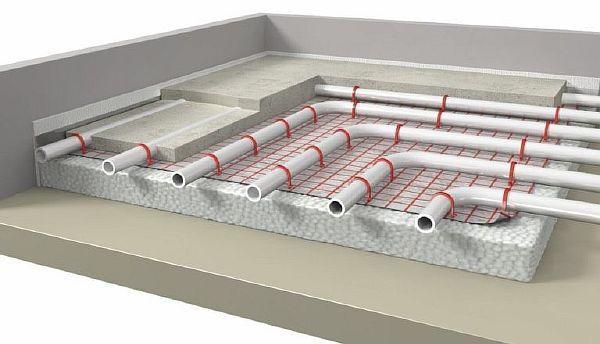 The heating circuit can be located along the walls in the form of radiators, or it can be located under the floor surface, heating it and the air in the room.
Thermostat for a heating radiator: installation, operating principle, characteristics, selection criteria.
Hot water or antifreeze is heated in the boiler and then supplied to the underfloor heating circuit using a circulation pump.
As the coolant passes through its pipes, it releases heat into the enclosed space, heating the surface. The cooled liquid returns to the boiler system. Depending on the return temperature, it is heated or cooled by mixing in colder water from the tank.
And this is where the thermostat is installed, which reacts to the amount of heating of the return flow and gives a command to perform one action or another.
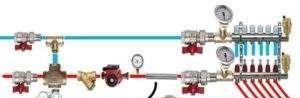
In underfloor heating circuits connected to a separate circuit, a thermostat is installed for each circuit, as they each have their own temperature control. Radiator heating circuits, however, heat up to temperatures almost twice as high as those for underfloor heating.
How does temperature control work?
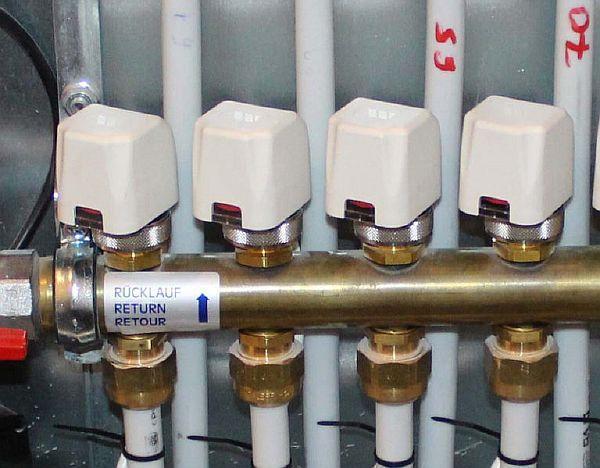 The main heating control elements are servo drives, temperature sensors, and thermostats. This combination of equipment allows for stepless, continuous, automatic temperature control of the hydronic underfloor heating system. This occurs as follows:
- If the temperature sensor signals that the temperature is insufficient, the servo drive opens the valve and more hot water enters the heating circuit.
- When the coolant overheats, the valve for mixing in chilled water opens, reducing the degree of heating in the circuit.
- However, manual adjustment is also possible by setting the valve to a specific position. However, this method requires constant visual monitoring, as the factors that determine the heating mode change repeatedly throughout the day. While these devices are relatively inexpensive, they are very inconvenient to operate, as each change in room conditions requires adjustments to the heating system.
Adjustment parameters
Watch the video - Adjusting the power of the temperature sensor unit
- The degree of heating of the floor covering. In this case, the heating sensor is installed in close proximity to it. This type of underfloor heating system is best suited for small rooms and low-power heating circuits used only as auxiliary systems, particularly for underfloor heating.
- Indoor air temperature – this control system uses sensors mounted directly in the thermostat housing. Proper operation of such a device can only be achieved if all insulation requirements for the building being heated are met. Otherwise, efficient heating is difficult to achieve, as significant energy losses are inevitable. A properly constructed home with an extensive heating system and a thermostat can achieve energy savings of up to 30%.
- Combined control systems, in which hydronic underfloor heating temperature sensors are installed both in the heated room and on the mixing unit. Parameters are adjusted to provide the most comfortable temperature in the home. This type of system, with a thermostat, is used in larger spaces. Both sensors, or one of them, can be used for control.
Types of thermostats
Watch the video — an overview of underfloor heating sensors
Various principles and design solutions are used to create these devices. Let's take a look at them.
 A mechanical thermostat for hydronic underfloor heating is the simplest, most reliable, and most durable device. Air temperature is adjusted with a rotary knob, and the temperature scale is printed on the durable plastic housing.
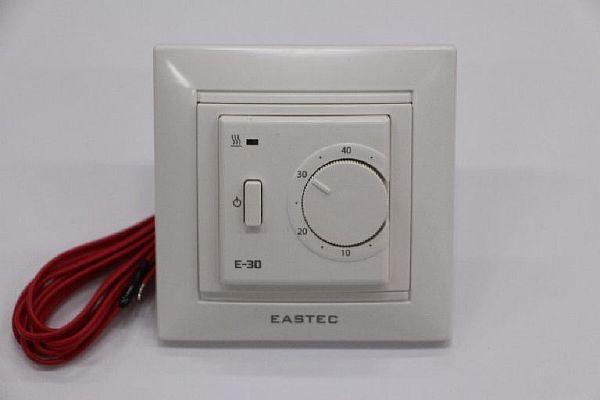
Some manufacturers install an on-off valve on the thermostat. The disadvantage of this device is the need for constant monitoring—it only operates in manual mode.
Some manufacturers allow for serious inaccuracies in the calibration of the temperature scale, so it is necessary to conduct an additional check of the device using an accurate, verified thermometer.
- At the touch remote controller The temperature of the heated floor is controlled and adjusted (learn more) Using the appropriate control panel or remote control. These models provide more precise and reliable heating control, but in some cases, these parameters vary by manufacturer. Price shouldn't be the primary factor when choosing a device; in some cases, this approach isn't justified.
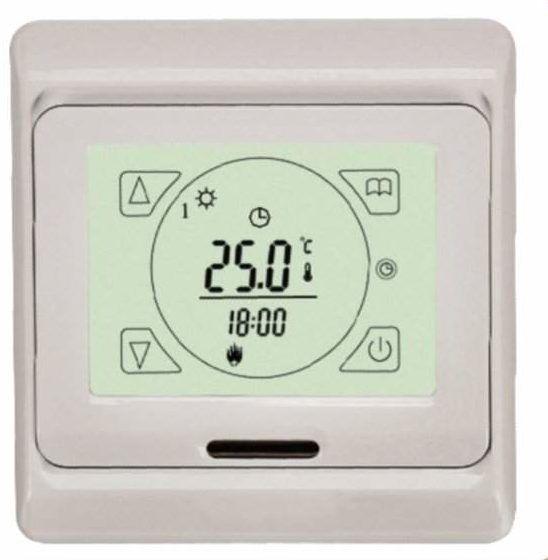
- Electronic thermostats are not much different in functionality from touch-screen devices, but they have a more user-friendly display.
 Programmable thermostats are convenient because they allow you to create your own heating control programs.
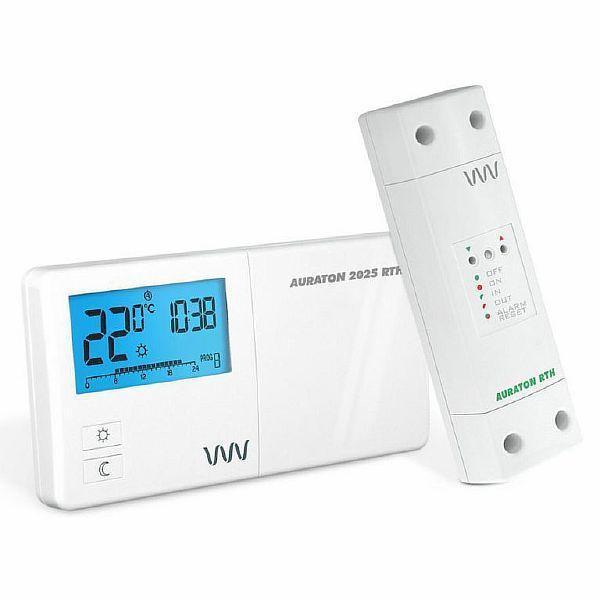
This device can be set for daily and weekly periods, as well as in automatic mode with an economy mode for when no one is home. This allows for energy savings of up to a third.
These devices automatically maintain the temperature in individual circuits of a complex underfloor heating system. Their disadvantages include high cost and complex adjustments. Before commissioning, carefully read the connection, installation, and setup instructions; errors can lead to failure of a complex, expensive system.
- Radio-controlled sensors are considered exclusive due to their high cost. They eliminate the need for low-voltage control circuits, as adjustments are made via radio signals. Each device is equipped with a radio transmitter and receiver that control the servo drives. Such devices are perhaps suitable for luxury homes for regulating the temperature of underfloor heating systems, if the owners do not want to have bundles of control circuit wires.
How to adjust the temperature in your home – 3 methods and determining the optimal setting
The primary goal of temperature control is to create comfortable living conditions while optimally utilizing resources. This can be achieved in several ways.
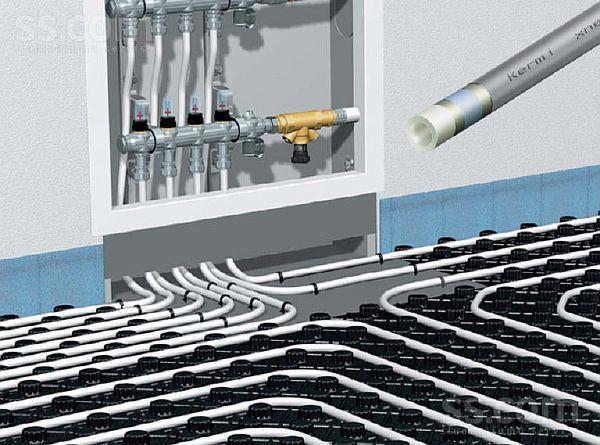 First One of them involves setting the optimal heating level of the coolant in the underfloor heating circuits. The second involves completely shutting off its flow into the underfloor heating circuit.
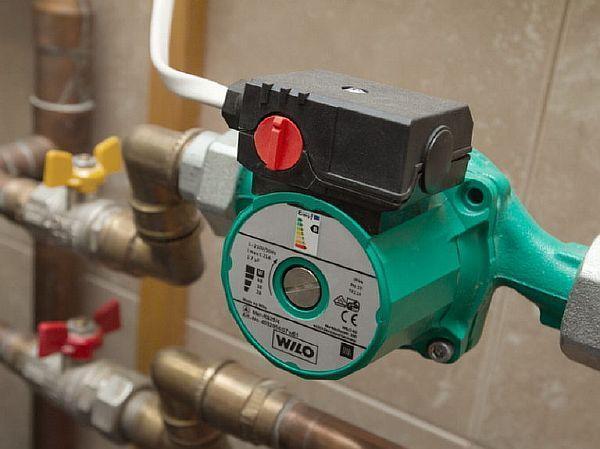
The simplest method is to use pipes with a maximum operating temperature of 90-95 degrees Celsius for the heating circuit. This allows for the installation of a circulation pump with a thermostat and a check valve.
The pump is installed in the return pipe, and the coolant temperature there is no more than 70-80 degrees Celsius. If the coolant temperature reaches critical levels, the thermostat switches off the pump and the heating system switches to standby mode.
As the floor cools, the circulation pump restarts, supplying a new dose of hot water to the circuit. Experience shows that this method is the most effective and reliable for stable operation of underfloor heating.
 The second method Heating level regulation involves the inclusion of a three-way valve or mixing valve in the system. With this approach, chilled water from the return line is mixed with the hot supply through the three-way valve. This means that the maximum temperature of the hot water from the boiler is lowered by the addition of chilled water.
If a three-way valve is used, adjustment can be made manually or via a servo drive. The mixing valve regulates the coolant temperature according to a preset setpoint.
The third way regulation of the heating medium in the home heating system 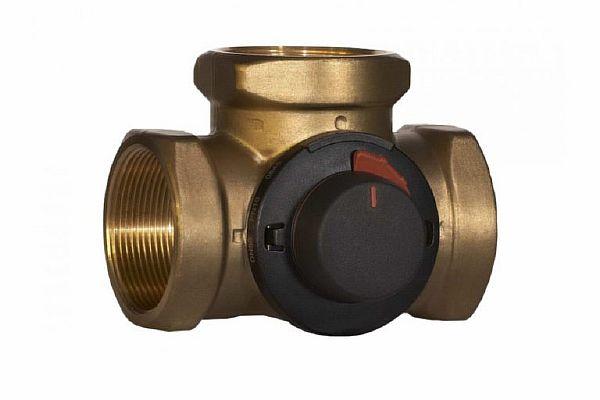 consists of using a mixing unit. Such a device can be made from the following components:
- 3-way valve;
- circulation pump;
- bypass jumper;
- thermometer;
- thermostatic head;
- Maximum temperature control relay.
Considering the composition of the components used, the heating level control unit in the heating system turns out to be quite expensive.
But the temperature change in it occurs very quickly because it is produced by mixing water from the return pipe with the main flow of coolant. This automatically reduces the combustion intensity in the boiler.
In accordance with the established adjustments, the fuel consumption mode is always optimal.  The number of nodes in the unified system can be any, and each will operate autonomously in accordance with the established settings.
This allows you to maintain a higher air temperature, for example, in a child's room, while simultaneously keeping it cooler in the adult bedroom. This unit is especially effective for temperature control in underfloor heating systems.
There's only one requirement for using this control method: the entire heating system must comply with European standards. The hot water temperature from the boiler must not exceed 67 degrees Celsius.
Now let's look at a method for regulating the thermal and hydraulic conditions using a thermostat. It is installed in the room and adjusted by setting the desired temperature for a given point on the device. Heating is controlled by a servo drive on a specific circuit.
Watch the video
Find out How does a water-heated floor work? depending on the type of connection.
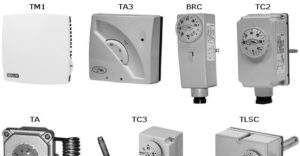
Wiring diagram for a thermostat for a water-based underfloor heating system
Installing underfloor heating in a city apartment building is a nearly impossible task. The low-temperature underfloor heating circuit can only be connected to the return line, often resulting in a critical drop in temperature in the building's heating system.
This is the reason for denial of approval for changes to the heating system design. This issue is much more easily resolved for individual developers who are the sole owners of their own heating system.
Watch the video to learn about the features and differences of thermostats for under-screed circuits.
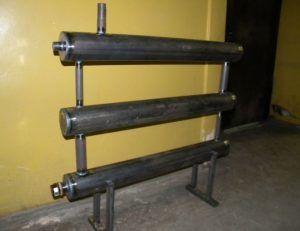
In these systems, the hot coolant from the boiler enters the manifold and is distributed throughout the rooms through separate pipes. After releasing its heat in the radiators, the coolant returns to the manifold, completing the full cycle.
The control equipment in such devices is installed directly on the manifold. It controls servo drives that receive an actuation signal from the thermostats.
Another method of temperature control is using a signal from a sensor located directly in the room where the temperature is being controlled.
This method is certainly more accurate, but it comes with higher costs when installing low-voltage control systems. It requires extensive wall chasing, as these wires will need to be pulled from each heated room.
And some even have two, when a room is equipped with a combined heating system with both radiators and underfloor heating. Installing a thermostat on the manifold eliminates this need, but the end result is the same.
Hydronic underfloor heating piping is quite complex to install, and design and installation errors can be costly. Therefore, it's best to entrust this work to experienced professionals.
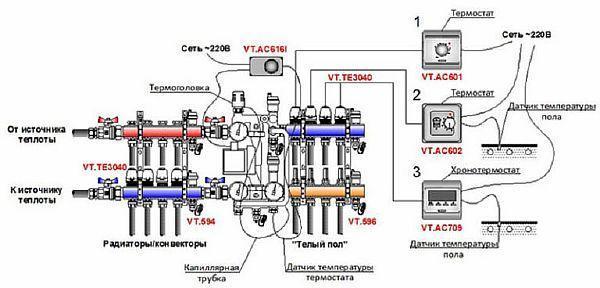
Before that, How to connect a thermostat for a water-heated floor, you need to decide on its location in the heating system.
How to choose thermostats for hydronic underfloor heating
Modern heating systems are controlled using specialized thermostats. When combined with a remote temperature meter, this device monitors not only the floor surface temperature but also the air temperature within the room.
After all, all efforts to create a reliable heating system are aimed at creating comfortable living conditions.
Proper use of underfloor heating is virtually impossible without proper control equipment. A thermostat for a hydronic underfloor heating system effectively maintains the temperature within the desired range, allowing for a healthy lifestyle.
There are many models of these devices on the market, which experts have divided into the following categories:
- Devices that help save energy by temporarily shutting off the heating system and underfloor heating when the owners are away.
- Devices with programmable timers allow you to configure a "smart mode" for your heating system based on the state of influencing factors. All adjustments from the timer are transmitted to the thermostat, which sets the temperature.
The choice of thermostat directly depends on the size of the room being heated. For a small room, an inexpensive mechanical device with simple and accessible controls is quite sufficient.
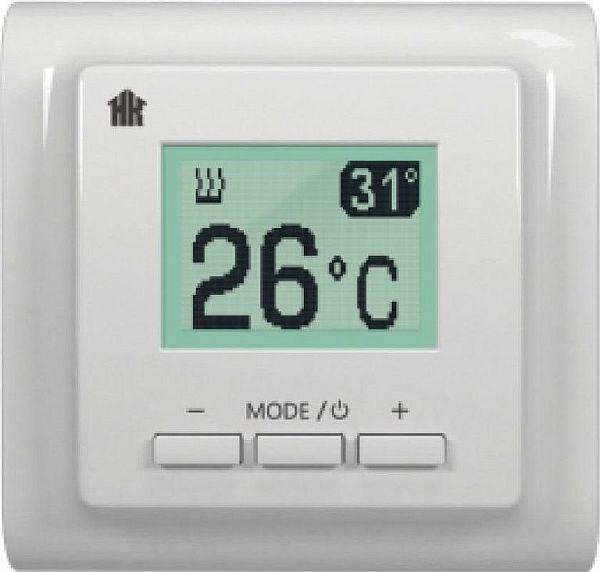
But the most commonly used ones are electronic thermostats with programmable optionsThe adjustment accuracy is 0.5 degrees.
This device's LCD display shows the set surface temperature and its current value. A special symbol also appears when the heating system is operating. There's also a fault indicator if there's a malfunction with the thermostat or the underfloor heating system as a whole.
The heating system is controlled by pressing three keys located on the front panel of the display.
Watch the video on water floor automation
Hydronic heating remains the most popular method of heating homes, including private homes. Therefore, its control systems continue to develop and improve.
This allows for significant energy savings on heating. The thermostat sensor in an underfloor heating system should be installed and connected with the power off.
The adjustment parameters are not described very clearly.