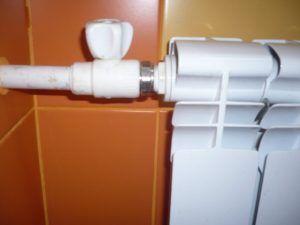
 Thanks to modern technology, it has become possible to use materials to create a heating system that we had no idea about in the recent past.
Today, it's possible to install heating systems using polypropylene pipes in a private home yourself, as professional skills are not required.
Almost any DIYer can solve this problem. This article provides instructions with video presentations to illustrate the process.
If you are interested in detailed step-by-step instructions - To learn how to properly solder polypropylene pipes, see this article..
Advantages of polypropylene products in heating systems
- Very easy installationYou can install such a network yourself, but for steel analogs, you need to hire a professional welder.
- Polypropylene products are not subject to corrosion, which significantly increases the service life of the network.
- The blanks do not form deposits inside and do not become clogged as do steel pipe-rolled counterparts.
- Polypropylene products are very flexible, but at the same time they have a high mechanical resistance index, they function at high temperatures and pressures.
- The liquid in such a line circulates better, and this increases the heat transfer of the network.
- The costs of such a network are significantly lower when compared to other materials.
All these characteristics have led to the fact that these pipe-rolling materials are used more and more often.
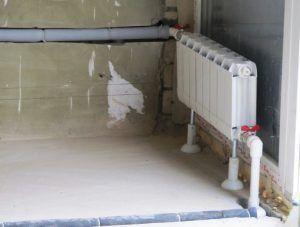
How to choose pipes for installing a heating system
When selecting pipe rolling materials, it is necessary to compare the operating parameters future pipeline with technical parameters, because this will determine what polypropylene pipes we will purchase.
For installation of hot water supply and heating systems, it is necessary to use products marked:
- PN 20
- PN 25.
These materials operate in networks with temperatures of up to 90 degrees Celsius and withstand temperature fluctuations of up to 100 degrees Celsius. These products can also be used in pipelines with pressures of 20 and 25 atm.
We offer Read the article on how to install heating in your home yourself.
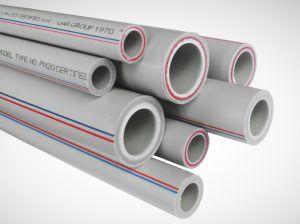
IMPORTANT! Reinforced PN 25 pipes are considered the best option for heating mains in private homes. The structural capabilities of these rolled pipes make them more durable and allow them to withstand high temperatures without deformation.
Rules for choosing polypropylene options for heating:
- The main indicator is the appearance of the blanks.
- High-quality blanks are distinguished by their even round shape.
- The material used for production must be homogeneous.
- All products must contain markings.
How to choose fittings
To avoid soldering PP pipes, fittings are used to connect individual sections. No heating system in a private home can function without these additional components. Fittings are typically categorized by diameter and shape.
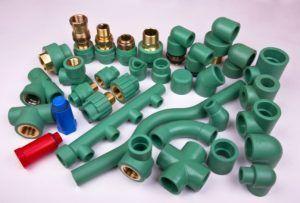
The following fittings are used to install a polypropylene pipeline:
- Couplings;
- Adapters;
- Corners;
- Tees;
- Compensators.
Video: Selecting Pipe Rolling for Installation
couplingThis is the simplest type, which is used for installing pipes of the same diameter.
AdapterThese are also simple devices that have different diameters at the ends.
CornerIt is used for installation in areas where the pipeline contains a bend. This device allows you to create a bend in the pipeline without deforming it. The elbows are equipped with external metal threads and allow for connection to bathroom faucets and other plumbing fixtures.
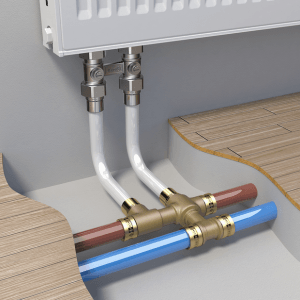
TeeThese fittings allow for the installation of multiple components simultaneously. Plastic connectors of this type can be used to connect dissimilar pipelines.
IMPORTANT! For the main line running around the facility, bypasses are installed. These prevent the workpieces from bending.
The cutting method does not always allow achieving high joint strength; in such situations, a "American"This is a special type of fitting that has metal threads on one end and a polypropylene base on the reverse side. This allows for connecting metal and plastic.
Video: DIY installation of plastic heating
[sociallocker]
When purchasing fittings, it's recommended to pay special attention to their diameter; it should precisely match the diameter of the pipes. This diameter is indicated on the markings.
Experts recommend purchasing fittings from the same manufacturer as the pipes; only then will the highest quality connection be achieved.
Drafting a project
Anyone can install heating systems in a private home using polypropylene pipes themselves, but only a specialist can properly design such a network.
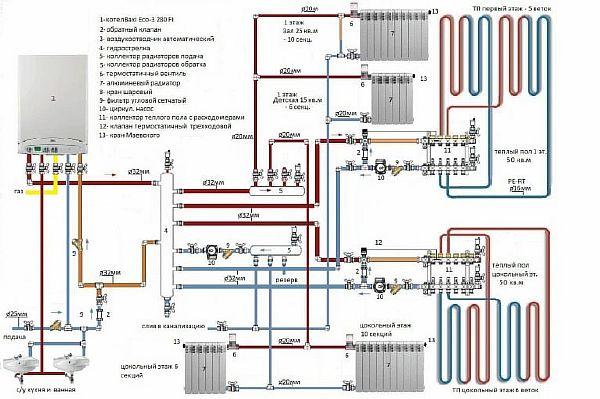
A heating system's performance is affected by a large number of factors. If they're not taken into account, the pipeline's efficiency will be futile. Consider the following:
- Pipe diameters. All heating systems are installed using pipes of varying diameters, ensuring adequate conditions for proper coolant circulation.
- Maintaining slope angles. This is crucial for gravity-fed networks and is also significant for forced-circulation systems.
- The brand of blanks used. Only reinforced versions are recommended for installation.
- The number and location of heating radiators affects the temperature in the house.
- Design features. Depending on these, bottom- or top-feed options are used.
After inspecting a private home, the contractor draws up a project that includes all the information about the materials used:
- main line diameters;
- tilt angles;
- places and methods of fastening and installing heating devices;
- boiler piping diagram.
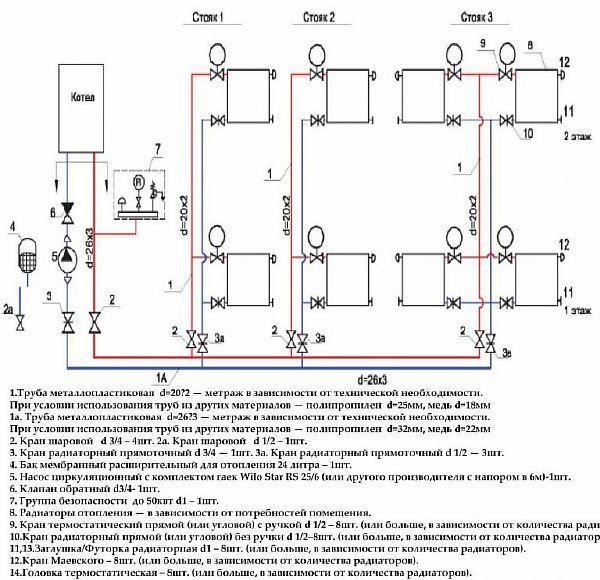
Based on such a project, an estimate is made for heating using polypropylene pipes.
How to properly solder polypropylene
To clearly see how to solder correctly, watch the video on our website. Polypropylene pipes should be soldered using a polypropylene soldering machine.
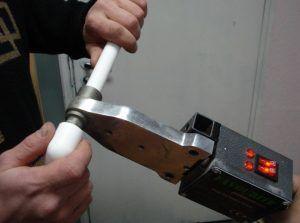
The components to be soldered are heated to 260°C, creating a permanent joint with a uniform structure. The atoms of the components pass into each other, resulting in a very strong joint.
Video: how to solder polypropylene
You can watch a video on how to properly solder polypropylene heating pipes yourself. This will simplify the job, and the process itself follows this sequence:
- Plug the soldering device into the power outlet. Work is permitted to begin after the signal indicator goes out for the second time.
- The blanks are cut to the required size using special scissors.
- The edge to be soldered must be stripped of foil. A shaver is used for this; it can be used to chamfer the wire to the desired size. This can also be done with a knife, but this is more difficult.
- The pipe and fitting are placed on the nozzles and held for the required time. The heating time depends on the pipe size. These parameters are included in the soldering iron instructions.
- Next, the parts are joined together. Care must be taken to ensure that there is no distortion, and that the parts are not moved or rotated.
IMPORTANT! Rotary fittings for polypropylene heating pipes in a private home require special attention. Correct placement is crucial. If the angle is incorrectly adjusted, the entire assembly will have to be redone, or the parts will simply have to be discarded.
Video: How to solder polypropylene yourself
Compensators
Polypropylene products tend to expand when exposed to coolant, causing the pipeline to bend. To prevent this, expansion joints are used.
They are made in the form of a loop from a piece of polypropylene blank. These parts are typically installed in areas with long pipeline lengths.
If there's no room to install an expansion joint, leave some space at the bend to allow for linear expansion of the pipes. This will allow the pipeline to expand freely without resting against the wall.
Video
[sociallocker]
Connecting devices
For fast and reliable operation, we recommend using quick-disconnect fittings (US-style union nut fittings). These are attached to the end sections of the pipeline.
Fastening the pipeline to the wall
To prevent deformation, polypropylene pipes must be securely fastened to the wall. The distance between fasteners should be 70 cm.
Radiator mounting
In a private home, DIY radiator mounting is done using special hardware included in the kit. These fasteners are designed for heavy-duty water-filled units. Using homemade fasteners can be unsafe.
Video
You can watch a video showing how to install a heating system using polypropylene pipes yourself. The entire process is described in great detail.
In general, this type of work can be done by anyone, even without much experience. It won't take much time.
Installing a heating system using polypropylene pipes, with a properly designed design and adherence to technical specifications, is quick and easy. This ensures reliable and efficient heating.
Watch the video tutorials on our website, and you won't have any problems with editing!