 Buyers are increasingly choosing polypropylene-based pipes.
These products are in high demand due to their excellent performance characteristics, trouble-free installation, and affordable price.
Manufacturers claim they last at least 50 years. Even minimal skills are enough to carry out a job such as installing a polypropylene water pipeline underground.
- We are dismantling the old water supply system
- Rules for laying pipes in the ground yourself
- Regulatory documents: conditions and requirements for pipeline installation
- Possible problems
- Features of trenchless installation
- What about insulation?
- We install filters
- We work with steel products
- About metal-plastic pipes
- Products with a polypropylene base
- Watch the video
We are dismantling the old water supply system
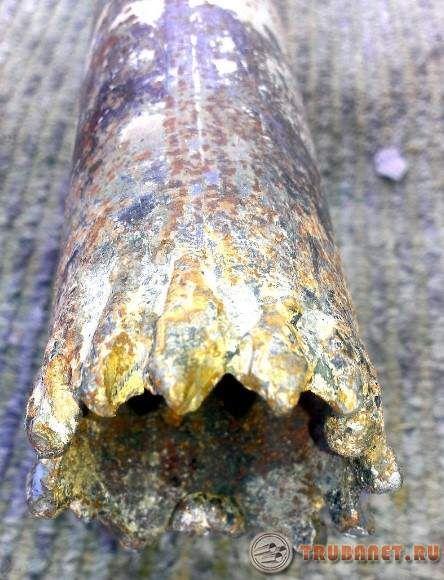 The first step in any plumbing system installation is to remove sections of the old pipeline. Steel components often require complete replacement.
Installation using a grinder is the most convenient and simple solution. After that, we begin laying the polypropylene pipes for the new water supply.
We invite you to read the article How to install a drainage pipe under a driveway yourself
Rules for laying pipes in the ground yourself
GOST states that for laying in the ground, pipes must have diameter not less than 32 millimetersA set of fittings is purchased for convenient and quick installation.
This sequence of actions is performed, When installing polypropylene pipes yourself.
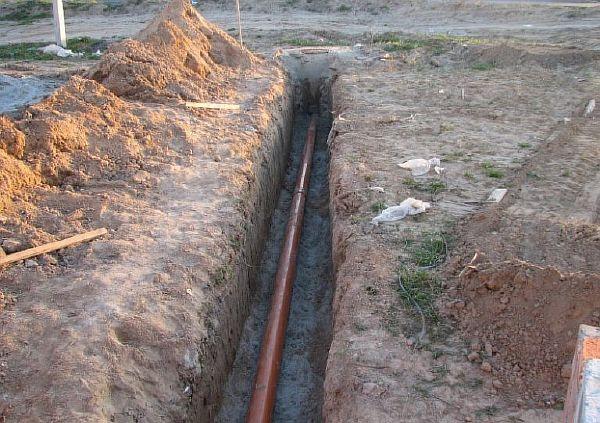
- First, a trench is dug in the ground. Standards specify that the trench depth should exceed the frost line. It's best to use special tables to determine the frost line for your region. 0.5 meters is the optimal width for a joint.

- We compact the trench - the bottom and the walls.
- They create a cushion that provides shock absorption. A layer of, for example, sand or gravel approximately 10-15 cm thick is sufficient.
- It is mandatory to wrap the water supply system with a layer of thermal insulation.Then the products are placed in the ditch and connected using fittings.
- We fill the pipeline with sand. The key is to ensure that the highest point is 5 centimeters above the pipeline itself.
- We cover the area where the water pipes are located with tiles. Broken bricks and tiles will also be indispensable for this purpose.
- We fill the trench with soil. It's easy to see that installing polypropylene pipes in the ground isn't all that difficult.

Regulatory documents: conditions and requirements for pipeline installation
Standards govern the installation of any pipeline, regardless of its material. Many technical aspects are regulated by so-called SNiPs (building codes and regulations).
They ensure safety and allow for high-quality performance of any work. Here are a few mandatory requirements for underground installation.
- The point at which the ground freezes is the point at which it needs to be measured. This level is usually 1.4 meters. In winter, the water inside the water supply system will simply freeze if it is located below this point. This will make the system unusable.
- The installation method and installation details may vary depending on the existing structures and facilities on the site, as well as the presence of highways, utility networks, and roads. It's best to consult with specialized companies if you're unsure where to install the cable.
- Soil and terrain features are important for those laying underground water pipes.
Watch the video
Possible problems
Sometimes the soil structure prevents excavation to the required depth. Or the ground freezes so severely that the water supply is damaged.
But a solution can always be found. For example, by drilling a hole if the soil is too loose. First, a steel pipe is laid in the hole, and then a polypropylene pipeline is installed inside it.
Additional freeze protection involves heating cables installed along the entire length. However, this comes with additional costs.
Trenchless installation methods will finally become an excellent solution for those who are faced with an obstacle that cannot be bypassed.
Features of trenchless installation
Trenchless installation offers owners several advantages at once.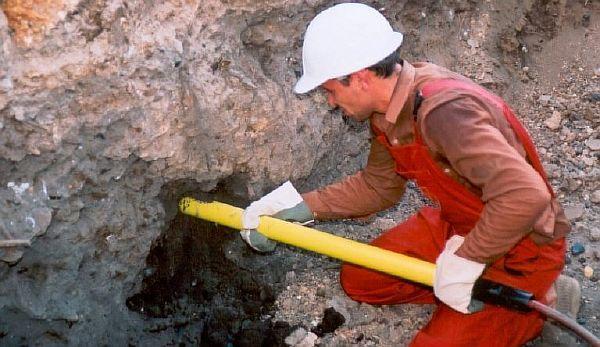
- There is no need to destroy buildings or plants in the way.
- The harm caused to the environment is reduced to a minimum.
- Time and financial costs are reduced.
There is more than one method.
- Rehabilitation. This involves replacing old pipes with new ones. This work is performed in two ways:
- Relining. New polypropylene pipes are installed inside the old ones. It's important to inspect the existing pipeline beforehand. Ensure there are no foreign objects or debris. Matching diameters is also crucial.
- Renovation. A new pipeline is installed and the old one is demolished simultaneously. This is performed in situations where the original diameter is insufficient.
- Puncture. This is useful for diameters over 150 millimeters. The process involves several stages.
- Two pits are dug on both sides of the object under which the communications will be installed.
- A hydraulic jack is placed on one side. It pushes a polypropylene pipe with a steel tip inward.
- The pipe gradually increases in volume, and then polypropylene products are introduced into it.
- Connection to all systems.
But the latter method is only suitable for those who are interested in laying short sections of water pipes.
What about insulation?
The water will not freeze if you choose the right type of pipes and the depth of their installation.But additional protection is often required when installing outdoors.
For this purpose, for example, special casings are used. The existing water supply line is installed inside another pipe with a smaller diameter. This creates an air cushion between the walls of the two components, thereby retaining the water's heat.
Video
Alternatively, the pipeline is simply poured using polystyrene concrete or foam concrete. This is a monolithic layer with a base of lightweight, porous concrete.
Plumbing is sometimes wrapped with insulationOr a heating cable. The latter is installed both inside and outside the structure. Two available installation methods are recommended:
- Two lines parallel to each other.
- In a spiral, around the water pipe.
Not every system is designed to handle increased pressure without issue. But this method of protection boasts effectiveness.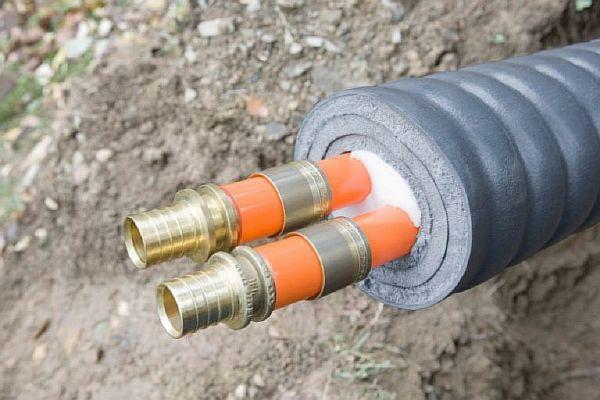
When high pressure is maintained inside, the liquid does not freeze, even if there is no physical insulation.
When installing outdoor gravity sewer systems, a so-called socket connection is used. The key is to keep the plastic free of contaminants, as this will ensure a high level of tightness. The parts requiring connection are lubricated with silicone or liquid soap.
Sealant treatment will provide additional protection during work such as laying polypropylene water pipes in the ground.
Only by adhering to all requirements and technologies will you achieve a long-lasting water supply system and help reduce operating costs.
We install filters
If there is no scale or sand in the water, then components such as toilet cistern fittings, automatic washing machines, and ceramic faucets will last much longer.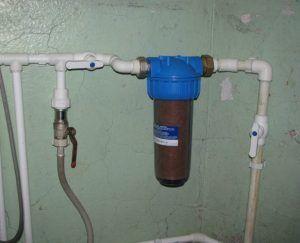
Installing the simplest filters with coarse filtration is sufficient. It is not advisable to install polypropylene pipes yourself without water purification filters.
Avoid filters that require manual disassembly. These types contain rubber seals, which are notoriously unreliable.
The preparation process depends on the type of pipe you've chosen. If it's galvanized, we use a grinder to cut the blanks to the required dimensions. This can also be done with a hacksaw.
Metal-plastic or polypropylene products are easier to cut on-site. Even minor size errors won't be a problem.
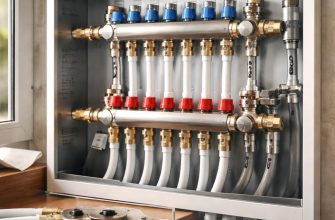
When connecting, two methods are preferred. For example, using a manifold, which serves as a distribution system for individual devices, each with its own fittings. Or using a simple tee.
We work with steel products
If you have the appropriate tools at hand, such as welding, it is used to connect metal structures.
It's easy to use for welding threads or bends that have been bent on a special machine called a pipe bender.
You can use dies or holders and do the work manually. Threaded connections are made in the same way as for valves.
About metal-plastic pipes
In this case, the connection is made using fittings equipped with union nuts. After cutting the pipe section, the inside is chamfered using a knife. The union nut is then placed onto the pipe along with a split ring.
Place the nipple from the fitting inside the pipe. It's important to proceed carefully, otherwise the sealing rings will shift. Tighten the nut just as carefully, without any sudden movements.
Products with a polypropylene base
To complete the job, all you need is an inexpensive soldering iron. Apply heat to the inner surface of the fitting using the appropriate nozzle.
We do the same with the end where the polypropylene pipe is located. We insert one part into the other and wait for everything to cool.
Watch the video
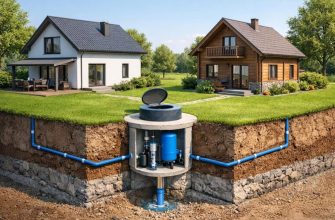
Laying water supply pipelines from pressure polyethylene pipes can be carried out by welding or using compression (compressor) fittings.