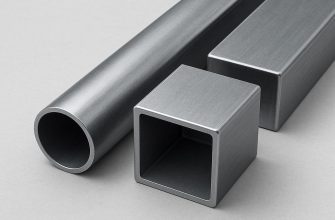
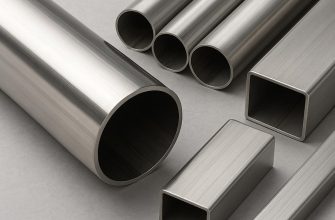
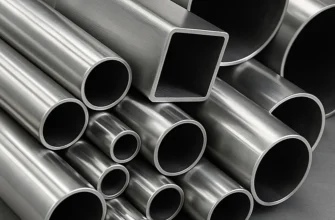
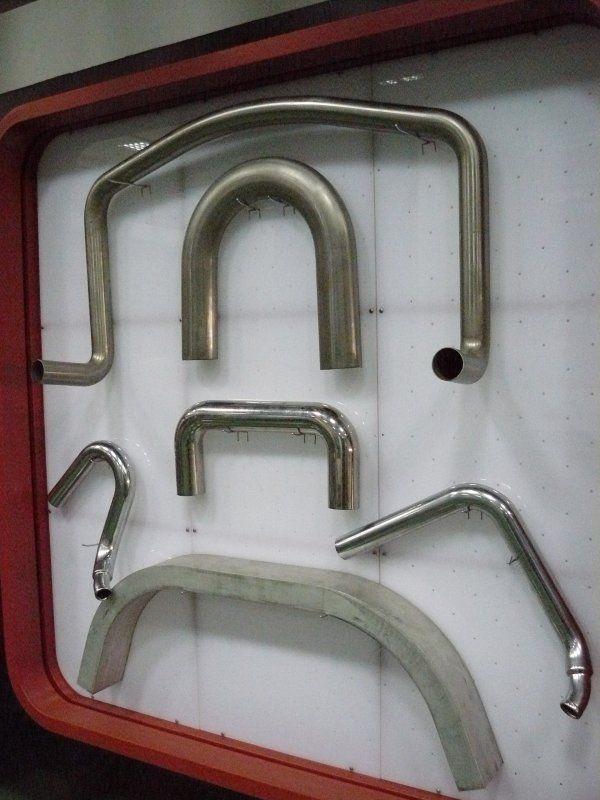
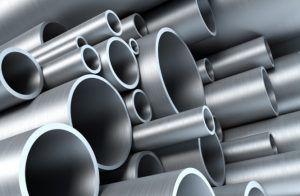
Steel pipes have excellent physical properties, can withstand significant operational loads, and provide reliable service for many years. They are used in open and closed pipelines for transporting gases and liquids. Manufacturing methods include: electric-welded with a straight seam, electric-welded with a spiral seam, seamless hot-formed, and seamless cold-rolled.
Steel water pipes are still successfully used in the construction of water supply networks. To determine the precise situations in which they can be used, it's necessary to thoroughly understand all the pros and cons of their use.
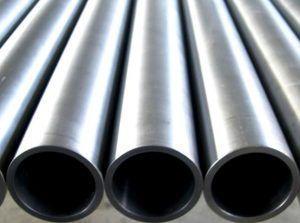 Ever since the introduction of pressurized water pipes and pumps to boost water pressure, water mains have been made of steel. It would seem that the abundance of other modern materials would have displaced these products from popularity, but this has not happened.
Rolled metal pipes account for a significant share of sales in today's market. Their popularity suggests they possess certain characteristics that distinguish them from similar products.
Steel water mains are appropriate where there is a risk of mechanical stress on the pipeline. If the pipeline is located underground or outdoors, steel is undoubtedly the best material. This conclusion is based on its strength capabilities, as this material has its drawbacks in other areas.
Also, for pipelines transporting water under high pressure loads, there is simply no better option than steel.
For example, after the booster pump, the main line is subject to the following adverse influences:
- Vibration.
- Significant pressure surges when turning the make-up on and off.
Calling these products the cheapest is incorrect, although they are among the most affordable. Another big advantage is that fittings for these pipelines are easy to find. While similar plastic parts can sometimes be difficult to find, steel fittings are quite affordable. large assortment.
Due to their low coefficient of thermal expansion, these pipes are suitable for installation under plaster. Using other materials in this situation risks cracking when heated.
See also all about steel welded water and gas pipeline materials: galvanized and non-galvanized, threaded, etc.
Features and specifications
Steel water pipes have the following characteristics. Some of the positive aspects have already been partially discussed above, but not everything is rosy with this type of rolled pipe.
He also has negative characteristics:
- Corrosive formationsUnfortunately, steel is susceptible to this influence. And plumbing systems are particularly sensitive to this. Within them, moisture constantly combines with atmospheric oxygen. This combination is simply detrimental to steel.
- Decrease in lumen clearance over timeSuch a highway tends to become clogged over time. Its clearance can decrease drastically in just a couple of years.
- Labor-intensive installation and dismantlingWhen discussing steel piping, it's important to note that assembling it is more difficult than tightening a few nuts on metal-plastic fittings or welding polypropylene pieces with a small welder. Connecting a steel water line requires the help of a professional welder.
- Impressive weightThis characteristic feature of steel water pipeline materials significantly complicates transportation and installation.
IMPORTANT! Steel networks can be protected from corrosion, a significant defect, by priming and painting.
Types of steel pipes
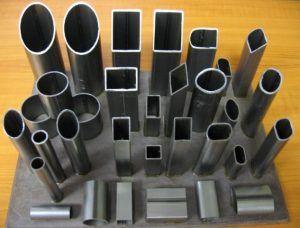 Types of steel pipes for water supply are provided below. The most common classification is division by manufacturing specifics, thus, they are divided into:
- GalvanizedThis category includes products that have been zinc-coated on both sides. This protective layer significantly enhances the product's anti-corrosion properties.
- ProfileThey are made of carbon steel. These options are widely used to create highly stable structures and metal frames.
- SeamlessHot-deformed products are a type of rolled tubular product that does not have a helical or longitudinal weld seam. The production technology in this case involves finishing the hot-deformed products under high temperature.
- Electric weldingIn this case, low-gelled and carbon steel are used for production, most often in sheet or strip form. Electric-welded products are widely used for laying heating mains and in the construction of other networks and structures.
- Water and gas pressureA very important factor for them is the ratio of the internal to external diameter, which depends on the wall thickness. Based on wall thickness, this type of rolled tubing is conventionally classified as: reinforced, standard, and lightweight.
Galvanized steel water pipes deserve special attention. This coating significantly extends the service life and reliability of the pipeline. These products are versatile and widely used in both domestic and industrial applications.
The increased corrosion protection provided by galvanization allows them to be used not only in water supply systems but also in heating systems.
Compliance with GOST requirements becomes a solid guarantee of high anti-corrosion properties, reliability and durability.
GOST 3262-75
Steel water pipe Manufactured in accordance with GOST 3262-75. This standard determines the nominal bore and wall thickness of this product.
They can be equipped with rolled or cylindrical threads. They can also be unthreaded. Rolled pipes manufactured according to GOST 3262-75 are used not only in water supply networks but also in gas supply networks.
They've also found application in the construction of various structures on sports grounds, including horizontal bars, support structures, and much more.
Duration of operation
Steel water pipes have an impressive service life. For this reason, they have become the undisputed leader for pipelines of various purposes. For heating systems, it's best to use black steel pipes, while for plumbing systems, galvanized steel is more appropriate.
When using these products in metal communication systems, it's important to pay attention to their manufacturing process. This affects their service life.
Electric-welded pipes can be installed in water, heating, and gas supply networks. Their problem is that they have lower flow capacities than similar copper or polymer pipelines.
This is due to the rough surface inside steel water pipes, which creates vortexes in the liquid being pumped, thus impeding the flow of the medium.
A distinctive feature of these pipes is that their service life is unaffected by hydraulic loads. High loads of this type do not reduce the service life of steel pipelines.
Often, such a network operates in difficult conditions: underground and at a coolant temperature close to boiling, and with hydraulic shocks reaching up to 15 atmospheres.
This mode of operation will not be handled by plastic and metal-plastic pipelinesThey would fail after 10-15 minutes of such work, but a steel structure will last reliably for a long time.
Dimensions
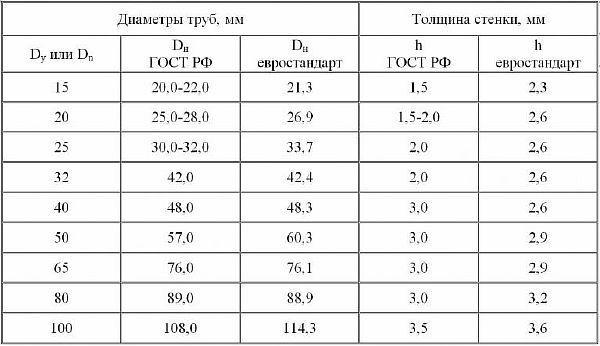
 Steel pipes are distinguished by the following standard dimensions, which are taken into account during design development:
- Nominal bore. This is a conventional value used when describing a pipeline. It is the actual internal diameter, rounded up to the nearest standard diameter. According to GOST 28338-89, the value is rounded up. Measurements are taken in inches or millimeters.Water supply pipes come in sizes ranging from 1 to 15 cm.
- Inner diameter. This is the exact volume inside the tube, obtained by direct measurement. It is expressed in millimeters.
- Outside diameter. This is the volume measurement taking into account the wall thickness.
- Wall thickness. This value is regulated.
In this situation, length is not a constant value; it is taken into account in calculations as a pressure regulation factor and as an economic factor. These systems are manufactured in short, measured lengths, meaning in standard pieces. They can also be produced in non-dimensional versions. Dimensions range from 4 to 12 meters.
Video: Let's look at the characteristics
Water pipes are measured in inches, while pipe dimensions are expressed in millimeters in all other cases. For convenience, millimeter notations are used alongside inch notations.
In the metric system, the standard unit of measurement is mm, and this value is stable. In the imperial system, inches represent not only standard units of measurement but also arbitrary ones. This is based on the characteristics of the thread.
The difference between the two types of products is obvious at first glance. This is indicated by the thread size and the roundness of the threads on the pipe.
IMPORTANT! Inches are converted to mm as follows. Knowing that 1 inch equals 2.54 cm, you can accurately calculate the pipe diameter in millimeters. All measurements are rounded up.
Table of diameters
The diameters of steel pipes for water supply are shown in the table.
| Conditional passage (CP) | Volume of thread cutting |
| 10 | 3/8 |
| 15 | 1/2 |
| 20 | 3/4 |
| 25 | 1 |
| 32 | 1 ¼ |
| 40 | 1 ½ |
| 50 | 2 |
| 65 | 2 ½ |
| 80 | 3 |
| 90 | 3 ½ |
| 100 | 4 |
| 125 | 5 |
| 150 | 6 |
The standard diameters of these pipes, which are regulated by GOST, are shown in the following table.
| Conditional passage (CP) | Outside diameter volume |
| 6 | 10.2 |
| 8 | 13.5 |
| 10 | 17 |
| 15 | 21.3 |
| 20 | 26.8 |
| 25 | 33.5 |
| 32 | 42.3 |
| 40 | 48 |
| 50 | 60 |
| 65 | 75.5 |
| 80 | 88.5 |
| 90 | 101.3 |
| 100 | 114 |
| 125 | 114 |
| 150 | 165 |
For example, these indicators will be needed when working with the heating systemWhen it comes to calculating the heating system so that all rooms in the house are heated evenly during the winter, these calculations are made using special tables for each specific situation.
If in doubt, it's best to call in a professional. A properly installed steel network will provide trouble-free service for a very long time. This can save you not only time and stress, but also money.
An improperly installed plumbing system can quickly become unusable, and repairs in this case are costly. For these reasons, competent, qualified plumbing services can save you money.
Table of sizes of different water pipes
The following table indicates the sizes of different water pipes.
| Conditional passage (CP) | Seamed pipes (mm) | Seamless products (mm) |
| 6 | 10 | 10.2 |
| 8 | 13.5 | 13.5 |
| 10 | 17 | 16 |
| 15 | 21.3 | 20 |
| 20 | 26.8 | 26 |
| 25 | 33.5 | 32 |
| 32 | 42.3 | 42 |
| 40 | 48 | 45 |
| 50 | 60 | 57 |
| 65 | 75.5 | 76 |
| 80 | 88.5 | 89 |
| 90 | 101.3 | 102 |
| 100 | 114 | 108 |
| 125 | 114 | 133 |
| 150 | 165 | 159 |
Assortment
The table below shows the range of steel pipes. It also provides information on the pipe's weight. The same regulatory standards determine the thickness of metal water pipes. This can also be found in the table below.
| Conditional passage (CP) | Lungs | Ordinary | Reinforced | |||
| Wall thickness | Weight | Wall thickness | Weight | Wall thickness | Weight | |
| 6 | 1.8 | 0.3729 | 2 | 0.4044 | 2.5 | 0.4747 |
| 8 | 2 | 0.5672 | 2.2 | 0.6131 | 2.8 | 0.7389 |
| 10 | 2 | 0.7398 | 2.2 | 0.8030 | 2.8 | 0.9805 |
| 15 | 2.35 | 1,098 | — | — | — | — |
| 15 | 2.5 | 1,159 | 2.8 | 1,277 | 3.2 | 1,428 |
| 20 | 2.35 | 1,417 | — | — | — | — |
| 20 | 2.5 | 1,498 | 2.8 | 1,657 | 3.2 | 1,862 |
| 25 | 2.8 | 2,120 | 3.2 | 2,391 | 4 | 2,910 |
| 32 | 2.8 | 2,728 | 3.2 | 3,086 | 4 | 3,778 |
| 40 | 3 | 3,329 | 3.5 | 3,841 | 4 | 4,340 |
| 50 | 3 | 4,217 | 3.5 | 4,877 | 4.5 | 6.159 |
| 65 | 3.2 | 5,706 | 4 | 7,053 | 4.5 | 7,879 |
| 80 | 3.5 | 7,337 | 4 | 8,336 | 4.5 | 9,322 |
| 90 | 3.5 | 8,442 | 4 | 9,598 | 4.5 | 10.74 |
| 100 | 4 | 10.85 | 4.5 | 12.15 | 5 | 13.44 |
| 125 | 4 | 13.42 | 4.5 | 15.04 | 5.5 | 18.24 |
| 150 | 4 | 15.88 | 4.5 | 17.81 | 5.5 | 21.63 |
Steel water pipes are very common and easy to find. This can be done through platforms for choosing building materials.

These locations offer a wide variety of options. By carefully reviewing them, you can choose the most suitable option for your purchase.
Despite the increased popularity of plastic pipelines, steel remains one of the most popular materials, and durable steel networks are the best proof of this.