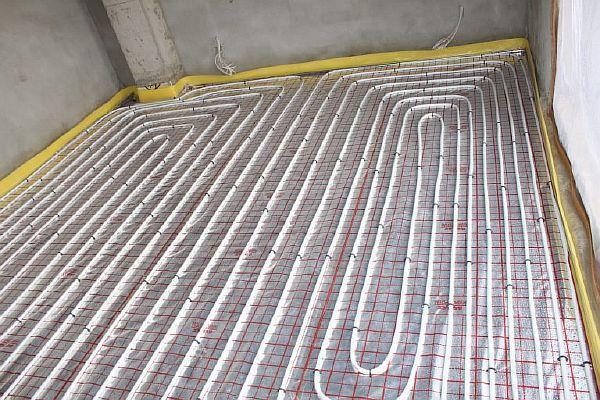
 Construction materials market for installation of a heating system offers a variety of products. However, professional installers consider metal-plastic pipes for underfloor heating to be the most suitable option. When choosing, they consider price, installation complexity, and the length of service life.
The manufacturer is an indicator of quality, and most buyers prefer expensive products from well-known brands. This is because lesser-known products often turn out to be counterfeit.
MP pipes are recommended for installing underfloor heating systems. They combine excellent quality with an affordable price.
Metal-plastic pipes for underfloor heating have become no less popular than their polymer counterparts. When heated, these underfloor heating pipes retain their structure and can withstand high loads.
All manufacturers produce this line of hydronic underfloor heating products as a five-layer system. It consists of three layers—the main layers—and two intermediate layers (the adhesive layers).
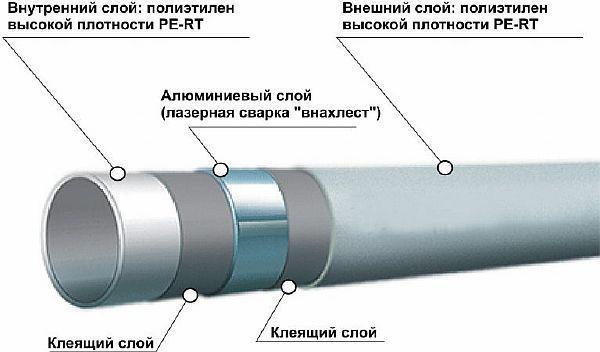
This composition of metal-plastic pipes significantly increases their strength and ability to withstand high temperatures.
Video
- The inner layer is responsible for operating parameters such as pressure and temperature, and its composition is cross-linked polyethylene extruded using the extrusion process.
- A layer of adhesive compound. It ensures a secure bond between the PE and aluminum.
- A gas-impermeable aluminum layer. It consists of a special foil folded along the entire length of the product.
- Second adhesive layer.
- The outer layer. On rolled tubing for this type of hot-water heating, it is made of cross-linked or high-density PE. This composition helps protect the product from external damage.
 Adhesive for metal-plastic pipes is a crucial component. Many unscrupulous manufacturers, in an attempt to cut costs during the production process, substitute expensive, high-quality adhesives for cheap, dubious-quality products.
This type of glue doesn't hold the product together properly, and its strength is reduced. It's easy to check which product you're using. Take a piece of pipe and heat it over a flame. A product containing low-quality glue will immediately begin to delaminate.
Many people buy these products because of their low cost, but the savings aren't worth it. Low-quality adhesives reduce the strength of the resulting structure, which increases the risk of accidents on the highway.
Advantages
The advantages of metal-plastic pipes are obvious - the most significant is the presence of an aluminum layerAnd this fact makes this product stand out.
The second important advantage is This is the minimum linear increase rate., and the aluminum layer is completely preserved; it is practically impossible to damage it.
Another advantage of metal-plastic pipes is their durability. In addition to their durability, these products are also reliable. Based on specific examples, the service life of steel is no more than 20 years.
And the durability of the MP pipeline takes a more impressive period – it's more than half a centuryNot many varieties can boast such a long period of use.
Another advantage worthy of attention is the ability to maintain the shape of the screed, which significantly simplifies installation.
It is also worth mentioning the thermal conductivity of metal-plastic products; these pipes have it minimalIn terms of thermal conductivity, they significantly surpass similar products.
Compared to steel, this thermal conductivity is 175 times lower. Copper's thermal conductivity is 1,300 times greater.
MP pipes are considered the best option for underfloor heating systems not only for their thermal conductivity, heat resistance, and durability. Many other characteristics contribute to this.
This type of product range has many advantages, but its only disadvantage is that it is slightly higher than that of polyethylene. price, And tendency to breakHowever, the second drawback can be avoided if the permissible bending radius is not exceeded when laying the floor.
What products are recommended for flooring?
Cross-linked polyethylene pipes are most often used for underfloor heating installations. Metal-plastic pipes are also used, but it's difficult to say right away which of these pipes is better. The problem is that there aren't many differences between them.
Some might say polyethylene is better because it's cheaper. However, this savings may not be entirely justified. if the installation is carried out by an inexperienced professional.
Polyethylene is also more difficult to install, which increases the cost of installation work. Consequently, the economic costs are practically equalized, and the decision Which pipe is best for underfloor heating?: metal-plastic or any other, everyone will do it themselves.
When considering which company is best for purchasing metal-plastic pipes, it's important to emphasize that virtually all products in this line are high-quality and reliable. All manufacturers have greatly improved the technical specifications of their underfloor heating products and enhanced their functionality.
Here are some manufacturers that can be considered as leading in this industry:
- Italy (Valtec, Ape);
- Germany (Uponor, Rehau);
- South Korea (Hydrosta).
And one more piece of advice: When choosing the best metal-plastic pipes for underfloor heating, it's important to understand that high-quality products don't come cheap.
Therefore, it's best to buy from reputable manufacturers. Products offered at low prices by little-known companies may be counterfeit, and you won't be able to build a high-quality underfloor heating system with them.
Diameters
Working with these rolled pipe materials is easy if you know the rules. These products conduct heat well and can hold their shape (in this case, bends). To ensure the corner of the heated floor stays in shape when bent, they must also be bent correctly.
When starting installation, many people wonder what diameter metal-plastic pipe is best. Beginners are advised to start with metal-plastic options and choose a 16 mm diameter for installation.
Video
Also, a product with a diameter of 20 mm is more difficult to process. However, this size is laid in 50 cm increments. Therefore, it is recommended to use a 16 mm diameter instead of an 18-20 mm diameter.
Products of this diameter are not only easier to install, but also cost an order of magnitude less than those of the “eighteenth” or “twentieth” diameter.
Types of connection
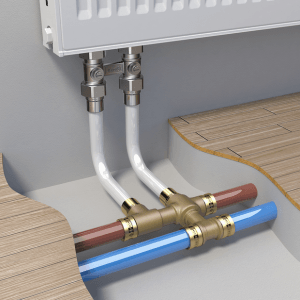
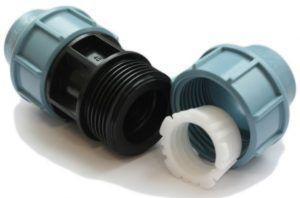
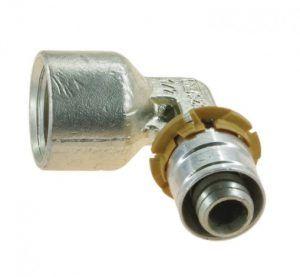
The joining of metal-plastic pipes can be performed in two ways:
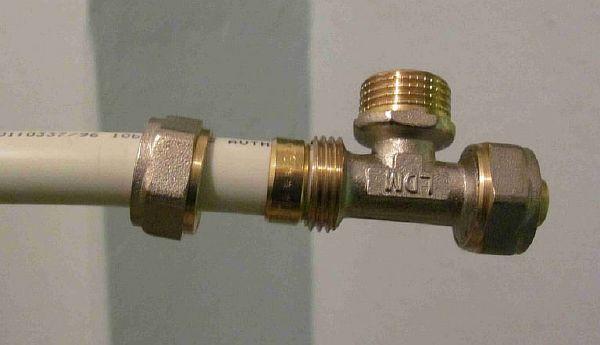
- by means of compression fittings
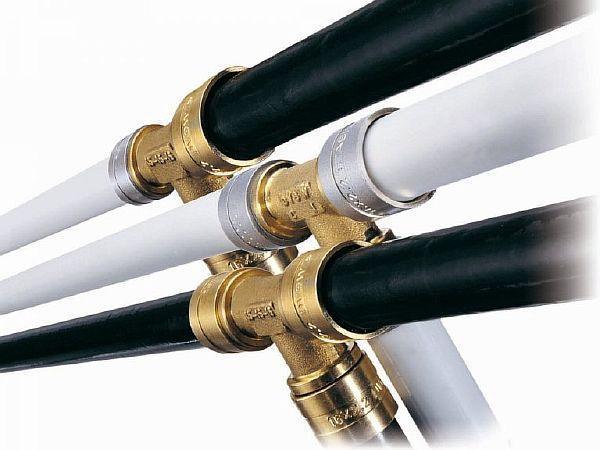
- by means of a press fitting
Connecting compression fittings requires the use of crimping tools. These consist of a nipple, a union nut, and a split ring. A reliable connection can be created with a simple wrench.
This type of joint has the advantage that it does not require any special equipment and the joint can be disassembled if necessary.
The joining of fittings is performed as follows:
- The branch pipe is prepared and a coupling is put on it.
- The protected side is processed with an expander and flared.
- The pipe is seated on the fitting's nipple, and the sleeve is clamped using a manual or hydraulic press. This completes the connection.
Leak in the underfloor heating system
The design of these products guarantees their strength and resistance to corrosion. If a metal-plastic pipe leaks, it may be due to the following reasons:
- violation of installation technology;
- mechanical impacts;
- poor execution of joints.
A leak in a system is often caused by a faulty connection fitting. In this case, simply tightening the nut is sufficient. If the leak continues, the system will require a thorough overhaul.
The rubber seals on the fitting should be checked for wear. Once the problem is resolved, all joints should be treated with silicone grease and sealed with sealant.
If a network installed with press fittings is leaking, the leaking joint must be dismantled and the ring on the pipe must be replaced.
If the pipeline itself is leaking (for example, due to a rupture), the damaged section must be replaced immediately. If replacement is not possible, the problem can be temporarily fixed. A bandage is used for this purpose.
Pressure testers
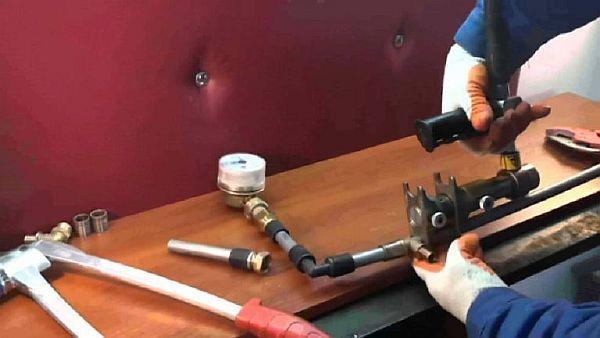 A metal-plastic pipe crimping tool can be easily purchased at any hardware store or online. It is used for installing heating, cooling, and water supply lines.
This equipment allows for the quick and easy installation of any pipeline, including underfloor heating. The device allows for the connection of pipelines with diameters ranging from 12 to 110 mm.
Upon customer request, crimping machines are supplied with replaceable kits and nozzles. These devices are simple and compact. They also require no maintenance.
Underfloor heating systems have been around for over fifteen years, and their main advantage is that uniform Heating a home. The main problem when choosing this type of heating remains: "How to choose the right metal-plastic pipes for the floor, and how many do I need?"
It has already been stated above that only high-quality materials should be used for work, as the efficiency of the system as a whole directly depends on this.
Calculating material consumption is not difficultOne underfloor heating loop is made from a single piece of rolled pipe. Experts have calculated that a 100-meter coil is sufficient for a 20-square-meter floor area.
Now you need to find out the entire area of the room and calculate the energy consumption for the entire area of underfloor heating. Areas not intended for heating are omitted from the calculations to avoid wasting money on purchasing unnecessary building materials for underfloor heating.
No matter how good the metal-plastic pipes used to install the system, it won't function properly if it's installed incorrectly. Therefore, it's best to have the underfloor heating system installed by qualified professionals. Many companies offer this service and have qualified specialists on staff.
It's also important to understand that only good, high-quality products can create a reliable system. These can only be purchased from trusted manufacturers. By following these recommendations, you can easily select high-quality products that will help you design an efficient and cost-effective underfloor heating system.
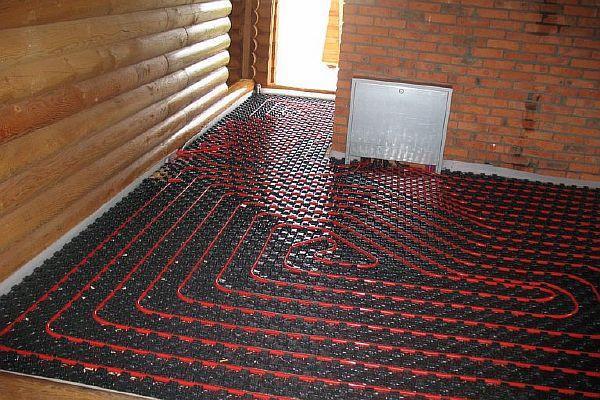
Underfloor heating systems have become a fully-fledged alternative to heating with gas boilers or electric radiators. The excellent capabilities demonstrated by metal-plastic underfloor heating pipes make it possible to easily and cost-effectively replace all traditional heating systems.