A pipe fistula is a defect in the pipe wall, typically a crack or a hole. It occurs in metal pipes due to pitting corrosion, and in plastic pipes due to high pressure when the pipe type is not compatible with the heating or hot water system design.
The article below will help you resolve the issue of sealing pipe leaks yourself. The problem of how to seal a leak in a pressurized pipe is truly a pressing one. After all, leaks in water, heating, and drainage pipes can occur at the most inopportune moment, and they need to be addressed quickly and effectively.
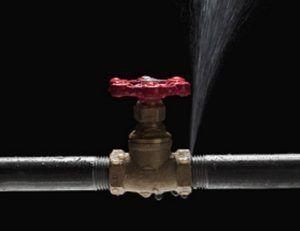 First of all, you need to understand that all the proposed tips are interesting, but, unfortunately, they are not long-lasting, and the results in the future could be much more "deplorable".
Experts recommend replacing existing piping with new ones immediately if a leak occurs. Polypropylene pipes can also help reduce costs.
Not only are they inexpensive, but they're also easy to install. Their installation is straightforward and easy to do yourself. When we talk about leak repair methods, we're talking about small-scale "breakthroughs." If water is gushing out, there's only one solution: replacing the pipeline.
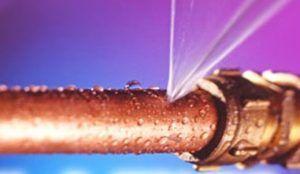 They call it a fistula pitting corrosion, which is formed by partial destruction of the material or by general aging. This results in a hole through which liquid leaks out.
The fistula's external visual manifestation is blistered paint and rust deposits. If you see such a deposit, don't rush to remove it, as the extent of the damage underneath is unpredictable.
In general, repairing pitting corrosion is not a difficult job, but nevertheless, it also requires serious preparation.
For such events you will need (experts say that you should always have the following on hand):
- Clamp (a pair of pieces).
- Rubber pads (they can be easily made from any materials at hand, such as old boots, thick rubber gloves, a bicycle tire, etc.).
- Screwdriver and bolts.
- Epoxy materials.
- Degreasing liquid.
- Emery.
- Cold welding.
- Causes of fistulas
- Where do leaks most often occur?
- How to fix leaks in metal pipes
- Sealing of fistulas in plastic pipelines
- How to weld a hole in a plastic water pipe
- There is a leak in the middle of the pipe
- Unreliable connecting seam
- There's a leak between the radiator sections – what should I do?
- When is heating system repair necessary?
- Features of hot water supply
- Fistulas in wells
Causes of fistulas
The causes of fistulas in water pipes usually come down to one thing. This impact corrosion.
The ideal temperature for corrosion formation is 15 degrees Celsius. Rolled pipe materials are most often exposed to this temperature during the spring, summer, and fall.
Water in the system also accelerates corrosion. Over time, rust builds up inside metal pipes.
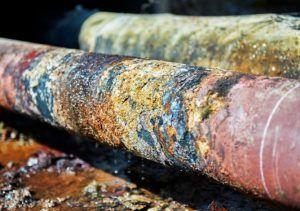
The metal in these products becomes increasingly thinner each year. Eventually, corrosion breaks through the wall completely, resulting in a leak.
This problem needs to be addressed immediately, without waiting for it to become a major issue. If the leak is small, it can be sealed under pressure without shutting off the water supply.
The most common problems that cause a heating pipe to leak include:
- long service life and strong corrosion;
- poor quality installation work, poor joints;
- loads of different types on the components of the heating system.
Since the pipe constantly contains water under pressure, and from the outside it is exposed to temperature changes in the air, condensation may form, which leads to oxidation of the metal and accelerates corrosion processes.
Leaks can occur not only in metal pipes but also in plastic ones. Naturally, the problem most often arises from mechanical damage or improper installation, as this material does not corrode.
Where do leaks most often occur?
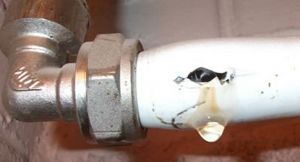 Leaks are usually caused by improper installation. The joints between pipes and radiators are considered particularly weak.
But there's another major issue: choosing the wrong material. Polypropylene pipes, which are only intended for cold tap water, should not be used for installing heating systems.
As a result, when hot water is supplied, they cannot withstand the resulting pressure, resulting in a leak.
What can you do to save your heating system from this situation?
When installing a heating system, it is recommended to use only reinforced polypropylene pipes.
Most often, a leak can form at the joints where the connecting seam or the pipe is connected to the radiator.
How to fix leaks in metal pipes
A leak in a metal hot water pipe can be quickly repaired using the following methods.
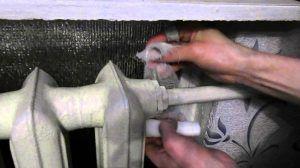 Option 1. Medical bandage and cement solution. The bandage is cut into pieces and soaked in a pre-prepared cement solution. These bandages are wrapped around the leak area, forming a cocoon-like structure.
Finally, the resulting structure is also coated with cement mortar. This dries in about a day.
Option 2. Rubber pieces. The rubber is cut into strips. Each strip should be slightly longer than the circumference of the pipe.
Next, the strips are pulled tightly around the "damaged" area and secured with clamps. This method can be used to repair even a small leak in a damaged section of a heating radiator.
Option 3. Table salt and a bandage. This method is typically used to seal pressure leaks in couplings, elbows, etc. The leaking area is wrapped in a bandage mixed with salt.
When dissolved, the salt seals the microleak. When compared to this pressure sealing method, it's immediately clear that it's not as reliable as the first two.
Option 4. Bandage. This method can be used for pipes under pressure. Bandages are considered one of the oldest and most proven options. A small automotive clamp can be used for fistulas with a volume of up to 0.005 cm3.
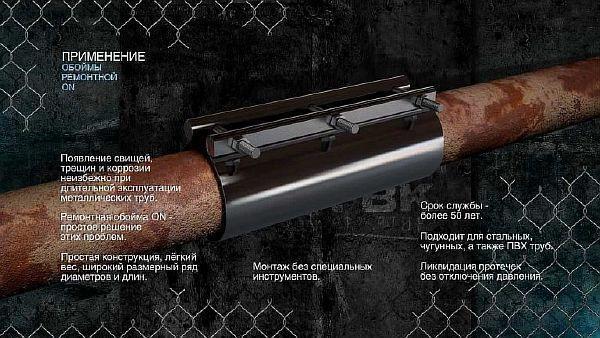
For the clamp, cut a strip of rubber a couple of millimeters wider than the pipe itself. The strip's length should be one centimeter shorter than the pipe's circumference. The clamp is placed on the pipeline, and a rubber gasket is placed underneath it..
This entire structure must completely cover the fistula. The clamp is then tightened. During this process, the surface of the corrosion site must be cleaned.
Video: How to fix a fistula
Sealing of fistulas in plastic pipelines
Plastic pipe materials have become increasingly popular in recent years. They have quickly replaced traditional steel products due to their wide range of positive characteristics. These materials are not only easy to install but also easy to repair if leaks occur.
A leak in a plastic pipe can be repaired by using couplings and fittings (replacing part of the line). A new section of pipe with pre-cut threads is then prepared.
Using connecting elements, it is installed in place of the damaged section. If you are unsure whether all the steps have been completed correctly, you can consult a professional.
 After inspecting the structure, he will give a precise answer as to whether it is suitable for operation, or will recommend a complete replacement of the damaged pipe.
This method can be used on both plastic and metal pipes. However, this method won't allow you to repair a fistula under pressure. You'll need to shut off the water to the plumbing system.
In order to water pressure (find out the optimal values for your plumbing system) It wouldn't hurt to carry out repairs; it's necessary to turn off the main valve. This is usually installed in the toilet.
Video: Fixing a Water Leak with Affordable Methods
How to weld a hole in a plastic water pipe
Unlike the previous option, which could be used not only for plastic products, this method is suitable for working with polypropylene pipe products.
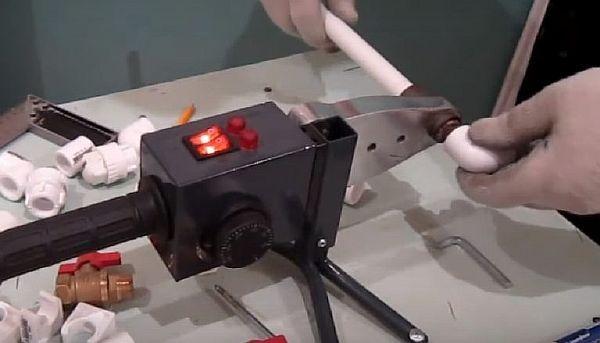 The actions are carried out using special tool for soldering plastic - ironThis tool melts the prepared components and fixes them after cooling.
To repair minor damage to an area, all repair work can be carried out under pressure.
However, for a formation of significant size, the water supply system will have to be shut off, since it will be impossible to weld the defect under pressure.
Anyone can use an iron. No special experience is required. These devices come with instructions that walk you through the entire process step by step.
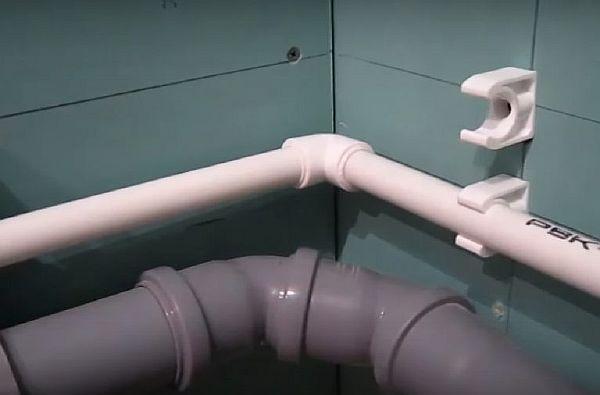
After reading it carefully, you can confidently begin repairing the PP pipeline. Welding a leak this way is not difficult.
There is a leak in the middle of the pipe
You need to inspect everything and identify the damage. What if the hole is small and leaking water, and you can't call a plumber? You can use "White Titan" automotive filler to seal the hole.
This repair method will extend the life of the pipe by several years, but only if it does not supply water under high pressure.
If the leak is significant, then a rubber layer, called a bandage, is placed over the hole, which should be larger in size than the hole.
The patch is secured with soft wire. All of the above items can be purchased at a hardware store.
It's important to remember that this method can only be used temporarily (until a professional arrives and can fix it properly).
Unreliable connecting seam
What should you do if water is leaking where a pipe meets a radiator, a faucet, or a threaded joint? In this case, troubleshooting will be somewhat more complicated, as sometimes the connections involve elements of different diameters.
Find out all the reasons why your kitchen faucet might drip and how to fix it. these defects.
What can I do to fix this? I can patch the hole using a piece of thin rubber, clamped with a special metal clamp.
This solution isn't a 100% solution. The joint will have to be disassembled and permanently welded or glued.
Final repairs can only be completed after the heating system is completely shut off and the water drain is completely removed. While this process can be done independently in a private home, in an apartment it is recommended to entrust this work to a professional.
If the house has autonomous heating, the owner must always have new couplings and spare connecting elements on hand so that in the event of an accident, a hole can be quickly repaired.
There's a leak between the radiator sections – what should I do?
A small hole from which water is leaking can be sealed using a regular self-tapping screw, which can be found in every home.
Naturally, this solution won't last long, but it will still help prevent the damage that even a minor leak can cause.
Once the fabric is dry, you can connect the radiator to the system, but to ensure proper sealing, you should still seek the help of a plumber.
What should you do if a surge in water pressure is the cause of the problem? The first step is to address the underlying issue.
The use of pipes with different cross-sectional sizes may result in water hammer, especially during the process of eliminating air pockets.
When is heating system repair necessary?
In any case, major repairs of heating systems are carried out on warm spring or summer days before the start of the winter season.
If your apartment has had iron pipes for more than five years, you should consider replacing them with reinforced polypropylene ones before they burst.
The latter do not oxidize when exposed to water and can withstand water hammer, making them more durable than iron ones.
All of the above heating pipe repair methods are good, but they can only provide temporary relief. To avoid asking yourself the question, "My heating pipe is leaking, what should I do?", call a plumber who can properly and reliably fix all heating system problems. This will prevent you from having to deal with costly repairs and shutting off the heating to your entire home when winter arrives.
Features of hot water supply
Fistulas in hot water pipes occur more frequently than in other locations. The place most susceptible to this phenomenon is the riser. The first sign of danger in such a system is a rusty buildup.
Video: How to fix a leaking pipe
As mentioned above, if you decide to seal a leak, you must not remove the growth. In the case of hot water supply systems, doing so can result in serious burns.
Such a leak in a pipeline can be repaired with a bolt or a temporary bandage. In both cases, work under pressure is prohibited. The water supply must be shut off before proceeding.
A small leak can be sealed under pressure using an adhesive bandage. The edges of the fiberglass fabric coated with BF-2 adhesive are applied to the damaged area (the tape is applied very tightly). Finally, the tape is secured with a metal plate. This area will only be able to function under pressure after 24 hours.
In this situation, you can also seal the leak using cold welding. It's best not to perform this type of work under pressure. The resulting hole is slightly enlarged with a drill, and the area is degreased.
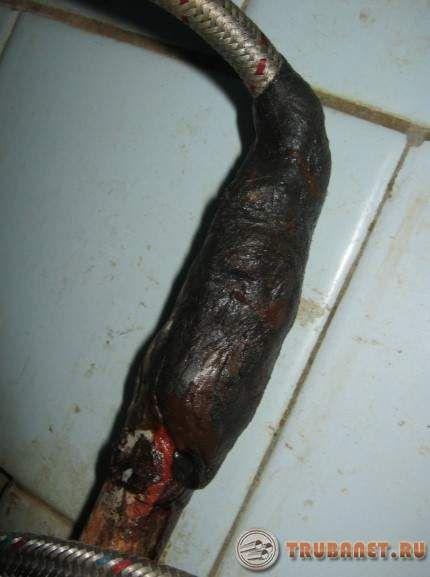
Once everything is dry, apply the compound to the leaking crack. Allow it to harden completely, which takes about ten minutes.
Fistulas in wells
When considering water sources on private property, wells are considered the most promising. Compared to boreholes, they provide higher-quality water, requiring virtually no purification or additional filtration.
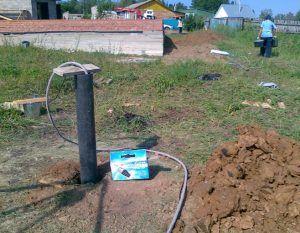 When a well is operating, the pump and water-lifting pipes vibrate. This causes the joints in the water-lifting pipes to weaken, leading to leaks (fistulas). This often results in serious accidents.
The well operates with vibrations in the water-lift pipe caused by the pumping equipment, which causes the joints to loosen. A fistula may develop, which can completely disrupt the well's operation.
Many homeowners attempt to repair and fix such leaks themselves, but experts strongly recommend entrusting this to professionals.
Such repairs are quite expensive, but they are completely worth it. Well repairs involve a number of complex operations that require specialized equipment.
This job may be beyond the capabilities of untrained professionals. You can clean the well and replace the pump yourself. However, these tasks also require a certain amount of skill.
Also, those without experience and knowledge who decide to patch up a “gap” should keep the following information in mind.
Incompetently performed work can have fatal consequences for the well. For example, it's impossible to retrieve a crowbar accidentally dropped into the well during sealing. This type of loss is very common among amateurs who decide to do it themselves.
IMPORTANT! Well maintenance technicians say that flushing is a mandatory annual procedure. It's only necessary for wells that are in continuous operation.
Equally important, specialists will immediately determine the true cause of the problem. This will allow you to repair the leaks and avoid unnecessary expenses. Plus, all work will be completed in the shortest possible time.
Now it's clear how to repair a leak in a pressurized pipe. By carefully studying the suggested options, you can quickly fix this annoying problem.
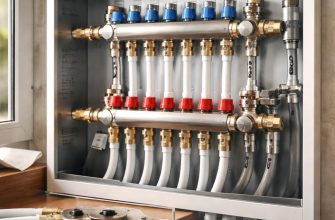
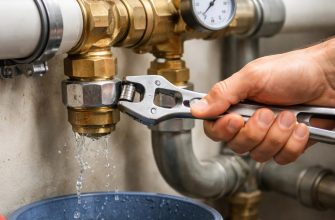


This method is designed to seal an elongated fistula. To apply the bandage, you need a rubber pad, which can be made from improvised materials: rubber from a boot, a tourniquet, a splint, or a thick rubber glove.