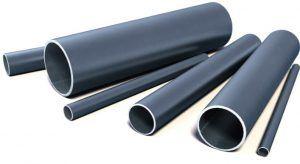
 Every homeowner strives to make their home a cozy haven. Enormous efforts are devoted to achieving this goal.
This includes detailed cost estimates for finishing work, searching for exclusive furniture sets, and developing a unique landscape design. However, all this effort can be wasted if the house is cold.
Therefore, the installation of the heating system and the home's thermal insulation require maximum attention. During this process, the time comes when it's time to purchase heating pipes.
Which pipes should you choose from the wide variety available? Polypropylene, reinforced plastic, or copper? And what about steel?
Until recently, this was the most common option. Systems were installed using steel pipes because there was no alternative at the time.
However, despite this, they shouldn't be dismissed as a relic of the past. There are situations where this option is the most optimal solution for a given situation.
For example, in an autonomous network, where there is a need to lay large volume pipelines, laid steel pipes for heating called the right decision.
The main advantage of steel pipelines is their strength. They are very difficult to damage by mechanical impact.
Small linear increase rate allows for heating networks made of steel pipes to avoid the use of compensatorsAnd a big advantage of steel materials is their excellent tolerance to high temperatures.
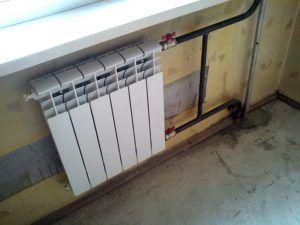
They can withstand very high temperatures. Also, in such heating systems, high pressure is maintainedIf the welding work in this heating system is performed professionally, then there is no risk of depressurization of such a network.
Perhaps one significant one flaw steel products are the complexity of their installationTo connect network sections, it is necessary to use a welding machine and engage a professional welder.
The cost of hiring a professional will be high, and the dimensions of these building materials create difficulties during installation.
Technical specifications
Consumer criteria for steel heating pipes are determined by their technical characteristics:
- Mode of productionSeamless pipes are considered the strongest because the seam becomes a weak point on the product. As a coating Any blank will do for electrical wiring, but for high-pressure main lines, only seamless types can be installed.
- DiameterInternal volume determines the size of the passage. For a pipeline, this is an important indicator.
- Wall thicknessStructural stability and the ability to withstand increased pressure depend on this.
- Top coatA galvanized coating protects these materials from corrosion. Chrome plating is used as a decorative element in furniture manufacturing.
- PerforationThis type of pipe is used as casing when drilling wells. However, in this area, these materials are gradually giving way to plastic types.
Due to their technical characteristics, these pipes are used in many areas. If we were to list them, it would be easier to point out those areas where they are not used.
Electric-welded heating pipe
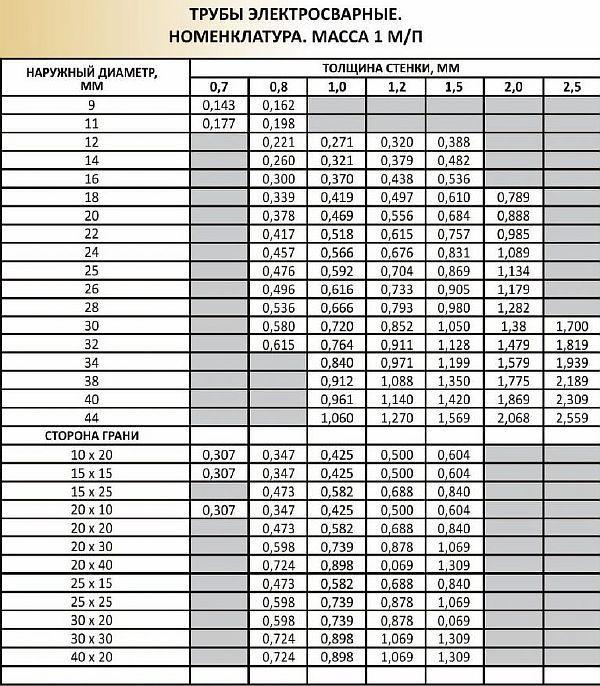
Electric-welded pipes for heating are manufactured in the following ways:
- Electric welded with straight seam.
- Electric-welded with a spiral seam.
- Seamless hot-deformed.
- Seamless cold rolled.
The process itself takes place in the following sequence:
- The rolled steel sheet is unwound and cut into longitudinal strips.
- The strips are rolled into an endless ribbon, and this is necessary for uninterrupted production.
- The tape is deformed by rollers, and it turns into a round pipe with an open seam.
- The seam is welded. Several types of welding are used for this: arc welding, induction current welding, laser welding, and plasma welding.
- The round workpiece is calibrated using rollers.
- Eddy currents or ultrasound continuously monitor the seams.
- Next, cutting is carried out into pieces of the required length.
Seamless pipelines
Seamless steel heating pipes are manufactured using a hot-forming process from a single, cylindrical piece. They are also known as solid-bent pipes.
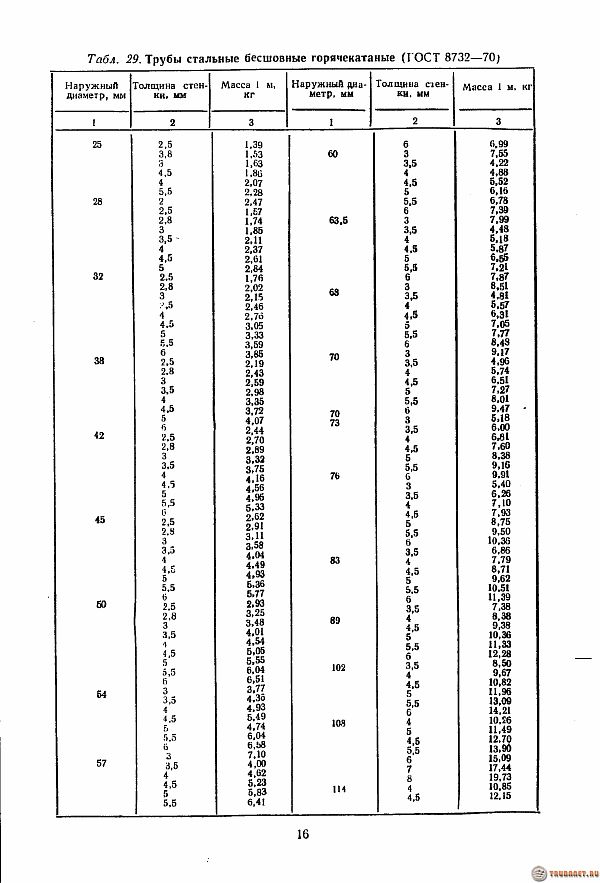
This rolled metal product contains no seams or joints. They are manufactured on special machines.
Depending on the type of production, seamless materials can be hot-rolled, solid-bent, or cold-rolled.
Solid-bent products get their name from the manufacturing method. This type of building material is characterized by high strength. Seamless options are also considered thick-walled blanks.
In this case, a special type of steel is used for production. Various non-ferrous metals are also used for this type of production. This is used for rolled pipes that transport aggressive chemical environments.
When discussing this type of product, it's impossible to ignore an interesting fact: Hot-rolled pipes are widely used in cryogenic engineering.
Corrugated pipes
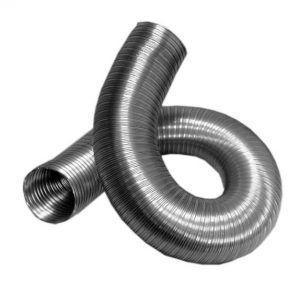 Corrugated steel pipe has only recently come into use for heating. However, its excellent qualities have led to its widespread use.
Compared to other similar options, corrugated types have proven their superiority. They perform well in a variety of applications, from hot coolant connections to low-temperature media transport.
Thanks to the efforts of the developers, corrugated pipe is now very easy to install, making it easy even for amateurs. Creating bends in the pipes requires no special equipment.
Video
Experts predict a bright future for corrugated products. Whether this will be successful remains to be seen, as technology advances. For now, they are confidently moving into a leading position.
Pipeline diameters
The diameter of the steel pipe for heating must be known preciselyThis will allow us to calculate the amount of fluid passing through the network. This knowledge is no less important in domestic heating systems.
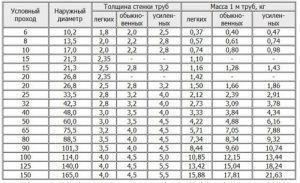
For example, when repairing the heating in a house, the diameter must be calculated so that the entire house is heated evenly in cold weather.
The following diameters are designated:
- Nominal. It is designated as "nominal diameter" - Du. This is the nominal value of the internal volume, measured in inches.
- Nominal. These values are given in letters as "nominal diameter" - Дн.
- O.D. Classification of products is carried out precisely according to this feature.Small – from 5 to 102 mm. Medium – from 102 to 426. And large diameters from 426 and more.
- Wall thickness of the blanks. This related indicator is also very important.
- The internal volume of steel products. This indicator is one of the most important. This applies to connecting elements of pipeline sections.
Different types of pipes are used in different construction sectors. Regulatory documents have been developed for this purpose, including a table with specified volumes. Special formulas are also used for calculations, significantly simplifying the work and saving a significant amount of time.
Wall thickness
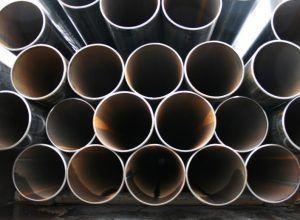 The thickness of steel heating pipes is calculated using special formulas. When calculating, round up. These materials are manufactured with a wall thickness of at least half a millimeter.
In accordance with GOST standards, during measurements it cannot be less than the calculated value, determined taking into account the specific features of use.
It's important to remember that a heating network is a main pipeline that typically experiences high temperatures. This is taken into account when calculating the wall thickness of the pipes used. For example, for products with a thickness of 25 to 325 mm, residual values of 10 to 45 mm are selected.
Resistance calculations determine the required thickness. The corrosive properties of the medium passing through the network must also be taken into account. The operating conditions, temperature, and pressure within the network are also taken into account when determining the wall thickness.
Prices for steel pipes for heating systems
Steel pipes for heating are easy to buy; prices for these products depend on the type of rolled metal and its technical characteristics.
These products can be purchased through specialized platforms for selecting and purchasing building materials, which offer a huge variety of options.
By carefully studying them and the terms of sale, everyone can choose the best option for themselves.
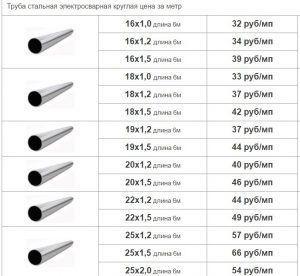
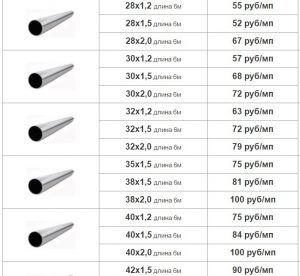
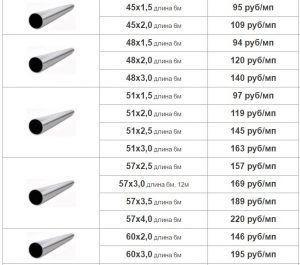
When purchasing, customers can choose not only the type of rolled metal they want but also the delivery options. Customers can also rent equipment for installation.
It's recommended to clarify the exact price of a particular item when placing an order. The average price per meter is approximately as follows:
- Galvanized steel materials with prices from 120 to 400 rubles.
- Uncoated materials with a price from 75 to 300 rubles.
- Seamless hot-deformed materials priced from 380 to 2500 rubles.
- Non-galvanized materials cost from 260 to 3300 rubles.
Steel pipes for Heating pipes, when properly installed, are durable products. Economic developments have changed customer preferences somewhat, and steel pipes are now purchased only in cases of extreme necessity or when there is no other option.
However, despite this, they are characterized as a very high-quality and affordable material. A significant addition to their high quality and affordable price is the durability of these products.