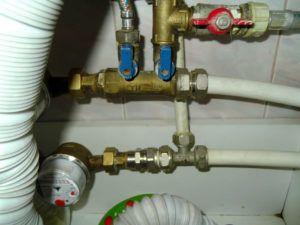
What pipes can be used for hot water supply:
- Reinforced polypropylene pipes are the best choice, the only drawback is that the pipes are rigid;
- metal-plastic – composite with two layers of plastic and a layer of aluminum between them;
- made of cross-linked polyethylene – with high resistance to external influences;
- copper, like steel, are almost never used;
- Stainless steel - the most expensive permanent pipes.
If you've decided to buy hot water pipes, choosing from the available options can be difficult, as the wide range of different materials can leave consumers in a difficult situation.
When you come to the market you can choose hot water pipes with different characteristics and with a wide range of prices.
All piping products for domestic hot water supply are divided into two main types:
- Metal. This category includes steel, copper, and stainless steel products.
- Non-metallic. This range consists of products made from various types of plastic (PVC, HDPE, polypropylene, etc.) and metal-plastic composites.
When choosing a water supply system, it's important to remember that not every product is suitable for this type of work. To correctly select and create a high-quality, trouble-free hot water supply system, you must first thoroughly understand the advantages and disadvantages of each type of pipe made from various materials. Only then can you make a final decision.
Types of rolled pipes for hot water supply
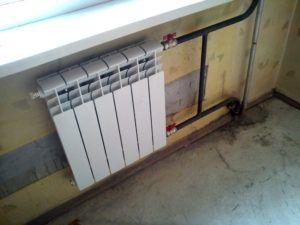 Metal plumbing pipes for hot environments come in several varieties. The first choice is steel.
These products are available with or without a coating. They are connected to a water main using threaded connections, along with additional fittings such as couplings, sleeves, and other fittings.
When installing steel water supply lines, you'll need adjustable and all-round wrenches, a welding machine, and a thread cutter. You'll also need to select the right tools for cutting plumbing pipes. buy tow and fum tapeIn this case, the diameter is usually measured in inches.
Steel plumbing pipes withstand high operating pressure and temperature with ease. The coolant in such a system can reach temperatures of up to 100 degrees Celsius. Seamless galvanized plumbing products are considered the best in terms of quality.
But, they also have some disadvantages.
- Poor resistance to corrosive formations.
- The constant presence of rusty impurities within the network.
- Over time, the clearance in such a plumbing system noticeably decreases.
- The seams at the joints require careful sealing.
- Installation of this type of plumbing pipe is quite labor-intensive.
- Large mass, which complicates transportation and handling.
When describing the types of products that can be used in a private home or apartment, it is necessary to mention stainless steel and copper pipes.
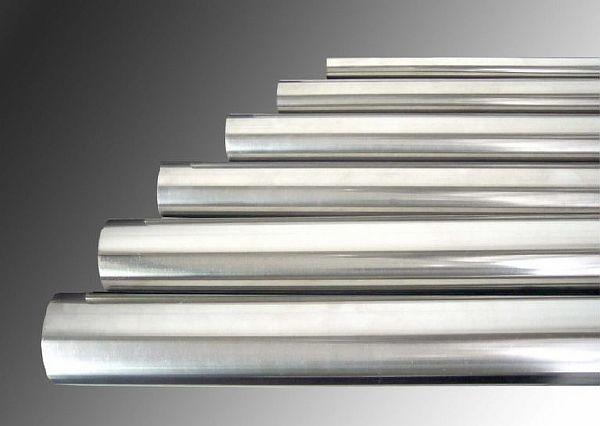
Stainless steel systems have virtually no drawbacks, but their high cost significantly reduces their popularity. Copper, on the other hand, offers excellent corrosion resistance and is considered ideal for water supply lines.
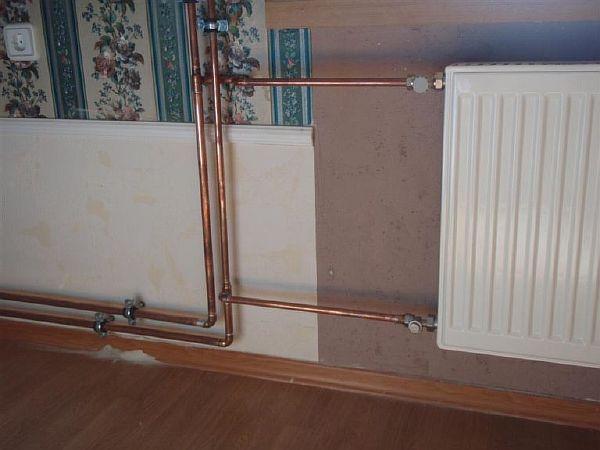
The service life is over 50 years. Copper products have proven effective not only in water supply systems but also in heating systems. This option is just as expensive as the first, but installation is simpler.
Non-metallic systems
Many people ask the legitimate question: which pipes for hot water are better—metal or other materials? When laying hot water riser pipes, it's important to know the answer. The main advantages of non-metallic systems are their high resistance to corrosion and a smooth interior surface that maintains its properties throughout the entire service life.
When deciding which piping materials to choose, many opt for plastic products. Considering the significant disadvantages of metal, this choice is a wise one.
Polyethylene (PE) pipes for hot water continue to be a subject of contentious debate. The installation of such a network has a number of unique features, so when deciding which pipe to use for hot water, it's important to understand the objective characteristics of all types of PE pipe materials.
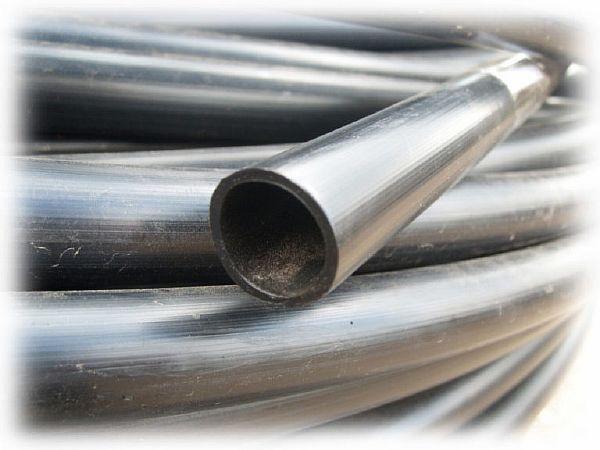
Reasons to use PE systems:
- The metal is called obsolete and ineffective.
- Resistance to corrosive formations.
- The service life is more than 20 years.
- When comparing which tubular products are better suited for welding, plastic has the advantage, as the metal's structure deteriorates after welding, which can lead to leaks during subsequent use.
- If we compare which nets become clogged from the inside faster, it's metal ones. Plastic ones maintain a constant diameter throughout their entire lifespan.
- PE is much better in terms of installation and is more cost-effective due to its low financial costs.
- Plastic lines are also easier to maintain. Unlike metal lines, they don't require additional treatment, such as painting.
- A significant factor when deciding which is better to choose is the high cost of metal and its labor-intensive installation.
What you need to know about metal-plastic
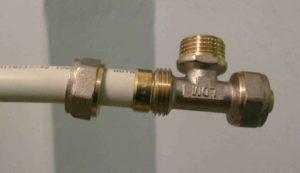 Metal-plastic pipes for hot water are very often installed. This is due to the following factors:
- More affordable cost and long period of use of these products.
- Simple installation without the need for expensive professional equipment. You can do the installation yourself.
- Excellent operating characteristics.
- Low thermal conductivity, which means heat loss is reduced to a minimum.
Polypropylene
Which polypropylene pipes are suitable for heated environments? Undoubtedly, their superior technical characteristics have made this type of pipe a leader in terms of applications. The operating temperature of a polypropylene pipeline is... reaches + 95 degrees Celsius.
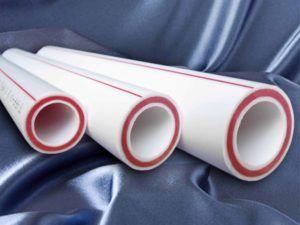 Polypropylene (PP) pipes for hot waterWhile these products, whose technical characteristics make them ideal for installation in hot water supply networks, have a significant drawback: a high coefficient of thermal expansion.
In such situations, careful attention must be paid to the installation, and in particular the fastening, of the polypropylene pipeline. Otherwise, significant deformation of the PP pipe used for hot water applications will occur.
To offset the linear increase, Manufacturers began producing reinforced polypropylene pipes for hot waterIn these networks, the expansion of PP material under the influence of high temperature is significantly reduced.
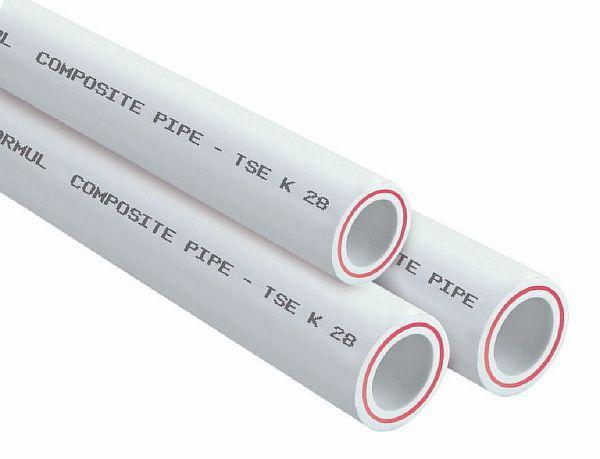
A new material worthy of special attention is cross-linked polypropylene.
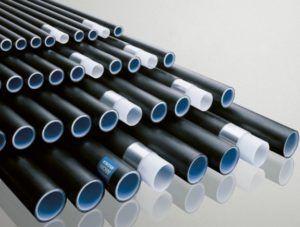
Hot water pipes made of cross-linked polyethylene They only recently appeared on the market. However, consumers quickly noticed their distinctive properties. Unlike simple polyethylene, PP grades can be successfully used for pumping high-temperature media, as they are not affected by high temperatures.
According to manufacturers, polypropylene pipelines will last for a century. The high flexibility of cross-linked polypropylene also significantly simplifies installation.
The advantages of a PP system include its low cost and reliable connections. Even a novice contractor can construct a PP main. The installed system can be concealed under cladding or in grooves.
Diameters
If the question is, "How can I distinguish between polypropylene pipes for hot and cold water?" the answer is very simple. Markings on the products will help, but determining the volume of pipe products is a bit more complicated.
It's crucial to correctly calculate the required fluid flow rate, the length of the plastic system, the resistance value, and much more. For these reasons, it's best to delegate this step to specialists.
Half-inch pipe is most often used for plastic plumbing, while three-quarter-inch pipe is used for riser installation. If water flow is high, the plastic riser size is increased to one inch.
If a plastic main line has become unusable, replacing it is not difficult. There is no need to hire a professional plumber. With a little skill, these tasks can easily be done yourself.
Low-density polyethylene
Metallized or fiberglass hot water pipes have proven themselves to be the best. However, technology evolves, and manufacturers are constantly introducing new materials. Among these innovations is low-density polyethylene (HDPE).
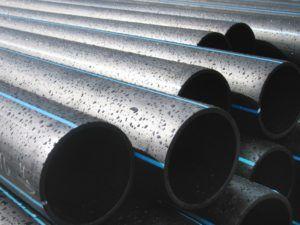 It recently replaced older metal and cast iron structures. HDPE pipe for hot water has the following advantages.
- Resistance of HDPE products to corrosion formations.
- Light weight.
- Ease of installation work.
- Long service life.
- HDPE pipes are used when installing a hot water supply network, for the drainage and gas supply lines. Depending on the liquid being used, plastic hot water pipes should be selected based on the marking and product type. The diameter and wall dimensions are also taken into account.
The main advantage of the HDPE system is its ability to pump drinking water. The most popular options in this range are 20–60 mm diameter pipes.
HDPE polyethylene pipes for hot environments are often installed in heating networks. To ensure the product maintains its original properties over time, it is recommended to choose polyethylene grades PE 100 and PE 80.
These hot water pipes can be installed in a sauna, an apartment heating system, a country house, or a summer cottage. In any room, this polyethylene product will maintain its high technical characteristics and long service life.
According to GOST, such polyethylene hot water pipes must be marked with a blue stripe. This indicates that these products can be used to supply water to residential buildings and are designed for a working pressure in the polyethylene network of 10 to 16 atmospheres.
Pipes for drainage network
Pipes for discharging hot liquids into sewers are most often made of polyvinyl chloride (PVC). Polypropylene and polyethylene are also used.
 Do these materials have anything in common? Externally, all these types of wastewater disposal systems are very similar. The sizes are also similar. The fittings for these systems are also identical.
Combines pipe products for liquid discharge into sewerage with equally low weight and smooth surface.
However, these systems have some differences. They include the following:
- PVC options are characterized by increased fragility and increased noise during operation.
- Polyethylene. These pipes for sewer discharge are highly resistant to aggressive chemical environments. Manufacturers claim that these systems last 50 years, but the reality is much longer.
The temperature at which polyethylene softens is approximately 80 degrees Celsius, so discharging waste water into polyethylene sewers in large quantities is prohibited. An example of this would be hot water drain pipes in bathrooms.
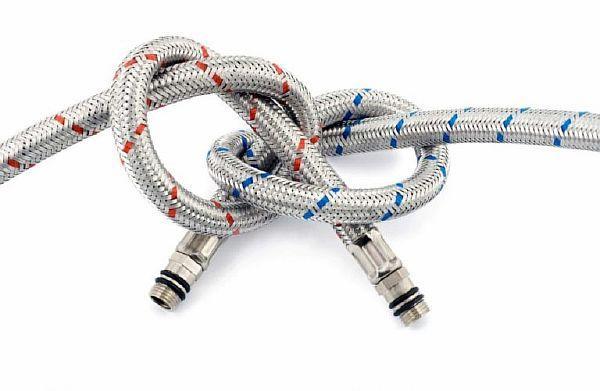
It's also worth noting that polyethylene is used to make corrugated products—flexible piping materials used for hot and cold water. This grade is ideal for underground installations, as it withstands earth movements and pressure extremely well.
Working with such networks is not difficult. It doesn't require much knowledge or skill. Connections to flexible pipes are made using special couplings.
The ease of installation that characterizes flexible pipe materials has led to the high popularity of products in this line, among which metal products are particularly popular.
When choosing hot water supply pipes, it's recommended to approach the matter with the utmost care. This is a rather complex matter, requiring a multitude of considerations. These include:
- specifics of pipeline operation;
- ambient temperature;
- chemical composition of the distilled liquid;
- length of the highway;
- pressure inside the network;
- price of pipe assortment;
- level of difficulty of installation.
All these aspects should be carefully considered and studied before making a final decision on what to choose.
When purchasing hot water pipes, choosing the right ones isn't difficult if you carefully read the information provided. If you plan to do the installation yourself, it's a good idea to learn the technology for processing the chosen material.