Information on construction and repair


General construction activities are those related to the comprehensive execution of actions aimed at constructing a building. The number of actions depends on the technological process and the type of structure. Here's an approximate list:
• preparatory activities;
• development of pits, trenches, land plots;
• installation of piles;
• production of reinforced concrete structures;
• installation of prefabricated building structural elements.
General construction work is performed by a contractor. Finishing and repair work on the completed building may be carried out by other hired crews and workers.
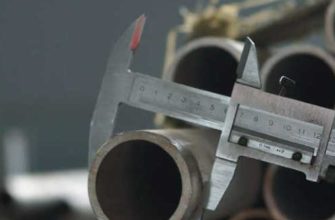
We use the mathematical formula in the calculations: S = π x d x L. The value of π is 3.14. Substitute the length of the pipe for L. d is the diameter based on external measurements. The result, S, is the area (m2).
There are 4 types of repairs in the construction industry:
1. Cosmetic: painting, replacing damaged trim, wallpapering.
2. Major repairs: replacement of utility lines and finishing, redevelopment of premises, modification of non-load-bearing structural elements of the building.
3. European-style renovation: the same major renovation, but using European technologies and building materials.
4. Designer renovation: giving the space the client's desired style. Implementing the design idea may require cosmetic and major renovations.
Each type of repair includes rough and finishing work. Additionally, there are differences in completion time: scheduled and emergency.
Comprehensive renovations cover the entire building, while selective renovations focus on individual rooms or structural elements.
To calculate the area of a cylinder (S m2), multiply π (3.14) by the diameter (d) and the length (L). Formula: S = π x d x L.
To calculate the volume (V m3), multiply the length (L) by the cross-section (S m2) of the cylinder. Formula: V = L x S.
Experimental building materials are new construction materials emerging in the construction industry. Due to limited production runs, these innovations are not used on a large scale.
The properties and performance characteristics of building materials have been partially studied. High-quality experimental materials are in demand and remain on the construction market.
New products that have proven poorly in construction and repair quickly disappear and do not go into mass production.
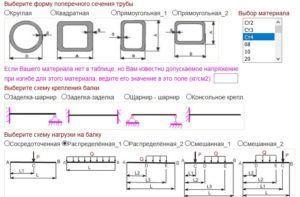
To find the volume (V) of water in 1 m of a cylinder, use the table data. For mathematical calculations, use the formula: V = π x R2 x L. The number π is a constant value of 3.14. L is the length, and R is the radius of the pipe.
Construction is a complex of technological processes, conditionally divided into 3 stages of execution:
1. Preparatory: project development, documentation preparation, delivery of building materials, construction site arrangement.
2. Main: building construction, installation of utility networks, rough and fine finishing.
3. Final: handover of the object to the customer according to the acceptance certificate.
The number of points for each stage of construction is determined during project development.
Depending on the place of execution, building finishing can be external or internal.
Depending on the type of purpose, a distinction is made between rough and fine finishing processes. The first type of work covers actions on the building's structural elements: cladding and leveling of walls, ceilings, and floors.
During rough finishing, utility lines are installed, windows and doors are installed, and primers are applied. Finishing work is completed with finishing materials: painting, wallpapering, tiling, or decorative stone cladding.
Construction involves a complex of processes aimed at project implementation. The number of steps depends on the type of facility being built and the complexity of the design solutions.
Standard list of tasks:
• preparation of the construction site;
• excavation of a pit;
• construction of the foundation, walls, roof of the building;
• modification of structural elements (usually required after the shrinkage of the wooden building frame);
• exterior finishing;
• interior rough and fine finishing;
• handing over the facility into operation to the acceptance committee and the customer according to the act.
Each task consists of dozens of items. When all activities are completed by a single contractor, this is called turnkey construction.
Based on the type of raw material, building materials are classified as natural or artificial. Based on their intended use, materials are classified as being used for the assembly of building components, rough finishing, and finishing.
According to their characteristic characteristics, building materials are classified as:
• solid;
• liquid;
• astringents;
• bulk;
• piecemeal.
Construction materials include paints and varnishes, heat-insulating, waterproofing, sound-insulating and other types of materials.
Special processes are specific types of technological processes aimed at arranging structural elements for equipment installation.
This definition includes lining, insulation, firebrick lining, and application of protective coatings. Specialized work includes dewatering, drilling and blasting operations, and the construction of factory chimneys.
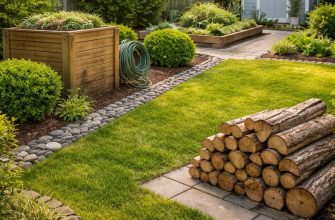





- garbage collection;
- preparation of access roads;
- dewatering;
- demolition of old buildings;
- felling trees;
- territory planning.
What types of materials are there for wall construction?
Wall materials are divided into three groups: wood, stone, and combined products. Wood refers to sawn timber: planks, beams, logs, and squared timber.
By stone we mean brick, cinder block, aerated concrete, natural stone, monolithic concrete.
Combined products may contain components of natural and artificial origin: SIP panels, thermal blocks, arbolite, expanded clay concrete, adobe, shell rock.
What types of finishing materials are there?
Depending on the location of the renovation, finishing materials are available for external and internal use.
According to their origin, building materials are divided into those made from natural, artificial and mixed raw materials.
Depending on the installation location, materials are distinguished for walls, roofs, floors, and ceilings.
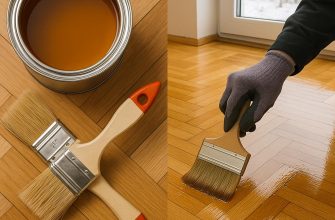
The repair is related to:
- coloring;
- plaster;
- tiling or paneling;
- laying linoleum, parquet, laminate.